Archive for the ‘fiction’ Tag
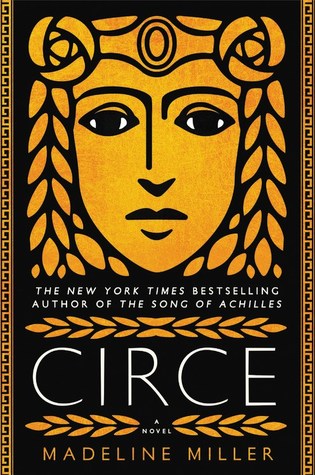
Circe by Madeline Miller is a who’s who of Greek mythology in the best way possible. This is a tale of desire through its various expressions, mortality/immortality and love in its many different forms.
Miller has fictionalized the life of Circe, the Greek goddess. It was she who transformed the beautiful nymph, Scylla, into the six-headed sea monster responsible for the deaths of numerous sailors in a narrow channel linking two seas.
Circe, the unfavored daughter of Helios the sun god and Perse, is exiled to the island of Aiaia. Despite her isolation, she comes in contact with others associated with the Odyssey. Before she meets Odysseus, however, Hermes, Jason, Medea and Daedalus are among those she encounters.
She is granted a brief respite from exile to assist her sister who gives birth to the Minotaur. Daedalus, father of Icarus, builds the labyrinth in which the half-man half-bull was confined. Circe and the mortal craftsman return to Aiaia. While this is a significant relationship, it is Odysseus who later claims Circe’s heart. This despite transforming his men into pigs and knowing his wife, Penelope, awaits his return.
In exile, Circe is only deprived of constant companionship. Otherwise, all of her needs are met. She discovers, through trial and error, the powers of the flora around her. Readers also learn the gods are ageless – to such an extent that Circe is hundreds of years old, with no physical evidence. Ultimately, this serves as a catalyst for her to attempt her greatest transformation ever.
Circe
Five Bookmarks
Little, Brown & Co., 2018
393 pages
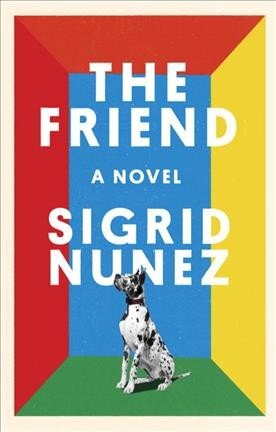
The Friend by Sigrid Nunez comes across as a letter to an intimate, erudite companion and also a series of journal entries about grief. Yet, it’s a story, in fact a novel, a work of fiction.
The nameless female narrator mourns the death of a dear friend, a relatively successful (male) writer, who has committed suicide. He, too, is unnamed, as are many of the characters, who are mostly peripheral, such as Wife One, Wife Three and Grumpy Vet. Some of the narrator’s graduate students are identified as someone “I’ll call …,” but only the super of her New York City apartment and a Great Dane are ascribed monikers.
Reluctantly, she takes the deceased man’s dog, Apollo, since no one else wants him; he’s old and massive. Like her, the dog also grieves. Apollo’s presence brings changes and not just to her lifestyle — despite her small apartment in a building that doesn’t allow pets. Previously, she’d only had cats. This is no immediate transformation. She recognizes he is a tie to her friend and she is not alone in her sorrow.
Nunez’s novel is also about writing. The narrator is a college English teacher. She cites writer after writer on death, grief, dogs, teaching, love and writing. Just as the woman recounts her memories of her close bond with the writer, her connection with Apollo transforms. She no longer sees him as a burden, so the question remains who is the friend: the dead writer, the narrator or the dog?
The Friend
Almost four bookmarks
Riverhead Books, 2018
212 pages

Period novels usually aren’t my thing. It could be the often flowery language, the popular use of first person narrative, the topic, the je ne sais pas. Little by Edward Carey, while guilty of the above, including the French, is captivating. The story, based on the early life of Madame Tussaud known for her wax sculptures of celebrities, is rich with humor, pathos, historical references and lively characters.
Born Anne Marie Grosholtz in 1761, Marie, as she was generally called until her diminutive size warranted the nickname “Little,” recounts her family background. She literally begins with her birth. Interspersed among the details of her life are drawings. The first identified as “Drawn by herself. In graphite, charcoal, and black chalk. (This being a likeness of her pencil.)” It’s difficult not to smile, although not all of the subsequent illustrations are humorous.
As a child, her life circumstances dramatically change following the death of her parents when she’s relegated to becoming a servant. Yet, Little is witty, intelligent and has a sharp power of observation: Traits that serve her well as her creativity and talents expand.
Little learns the craft of waxwork from the odd Dr. Curtius, who at first sculpted body parts and organs out of wax. Initially, he treats her as a ward. When the pair moves to Paris from Switzerland, her station is reduced to kitchen maid.
Carey’s epic follows the French Revolution with Little’s indomitable spirit whose name bears no reflection on her inner strength and kindness.
Little
Four-and-a-half Bookmarks
Riverhead Books, 2018
435 pages

Half of a Yellow Sun by Chimamanda Ngozi Adiche gets off to a slow start in its account of Biafra’s struggle for independence from Nigeria in the 1960s. It gains momentum as the story evolves from more than a glimpse into African history into the lives of the characters experiencing the turmoil.
Sisters Olanna and Kainene are twins by birth only. Olanna is beautiful, warm and relinguishes her privileged lifestyle to live with Odenigbo, a university professor and strong supporter of the revolution against Nigeria. Kainene is distant, not as attractive and lives with Richard, a reserved Englishman. Ugwu is the young servant boy in Odenigbo’s house who becomes part of the family.
A host of other characters, with names hard to pronounce and keep straight, inhabit the narrative, but the above are the ones with whom the reader becomes attached. This is thanks to the author’s early descriptions of their lives before the conflict and how they are changed as a consequence of it.
Talk of a revolution becomes war and the efforts to establish Biafra as a free, independent nation push Olanna and Odenigbo deeper into the inconveniences and dangers of the conflict. Hunger, filth, death and despair surround them in their efforts to survive.
The past real-world events addressing race and class issues, ethnic histories and colonialism in Africa is haunting. As the novel progresses to its frenetic climax, I wanted a return to its earlier, meandering pace if only to spend more time with the characters.
Half of a Yellow Sun
Four-and-half Bookmarks
Alfred A. Knopf, 2006
433 pages

History has already documented the atrocities of World War II at the hands of Adolf Hitler. In addition to the horror, his idiosyncrasies and his death are well detailed. Nonetheless, author V.S. Alexander has one more story to add to the fiction side of the scales: The Taster.
Magda Ritter is adrift in war-torn Berlin. With no job or romantic prospects, her parents send her to Berchtesgarten in the German Alps to escape the bombing – to ensure her safety. Their efforts succeed but not the way Magda imagined. She’s assigned to taste Hitler’s food to ensure it’s safe for him to eat.
Alexander describes the bucolic life at Hitler’s mountain retreat, the Berghof, where much of the novel is set. It’s a stark contrast to other parts of Germany. Initially, Magda is frightened by her responsibilities, but she soon realizes they are keeping her and her family alive. Still, she is repulsed by the knowledge that by tasting Hitler’s food she is keeping him safe.
The focus of Alexander’s narrative is Magda who falls in love with Captain Weber, a conspirator within the SS. The cook, other tasters and Eva Braun, Hitler’s mistress, are among the interesting characters with whom Magda interacts. Feelings of mistrust, a constant cloud of fear and the blind devotion so many had toward the Fuhrer are well developed.
Alexander notes this is a work of fiction, and his research is chillingly thorough. Knowing Hitler’s death is imminent does little to dispel the thriller he creates.
The Taster
Four Bookmarks
Kensington Books, 2018
320 pages
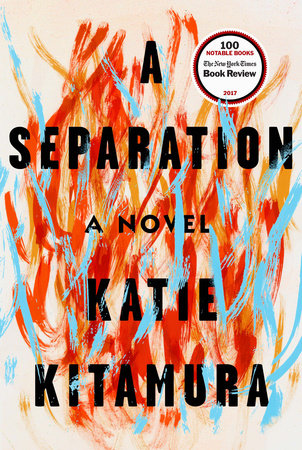
The narrator in Katie Kitamura’s novel, A Separation, is never named. Nonetheless, we learn other, more intimate details about her.
The title has multiple implications beginning with the fact that the narrator is separated from her husband, Christopher, and has been for six months. The couple has not announced the split; in fact, the pair has promised vowed to continue waiting before going public with the news.
Kitamura is terse in her descriptions. Yet her characters are well-developed, even the ones we never actually meet. Christopher, for example, has gone missing in Greece. Still, he is seen through the narrator’s eyes and experience.
In London, his mother Isabella, who is unaware of any change in Christopher’s marital status, contacts the narrator since messages to her son have gone unheeded. In just a few sentences, Kitamura deftly portrays the uncomfortable relationship the women share. Isabella is incredulous that her daughter-in-law has no idea of Christopher’s exact whereabouts. Both know he is in Greece and the resort hotel he checked into, but nothing beyond that.
What ensues is the narrator’s trip to Greece in search of the man from whom she is no longer in love. He’s not been seen at the hotel for several days, although all of his belongings are still there. She’s curious, but her heart isn’t in it. Her voice is stoic, matter-of-fact, with occasional flashes of anger or disappointment as she discovers new secrets and is placed in the awkward position of being presumed a devoted wife.
A Separation
(Barely) Four Bookmarks
Riverhead Books, 2017
229 pages

It’s not often that I give up on a book, but I’m calling it quits after 78 pages of The Night Ocean by Paul La Farge. I tried, I really tried to get into this book. I wanted to, but it wasn’t happening.
In less than 100 pages I knew little more of what novel was about then I did on page one: zilch. That’s an exaggeration; I had gleaned a little info from the book jacket. The problem is that the synopsis and the narrative didn’t mesh well — at least not in the first 80 pages.
The Night Ocean is part of The Tournament of Books Summer Reading Challenge. I’m a fan of the Tournament of Books, which happens around the same time as the NCAA basketball tournament following a similar bracket formula. The Summer Challenge involves two books, La Farge’s and A Separation. I put library holds on both; I’m still waiting for the latter.
The premise of The Night Ocean is a woman’s search for her presumed-dead husband, his obsession with H.P. Lovecraft, the 1930s horror writer who had an affair with a 16-year-old boy (who later gained fame as an Aztecs scholar). Why wouldn’t that be intriguing?
Most of what I read involved Lovecraft, including pages and pages of his journal entries. His style and tone were off-putting: “Down at y’Dockes againe this night, seeking Subjects for y’Worke.”
Challenge or not, I don’t want to toil this hard for a summer read.
The Night Ocean
Penguin Books, 2017
389 pages
 Somebody get Nathan Hill an editor! The author of The Nix is creative, daring and has a good – no excellent – story to tell. The problem is that it’s about 250 pages too long, including an 11-page sentence. Really?!
Moving back an fourth between a tumultuous Chicago in 1968 just before the Democratic national convention and a calmer 2011, the novel ‘s focus is on the relationship between Samuel Andresen-Anderson and his estranged mother, Faye. It’s been decades since he last saw her. When Samuel was a child, Faye abandoned him and her husband.
Samuel teaches literature at a Chicago university. His heart isn’t in his work; his students are neither inspired, nor inspiring. After hours, on his faculty computer, he plays an immersive video game. He is also 10 years behind on a book that he’s been contracted to write. Samuel is a likeable guy and it’s painful to consider him a loser. But.
Hill is at his best in his descriptions of Samuel’s childhood, before his mother left. It’s vivid, engaging and explains so much about this character. Equally engrossing are the sections about Faye’s youth in a rural town in Iowa.
Less appealing are some of the other characters and situations, if only because the depth of their portrayal is extraneous. Take the sentence that is a chapter unto itself. It chronicles the symptom-by-symptom, reaction-by-reaction experience of a compulsive gamer as his body shuts down.
Ultimately, all the reader, like Samuel, wants is to understand why Faye left.
The Nix
Almost Four Bookmarks
Alfred A. Knopf, 2016
620 pages

This is a good time of year for a heartwarming story, even a predictable one. A Man Called Ove by Fredrik Backman fits the bill.
Ove is a Saab man. He’s not employed by the Swedish automaker, he’s loyal to it. It’s his gauge of measuring a person’s character (in Ove’s world it usually applies to men). Ove is all about character. He raises his eyebrows at those who drive BMWs or Audis; he tolerates Volvos.
Set in his ways like a train on a track, Ove only cares about his route. Except, anyone sharing his path must abide by the same rules he does. He doesn’t necessarily set the directives only that he follows them to an extreme.
At times funny and sad, Ove’s story is initially about his decision that it’s time for his life to end. Of course, this is no laughing matter, but humor surfaces as life intervenes in his efforts to take action. Distractions get in the way. He must contend with neighbors, a stray cat, being in the wrong place at the wrong time, and his wife Sonja.
Set in Sweden, Backman alternates chapters to reveal Ove’s past and its impact on the present. It’s easy to visualize Ove as a grumpy old man, although he’s only 59; it’s also not difficult to see, or at least initially suspect, there’s more than meets the eye. It’s most evident in his love for Sonja. What happens comes as a surprise to Ove and the reader.
A Man Called Ove
Three and three-quarters Bookmarks
Fredrik Backman
Atria Books, 2014
337 pages

Epic Russian novels have long appealed to me for many reasons: the history, the descriptions of stark landscapes and lively urban settings, the storytelling, and the names. Ah, the names.
Author Amor Towles ties all these elements together in A Gentleman in Moscow.
Count Alexander Ilyich Rostov, known as Sasha among a few and as the Count among many, is sentenced to house arrest at Moscow’s grand Metropol Hotel in 1922. This is an engrossing tale about a man who grew up with every comfort and advantage during tsarist Russia. Although his lifestyle changes, it unexpectedly expands.
At the beginning of his confinement, the mother country is in the early stages of political and economic changes that continue for decades. The Count is undeterred by his reversal of fortunes. Towles presents a contented man, knowledgeable, kind, charismatic, happy with routines, yet imaginative. As the Count’s story moves through the years he faces challenges greater than the restrictions of his movements, but always with a good attitude.
Towles injects humor and history with a hotel guestbook of intriguing characters. Interestingly, each chapter begins with the letter A, like the count’s (and author’s) first name.
Here is a novel of the never-wanting-it-to-end variety. The Count’s humanity, his relationships/friendships, and the rich memories of his childhood overshadow his loss of freedom. At times it’s easy to forget that he is a captive in a majestic hotel. He can’t actually check out any time he wants, but why would he want to leave?
A Gentleman in Moscow
Five Bookmarks
Amor Towles
Viking, 2016
462 pages