Archive for the ‘families’ Tag
John Calum Macleod, known as Cal, to distinguish him from his father John Macleod (thus, the title John of John), is called to return to his Western Scottish island home to help care for his ailing grandmother. Reluctantly, Cal leaves Edinburgh for a life he wanted to leave behind.
Cal has graduated from art school with little to show for his degree. Whether its guilt or a sense of duty, it’s easy enough to leave since he has no job prospects, is out of money, has no friends and no excuses to continue his life on the mainland.
Author Douglas Stuart is at his best describing the harsh, windswept landscape, which is as much a character in the narrative as the people portrayed. This includes several even harsher residents: John is among them. Ella, Cal’s grandmother is not at death’s door, but she is a thorn in John’s existence: she is his mother-in-law, whose family has owned the croft they live for generations. Cal’s mother left John years ago.
John is a sheep farmer, weaver and lay minister with strict, inflexible ideas of how life should be lived. He loves his son, but has difficulties accepting him for who is. In truth, he knows little about Cal; Ella has more insight and is more caring.
This is a novel about hypocrisy, families, friendships, secrets and desires to be free of what others will think – which accounts for the large numbers of lies the characters tell to each other and themselves.
John of John
Four bookmarks
Grove Press, 2026
403 pages, includes acknowledgements
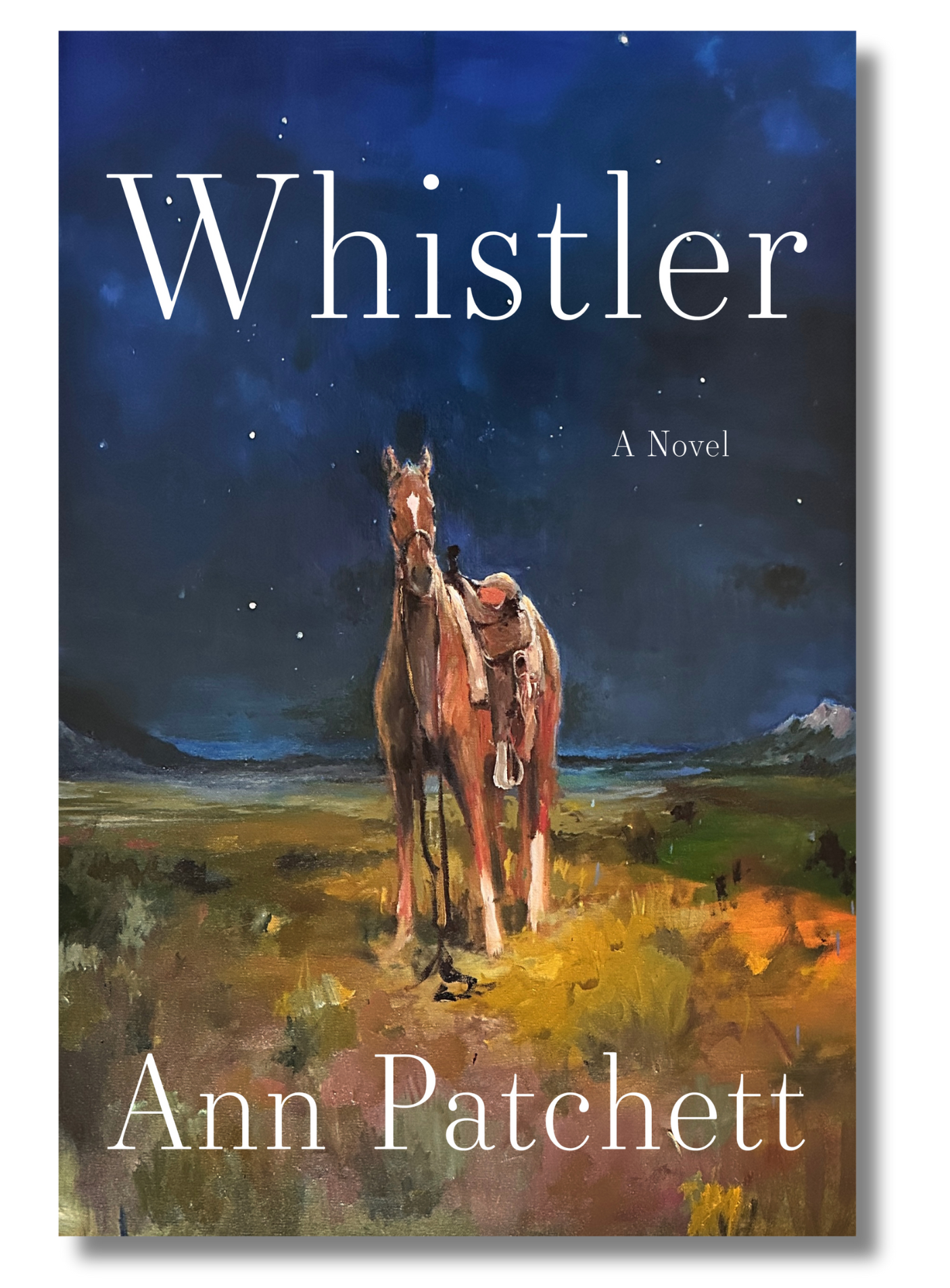
I like Ann Patchett’s writing so much I’d be happy just reading her shopping lists. Her ability to engage readers with relatable characters, descriptive language and making a seemingly ordinary story intriguing are on full display in her most recent novel, Whistler.
This is a story about memories; ones not embellished by time. The author is methodical in the way in which her main character, Daphne, a 53-year-old English literature teacher, shares not only a significant event from her childhood, but also the joy of reconnecting with the past.
When she was nine, she and her stepfather, Eddie, were in a serious car accident. Soon afterward, Daphne’s mother kicks him out of the family’s life. However, this isn’t where the story begins. That happens when an older Eddie recognizes the now adult Daphne.
It takes little time to rekindle their mutual admiration society as told through Daphne’s perspective. So, the pair pick up as though it hadn’t been decades since their contact. Eddie was beloved not only by Daphne, but also Leda, her younger sister.
Early in the narrative the voice changes from Daphne’s to third person when the time shifts to Jan. 18, 1980. This particular time frame is interspersed with contemporary life as Daphne and Eddie reestablish a relationship that was especially important to them.
Yes, there’s a titular horse, but this is not an equine book. Rather, Whistler the novel is rich with emotion and humor about human connections and the value of appreciating people just as they are.
Whistler
Four-and-half- bookmarks
Harper Large Print, 2026
374 pages
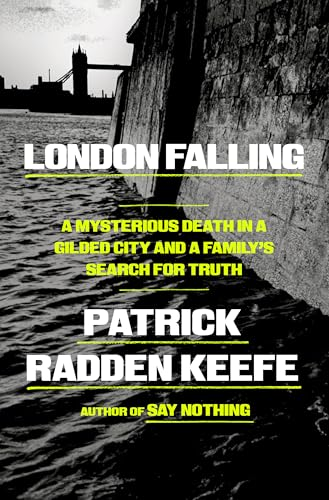
I was familiar with the story behind Patrick Radden Keefe’s London Falling thanks to a New Yorker article he wrote a few years ago.
The book, subtitled A Mysterious Death in a Gilded City and a Family’s Search for the Truth, reflects the author’s detailed research regarding the questionable suicide of 19-year-old Zac Brettler. It’s not just the young man’s death that warranted attention, but the steps leading up to it that are most intriguing.
Thanks to Zac’s parents, Rachelle and Matthew Brettler, readers learn about the family’s background, Zac’s childhood and his later involvement with known Russian oligarchs. Especially puzzling to the Brettler’s was the latter, particularly since the teenaged Zac was able to convince powerful, dangerous men that he was the son of a wealthy Russian set to inherit a fortune.
The author relied on interviews with those who knew Zac, police reports, court transcripts and people familiar with London’s darker side.
According to those who knew him, Zac never showed signs of suicidal tendencies. He left no note and one of the last two persons to see him alive was considered by many to be an intimidating gangster; the other was a dubious businessman.
At times the narrative gets deep in the weeds with family background material; at others, the pace is fast, filled with tension in anticipation of what the Brettlers might learn about Zac in his final days. Descriptions of London’s underbelly are frightening given the wealth and influence wielded by those in its midst.
London Falling
Four bookmarks
361 pages, includes acknowledgements and notes
Doubleday, 2026
Buckeye by Patrick Ryan has all the elements of a (good) soap opera: broken relationships, infidelity, family issues and so much more especially, or perhaps, because the setting is a small Ohio town (hence the name).
The fictional work spans six decades, but actual events serve as the backdrop.
Cal Jenkins and Becky Hanover grow up and marry in rural Bonhomie, Ohio. Carl was born with one leg shorter than the other; this made him ineligible to serve later when World War II breaks out. However, it’s VE Day when things begin to change for him. That’s when Margaret, relatively new to town and certainly a stranger to Calvin, walks into the hardware store where he works and kisses him in celebration of the war’s end.
Buckeye begins in the present, moves seamlessly to the past for a brief time, before moving forward. Margaret is married to Felix, but theirs is a passionless marriage; Felix is gay. There’s more backstory. He joins the navy when war is declared and is later lost at sea in the Pacific.
Meanwhile, Becky is preoccupied with her paranormal abilities; Cal is skeptical. It’s not long before Margaret and Cal begin spending more time together.
Ryan’s character-driven narrative is engaging and credible — well, perhaps Becky is less so because of her obsession with reaching the dead. Still, we watch the couples evolve with the times and situations particularly those associated with the numerous lies and secrets that slowly, but predictably, rise to the surface.
Buckeye
Nearly four bookmarks
Random House 2025
452 including acknowledgements
When was the last time you put pen to paper, placed it in a stamped envelope and mailed it? Or, when did you last receive a handwritten letter? These are the explicit unspoken questions lingering within the pages of The Correspondent by Virginia Evans. Plenty of implicit ones fill the pages.
The novel is a series of letters written by 70-something Sybil Van Antwerp . Through years of letter writing, Sybil’s daily routines, her history, emotions and relationships are revealed. Her complexities are relatable. She is kind, ornery and persistent. She writes letters to authors, friends, her brother, the son of a former colleague and many, many others. Sybil has much to write about; she’s a retired lawyer, avid reader, mother, divorcee and lifelong learner.
Yet, for all these qualities, she’s not entirely likeable. She holds a grudge and misses a lot that’s right in front of her. Some of this is due to her diminishing eyesight, but more can be attributed to her stubborn personality. When opportunities arise to make amends, she’s a mixed bag. She extends olive branches to those with whom she had peripheral contact, while refusing with family members, including her dying ex-husband.
Evans is heavy handed when it comes to lessons to be learned such as establishing and maintaining relationships. Sybil is not completely aware of the impact of her letters. Still, Sybil’s commitment to written correspondence is commendable, particularly considering her frequent lack of face-to-face social skills.
Nonetheless, it’s time to buy some postage stamps.
The Correspondent
Three and three-quarter bookmarks
Crown 2025
285 pages including acknowledgements
(I’m back. I took a blogging break, but reading continued as usual: a lot. I’m not sure I’ll blog about everything that I read over the past (too many) months since I last posted, but thanks to a friend’s encouragement I’m reigniting my passions of reading and writing.)
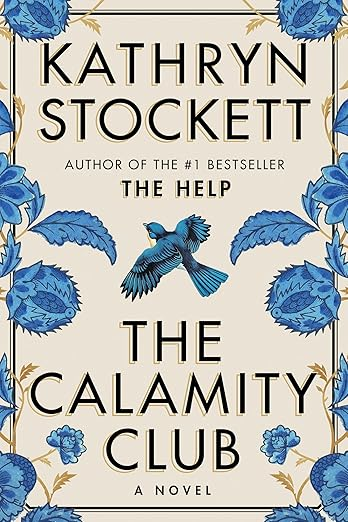
When I picked up my copy of The Calamity Club from the library (a book with an exceptionally long wait list), I was thrilled until I realized it was more than 600 pages. Once I started reading, I forgot about the weight — er number of pages — and couldn’t put it down.
Set in the depression in Oxford, Miss., Kathryn Stockett’s novel has multiple intertwining threads, yet none get tangled enough to be confusing. All address some heavy, intense issues in an often amusing, but always poignant manner.
Birdie is a hardworking, intelligent, unmarried woman. She’s perceptive and speaks her mind. She goes to Oxford to learn why Frances, her newly-married, social-climbing sister, hasn’t communicated with anyone in the family. Frances and her husband live with his mother in their well-appointed home.
Eleven-year-old Meg has been abandoned by her mother and is considered “unadoptable” at the county orphanage where the sadistic director is particularly harsh toward her. Meg is witty and resourceful in spite of her situation.
Birdie and Meg are only two of the many, many interesting characters inhabiting the pages. All have distinct voices/personalities. The setting is vividly described and the hardships of the era are palpable.
A myriad of secrets, including some surprising connections, and a unique, actually kind of crazy, solution to solving the problems associated with poverty, racism and abandonment converge in some laugh-out-loud and tear-sniffling moments.
Stockett’s last book (The Help) was published in 2009. It was worth the wait for The Calamity Club.
The Calamity Club
Five bookmarks
Spiegel & Grau, 2026
656 pages
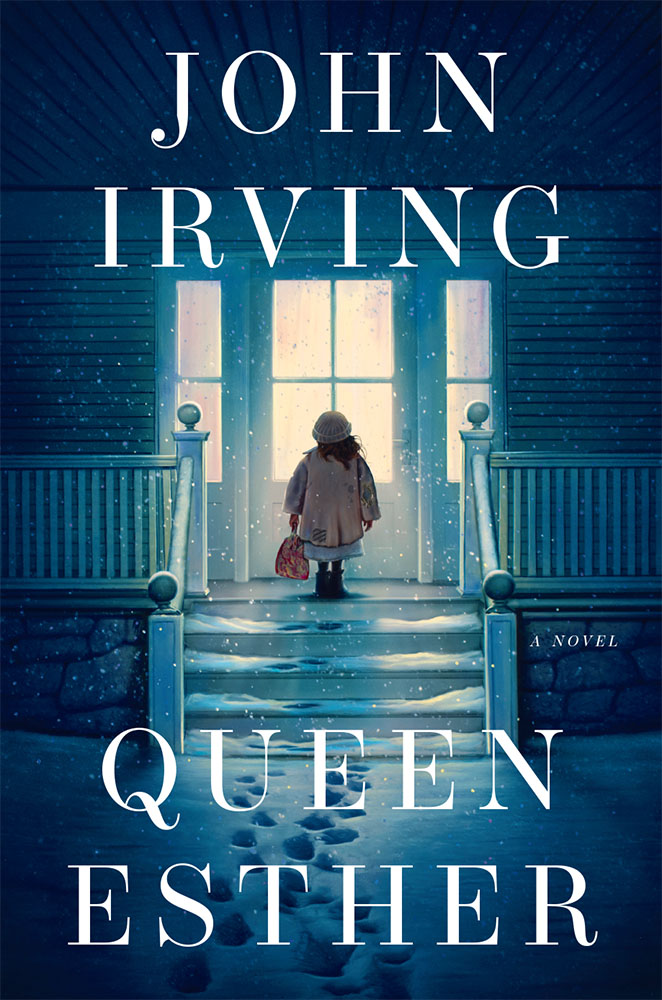
In Queen Esther, John Irving introduces readers to the Winslows of Pennacook, N.H., an intelligent, generous family with five daughters and several adopted caregivers for the girls from St. Cloud’s Orphanage (this may stir memories of an earlier Irving work particularly references to Dr. Larch).
The last adoptee is Esther, a Jewish orphan whose early and continued influence on the family is inexplicable: one of the novel’s shortcomings. When efforts to place her with a Jewish family fail, the Winslows’ aversion to anti-Semitism makes them the most likely candidates.
Through a winding narrative that moves from New Hampshire to Vienna, from Amsterdam to Jerusalem, from the early 1900s to 1981, Jimmy Winslow, the grandson of Thomas and Constance Winslow is the main character more than Esther. Jimmy is reared by the five Winslow sisters; yet, Hope, is the mother of record and Esther gave him birth. She has no direct role in his upbringing but is always a shadow in his life. As a young adult after leaving the Winslows, Esther spends her life searching for her Jewish self; this coincides with Israel’s contemporary political history. She provides Jimmy no tangible attributes – only a lot of questions.
Likeable and earnest, Jimmy grows up to be a writer, eventually a father, but someone whose curiosity about Esther is always a shadow.
As is true with most Irving works, there’s humor and an array of interesting, if not always necessary, characters. The novel is too long with little to redeem its wordiness.
Queen Esther
3.75 Bookmarks
Simon & Schuster, 2025
408 pages + acknowledgements and Reader’s Guide
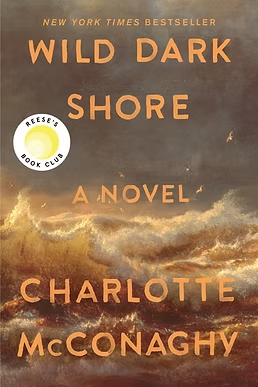
Grief, isolation, broken relationships and climate change are beautifully and tragically addressed in Wild Dark Shore by Charlotte McConaghy.
Dominick Salt and his three children are the caretakers and lone residents of Shearwater Island, near Antarctica. They’re organizing and packing the contents of a seed bank awaiting a ship to return them to the mainland. Rising tides, harsher weather conditions and the island’s isolation make it uninhabitable or a viable environment for continued study. Shearwater is a critical element of the story.
When a barely-alive woman washes ashore during a severe storm there’s an immediate sense of foreboding. Rowan’s reasons for traveling to Shearwater are suspect given Shearwater’s remoteness; when she reveals that she’s looking for her husband who had been in charge of the seed bank, the Salts’ reticence makes her suspicious.
As Rowan’s wounds heal she gets to know each of the children, while remaining mistrustful of Dom. The five characters are richly portrayed, each nearly eclipsed by grief and none able to communicate their feelings.
McConaughy’s writing maintains a palpable sense of tension throughout the narrative. It’s nerve-wracking and impressively captivating with numerous unanswered questions: what happened to the other members of the research team; how will the Salts adjust from their extremely secluded life; can their brokenness be mended; and more.
First person voice tells Rowan and Dom’s side of the story, while third person voice is used for the children. Short chapters further heighten a sense of dread, but also offer occasional glimmers of hope.
Wild Dark Shore
Five Bookmarks
Flatiron Books, 2025
302 pages, includes acknowledgements
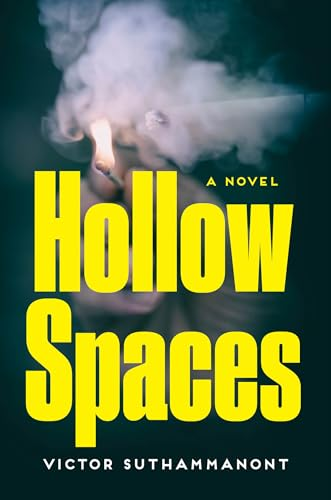
Hollow Spaces, the title of Victor Suthammanont’s debut novel, refers to the emptiness created by emotions such as grief, anger and at times even love.
It’s been 30 years since Brennan and Hunter Lo’s father, John, was acquitted of murdering his lover, they were young children. Yet, for the last 30 years, the unresolved question of whether he was actually guilty or not has divided them.
Brennan only saw the good in her father while Hunter saw only the bad. Their mother, who was betrayed by her husband’s infidelity, did little to help either of her children work through their feelings. Instead, the siblings, who had rarely gotten along, decide to look for the answers to determine whether John was guilty of murder or not. Agreed is the concession that one will acknowledge the other was right all along.
Many witnesses are no longer alive and old police records not easily accessible. Still, they embark on their own private investigation. Brennan’s an attorney; Hunter is a journalist. They’re both adept at research.
Along the way, they receive threats from unknown sources to quit pursuing their search. This makes them suspect they’re on to something.
The narrative is fast paced and characters are well developed, if not always likeable. Brennan comes across as condescending and Hunter is arrogant. Nonetheless, their efforts to know more about the circumstances that tore their family apart all those years ago are intriguing and compelling. In the process they discover they have more in common than once believed.
Hollow Spaces
Three-and-three-quarters Bookmarks
Counterpoint, 2025
374 pages, includes acknowledgements
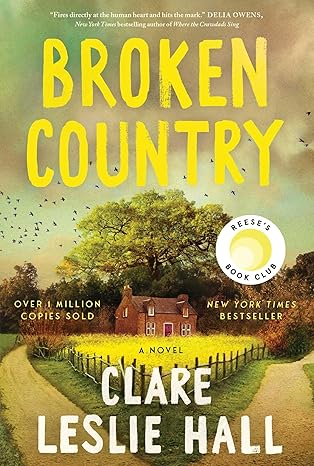
Claire Leslie Hall’s novel, Broken Country, is a study in class differences, miscommunication and reignited emotions, primarily love and guilt.
When Gabriel Wolfe reappears in Beth Johnson’s life years after their brief, but intense love affair ended, not only is her life uprooted, but so is everyone else’s in the small, rural English village (their country) where they live.
Despite the tragedy of losing their young son in an accident, Beth and Frank Johnson have a strong, seemingly healthy marriage. They work the family farm with Jimmy, Frank’s younger brother and they’re well-respected in their community. Gabriel is a well-known author from an affluent background who’s returned to his family’s estate with Leo, his young son in tow. He’s the same age as Beth’s son at the time he died.
Yes, this is a love story, but there is also an element of mystery. The character-driven plot is rich with descriptive images of the rural landscape and the deep-seeded emotions of Beth, in particular. This makes it more her story with the others as supporting actors. Nonetheless, each one is richly nuanced.
The narrative randomly alternates among the past, present and future. This serves not only to inform the reader about previous and existing relationships, but also hints at some of what’s to come. Thus, there’s much that is predictable here, particularly that Gabriel and Beth will once again be drawn to each. Fortunately, there is at least one major surprise that is bound to keep readers engaged.
Broken Country
Four bookmarks
Simon and Schuster, 2025
307 pages