Archive for the ‘friendship’ Tag
History and fiction meet in Daughters of the Sun and Moon by Lisa See in 1870 when the lives of three Chinese women of different backgrounds intersect in the rustic, violent Los Angeles pueblo.
Dove, the daughter of an Imperial Scholar, and Petal, from a poor farming family, are sent to California for very different reasons: Dove to be married to a merchant many years her senior; and Petal to work in a brothel. Moon, one of the fewer than three dozen women already in Los Angeles, is married to the well-liked doctor who practices traditional Chinese medicine.
All three have seemingly impossible dreams: Dove to be loved; Petal to know freedom; and Moon to have a child.
Each chapter primarily focus on one of the women, although there are references to all throughout the narrative. First person voice is used for Moon and Petal; including chapters in Moon’s voice looking back on the events from 1926. Chapters centered on Dove rely on an omniscient narrator.
Except for the few initial interactions among the women, kindness is a rarity since prejudice toward the Chinese in general, and women, in particular, is a major theme. Two kidnappings and tensions between two gangs reach a boiling point that soon involves Anglos and Mexicans pitted against the Asians.
See recounts, in horrific, vivid detail, the real-life events known as the Night of Horrors, when much of the Chinese population is brutally decimated. This is what ultimately brings the trio together in their quest for survival.
Daughters of the Sun and Moon
Four and a half bookmarks
Scribner, 2026
363 pages, includes a note on the history and acknowledgements
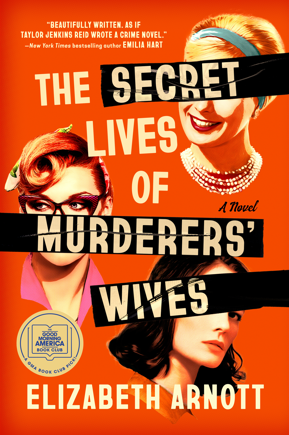
The Secret Lives of Murderers’ Wives is one of those titles that both intrigues and leaves one skeptical about what to expect.
Set in 1966 Southern California, author Elizabeth Arnott strategically references popular songs, fashion and events of the era to set the scene, which takes some edge off this thriller. The three main characters are, indeed, the ex-wives of infamous serial killers now incarcerated.
Their husbands’ notoriety has made the women’s lives difficult; they have few friends and the relationships they do have are mostly misguided. None of the women had a clue regarding the dangerous, and gruesome, lives their husbands led away from home.
Bev is the only one of the three with children; she believed he was the family-man he projected to her and those in their circle. Brash Margo’s husband was former would-be-politician. Elsie works as a clerk at a Los Angeles newspaper (with aspirations to be a reporter). Each man was convicted of horrifically killing multiple women. It’s not entirely clear how the ex- wives met but they do form a bond as victims in their own right.
When several young, local women are found murdered, Bev is the first to suspect there’s a connection; one that’s soundly dismissed by the police. Law enforcement is convinced gangs are involved; Bev is certain one man is responsible. This is when she and her friends begin their own investigation.
The engaging, well-paced narrative leaves one wanting to double check that windows and doors are locked at night.
The Secret Lives of Murderers’ Wives
Four Bookmarks
Berkley, 2026
312 pages with acknowledgements
Buckeye by Patrick Ryan has all the elements of a (good) soap opera: broken relationships, infidelity, family issues and so much more especially, or perhaps, because the setting is a small Ohio town (hence the name).
The fictional work spans six decades, but actual events serve as the backdrop.
Cal Jenkins and Becky Hanover grow up and marry in rural Bonhomie, Ohio. Carl was born with one leg shorter than the other; this made him ineligible to serve later when World War II breaks out. However, it’s VE Day when things begin to change for him. That’s when Margaret, relatively new to town and certainly a stranger to Calvin, walks into the hardware store where he works and kisses him in celebration of the war’s end.
Buckeye begins in the present, moves seamlessly to the past for a brief time, before moving forward. Margaret is married to Felix, but theirs is a passionless marriage; Felix is gay. There’s more backstory. He joins the navy when war is declared and is later lost at sea in the Pacific.
Meanwhile, Becky is preoccupied with her paranormal abilities; Cal is skeptical. It’s not long before Margaret and Cal begin spending more time together.
Ryan’s character-driven narrative is engaging and credible — well, perhaps Becky is less so because of her obsession with reaching the dead. Still, we watch the couples evolve with the times and situations particularly those associated with the numerous lies and secrets that slowly, but predictably, rise to the surface.
Buckeye
Nearly four bookmarks
Random House 2025
452 including acknowledgements
When was the last time you put pen to paper, placed it in a stamped envelope and mailed it? Or, when did you last receive a handwritten letter? These are the explicit unspoken questions lingering within the pages of The Correspondent by Virginia Evans. Plenty of implicit ones fill the pages.
The novel is a series of letters written by 70-something Sybil Van Antwerp . Through years of letter writing, Sybil’s daily routines, her history, emotions and relationships are revealed. Her complexities are relatable. She is kind, ornery and persistent. She writes letters to authors, friends, her brother, the son of a former colleague and many, many others. Sybil has much to write about; she’s a retired lawyer, avid reader, mother, divorcee and lifelong learner.
Yet, for all these qualities, she’s not entirely likeable. She holds a grudge and misses a lot that’s right in front of her. Some of this is due to her diminishing eyesight, but more can be attributed to her stubborn personality. When opportunities arise to make amends, she’s a mixed bag. She extends olive branches to those with whom she had peripheral contact, while refusing with family members, including her dying ex-husband.
Evans is heavy handed when it comes to lessons to be learned such as establishing and maintaining relationships. Sybil is not completely aware of the impact of her letters. Still, Sybil’s commitment to written correspondence is commendable, particularly considering her frequent lack of face-to-face social skills.
Nonetheless, it’s time to buy some postage stamps.
The Correspondent
Three and three-quarter bookmarks
Crown 2025
285 pages including acknowledgements
(I’m back. I took a blogging break, but reading continued as usual: a lot. I’m not sure I’ll blog about everything that I read over the past (too many) months since I last posted, but thanks to a friend’s encouragement I’m reigniting my passions of reading and writing.)
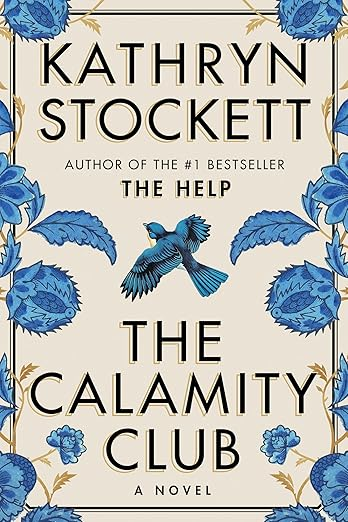
When I picked up my copy of The Calamity Club from the library (a book with an exceptionally long wait list), I was thrilled until I realized it was more than 600 pages. Once I started reading, I forgot about the weight — er number of pages — and couldn’t put it down.
Set in the depression in Oxford, Miss., Kathryn Stockett’s novel has multiple intertwining threads, yet none get tangled enough to be confusing. All address some heavy, intense issues in an often amusing, but always poignant manner.
Birdie is a hardworking, intelligent, unmarried woman. She’s perceptive and speaks her mind. She goes to Oxford to learn why Frances, her newly-married, social-climbing sister, hasn’t communicated with anyone in the family. Frances and her husband live with his mother in their well-appointed home.
Eleven-year-old Meg has been abandoned by her mother and is considered “unadoptable” at the county orphanage where the sadistic director is particularly harsh toward her. Meg is witty and resourceful in spite of her situation.
Birdie and Meg are only two of the many, many interesting characters inhabiting the pages. All have distinct voices/personalities. The setting is vividly described and the hardships of the era are palpable.
A myriad of secrets, including some surprising connections, and a unique, actually kind of crazy, solution to solving the problems associated with poverty, racism and abandonment converge in some laugh-out-loud and tear-sniffling moments.
Stockett’s last book (The Help) was published in 2009. It was worth the wait for The Calamity Club.
The Calamity Club
Five bookmarks
Spiegel & Grau, 2026
656 pages
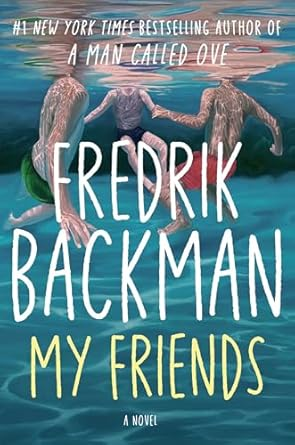
Just as the title, My Friends, implies Fredrik Backman’s novel is about friendships both those in the past and an emerging one.
Louisa has grown up in foster homes and just turned 18. Her best friend, Fish, has recently died leaving her completely on her own.
Through a random, and hard to believe, encounter with a famous Artist in the back alley of an art gallery, they graffiti a wall together. She learns he’s the artist she’s long admired; he sees she’s a talented artist. Before he dies shortly thereafter, he instructs his friend, Ted, to find Louisa to give her the painting that first brought him worldwide attention. It’s one she’s been obsessed with most of her life.
That chance meeting changes her life and thus begins a journey to learn more about the artist and herself. Despite’s Ted’s reluctance and discomfort to have Louisa as his companion, they embark on an adventure that occurs simultaneously as he shares the story of how he, the Artist and two other friends spent the summer they turned 15.
Backman, through Ted, details how the painting came to be, illustrates the close bonds the friends shared and describes their unprivileged backgrounds. Louisa easily relates to having never had much and still carries memories of Fish close to her heart.
Backman injects humor in this often poignant, predictable work. It’s about the strength of friendship, perseverance and the ability to survive through unlikely circumstances.
This is a story about friendship, perseverance and survival.
My Friends
Four Bookmarks
Astoria Books, 2025
436 pages, includes acknowledgements
Four bookmarks
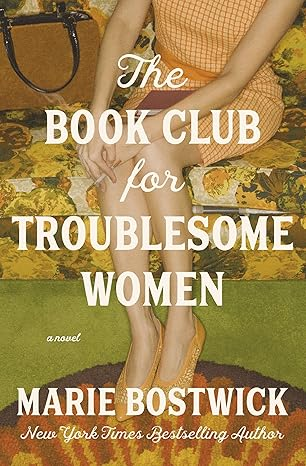
Set in 1960s in a northern Virginia suburb of Washington, D.C., Marie Bostwick’s novel, The Book Club for Troublesome Women is a misnomer– at least by today’s standards.
The housing development where the women live is new, so none of the neighbors know one another well. After visiting the local bookstore, Margaret Ryan decides to form a book club. She invites three other women to discuss Betty Friedan’s The Feminine Mystique, which has just hit the shelves. The group calls itself The Bettys.
Bostwick ascribes interesting attributes to each woman. Marilyn, Viv and Charlotte are all married with children. Charlotte is brash and creative unlike anyone Marilyn has ever met. Bitsy, the youngest and married to a much older man, is desperate to get pregnant.
The novel focuses on the personalities and friendships, which are initially in line with the times in which they live. This is primarily focused on the sexism they face in their marriages and outside their homes. Slowly, and predictably, as the women grow closer they begin to change by challenging the norms of the day.
There’s plenty of humor and nostalgia, even for those who weren’t part of that era. The women’s frustrations at not being taken seriously are palpable, but so is their joy when they are.
The final chapter takes readers to the early 2000s. As for the title, these women aren’t troublesome; rather they’re brave, progressive and evolve to become defiant. There’s little that’s unexpected, but it’s a fun read nonetheless.
The Book Club for Troublesome Women
Almost four bookmarks
2025, Harper Muse
371 pages, including acknowledgements and Discussion Questions
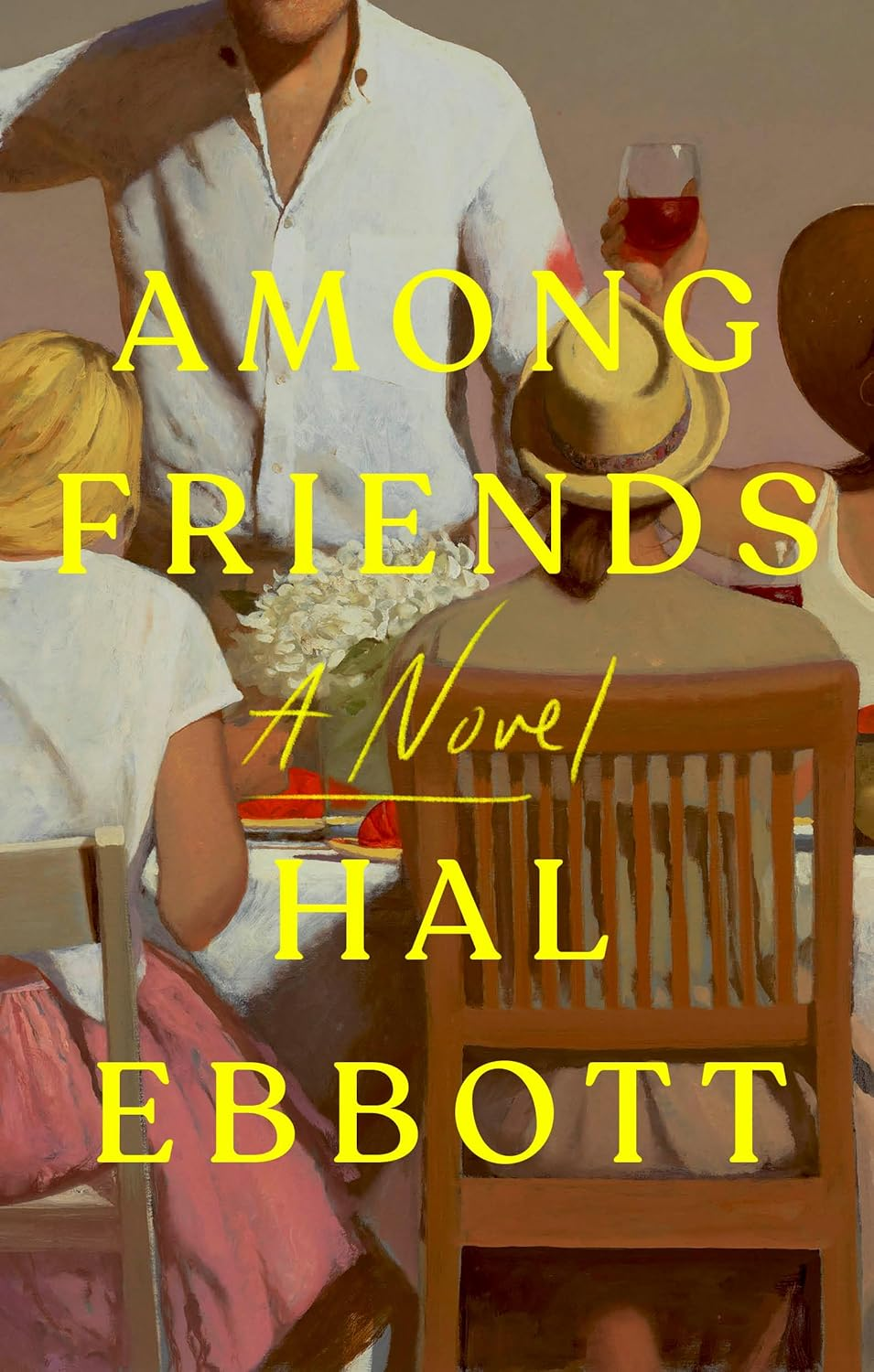
Years ago I gave myself permission to stop reading if I couldn’t get into a book. I should have heeded my own consent with Among Friends by Hal Ebbot. I finished it, although with effort. I felt obligated because it was a book group selection.
The novel focuses on the long-standing friendships between two families: Amos, Claire and daughter Anna; Emerson, Retsy and daughter Sophie. Although from different social backgrounds, the men have been best friends for more than 30 years. Emerson and Claire, both come from privilege, have known each most of their lives. The teen girls have grown up together.
They’re together at Emerson’s country home in upstate New York to celebrate his 52nd birthday. Yet, something’s off; there’s an unstated, and apparently unusual, competition between the men.
Later, when Emerson finds himself alone with teenage Anna, something occurs that has the potential to change all their lives. Anna initially doesn’t tell her parents, but when she does they’re torn as to not only what to believe, but more importantly who.
The narrative then gets bogged down with too much about their pasts and it’s easy to question why they’re even friends.
Although Ebbott creates credible tension both with Anna and her parents, along with the adults’ responses, who care?! Retsy and Amos believe Emerson is capable of Anna’s claims; Claire’s ready to dismiss her daughter’s accusation and Emerson is certain he can manipulate the truth.
The characters aren’t people I’d want to know; reading about them was enough.
Among Friends
Two-and-half bookmarks
Random House, 2025
320 pages
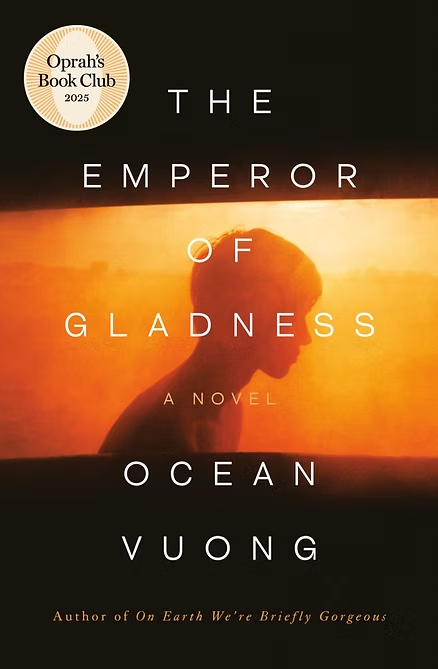
College dropout and drug addict Hai, is about to jump off a bridge in East Gladness, Conn., when he’s talked down by Grazina, an elderly widow, who then invites him into her nearby, rundown home. This is the beginning of Ocean Vuong’s novel The Emperor of Gladness. What ensues is a look at how creating a family can evolve from unlikely relationships.
Hai has lied to his Vietnamese mother about still being in school and, among other things, his sexuality. In fact, he elaborates telling her he’s in medical school. As his friendship with Grazina evolves, he becomes her unofficial caretaker, ensuring she talks her medications and helping her as she relives traumatic flashbacks from when she escaped the war in Lithuania. Nonetheless, she sinks deeper into dementia.
When it becomes clear the pair needs money, he joins his cousin Sony, like the electronics brand, who works in a fast casual restaurant with a group of misfits.
The characters, like the novel itself, are both sad and funny through their distinct personality quirks. Their desperateness is palpable. Sony, who is otherwise not exceptionally bright, is a Civil War savant. Sonny’s mother is in jail and he believes his father is living in Maine.
Vuong’s descriptions are vivid but occasionally longwinded. Despite the author’s colorful details, it’s easy to visualize the desolate town of East Gladness.
Hai’s co-workers at the restaurant are equally adrift, each with their own feelings of loneliness while they unknowingly search for connections.
The Emperor of Gladness
Four Bookmarks
Penguin Press, 2025
402 pages
When Phoebe Stone abruptly leaves her Midwest college teaching job at the beginning of the semester, she heads to an upscale hotel on the Rhode Island coast. It’s a place she’d always dreamt of going with her husband, but he’s left her for another woman and Phoebe needed to get away; she’s had enough.
Alison Espach’s humorous and compassionate novel, The Wedding People, is as much about self-discovery as it addresses misplaced emotions, chance encounters and probable bad decisions.
The hotel is booked for a weeklong private affair and Phoebe is easily mistaken as a wedding guest; albeit without any luggage. It’s a large group of family and friends. No one takes particular notice until the bride, Lila, realizes Phoebe’s presence has the potential of ruining the festivities. Lila has planned everything, while sparing no expense, practically down to the minute. The unanticipated presence of a stranger could ruin everything.
Yet, Phoebe intrigues Lila, who spends time in the older woman’s room regaling her with the efforts involved in planning the wedding. Phoebe learns how Lila met her fiancé, the relationships she has with her mother, her sister-in-law to be and many of the (invited) guests.
Phoebe assures Lila that she has no intention of being a disruption: she plans to stay at the hotel one night and not interact with anyone. This soon goes awry.
The engaging, well-paced narrative, full of nuanced characters, leads Phoebe to a better understanding of herself, an acceptance of others, new friendships – and more.
The Wedding People
Four Bookmarks
Henry Holt and Co., 2024
367 pages, includes acknowledgements