An Orchestra of Minorities by Chigozie Obioma is creatively written drawing on Nigerian folklore to tell a modern story of love, personal freedom and expectations.
Chinonso, a chicken farmer, meets Ndali, a young woman about to jump off a bridge. He convinces her not to leap, and they go their separate ways. His parents are deceased, his sister estranged. Ndali is in pharmacy school and is the daughter of a wealthy family. She tracks him down, they fall in love, and happily ever should come next.
Of course, her parents disapprove not just because he is a chicken farmer, but because he isn’t well-educated. He decides to pursue a college education knowing it will be a long process. An old friend arrives boasting of life in Cyprus where it’s easy to find a good-paying job and finish college in less time than in Nigeria. The friend makes the necessary arrangements; Chinonso sells his flock, his house, gives his friend money and leaves Ndali to become a better man.
Chinonso’s chi, inner spirit, narrates Chinonso’s story to the Igbo deities, of which there are several. Most paragraphs, directed to one or more in particular, are full of lengthy details foretelling of something ruinous to come motivated by Chinonso’s deep love for Ndali.
Chinonso believes in his decision; Ndali is less sure. His journey is a roller coaster of hope and despair, which the reader shares with Chinonso. This is far from uplifting, yet the narrative lingers long after the last page.
An Orchestra of Minorities
Four Bookmarks
Little, Brown and Co., 2019
448 pages
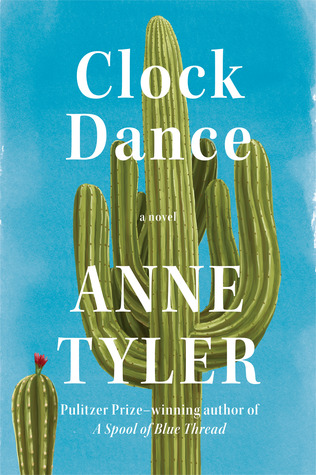
Clock Dance is distinguished from Anne Tyler’s other works because of its setting. Yes, Baltimore does figure into the plot, but not immediately. Other locales provide the initial settings. The story doesn’t come alive, though, until the main character arrives in Charm City.
Three phases of Willa Drake’s life ultimately influence her character: as a child when her mother randomly, and temporarily, leaves the family; as a college coed considering whether or not to accept a marriage proposal without finishing her degree; finally, in her sixties when she receives a call to come to Baltimore from Arizona to care for Cheryl, the 9-year-old daughter of her grown son’s injured ex-girlfriend, Denise. Yes, that’s a tenuous connection.
Before Baltimore, Willa is widowed when her boys are teenagers. They grow up, she remarries and has little communication with them. The surprise request is from Denise’s neighbor who sees Willa’s number on a list of emergency contacts. It takes some persuasion, but Willa agrees to help people about whom she knows nothing. In the process of caring for others who need her, Willa discovers a sense of belonging she hasn’t experienced.
Tyler’s characters are vulnerable, real and endearing. Cheryl is a no-nonsense kid whose strong sense of independence comes from being the daughter of a single mother. The author brings Baltimore to life through descriptions of Denise and Cheryl’s neighborhood and its quirky residents, of which there are many.
Although somewhat predictable, Clock Dance is a charming tale of the need to belong.
Clock Dance
Four+ Bookmarks
Alfred A. Knopf, 2018
292 pages

The Los Angeles Times Food Bowl is more than a celebration of food, although it certainly plays a major role. It’s also about the city’s culture and the various neighborhoods comprising the metropolitan area. Each contributes to the literal and figurative flavor of the city. Time constraints restricted us to only two of the month-long events – although we did dine at other restaurants during my recent five-day visit.

Every Wednesday in May Momed has offered an “Immigrant Dinner” featuring cuisine organized by an immigrant friend of the restaurant. We hit on Taste of Iran with guest chef Bita Milanian. The menu featured two appetizers and three entrees. We ordered one of everything. The most unusual, or new to me, was the Borani-e-labu. Diced roasted beets mixed with Persian yogurt gave this soupy, savory starter the color of cotton candy. (Sorry no photos.) The only problem was not enough pita with which to sop it up.
 Each entrée featured a blend of ingredients rendering it new to the palate: Kufteh: combined fresh herbs, ground beef, rice, barberries and walnuts. This was softball-size in shape and dressed with roasted yellow and red peppers.
 Fava beans, lentils, pomegranate seeds, citrus, raisins, other rices and dates were among other components incorporated into the dishes.
Momed is short for Modern Mediterranean. It’s located in a residential area of Atwater Village.
Momed
3245 Casitas Ave.
Los Angeles, Calif.

Across town we enjoyed another LA Food Bowl event: Frites Fete at 189 by Dominque Ansel. This focused on something completely different: frites, aka pommes frites are French fries.

The three-course meal began with an endive Caesar salad served with a cloud-like gougere made with gruyere, hints of nutmeg and chili pepper. The entree choices were a choice of moules frites, steak frites or mushrooms. We all wanted the steak, but were curious about the mussels. Fortunately, we were able to order an appetizer serving, which was plenty. This was creamy, rich and as decadent as dessert.
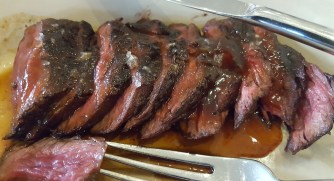
Thinly sliced pieces of rare hanger steak in a house made demi glace was tender and grilled to perfection.
Of course, the frites were meant to be the star of the evening, but were overshadowed by the entrees. Still, the seasoned, crispy yet pliable fries were not the stuff of fast food establishments.
Dessert included a choice of tarte tatin: a puff pastry base topped with caramelized apple, caramelized banana or spiced pear. My favorite was the Fosters-like banana served with a generous dollop of crème fraiche.
In addition to what was served, was how. We had an exceptional server who was attentive, patient and had a good sense of humor – all were appreciated.
Ansel is, perhaps, best known for creating the cronut in New York City years ago. He opened a bakery and 189 in The Grove in Los Angeles in 2017.
189 by Dominque Ansel
The Grove Drive
Los Angeles, Calif.
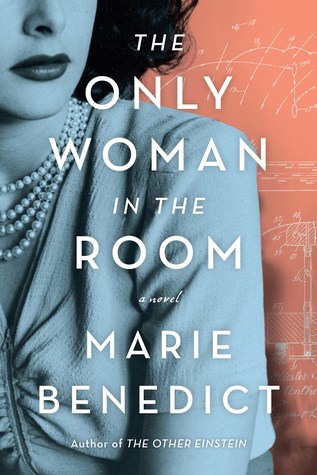
Marie Benedict has a knack for fictionalizing life stories of impressive, impactful women. The Only Woman in the Room is her latest endeavor. Hedy Lamarr, screen star of the 1940s and 50s, isn’t the first person who comes to mind as a significant World War II figure. Further, as an inventor she deserves more credit than many realize.
Hedweg Kiesler was born in Vienna into a wealthy, Jewish family and considered a stunning beauty. Initially, Benedict’s account of Kiesler/Lamarr is focused on her early stage career leading to her marriage to Friedrich Mandl, a munitions manufacturer.
Mandl is older, wealthy and powerful. Hedy’s father fears any rejection on Hedy’s part toward Mandl’s romantic interest could put the family in danger. Initially, Hedy is not impressed by the riches (and roses) he dispenses so freely to woo her. Eventually they marry after she succumbs to his charms.
The novel’s title is an apt description of Hedy’s presence which is dismissed as one of no consequence. She’s considered no more than a beautiful woman. What she learns, however, are plans for Austria to first join forces with Mussolini; and later Hitler. She knows she needs to escape, not only the fate of her country, but the abusive relationship with Mandl, who simply wanted a trophy wife.
Danger and intrigue are tangible elements in Keisler’s life; fame and romance comprise Lamarr’s. Yet, Benedict shows something deeper by chronicling the transition from refugee to film siren to wireless communications inventor.
The Only Woman in the Room
Four Bookmarks
Sourcebooks Landmark, 2019
254 pages
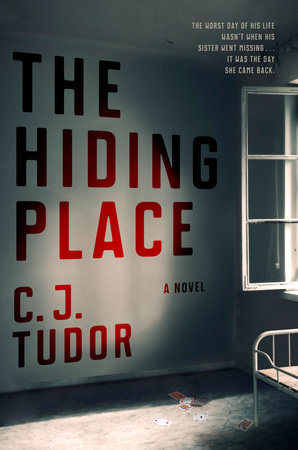
Creepy is the best way to describe The Hiding Place by C.J. Tudor. The setting, the characters and the story itself are all disturbing. It’s difficult to appreciate a book with no likeable characters; yet the author successfully creates an unsettling story that goes beyond masses of beetles crawling out of walls.
Narrator Joe Thorne returns to his hometown, a run-down former mining town in rural England. It was never a thriving community, but its position at the edge of economic ruin makes the old days not look so bad in Joe’s eyes. It’s clear he’s returned to settle a score. Yet, there are so many twists and characters lacking empathy, interest or both, that the obvious question of why hangs too heavy over the narrative.
Joe is a teacher, a liar, a gambling addict and also, somehow, a victim. He left his previous job under suspicious circumstances but is able to con his way into a teaching position at the school he attended as a youth. Many of Joe’s old pals are still in town, but it’s clear these are no longer friendly relationships. Another unfriendly sort is Gloria, a thug hired by the Fatman to collect the gambling debts Joe has amassed.
Before Joe’s arrival, a murder/suicide has occurred in the very cottage he knowingly chooses to rent. A mother has killed her son before turning a gun on herself. This strikes Joe as hauntingly familiar even though nothing in his past suggests something similar. Until it does.
The Hiding Place
Three-and-half Bookmarks
Crown Books, 2018
278 pages

The Air You Breathe by Frances De Pontes Peebles gifts readers with an expansive, beautifully-written view of the ebbs and flows of deep friendships.
Dores, whose existence is shaped by her role as an orphan on a Brazilian sugar plantation, narrates the story. Her life changes when Graca, the spoiled, young daughter of the sugar cane baron, arrives. The two are opposites in every way. It is no surprise that their attraction is the impetus for their future endeavors.
Since there are no other children her age, Graca’s parents enlist Dores as playmate and study companion for their daughter. Despite spending much of her life up to this point working in the kitchen, Dores is a good student, much better than her friend. Yet, Garca possesses all of the advantages that will contribute to her success: beauty, a mesmerizing voice, a strong will and privilege.
The narrative begins with Dores looking back on her past, specifically the success of Graca, who becomes legendary Samba singer Sofia Salvador. The trajectory from rural Brazil to Rio de Janeiro to Hollywood is more than a rags-to-riches story. Each chapter begins, or ends depending on perspective, with the lyrics Dores has written and made famous by Sofia/Graca.
The characters are lively, the street scenes vibrant and the pulse of the 1930s and ‘40s sets the rhythm. The connection between the two women is full of joy and anguish, frustration and pride. Dores and Graca need each other, despite often wishing this was not the case.
The Air You Breathe
Five Bookmarks
Riverhead Books, 2018
449 pages

The Library Book might be better titled The Los Angeles Central Library Book. Author Susan Orlean provides an exhaustive history of the downtown LA library. The 1986 fire that destroyed four-hundred- thousand books and other materials including periodical, numerous collections and caused extensive damage to the building is the starting point for her overview.
The fire, how it started and efforts to rebuild are the most engaging aspects. While the Central Library isn’t exactly a phoenix rising from the ashes, it’s close. Arson is suspected and one suspect, since deceased, is profiled in great detail. Harry Peak is a charismatic wanna-be actor. He was also a chronic liar. He lied to friends, family, arson investigators and attorneys.
Orlean incorporates a fun, clever approach to each chapter citing four references that provide context for what will follow. For example, it’s clear from the sources cited that Chapter 11 will be about fund raising.
Where the narrative bogs down is in the history of the library’s various directors. Granted, some were more colorful, more resourceful, less interesting, less impactful than others. These chapters were on the dry side.
The most fascinating aspects, in addition to the learning about the fire itself, were learning about the librarians, their specific job descriptions and their commitments to the library and its patrons.
It’s clear Orlean has a deep respect for the roles libraries serve, but there was too much in her book that is the stuff of trivia competitions, something that doesn’t appeal to me.
The Library Book
3 Bookmarks
Simon & Schuster, 2018
319 pages (including notes)
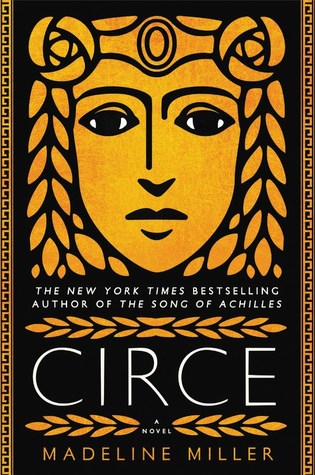
Circe by Madeline Miller is a who’s who of Greek mythology in the best way possible. This is a tale of desire through its various expressions, mortality/immortality and love in its many different forms.
Miller has fictionalized the life of Circe, the Greek goddess. It was she who transformed the beautiful nymph, Scylla, into the six-headed sea monster responsible for the deaths of numerous sailors in a narrow channel linking two seas.
Circe, the unfavored daughter of Helios the sun god and Perse, is exiled to the island of Aiaia. Despite her isolation, she comes in contact with others associated with the Odyssey. Before she meets Odysseus, however, Hermes, Jason, Medea and Daedalus are among those she encounters.
She is granted a brief respite from exile to assist her sister who gives birth to the Minotaur. Daedalus, father of Icarus, builds the labyrinth in which the half-man half-bull was confined. Circe and the mortal craftsman return to Aiaia. While this is a significant relationship, it is Odysseus who later claims Circe’s heart. This despite transforming his men into pigs and knowing his wife, Penelope, awaits his return.
In exile, Circe is only deprived of constant companionship. Otherwise, all of her needs are met. She discovers, through trial and error, the powers of the flora around her. Readers also learn the gods are ageless – to such an extent that Circe is hundreds of years old, with no physical evidence. Ultimately, this serves as a catalyst for her to attempt her greatest transformation ever.
Circe
Five Bookmarks
Little, Brown & Co., 2018
393 pages

Maud is the 88-year-old Elderly Lady up to No Good in Swedish writer Helene Tursten’s terse collection of short stories.
Most of what Maud is up to is murder. She’s an unlikely bad guy (gal), and not just because she’s a woman, It happens that murder is the way she solves a lot of problems; they are often not even her own issues.
Alone and living rent-free in a Gothenburg apartment, Maud’s housing situation is challenged when a demanding artist moves into a smaller apartment. Maud grew up in the spacious living area she still inhabits. A clause in her late father’s will stated that she and her older sister would be allowed to remain until their deaths. Her sister has been dead for 40 years and Maud has no intention of relinquishing her apartment anytime soon.
When not busy plotting how to rid herself from the artist’s attention, she enjoys traveling. Although each of the five stories is a stand-alone narrative, all are tied to Maud’s apartment and travels. The latter often provides an alibi.
Tursten’s writing is witty . The main character takes advantage of ageism and misperceptions to get away with, literally, murder. Even though Maud is not a sympathetic character her actions are not completely unjustified. Extreme certainly, but often warranted.
An Elderly Lady is Up to No Good
Four Bookmarks
Soho Press, 2018
171 pages