
Even if there’s no birthday celebration on the near horizon, Gaile Parkin’s Baking Cakes in Kigali will make you wishing for a piece of homemade cake.
Reminiscent of Alexander McCall Smith “The No. 1 Ladies Detective Agency,” Parkin introduces readers to Angel, who bakes cakes in her apartment and helps, by design or coincidence, her friends and neighbors solve problems of which they are often unaware and in the process dealing with her own.
Angel and her husband Pius are originally from Tanzania, but have moved to Kigali, Rwanda, because of his consulting job. Their two grown children have died from AIDS leaving behind their five children in the care of Angel and Pius. Angel’s grief for the deaths of her adult offspring lies just beneath the surface, overshadowed by her involvement with others and dealing with hot flashes.
Angel bakes cakes for all occasions. Her clients visit her home where she makes them tea while discussing the type of cake that will be most suitable. Some clients have a clear, specific idea in mind, while others are less certain.
Angel is always happy to offer suggestions, although she might sometimes disagree with the reason for which the cake is celebrating/acknowledging.
Parkin introduces a variety of characters representing a range of life experiences and means. Each is carefully portrayed making it easy to share Angel’s sympathies or distrust. Initially it seems that each chapter is a separate, independent story, but they all come together in a fun, albeit predictable, fashion.
Baking Cakes in Kigali
Three-and-a-half Bookmarks
Delacorte Press, 2009
308 pages
A recent trip to Mexico, as with previous visits, was a sensory treat. Besides the beautiful sites, thanks to the generosity of my cousins in San Luis Potosi in the central part of the country, we were indulged with exceptional meals.

I’d heard about enchiladas Potosinas, and was happy they were served the night of arrival. This set the bar for subsequent foods. Shaped more like empanadas, red sauce-infused corn tortillas are stuffed with cheese and salsa. They’re lightly fried for a crispy exterior texture that contrasts with the creamy cheese filling.
My cousins provided numerous opportunities to sample other dishes popular in the region, including gorditas, sincronizadas, chiliaquilles, enmolladas and fundido with chorizo.

Sincronizadas can best be described as stacked quesadillas. Ham, cheese, salsa between layers of flour tortillas made this an especially flavorful brunch that also included beans and freshly-made green salsa. Although, normally served as a snack or simple meal, molletes were added to the menu simply because my cousin knows I like them and it was our last day in Mexico. It was far too much food, yet far too difficult to stop eating.

Part of our trip we began one day in Guanajuato with chilaquilles covered with pasilla sauce and ended it with enmolladas (mole enchiladas) and tamarindo margaritas in San Miguel de Allende. Not a bad way to dine/visit.
Tacos are part of the national cuisine, so our stay would have been incomplete without them. Fortunately, the tacos al pastor, among others, at Taqueria Arandas ensured our palates, and stomachs, were well-sated.

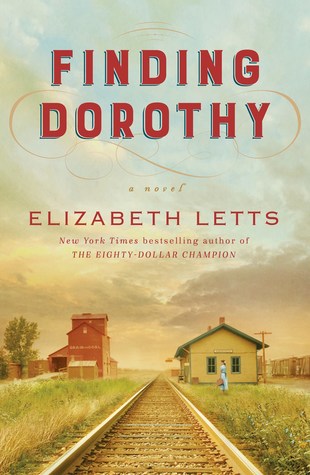
The land of Oz serves as the backdrop in Finding Dorothy by Elizabeth Letts, but it’s more than a look behind the green curtain where the wizard was hiding.
The novel’s timeline alternates between 1938 when filming on the MGM classic took place and the life of Maud Baum, whose husband Frank authored the beloved series.
Beginning in 1871, this novel, based on fact, chronicles Maud’s childhood as the daughter of a suffragette, her experience at Cornell University where she was one of 19 women in a class with more than 200 men, and how she came to meet, then marry Baum.
The chapters set in 1938 show Maud striving to impress upon the movie’s power team the importance of staying true to her husband’s book. This, she’s convinced, depends on Judy Garland being able to project Dorothy’s innocence and hope. Maud sees this threatened by the movie studio’s efforts to control Garland through a regimen of diet and sleeping pills. Thus, Maud reaches out to protect the young actress.
The chapters concentrating on Maud’s life are a glimpse into the whimsical nature of her husband, the efforts for women’s right to vote, hardscrabble life on the North Dakota plains and her struggle to find meaning in her own life.
Letts deftly defines the various time frames and landscapes. Even though readers know the ultimate success of the movie, it’s Maud’s growth that is most captivating. How Frank came to write the Oz stories their popularity merely provides the framework.
Finding Dorothy
Four Bookmarks
Ballantine Books 2019
351 pages

Next Year in Havana by Chanel Cleeton offers an insightful look into Cuba’s history. The trouble is having to wade through the predictable romance stories it’s centered around. Yes, the plural form of story is intentional.
The first begins in 1959 with the Perez family, whose fortunes were built through several generations on sugar production. Nineteen-year-old Elisa has two older sisters, a much younger sister and a brother who’s been banished from the family for his politics. Elisa is first introduced as the family does its best to leave Cuba. Fidel Castro has just taken over the country and the wealthy are being stripped of their status and riches.
The alternating story, set in 2017, revolves around Marisol, Elisa’s granddaughter, who has been tasked with taking her grandmother’s ashes to be scattered in Cuba. There she discovers there was much about Elisa she didn’t know, including a past love, while also embarking on a romantic relationship of her own.
Elisa’s story recounts her affair with a revolutionary, while Marisol strives to learn more about this part of her grandmother’s life. In the process she is attracted to Luis, the grandson of Elisa’s best childhood friend.
Luis is a history teacher at the university in Havana. He serves not just as a tour guide of Cuba’s, but also its political history. As Luis notes, a lot has changed but not much is different in the island nation.
Cleeton manages a few surprises; otherwise the novel’s strengths lie in the historical references.
Next Year in Havana
Three bookmarks
Berkley. 2018
356 pages, plus Reader’s Guide and an excerpt from Cleeton’s next novel

Initially, it was the title of Jackie Copleton’s novel, A Dictionary of Mutual Understanding, I found intriguing. Fortunately, as the story progressed, so did my interest.
The novel begins with Amaterasu opening her front door to a disfigured, middle-aged man claiming to be her grandson, Hideo. He was presumed dead 40 years ago following the bombing of Nagasaki. Amaterasu’s daughter was also killed on that fateful August day. Hideo bears the scars of radiation making it difficult to discern any recognizable features. He gives Amaterasu a sealed box of letters written by Sato, his adoptive father, the same man with whom she shares a history she prefers to forget.
The narrative moves back and forth in time to life before and after the bomb based on Amaterasu’s memories, her daughter’s diaries and Sato’s letters. Hideo has no memories of his life before the bombing. He has no stories to share with Amaterasu to convince her he is, indeed, her grandson. She refuses to consider the possibility, yet she meets with Hideo on multiple occasions.
Copleton begins each chapter with an explanation of some aspect of Japanese culture. This is both interesting and helpful in trying to understand Amaterasu’s mindset. She is old and alone following the death of her husband of many years. They left Japan long before in a hopeless effort to try to forget their losses.
Hideo’s fortitude and patience are tested in his efforts to convince Amaterasu of their connection and she must consider her past relationships.
A Dictionary of Mutual Understanding
Three-and three-quarter bookmarks
Penguin Books 2015
292 pages
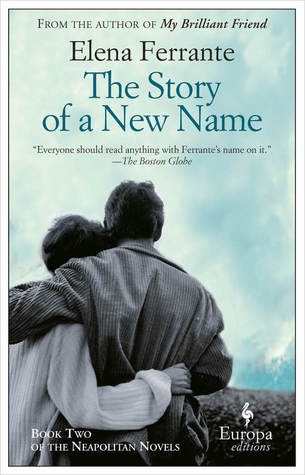
Italian novelist Elena Ferrante has hooked me with The Neapolitan Novels. Book Two, The Story of a New Name, picks up where My Brilliant Friend abruptly ended: at a wedding. The narrative moves forward while looking back to further develop the characters and plot line.
The friendship between Lila and Elena is based on the appreciation each has for the other’s intellect. However, due to family circumstances only Elena is given the opportunity to pursue a formal education. Lila studies independently. She is also newly married to the wealthy shopkeeper, but her volatile personality remains unchanged. She soon discovers, in her marriage, that her ability to get her way has more dire consequences than when she was younger.
Much of the beauty of Ferrante’s writing, translated by Ann Goldstein, lies in the vivid descriptions of the small town near Naples where much of the action takes place and of the characters she has created. Some are thoughtful, driven and kind, while others are impulsive and mean, some are smarter than others. None are one-dimensional.
After the wedding, Elena continues in high school where she excels as a student, despite some ups and downs. As the story progresses, life’s responsibilities take hold: military service, work and families. Elena’s education continues in Pisa. Lila has an affair with the young man who Elena has long been attracted to.
This may sound like a soap opera, but in Ferrante’s hands it is a moving story about choices, opportunities and testing the bonds of friendship.
The Story of a New Name
Four Bookmarks
Europa Editions, 2013
471 pages

Dust Bowl Girls by Lydia Reeder focuses on a group of young women from various parts of rural Oklahoma in the early 1930s. It’s been call the counterpart to Daniel James Brown’s The Boys in the Boat in that it highlights overcoming adversity. Whereas the boys rowed their way to fame in the 1936 Olympics, the young women are basketball players. Their glory was limited to a championship season. As Reeder recounts, however, what a season it was!
In addition to profiles of the players and coach, the author provides vivid descriptions of the hardscrabble era, a history of women’s basketball, and attitudes toward women sports in general. For instance, the sport was considered unladylike. This was reflected in the rules governing uniforms and rules. Although it’s interesting, these aspects are frequently repeated, with little variation. Consequently, it appears as padding more than insightful content.
What may be most striking is that the women, most in their late teens, played for the Oklahoma Presbyterian College Cardinals on full scholarships. Many were farm girls, whose families would not otherwise have been able to afford to send them to college. Their basketball skills were often gleaned on dirt patches; these were strong, talented players.
During the Depression era, it was common for businesses to sponsor women’s teams as promotional enterprises. The Cardinals faced opponents from other small schools and non-academic teams. Olympic medalist, and later women’s golf pro, Babe Didrikson was a member of the latter. Hers was the team to beat.
Dust Bowl Girls
Three and three-quarter Bookmarks
Algonquin Books, 2017
286 pages, including epilogue and notes

That Kind of Mother by Rumaan Alam makes one wonder whether to emphasize the word that with a judgmental tone or of nonchalance. In either case, Jacob is Rebecca Stone’s firstborn who fills her with love and anxiety; she is certain she doesn’t know how to mother. Thanks to Priscilla, the kind, easy-going La Leche League liaison, Rebecca gradually gains confidence as a new parent. However, this slow-to-reach self-assurance is, initially, completely dependent on Priscilla to the point that Rebecca offers the African-American woman employment as Jacob’s nanny.
The situation allows Rebecca to pursue her endeavors as a poet. It also creates a strong friendship between the two women that transcends race and maternal roles. A few years later, when Priscilla becomes pregnant and dies during childbirth, Rebecca immediately offers to adopt the baby. Rebecca’s husband uneasily goes along with the plan. Rebecca’s adult daughter, who is also expecting a child, agrees. The result is a melding of the two families, but less so of the different cultures.
Rebecca has grown up with privilege and her marriage to Christopher, an older, English diplomat, allows her to maintain the lifestyle to which she’s accustomed. Consequently, she’s made a lot of assumptions regarding race. Even after formally adopting Priscilla’s son, there is much she misunderstands.
Interestingly, Alam writes from a female perspective, and gets things right. His writing is engaging as Rebecca’s life, her family and career undergo major changes leaving the reader to question how else to face similar experiences.
That Kind of Mother
Four Bookmarks
Ecco, 2018
291 pages
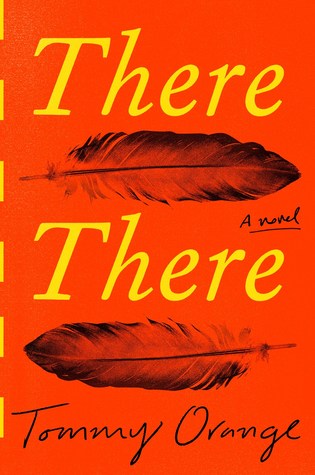
In the late 1930s Gertrude Stein wrote of Oakland, Calif., “… there, there is no there there.” It’s apt, then, that Tommy Orange has co-opted part of the quote as the title of his novel. Orange introduces readers to several Native Americans whose lives intersect in the city on the East Bay.
Never as glamourous, wealthy or viewed in as positive a light as San Francisco, Oakland is, nonetheless, the focal point for Orange with different perspectives provided by the 12 characters he introduces. Their stories, told in separate chapters, are shaped by the urban environment and the upcoming Big Oakland Pow Wow.
Violence, alcoholism, out-of-wedlock pregnancies, traditions, estranged families and more are contributing factors to the scenarios Orange creates. Most are heart-breaking, yet humor and joy are also evident.
Opal Viola Violet Bear is first introduced as an 11-year-old in 1970 when her mother brings her and her older sister, Jacqui, to Alcatraz as part of the all-tribe occupation. She re-enters the story through the eyes of her grandson, Orvil Red Feather. Except, technically, Opal is Orvil’s and his two younger brothers aunt. Although his name clearly identifies his heritage, he knows little about it. He discovers dance regalia in Opal’s closet. He learns what he can about Indian dance and culture online. The Pow Wow is his chance to be part of something he knows very little about.
Reasons for the others to attend the Pow Wow range from dark to hopeful, which makes the narrative so engaging.
There There
Four Bookmarks
Alfred A. Knoph, 2018
290 pages

Kent Haruf’s slow moving, methodical novels immediately embrace readers. Eventide is no exception. The setting is rural Colorado, where seasons dictate life’s pace.
Haruf reintroduces several characters from his bestselling Plainsong, including brothers Harold and Raymond McPheron, Victoria Robideaux and Colorado’s eastern plains. The McPherons, who have spent their entire lives working side by side on the family farm, have never married. Victoria, the unwed teenage mother they took in in the previous novel, is ready to leave for college with her young daughter. The impact the mother and child have had on the McPherons is tangible; their reaction to the pair leaving is parental.
Yet theirs is only part of the narrative. Holt is a small town, where, it seems, everyone is acquainted, whether personally or indirectly, with everyone else – or at least knows of their business. There’s Luther and Betty, with their two children, living on food stamps who meet regularly with a social worker, Rose. Despite her best efforts, the parents have no parenting skills and the children suffer.
Haruf describes relationships in the sparsest of terms, yet they’re vivid. Some are painful, others humorous, many loving, but all are real. For example, Betty and Luther don’t intentionally put their kids in harm’s way, but neither do they know how to protect them.
Even with the subplots involving other residents of Holt, the focus always returns to the McPherons, particularly Raymond after tragedy strikes.
Haruf uses no quotation marks and terse dialog, yet the conversations speak volumes.
Eventide
Four Bookmarks
Alfred A. Knopf, 2004
300 pages