Archive for the ‘Books’ Category

Still Waters by Viveca Sten is part of the Sandhamn Murders, a Swedish series set mostly on an island near Stockholm. It’s often safe to assume that when the words murder and Sweden appear in the same sentence a dark, somber mystery is in store – the kind that makes you want to keep a light on at night. Sten’s novel breaks the mold, sort of.
Forget the gloom typically associated with Scandinavian who-dunits: Sandhamn is a coastal resort and in a part of Europe where the sun barely disappears from view.
Thomas Andreasson, a detective in Stockholm, grew up on one of the small islands of the archipelago of which Sandhamn is a part. He’s assigned to investigate what initially appears to be an accidental drowning. However, when the dead man’s cousin also turns up dead on Sandhamn, Thomas – and the reader – know this is no mere coincidence.
Along with the detective is his childhood best friend, Nora; she’s a married lawyer and mother of two young sons. The friendship is platonic, although marital issues between Nora and her husband surface. The characters are likable and engaging, but the deaths of the cousins are less compelling. Sten does little to create tension as Thomas works to solve the case. The single event designed to keep one on edge is, unfortunately, predictable.
The only real grit comes from the constant references to the sand. Nonetheless, Still Waters makes for a good summer read with no worries about locking doors or having a night-light.
Still Waters
Three-and-three-quarter Bookmarks
Amazon Crossing, 2008
434 pages
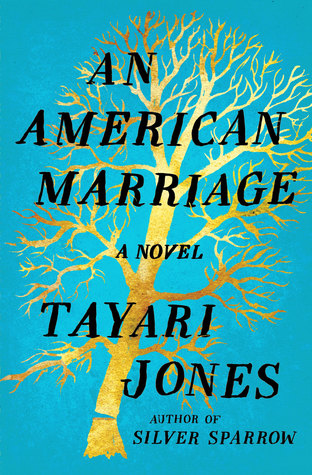
An American Marriage is about the institution of matrimony and race in America. Author Tayari Jones introduces readers to Celestial and Roy as each provides their perspectives on their relationship from its early stages to the circumstances that shake its foundation.
Roy’s a country boy with grand aspirations who left rural Louisiana at his first opportunity; Celestial is an artist born and raised in Atlanta. She could be considered haughty, just as he could be seen as arrogant in his drive to move far beyond his roots. Yet, Celestial is the more appealing character of the two. She’s intelligent, independent and creative. There’s just something about Roy that makes him less sympathetic.
This is true even after he is sentenced to serve a 12-year prison term for a crime he did not commit. During his incarceration, the narrative is told through the couple’s exchange of letters. Initially, their correspondence is warm, loving, a continuation of their previous life together. Slowly, the letters become less personal, more terse and infrequent.
The other significant character is Andre, literally the boy next door; Celestial has known him all her life. They have always been close friends and it was Andre who introduced her to Roy.
One year quickly becomes five. Life moves forward for all concerned through professional success, a death and realizations about the past. Following an early release, Roy hopes the passage of time hasn’t completely removed him from Celestial’s world. All are left to wonder what future their marriage holds.
An American Marriage
Three and three-quarter bookmarks
Algonquin Books, 2018
306 pages

Admittedly, I knew nothing about pachinko before reading the book of the same name by Min Jin Lee. The first mention of the popular Japanese pinball-like game doesn’t surface until halfway through this epic novel spanning four generations.
It begins on a small Korean island in 1910 and progresses rapidly several years later following the birth of Sunja, the only daughter of a poor, disabled innkeeper and his wife. Times passes quickly; soon Sunja is a teenager helping her widowed mother run the inn: a glorified name for a shack with paying guests. Tension between Korea and Japan contributes to the dire economic straits.
Sunja discovers she is pregnant and her lover is married. The arrival of a young man, ill and en route to Japan to serve as a minister, changes the course of her life. They marry, move to Osaka and live with his brother and sister-in-law.
History converges with their story as war, famine and prejudice dictate their lives: Koreans are considered less than third-rate citizens.
The family’s ability to survive depends largely on an unknown benefactor, reminiscent of Great Expectations. Heartache ensues once the identity is revealed.
The novel is rich with characters reflecting both the intolerant attitudes of many Japanese and the cultural constraints of Koreans living on foreign soil.
This is a bulky, albeit well-paced, joyful and heart wrenching story with a historical perspective. The game is an apt title since much of life is left to chance while bouncing around from situation to situation.
Pachinko
Four-and-a-half Bookmarks
Grand Central Publishing, 2017
490 pages

History has already documented the atrocities of World War II at the hands of Adolf Hitler. In addition to the horror, his idiosyncrasies and his death are well detailed. Nonetheless, author V.S. Alexander has one more story to add to the fiction side of the scales: The Taster.
Magda Ritter is adrift in war-torn Berlin. With no job or romantic prospects, her parents send her to Berchtesgarten in the German Alps to escape the bombing – to ensure her safety. Their efforts succeed but not the way Magda imagined. She’s assigned to taste Hitler’s food to ensure it’s safe for him to eat.
Alexander describes the bucolic life at Hitler’s mountain retreat, the Berghof, where much of the novel is set. It’s a stark contrast to other parts of Germany. Initially, Magda is frightened by her responsibilities, but she soon realizes they are keeping her and her family alive. Still, she is repulsed by the knowledge that by tasting Hitler’s food she is keeping him safe.
The focus of Alexander’s narrative is Magda who falls in love with Captain Weber, a conspirator within the SS. The cook, other tasters and Eva Braun, Hitler’s mistress, are among the interesting characters with whom Magda interacts. Feelings of mistrust, a constant cloud of fear and the blind devotion so many had toward the Fuhrer are well developed.
Alexander notes this is a work of fiction, and his research is chillingly thorough. Knowing Hitler’s death is imminent does little to dispel the thriller he creates.
The Taster
Four Bookmarks
Kensington Books, 2018
320 pages
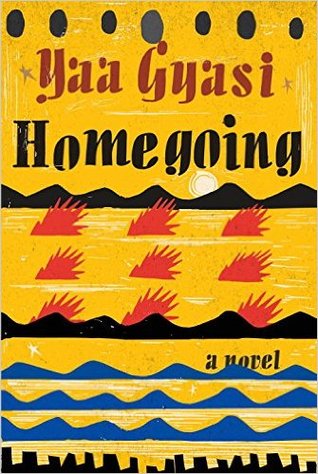
At first, Homegoing by Yaa Gyasi seems more like a collection of short stories than a novel and that, along with the title, is part of its beauty.
Spanning more than 300 years, this is an epic tale of the evolution of a family. Each chapter focuses on a specific character and could be a stand-alone story. Fortunately, a thread connects one to the other, even though there are some knots and loops along the way. These simply enhance the narrative. There is a chronology but not in the traditional sense.
In 18th century Ghana, Effia, the young beautiful daughter of a village chief is married to an Englishman, where she lives in a castle. She’s unaware that her half-sister, Esi, is imprisoned in the castle dungeon as a slave to be sold and sent to America.
The author traces, through the years, the lives of the sisters’ descendants as they experience warfare among Ghanian tribes, plantation slavery, British colonization, the migration from Alabama to Harlem, and more.
Gyasi provides portraits of 14 distinct main characters and a supporting cast of dozens more. Each is nuanced through his or her experience, determination and environment. Almost equally important are the landscapes; the element of place shapes the individuals in ways that can’t be ignored. There are lush and harsh jungles, shorelines, cotton fields, inner-city Baltimore, Alabama coal mines and smoky jazz bars.
Survival and the strength of family ties resonate in every chapter as each character takes a turn in the spotlight.
Homegoing
Four Bookmarks
Alfred A. Knopf, 2016
305 pages

The month-long Los Angeles Times Food Bowl is over. I was there for a week and participated in three and a half (I’ll explain this) events. My clothes are still a little snug even though only one of the activites I attended did not involve eating. That was the Q&A session with cookbook author Nadine Levy Redzepi and LA Times dining critic Jonathan Gold.

She’s married to chef Rene Redzepi of Noma fame. Although she works with her husband at the Copenhagen restaurant, Nadine deserves her own spotlight thanks to her new cookbook, “Downtime.” The recipes, designed as easy-to-prepare, flavorful and for simple at-home dining, are what she serves family and friends.
Nadine’s intelligence, passion for food and humor shone during the hour-long discussion. Gold’s questions and demeanor were less impressive. Clearly he knows food, but his interviewing skills could use some work – along with his wardrobe.

Nadine’s interest in food developed well before meeting her husband. Her parents were buskers and when they had a particularly good day in earnings, the family celebrated by going out to a nice meal. “Food was an adventure for us,” she said. Her talk, and her cookbook, let the audience share in the fun.
Oh, that half event: gelato at Gelateria Uli which participated in the Food Bowl by offering different flavors suggestive of Los Angeles. It was horchata the day we stopped in, but I was too tempted by other flavors: white chocolate banana and peanut chocolate chip, for example.
Gelateria Uli
541 S. Spring St.
Los Angeles, Calif.

Swedish author Lars Kepler is actually the husband and wife team of Alexandra and Alexander Ahndoril. It’s complicated. Nonetheless, Kepler’s The Hypnotist is a 500-page avalanche of a mystery. It quickly builds momentum from one dark crime to another only slowing its pace in the final pages.
The novel spans two weeks just before Christmas. Readers come to know and appreciate detective Joona Linna’s attention to detail and unwavering confidence in his ability to solve criminal cases. Dr. Eric Maria Bark, his wife, Simone, their son, Benjamin, are the good guys with Joona and a few others.
The short chapters, each identified by day and time, enhance the tempo. The story flows effortlessly from the first crime involving the murder of three family members; the seeming lone survivor is the son found at the scene covered in blood with life-threatening injuries Despite a promise made years earlier in which he vowed to never again use hypnosis on a patient, Eric is convinced it is the only way to help the injured boy.
Meanwhile, Benjamin is kidnapped and Eric must look to his past to find a connection.
Eric and Simone are flawed characters, which only enhances the novel’s appeal. Who wants to read about the perfect couple or family? Benjamin’s serious medical condition heightens the tension the longer he is held captive.
The prospect of reading a 500-page book may be daunting, but once started it’s difficult to put down. The lure of multiple mysteries and their resolutions is thrilling.
The Hypnotist
Four Bookmarks
Picador, 2009
503 pages

Before We Were Yours is a heart-wrenching story with its foundation in truth told as a work of fiction.
Lisa Wingate’s tale follows two women during two different time periods; it doesn’t take long to suspect the narratives will eventually intersect. The question is when and how, which is all it takes to make this a difficult book to put down.
Fact: Georgia Tann ran the Memphis Tennessee Children’s Home Society. Tann kidnapped and sold children in the name of adoption.
Fiction: The five Foss siblings are removed by force from their family’s Mississippi River boat and taken to the Children’s Home. Their names are changed, and, except for Rill and Fern Foss, the siblings are separated. Rill Foss, who become May Crandall, recounts the past. Avery Stafford a young, professional woman, provides the present day voice after a chance encounter leads her to learn more about her grandmother, Judy Stafford’s, past.
Alternating voices provide vivid images of the abuse endured by the wards of the Tann’s employees with Avery’s quest to answer questions she had never before considered. Set in Tennessee and South Carolina, Wingate’s ear for colloquialisms is true without being demeaning or exaggerated. Her descriptions of the once-happy Foss family and the elite Staffords are engaging.
The only false note, perhaps because it is too predictable, lies in the relationship Avery establishes with Trent, a handsome young widower. His grandfather knew May and Judy; Avery and Trent want to know why. So does the reader!
Before We Were Yours
Four Bookmarks
Ballantine Books, 2017
342 pages

I read Tattoos on the Heart several years ago. Gregory Boyle, the Jesuit priest who founded Homeboy Industries (HBI) in Los Angeles, wrote about his experiences working with gang members. Each chapter left me in tears at the heartfelt stories Boyle shared of those attempting and often overcoming daunting challenges of their life circumstances and poor choices.
Barking to the Choir, Boyle’s new book, is more introspective. It has plenty of heartbreaking vignettes of homies facing incredible odds, but its pull on the heartstrings is looser. In both books an abundance of joy fills most pages even in the direst situations; but this time Boyle’s messages about hope and acceptance are tempered with his interpretation of understanding God’s word. This isn’t a bad thing.
Simple acts of kindness, not just from Boyle, but among the marginalized he writes about are moving. Major leaps of faith, again, not just from the author, but among those populating his world are thought-provoking. I’m left to consider blessings in my own life and the positive choices I’ve been able to make because of the family environment I had.
Father Boyle injects a healthy amount of humor while recounting events of those who pass through HBI’s doors. He isn’t preaching, or barking, but he certainly leaves the reader with much to consider. Two ideas, in particular, in the book resonate with me: awe and judgement. The former is what we should aspire to in our interactions with others; the latter is, unfortunately, more prevailing.
Barking to the Choir: The Power of Radical Kinship
Four Bookmarks
Simon & Schuster, 2017
210 pages
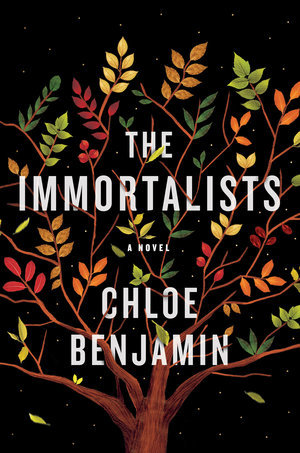
Fate and the power of suggestion collide in Chloe Benjamin’s The Immortalists. It’s 1969 and it’s in the midst of summer’s heat and doldrums when siblings Varya, Daniel, Klara and Simon Gold need a distraction. They seek out a woman known to foretell the exact date on which one will die. The children are 13, 11, 9 and 7, respectively. This seemingly-innocent adventure profoundly and ultimately affects each of their lives.
The narrative then jumps to the late 1970s. Each chapter focuses on one of the Golds, their interactions with each other, the choices they make and how that long-ago visit to the psychic is embedded in their lives.
The fortune teller, along with Eddie O’Donoghue, a police officer turned FBI agent, are characters who move in and out of the story through often unlikely scenarios. They alternately represent good and evil. Their presence is unnerving if only because they’re initially perceived as simply passing through. Yet, it becomes clear that the author doesn’t want the reader to relegate them to cameo appearances.
The Immortalists
Four-and-a-half Bookmarks
G.P. Putnam’s sons, 201
346 pages