Archive for the ‘prejudice’ Tag
History and fiction meet in Daughters of the Sun and Moon by Lisa See in 1870 when the lives of three Chinese women of different backgrounds intersect in the rustic, violent Los Angeles pueblo.
Dove, the daughter of an Imperial Scholar, and Petal, from a poor farming family, are sent to California for very different reasons: Dove to be married to a merchant many years her senior; and Petal to work in a brothel. Moon, one of the fewer than three dozen women already in Los Angeles, is married to the well-liked doctor who practices traditional Chinese medicine.
All three have seemingly impossible dreams: Dove to be loved; Petal to know freedom; and Moon to have a child.
Each chapter primarily focus on one of the women, although there are references to all throughout the narrative. First person voice is used for Moon and Petal; including chapters in Moon’s voice looking back on the events from 1926. Chapters centered on Dove rely on an omniscient narrator.
Except for the few initial interactions among the women, kindness is a rarity since prejudice toward the Chinese in general, and women, in particular, is a major theme. Two kidnappings and tensions between two gangs reach a boiling point that soon involves Anglos and Mexicans pitted against the Asians.
See recounts, in horrific, vivid detail, the real-life events known as the Night of Horrors, when much of the Chinese population is brutally decimated. This is what ultimately brings the trio together in their quest for survival.
Daughters of the Sun and Moon
Four and a half bookmarks
Scribner, 2026
363 pages, includes a note on the history and acknowledgements
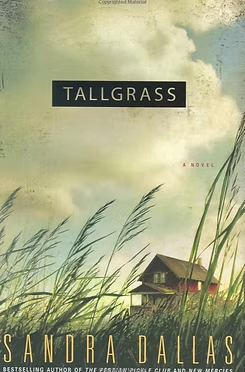
In 1942 Japanese Americans were forced to relocate to ten remote isolation camps under the guise of protecting the U.S. This is the foundation for Tallgrass, Sandra Dallas’s fictional portrayal of a small Eastern Colorado town that became home to an internment camp.
Tallgrass was published in 2007 yet remains timely in its illustration of unfounded prejudice and ill-conceived fear of those who are different.
Renny is the youngest daughter of a beet-farming family, whose property is near Tallgrass. Initially, the young teen doesn’t know what to think of the Japanese since there’s a clear division in town among those who think the idea of the camp is shameful and those adamantly opposed to its presence. The negative attitudes are fortified when a young girl is found raped and murdered. Guilt is immediately assigned to the Japanese.
Due to the war, finding farm laborers proves difficult, so Renny’s father hires three young Japanese men who prove to be hard workers and serve to dispel the misgivings held by Renny and her mother.
Dallas has crafted an engaging narrative proving that evil is not defined by one’s ethnicity or skin color. However, in her portrayal of some characters, there is little gray area. Still, as Renny’s family grows closer to the Japanese workers, she matures and is ultimately able to form her own opinions.
While there’s much that is predictable, the mystery of the murder, family secrets and a view of the hardscrabble life of farmers contribute to the well-paced novel.
Tallgrass
Four bookmarks
305 pages plus Reader’s Guide
St. Martin’s Griffin, 2007
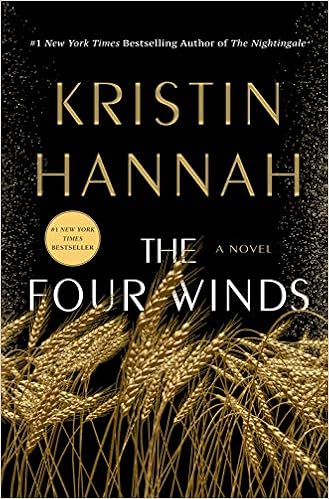
Although I’ve only read a few of Kristen Hannah novels, it’s clear she does her homework. This is true whether the novel’s setting is France during World War II, Leningrad or the Pacific Northwest; her writing evokes a strong sense of time and place. The Four Winds, set in the 1930s Dust Bowl era, is no exception. Hannah’s work also features strong, independent women; here Elsa Wolcott follows the pattern.
At 25 Elsa is considered past her prime as a marriage candidate. When she meets Rafe Martinelli, seven years her junior, her life changes. With no intention of a marrying Elsa, Rafe has no choice when she becomes pregnant.
By the 1930s, Elsa has settled in on the Martinelli farm, which in Northern Texas does not escape the devastation of the drought and dust storms that wreaked havoc across the Great Plains. Rafe abandons Elsa, their two children and his parents. Eventually, Elsa makes the trek to California, where word has it life is better.
Hannah’s vivid descriptions of the poverty, prejudice and injustices faced by the flood of migrants could easily, and unfortunately, be applied today. Elsa and her children aren’t immune to the incivilities, but the family’s relationships grow stronger in its struggle to find a better life.
The weakest element of the narrative is the insertion of efforts by union organizer Jack Valen. He comes across as the hero the family, and all farm workers, need. Yet, in some ways this negates Elsa’s intelligence and inner strength.
The Four Winds
Four Bookmarks
St. Martin’s Press, 2021
454 pages

Admittedly, I knew nothing about pachinko before reading the book of the same name by Min Jin Lee. The first mention of the popular Japanese pinball-like game doesn’t surface until halfway through this epic novel spanning four generations.
It begins on a small Korean island in 1910 and progresses rapidly several years later following the birth of Sunja, the only daughter of a poor, disabled innkeeper and his wife. Times passes quickly; soon Sunja is a teenager helping her widowed mother run the inn: a glorified name for a shack with paying guests. Tension between Korea and Japan contributes to the dire economic straits.
Sunja discovers she is pregnant and her lover is married. The arrival of a young man, ill and en route to Japan to serve as a minister, changes the course of her life. They marry, move to Osaka and live with his brother and sister-in-law.
History converges with their story as war, famine and prejudice dictate their lives: Koreans are considered less than third-rate citizens.
The family’s ability to survive depends largely on an unknown benefactor, reminiscent of Great Expectations. Heartache ensues once the identity is revealed.
The novel is rich with characters reflecting both the intolerant attitudes of many Japanese and the cultural constraints of Koreans living on foreign soil.
This is a bulky, albeit well-paced, joyful and heart wrenching story with a historical perspective. The game is an apt title since much of life is left to chance while bouncing around from situation to situation.
Pachinko
Four-and-a-half Bookmarks
Grand Central Publishing, 2017
490 pages