Archive for the ‘Reviews’ Category

When reading a mystery I want to be surprised; I also want to reach the solution on my own. This might seem contradictory, but it’s my benchmarks for a good thriller.
Both were achieved in Fiona Barton’s The Child. I was pleased to be right. Of course, it took most of the book to fit all of the pieces together, but I did. Rather than feel disappointed once I suspected how things would end, I was proud of my sleuthing abilities.
Three main characters move the story: Kate, a journalist intrigued by the discovery of an infant’s skeleton when an old house is demolished; Angela, whose infant daughter was kidnapped from the maternity ward more than 40 years ago; and Emma, a middle-aged woman with secrets, including a teen pregnancy. Emma’s mother, Jude, has a pivotal role in the novel’s progression.
Kate is convinced there’s more to the story than the gruesome discovery at a construction site. Meanwhile, Angela’s begins to hope that she will finally have an explanation of what happened to her daughter. Emma fears that her past has literally been uncovered. Meanwhile, Jude has no interest in looking in the rear-view mirror and dismisses Emma’s anxieties as part of the strained relationship between the two.
Through Kate, the author methodically reveals the heartbreaks and fears each woman has suffered in their respective lives while fitting together the ways in which they’re all connected. If intrigue isn’t enough, there’s also a bit of science thrown into the mix.
The Child
Four Bookmarks
Berkley, 2017
365 pages
It might be a cliché, or at least an exaggeration, but it seems as if there’s a taco stand on every corner in Mexico City. While the made-on-the spot, hand-held typical street food is fresh and tasty, there’s much more to the cuisine than what you’d expect. Nonetheless, this post will focus on what comes to mind when thinking of Mexican food – beyond tacos.

Mole is one of my favorites and I had it twice. Both were the dark, Oaxacan versions that were rich, smooth and blended the sweet with the savory. However, my preference was for Cabera 7’s rendition. Although, it was beautifully plated, the chicken arrived cold and had to be sent back to the kitchen. When it did arrive with the proper temperature, it was exceptional. House-made, fresh corn tortillas and white rice helped absorb some of the sauce so none of it went uneaten.

The other mole was at Sanborn’s. This ubiquitous chain has everything: clothing, accessories, a pharmacy, shoes, a restaurant and more. The mole here was too sweet; it lacked the balance that’s the hallmark of the dish. It’s a department store, afterall.
Burritos are less common in Mexico than you might think, but Ensalada y Burritos Gourmet demonstrated what many fast-food burrito chains lack: an abundance of flavor. My thick burrito was packed with pibil, a colorful, more savory-than-spicy version of pulled pork, with rice and black beans.
We did venture away from the standards, but that’s for another post.
Cabrera 7
Plaza Luis Cabrera 7, Cuauhtémoc, Roma Norte,
06700 Ciudad de México, CDMX, Mexico
Ensalada y Burritos Gourmet
Coahuila 125,Roma Nte.,
06700 Ciudad de México, D.F.,México, Mexico
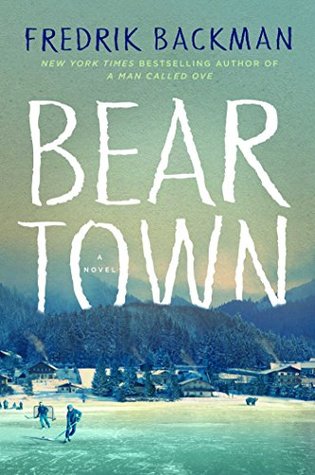
Fredrik Backman hit the bestseller list in the United States with A Man Called Ove in 2013. (Several of his books are reviewed here on The Blue Page Special). Beartown, his most recent, is as engaging and character-driven as his previous work. Yet, in many ways, it’s also a departure.
The small, isolated town of the title is cold and bleak, where hockey reigns, followed closely by poverty. This is a story about fitting in, motivation, pain, teen angst, adult misperceptions and misplaced loyalty. It lacks the blatant quirkiness of some of Backman’s earlier novels and teeters near the edge of predictability. Its salvation lies in the strength of the characters. Some fall into the cliché category while most are remarkable and credible, if not always likeable.
The first sentence is a grabber; actually, it’s more like a full body check: “late one evening toward the end of March, a teenager picked up a double-barreled shotgun, walked into the forest, put the gun to someone else’s forehead, and pulled the trigger.”
The town’s economy depends on the success of its junior ice hockey team winning a championship. It’s well positioned to do so thanks to the group of players who have been together for years and the exceptional talents of a particular player.
However, as Backman describes the players, their families, fans and town residents, it becomes evident that all is not as it appears. This is about secrets, self-identity and the drive not just to succeed but to survive.
Beartown
Four bookmarks
Atria Books, 2017
432 pages
One of my middle son’s favorite foods is fried chicken; I’ve jumped on that band wagon with him. It started with my introduction to Bouchon’s buttermilk rendition. It soon evolved to include waffles. But, for now, I’ll stick to the hens.
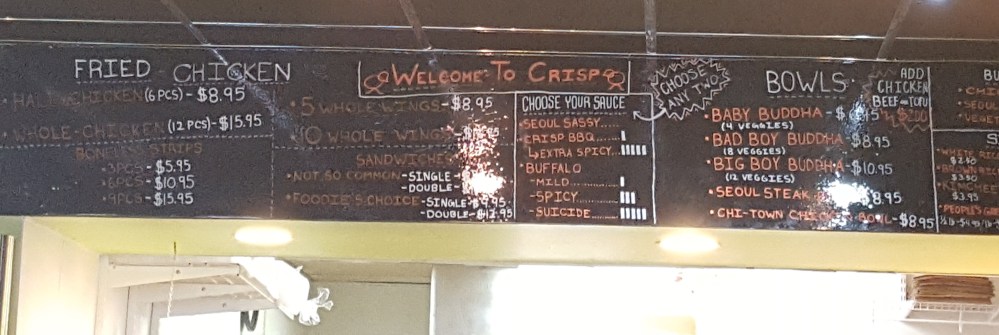
When Food and Wine magazine listed the best places in the country to find the crispy comfort food it was like finding a treasure map. The timing was perfect as I was making a trip to Chicago, which boasts three of the 33 on the list. We only had time to try one: Crisp.

When we wandered into the small, unimpressive order-at-the-counter eatery I was surprised. The preparation here is not what’s served with mashed potatoes and peas. This was Korean fried chicken, which sent my taste buds in a completely different direction than they’d traveled before.
First, diners choose between wings or boneless strips. Then there’s a choice of sauces. These range from plain, slightly sweet, a smoky spicy and a Buffalo spicy. I went with the sweet. Honey, ginger, garlic and soy were the obvious flavors coating crispy pieces of chicken that had been flash-fried twice. They were sticky, thanks to the honey, but not at all greasy.
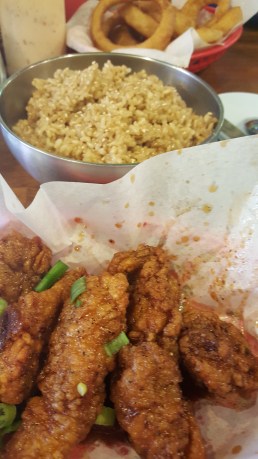
Crisp also serve sandwiches, Buddha bowls and Korean burritos. Sides include brown rice, onion rings, greens, kimchee (sic) and shoestring potatoes.
I have my go-to places for traditional fried chicken. Nonetheless, I don’t mind continuing the quest for perfect poultry, especially when I find such different spins like Crisp’s.

Crisp
Four Plates
2910 N. Broadway
Chicago, Ill.
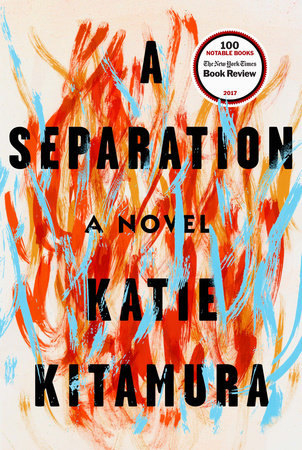
The narrator in Katie Kitamura’s novel, A Separation, is never named. Nonetheless, we learn other, more intimate details about her.
The title has multiple implications beginning with the fact that the narrator is separated from her husband, Christopher, and has been for six months. The couple has not announced the split; in fact, the pair has promised vowed to continue waiting before going public with the news.
Kitamura is terse in her descriptions. Yet her characters are well-developed, even the ones we never actually meet. Christopher, for example, has gone missing in Greece. Still, he is seen through the narrator’s eyes and experience.
In London, his mother Isabella, who is unaware of any change in Christopher’s marital status, contacts the narrator since messages to her son have gone unheeded. In just a few sentences, Kitamura deftly portrays the uncomfortable relationship the women share. Isabella is incredulous that her daughter-in-law has no idea of Christopher’s exact whereabouts. Both know he is in Greece and the resort hotel he checked into, but nothing beyond that.
What ensues is the narrator’s trip to Greece in search of the man from whom she is no longer in love. He’s not been seen at the hotel for several days, although all of his belongings are still there. She’s curious, but her heart isn’t in it. Her voice is stoic, matter-of-fact, with occasional flashes of anger or disappointment as she discovers new secrets and is placed in the awkward position of being presumed a devoted wife.
A Separation
(Barely) Four Bookmarks
Riverhead Books, 2017
229 pages

It’s not unusual for museums to have exceptional gift shops and restaurants. The National Museum of Wildlife Art earns kudos for both. The aptly named Palate offers a creative menu and expansive views of the National Elk Refuge just north of Jackson, Wyo.
Several bronze sculptures are visible from U.S. Highway 191, but the collection is more impressive in the museum’s parking lot and lobby. Still, it’s the food that recently garnered our attention.
Salads, pasta, soup and sandwiches comprise the menu. An extensive wine list also available.
We opted to share three plates: the Pork Belly BLT, Bison Gyro and Roasted Green Beans.
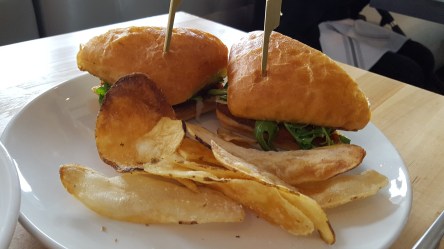
The BLT had several spins, besides the fact that it featured pork belly. With arrugula and tomato jam, the sandwich was further elevated thanks to lemon caper aioli and sunflower pesto. The works were served on ciabatta making this no ordinary diner mainstay. House-made chips completed the plating.
The gyro was, perhaps, my least favorite. This may have been only because the BLT was so exceptional. Shredded meat with creamy, whipped feta, pickled onion and cucumbers were served on Indian frybread. It was also accompanied by chips.

Almond vinaigrette and thin crispy slices of onion covering the roasted green beans. These were hard to share.

Harder to share was the Peanut Butter Chocolate Bar not only because it was delicious, but it was difficult to cut. The rich peanut butter mouse on a pretzel crust topped with chocolate was like an upscale Reese’s Peanut Butter Cup.
Palate
Four Plates
National Museum of Wildlife Art
2820 Rungius Rd.
Jackson, Wyo

For most, Rock Springs, Wyo., isn’t exactly a destination spot, but if traveling in either direction on Interstate-80 or heading north to Jackson Hole, it’s good to know there’s at least one spot to grab a quick, and tasty, meal. Besides, it’s hard to pass up a place called Chill Grill.
This is mostly a burger and fountain joint, without a counter. The space is small and decorated with 45s, and 33s on the wall. There’s a tribute to Elvis on one side and Marilyn Monroe on the other. Chill Grill evoke memories of the Fonz and Happy Days even without carhop service.
The menu offers sandwiches, burgers, hot dogs and salads, along with multiple pages of ice cream treats.
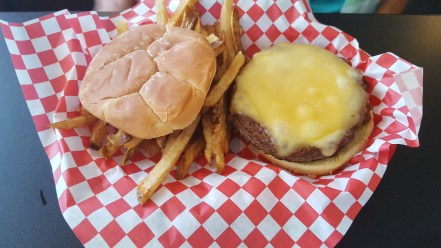
The juicy cheeseburger came with fresh-cut French fries. A “burger bar” lets diners add their own basic extras like pickles and onions.
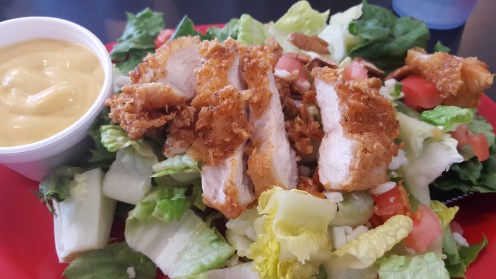
Crispy chicken caught my eye; it’s available as an entrée or on top of salads. I had the latter. Sliced chicken breast served on a bed of greens with tomatoes and honey mustard dressing. I wasn’t a fan of the dressing, but the chicken was indeed crispy and I let myself believe I was having a healthy meal.
I was tempted to have a strawberry shake, but resisted only to succumb to a chocolate chip cookie dough ice cream cone so large I couldn’t finish it. The hot fudge sundae featured the real stuff, although the topping wasn’t hot enough to even threaten melting the vanilla ice cream.
Chill Grill
Four Plates
1758 Elk St.
Rock Springs, Wyo

Full disclosure: I have known the executive chef at Income Tax since he was in first grade; his line cook all his life: he’s my youngest son. Although I had nothing to do with Ryan Henderson’s rise to his role, I will take a little credit for Andrew’s interest in food and cooking.
It might be better if I had no knowledge or familiarity with the kitchen staff since it could be perceived that my judgement is clouded. It is. Nonetheless, the meal ranks high among my most deliciously memorable.

Income Tax, located in the Edgewater neighborhood of Chicago, and Ryan have garnered numerous accolades since its opening December. All are well deserved and the result of careful planning by the owners and Ryan. The concept is a wine bar with food designed to pair with wines representing Spain, Germany, France and Italy. Rest assured wines of other countries are also available. The contemporary vibe and wonderful service complete the dining experience.

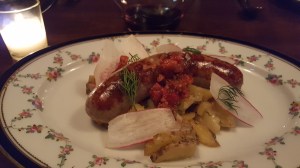
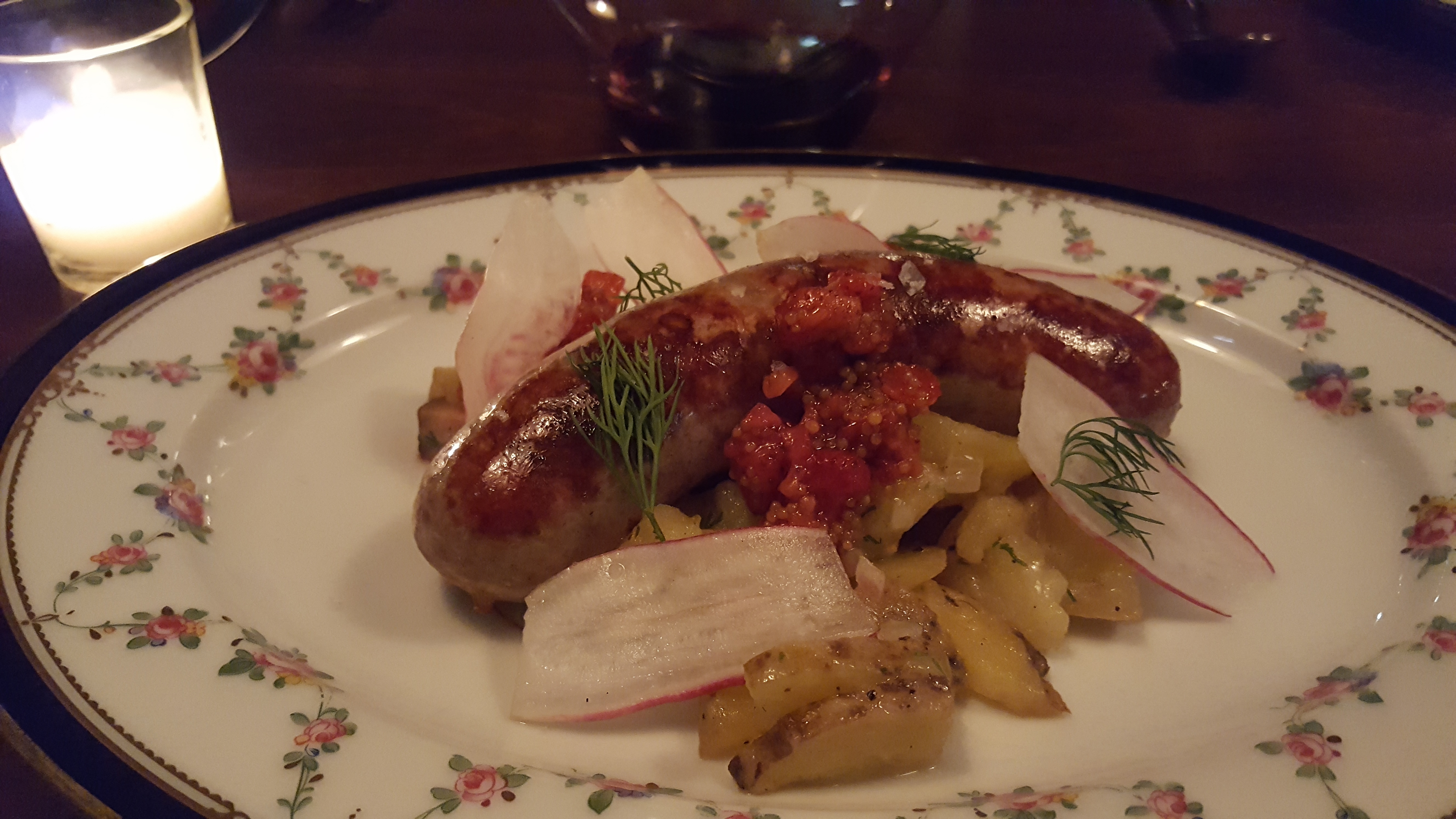
I was especially impressed with the elements of creativity. Among the appetizers is a house-made pretzel served with a savory and sweet cherry mustard. That’s right, cherry mustard. Scallops are paired with chorizo for a lively blend of flavors. A house made bratwurst features strawberry relish. A soup made with ringlets of caraway crepe adds lamb bacon (made in-house). The list goes on.

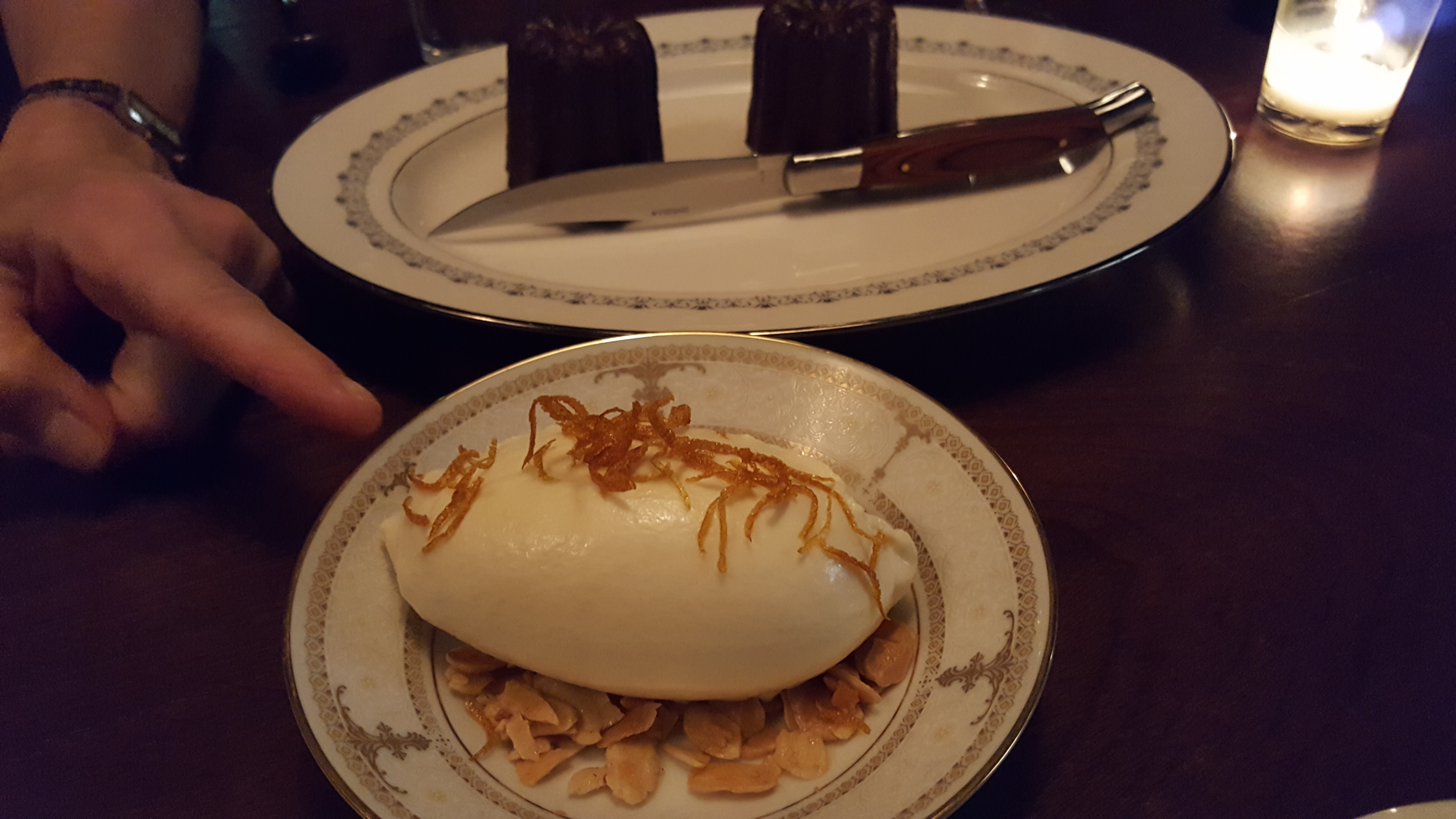
Of course, no meal is complete without dessert: rich chocolate caneles, port ice cream and chocolate mousse are the ideal way to end a perfect meal.
Excellent work, kitchen crew — even if our ties are long standing!
Income Tax
Five Plates
5959 N. Broadway
Chicago, IL

Lincoln in the Bardo is a mash-up. It’s part Greek tragedy, part play, part poem and completely imaginative. George Saunders has crafted a novel that can best be described as unusual, and that’s meant as a compliment.
Amid a graveyard setting, following the death of Willie Lincoln, the 11-year-old son of the U.S. president, Saunders’ tale is about grief, the afterlife and the disenfranchised. It includes a lot of humor.
Bardo comes from the Buddhist thought regarding a state between life and death; a purgatory of sorts. The characters are largely those trapped in this transitional stage. Although they are definitely dead, Saunders brings them to life through references to their foibles when they were alive as well as through their attitudes and deeds among the nonliving. They aren’t zombies, but they are supernatural.
There is no dialogue. Instead, observations on the action are shared through statements from the characters or from accounts in books, newspapers, conversations and other sources. It’s a blend of having each statement presented as lines in a play with footnotes. For example, this about Abraham Lincolns’ grief:
“It was only just at bedtime, when the boy would normally present
himself for some talk or roughhousing that Mr. Lincoln seemed truly
mindful of the irreversibility of the loss.”
In “Selected Memories from a Life of Service,”
By Stanley Hohner
Initially, it was a bit difficult to embrace the format and the narrative. However, it becomes evident that Saunders is creative and appreciates a good laugh.
Lincoln in the Bardo
Four Bookmarks
Random House, 2017
343 pages

It’s not often that I give up on a book, but I’m calling it quits after 78 pages of The Night Ocean by Paul La Farge. I tried, I really tried to get into this book. I wanted to, but it wasn’t happening.
In less than 100 pages I knew little more of what novel was about then I did on page one: zilch. That’s an exaggeration; I had gleaned a little info from the book jacket. The problem is that the synopsis and the narrative didn’t mesh well — at least not in the first 80 pages.
The Night Ocean is part of The Tournament of Books Summer Reading Challenge. I’m a fan of the Tournament of Books, which happens around the same time as the NCAA basketball tournament following a similar bracket formula. The Summer Challenge involves two books, La Farge’s and A Separation. I put library holds on both; I’m still waiting for the latter.
The premise of The Night Ocean is a woman’s search for her presumed-dead husband, his obsession with H.P. Lovecraft, the 1930s horror writer who had an affair with a 16-year-old boy (who later gained fame as an Aztecs scholar). Why wouldn’t that be intriguing?
Most of what I read involved Lovecraft, including pages and pages of his journal entries. His style and tone were off-putting: “Down at y’Dockes againe this night, seeking Subjects for y’Worke.”
Challenge or not, I don’t want to toil this hard for a summer read.
The Night Ocean
Penguin Books, 2017
389 pages



 The Blue Page Special
