Archive for the ‘Reviews’ Category
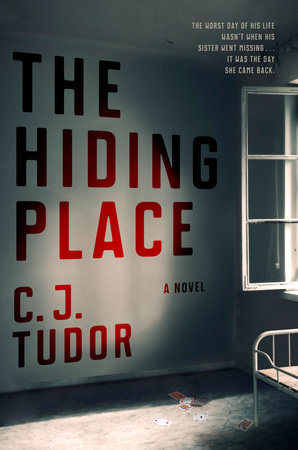
Creepy is the best way to describe The Hiding Place by C.J. Tudor. The setting, the characters and the story itself are all disturbing. It’s difficult to appreciate a book with no likeable characters; yet the author successfully creates an unsettling story that goes beyond masses of beetles crawling out of walls.
Narrator Joe Thorne returns to his hometown, a run-down former mining town in rural England. It was never a thriving community, but its position at the edge of economic ruin makes the old days not look so bad in Joe’s eyes. It’s clear he’s returned to settle a score. Yet, there are so many twists and characters lacking empathy, interest or both, that the obvious question of why hangs too heavy over the narrative.
Joe is a teacher, a liar, a gambling addict and also, somehow, a victim. He left his previous job under suspicious circumstances but is able to con his way into a teaching position at the school he attended as a youth. Many of Joe’s old pals are still in town, but it’s clear these are no longer friendly relationships. Another unfriendly sort is Gloria, a thug hired by the Fatman to collect the gambling debts Joe has amassed.
Before Joe’s arrival, a murder/suicide has occurred in the very cottage he knowingly chooses to rent. A mother has killed her son before turning a gun on herself. This strikes Joe as hauntingly familiar even though nothing in his past suggests something similar. Until it does.
The Hiding Place
Three-and-half Bookmarks
Crown Books, 2018
278 pages

The Air You Breathe by Frances De Pontes Peebles gifts readers with an expansive, beautifully-written view of the ebbs and flows of deep friendships.
Dores, whose existence is shaped by her role as an orphan on a Brazilian sugar plantation, narrates the story. Her life changes when Graca, the spoiled, young daughter of the sugar cane baron, arrives. The two are opposites in every way. It is no surprise that their attraction is the impetus for their future endeavors.
Since there are no other children her age, Graca’s parents enlist Dores as playmate and study companion for their daughter. Despite spending much of her life up to this point working in the kitchen, Dores is a good student, much better than her friend. Yet, Garca possesses all of the advantages that will contribute to her success: beauty, a mesmerizing voice, a strong will and privilege.
The narrative begins with Dores looking back on her past, specifically the success of Graca, who becomes legendary Samba singer Sofia Salvador. The trajectory from rural Brazil to Rio de Janeiro to Hollywood is more than a rags-to-riches story. Each chapter begins, or ends depending on perspective, with the lyrics Dores has written and made famous by Sofia/Graca.
The characters are lively, the street scenes vibrant and the pulse of the 1930s and ‘40s sets the rhythm. The connection between the two women is full of joy and anguish, frustration and pride. Dores and Graca need each other, despite often wishing this was not the case.
The Air You Breathe
Five Bookmarks
Riverhead Books, 2018
449 pages

The Library Book might be better titled The Los Angeles Central Library Book. Author Susan Orlean provides an exhaustive history of the downtown LA library. The 1986 fire that destroyed four-hundred- thousand books and other materials including periodical, numerous collections and caused extensive damage to the building is the starting point for her overview.
The fire, how it started and efforts to rebuild are the most engaging aspects. While the Central Library isn’t exactly a phoenix rising from the ashes, it’s close. Arson is suspected and one suspect, since deceased, is profiled in great detail. Harry Peak is a charismatic wanna-be actor. He was also a chronic liar. He lied to friends, family, arson investigators and attorneys.
Orlean incorporates a fun, clever approach to each chapter citing four references that provide context for what will follow. For example, it’s clear from the sources cited that Chapter 11 will be about fund raising.
Where the narrative bogs down is in the history of the library’s various directors. Granted, some were more colorful, more resourceful, less interesting, less impactful than others. These chapters were on the dry side.
The most fascinating aspects, in addition to the learning about the fire itself, were learning about the librarians, their specific job descriptions and their commitments to the library and its patrons.
It’s clear Orlean has a deep respect for the roles libraries serve, but there was too much in her book that is the stuff of trivia competitions, something that doesn’t appeal to me.
The Library Book
3 Bookmarks
Simon & Schuster, 2018
319 pages (including notes)
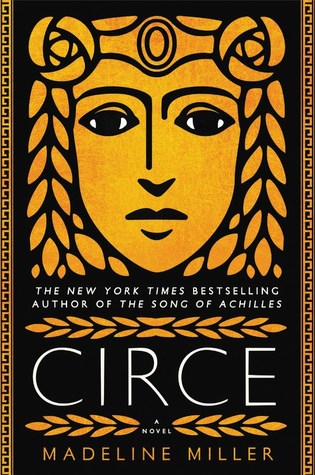
Circe by Madeline Miller is a who’s who of Greek mythology in the best way possible. This is a tale of desire through its various expressions, mortality/immortality and love in its many different forms.
Miller has fictionalized the life of Circe, the Greek goddess. It was she who transformed the beautiful nymph, Scylla, into the six-headed sea monster responsible for the deaths of numerous sailors in a narrow channel linking two seas.
Circe, the unfavored daughter of Helios the sun god and Perse, is exiled to the island of Aiaia. Despite her isolation, she comes in contact with others associated with the Odyssey. Before she meets Odysseus, however, Hermes, Jason, Medea and Daedalus are among those she encounters.
She is granted a brief respite from exile to assist her sister who gives birth to the Minotaur. Daedalus, father of Icarus, builds the labyrinth in which the half-man half-bull was confined. Circe and the mortal craftsman return to Aiaia. While this is a significant relationship, it is Odysseus who later claims Circe’s heart. This despite transforming his men into pigs and knowing his wife, Penelope, awaits his return.
In exile, Circe is only deprived of constant companionship. Otherwise, all of her needs are met. She discovers, through trial and error, the powers of the flora around her. Readers also learn the gods are ageless – to such an extent that Circe is hundreds of years old, with no physical evidence. Ultimately, this serves as a catalyst for her to attempt her greatest transformation ever.
Circe
Five Bookmarks
Little, Brown & Co., 2018
393 pages

Maud is the 88-year-old Elderly Lady up to No Good in Swedish writer Helene Tursten’s terse collection of short stories.
Most of what Maud is up to is murder. She’s an unlikely bad guy (gal), and not just because she’s a woman, It happens that murder is the way she solves a lot of problems; they are often not even her own issues.
Alone and living rent-free in a Gothenburg apartment, Maud’s housing situation is challenged when a demanding artist moves into a smaller apartment. Maud grew up in the spacious living area she still inhabits. A clause in her late father’s will stated that she and her older sister would be allowed to remain until their deaths. Her sister has been dead for 40 years and Maud has no intention of relinquishing her apartment anytime soon.
When not busy plotting how to rid herself from the artist’s attention, she enjoys traveling. Although each of the five stories is a stand-alone narrative, all are tied to Maud’s apartment and travels. The latter often provides an alibi.
Tursten’s writing is witty . The main character takes advantage of ageism and misperceptions to get away with, literally, murder. Even though Maud is not a sympathetic character her actions are not completely unjustified. Extreme certainly, but often warranted.
An Elderly Lady is Up to No Good
Four Bookmarks
Soho Press, 2018
171 pages

The land of Oz serves as the backdrop in Finding Dorothy by Elizabeth Letts, but it’s more than a look behind the green curtain where the wizard was hiding.
The novel’s timeline alternates between 1938 when filming on the MGM classic took place and the life of Maud Baum, whose husband Frank authored the beloved series.
Beginning in 1871, this novel, based on fact, chronicles Maud’s childhood as the daughter of a suffragette, her experience at Cornell University where she was one of 19 women in a class with more than 200 men, and how she came to meet, then marry Baum.
The chapters set in 1938 show Maud striving to impress upon the movie’s power team the importance of staying true to her husband’s book. This, she’s convinced, depends on Judy Garland being able to project Dorothy’s innocence and hope. Maud sees this threatened by the movie studio’s efforts to control Garland through a regimen of diet and sleeping pills. Thus, Maud reaches out to protect the young actress.
The chapters concentrating on Maud’s life are a glimpse into the whimsical nature of her husband, the efforts for women’s right to vote, hardscrabble life on the North Dakota plains and her struggle to find meaning in her own life.
Letts deftly defines the various time frames and landscapes. Even though readers know the ultimate success of the movie, it’s Maud’s growth that is most captivating. How Frank came to write the Oz stories their popularity merely provides the framework.
Finding Dorothy
Four Bookmarks
Ballantine Books 2019
351 pages

Next Year in Havana by Chanel Cleeton offers an insightful look into Cuba’s history. The trouble is having to wade through the predictable romance stories it’s centered around. Yes, the plural form of story is intentional.
The first begins in 1959 with the Perez family, whose fortunes were built through several generations on sugar production. Nineteen-year-old Elisa has two older sisters, a much younger sister and a brother who’s been banished from the family for his politics. Elisa is first introduced as the family does its best to leave Cuba. Fidel Castro has just taken over the country and the wealthy are being stripped of their status and riches.
The alternating story, set in 2017, revolves around Marisol, Elisa’s granddaughter, who has been tasked with taking her grandmother’s ashes to be scattered in Cuba. There she discovers there was much about Elisa she didn’t know, including a past love, while also embarking on a romantic relationship of her own.
Elisa’s story recounts her affair with a revolutionary, while Marisol strives to learn more about this part of her grandmother’s life. In the process she is attracted to Luis, the grandson of Elisa’s best childhood friend.
Luis is a history teacher at the university in Havana. He serves not just as a tour guide of Cuba’s, but also its political history. As Luis notes, a lot has changed but not much is different in the island nation.
Cleeton manages a few surprises; otherwise the novel’s strengths lie in the historical references.
Next Year in Havana
Three bookmarks
Berkley. 2018
356 pages, plus Reader’s Guide and an excerpt from Cleeton’s next novel

Initially, it was the title of Jackie Copleton’s novel, A Dictionary of Mutual Understanding, I found intriguing. Fortunately, as the story progressed, so did my interest.
The novel begins with Amaterasu opening her front door to a disfigured, middle-aged man claiming to be her grandson, Hideo. He was presumed dead 40 years ago following the bombing of Nagasaki. Amaterasu’s daughter was also killed on that fateful August day. Hideo bears the scars of radiation making it difficult to discern any recognizable features. He gives Amaterasu a sealed box of letters written by Sato, his adoptive father, the same man with whom she shares a history she prefers to forget.
The narrative moves back and forth in time to life before and after the bomb based on Amaterasu’s memories, her daughter’s diaries and Sato’s letters. Hideo has no memories of his life before the bombing. He has no stories to share with Amaterasu to convince her he is, indeed, her grandson. She refuses to consider the possibility, yet she meets with Hideo on multiple occasions.
Copleton begins each chapter with an explanation of some aspect of Japanese culture. This is both interesting and helpful in trying to understand Amaterasu’s mindset. She is old and alone following the death of her husband of many years. They left Japan long before in a hopeless effort to try to forget their losses.
Hideo’s fortitude and patience are tested in his efforts to convince Amaterasu of their connection and she must consider her past relationships.
A Dictionary of Mutual Understanding
Three-and three-quarter bookmarks
Penguin Books 2015
292 pages
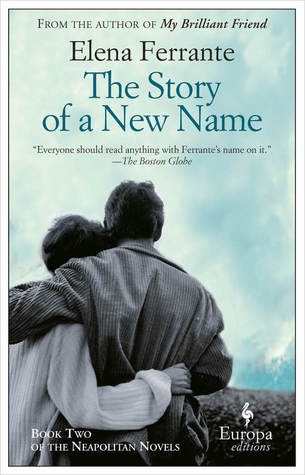
Italian novelist Elena Ferrante has hooked me with The Neapolitan Novels. Book Two, The Story of a New Name, picks up where My Brilliant Friend abruptly ended: at a wedding. The narrative moves forward while looking back to further develop the characters and plot line.
The friendship between Lila and Elena is based on the appreciation each has for the other’s intellect. However, due to family circumstances only Elena is given the opportunity to pursue a formal education. Lila studies independently. She is also newly married to the wealthy shopkeeper, but her volatile personality remains unchanged. She soon discovers, in her marriage, that her ability to get her way has more dire consequences than when she was younger.
Much of the beauty of Ferrante’s writing, translated by Ann Goldstein, lies in the vivid descriptions of the small town near Naples where much of the action takes place and of the characters she has created. Some are thoughtful, driven and kind, while others are impulsive and mean, some are smarter than others. None are one-dimensional.
After the wedding, Elena continues in high school where she excels as a student, despite some ups and downs. As the story progresses, life’s responsibilities take hold: military service, work and families. Elena’s education continues in Pisa. Lila has an affair with the young man who Elena has long been attracted to.
This may sound like a soap opera, but in Ferrante’s hands it is a moving story about choices, opportunities and testing the bonds of friendship.
The Story of a New Name
Four Bookmarks
Europa Editions, 2013
471 pages

Dust Bowl Girls by Lydia Reeder focuses on a group of young women from various parts of rural Oklahoma in the early 1930s. It’s been call the counterpart to Daniel James Brown’s The Boys in the Boat in that it highlights overcoming adversity. Whereas the boys rowed their way to fame in the 1936 Olympics, the young women are basketball players. Their glory was limited to a championship season. As Reeder recounts, however, what a season it was!
In addition to profiles of the players and coach, the author provides vivid descriptions of the hardscrabble era, a history of women’s basketball, and attitudes toward women sports in general. For instance, the sport was considered unladylike. This was reflected in the rules governing uniforms and rules. Although it’s interesting, these aspects are frequently repeated, with little variation. Consequently, it appears as padding more than insightful content.
What may be most striking is that the women, most in their late teens, played for the Oklahoma Presbyterian College Cardinals on full scholarships. Many were farm girls, whose families would not otherwise have been able to afford to send them to college. Their basketball skills were often gleaned on dirt patches; these were strong, talented players.
During the Depression era, it was common for businesses to sponsor women’s teams as promotional enterprises. The Cardinals faced opponents from other small schools and non-academic teams. Olympic medalist, and later women’s golf pro, Babe Didrikson was a member of the latter. Hers was the team to beat.
Dust Bowl Girls
Three and three-quarter Bookmarks
Algonquin Books, 2017
286 pages, including epilogue and notes


 The Blue Page Special