Archive for the ‘St. Martin’s Griffin’ Tag
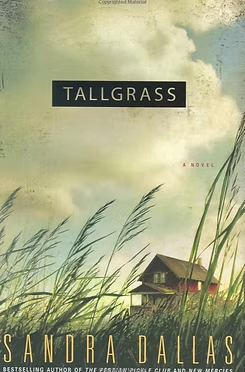
In 1942 Japanese Americans were forced to relocate to ten remote isolation camps under the guise of protecting the U.S. This is the foundation for Tallgrass, Sandra Dallas’s fictional portrayal of a small Eastern Colorado town that became home to an internment camp.
Tallgrass was published in 2007 yet remains timely in its illustration of unfounded prejudice and ill-conceived fear of those who are different.
Renny is the youngest daughter of a beet-farming family, whose property is near Tallgrass. Initially, the young teen doesn’t know what to think of the Japanese since there’s a clear division in town among those who think the idea of the camp is shameful and those adamantly opposed to its presence. The negative attitudes are fortified when a young girl is found raped and murdered. Guilt is immediately assigned to the Japanese.
Due to the war, finding farm laborers proves difficult, so Renny’s father hires three young Japanese men who prove to be hard workers and serve to dispel the misgivings held by Renny and her mother.
Dallas has crafted an engaging narrative proving that evil is not defined by one’s ethnicity or skin color. However, in her portrayal of some characters, there is little gray area. Still, as Renny’s family grows closer to the Japanese workers, she matures and is ultimately able to form her own opinions.
While there’s much that is predictable, the mystery of the murder, family secrets and a view of the hardscrabble life of farmers contribute to the well-paced novel.
Tallgrass
Four bookmarks
305 pages plus Reader’s Guide
St. Martin’s Griffin, 2007

Rainbow Rowell’s story of young love overshadowed by harsh realities is humorous, haunting, and hopeful. Alliteration aside, Rowell’s Eleanor & Park is a study in contrasts and seems to prove that opposites do attract.
The omniscient narrator alternates between the couple. Although this approach doesn’t establish distinct voices, the characters are well-defined. Bits and pieces of Eleanor’s unhappy home life are slowly revealed while suggesting impending misfortune. Park, on the other hand, has two loving parents and lives next door to his grandparents. Eleanor is the new girl in school. She’s overweight, has bright red, unruly hair and dresses in a way that only the addition of neon could attract more attention. Park isn’t Mr. Popularity, but he does straddle the line between acceptance and rebuff. He’s part Asian, dresses all in black, but has known the kids in his high school all his life. When Eleanor sits next to him on the bus, he’s embarrassed, but friendship, then romance slowly, oh so slowly, begins to emerge.
Among Rowell’s themes are bullying and abuse; these create tension in the novel. The sense of something going awry is palpable. Yet, so are the more positive aspects of emerging love and parental concern. References to Shakespearean tragedy add a sense of foreboding; nonetheless, this is a tale dependent on hope. The title characters are different, likeable, and prove that appearances aren’t everything. It’s unfortunate they live in world where extreme differences aren’t always appreciated and where it’s easy to hide dangerous secrets.
Eleanor & Park
Four Bookmarks
St. Martin’s Griffin, 2013
325 pages
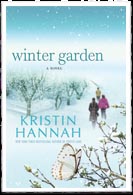
Often, stories within stories are enchanting, muddled, lopsided or boring. Fortunately, Winter Garden by Kristin Hannah is captivating without any confusion. One narrative is not more interesting than the other; both have equal appeal.
Much of what makes Hannah’s novel so successful is the clever way in which her characters evolve. Sisters Meredith and Nina are grown women who have always basked in the light of their father’s love. Meredith is the older sister, pragmatic and harried; Nina lives the adventurous life of a freelance photographer. Theirs is not a close a relationship. If not for Evan, their father, there would be little for anyone in the family to hold dear.
Unlike Evan, their mother is a cold, distant woman incapable of showing or articulating affection. This could be a black and white story, but Hannah has enough sense, and talent, to show the nuances. A secret past, painful memories and the harsh reality of war culminate in a fairy tale the sisters’ mother is ultimately compelled to tell. The story moves from the idyllic, contemporary life on the family’s apple orchard to cold, war-torn Russia. Like any good fairy tale, this one begins with a handsome prince, an evil overseer, and a young girl who falls in love.
As the fairy tale evolves, it’s clear this the only way the mother can explain herself and for her daughters to recognize their own strengths, weaknesses and connections. There’s nothing jumbled in either side of Hannah’s engaging account.
Winter Garden
Four Bookmarks
St. Martin’s Griffin, 2010
391 pages


 The Blue Page Special