Archive for the ‘relationships’ Tag

One house, 13 siblings, ghosts and the city of Detroit provide the foundation for The Turner House by Angela Flournoy. Thank goodness she provides a family tree to keep track of Francis and Viola Turner’s offspring. It helps that much of the present-day story focuses on Cha Cha, the eldest of the Turner children, and Lelah, the youngest. They’re separated by 23 years; their issues are familiar but not quite cliches.
Flournoy also takes the reader back to 1944 when Francis leaves Viola and young son in his rural Arkansas hometown to seek a better life in Detroit. Francis plans to send for his family once he’s settled. He stays away for more than a year, leaving Viola to consider other options.
This backdrop is interspersed with how the family has coped through the years. Francis is dead, Cha Cha has grandchildren of his own; even Lelah is a grandmother. Few have intact marriages or relationships, yet the family is close-knit. The house, the one in which all 13 Turners grew up, is empty and fallen into disrepair. Viola is no longer well enough to live on her own; she lives with Cha Cha and his wife in the suburbs.
The house, vividly described with Pepto Bismo pink bedroom walls, narrow stairs and large porch reflects the rise and fall of Detroit. Once alive with the large family’s comings and goings, its monetary worth is practically non-existent. The brothers and sisters, though, are mixed in their assessment of its sentimental value.
The Turner House
Four Bookmarks
Houghton Mifflin Harcourt, 2015
338 pages

Hive-Mind by Gabrielle Myers is labeled a memoir, but it’s slightly more than that. Written in diary-like form, Myers describes her summer of 2006 on a farm in Northern California. This is no kiddie account, though. While it’s the focus of her narrative, Myers alternates the chronicle with a look back to her relationship with her mother and growing up in Virginia. As if this isn’t enough, she also includes poetry.
It’s evident that sharing the earlier memories is cathartic; this is true of the latter ones, but is less obvious until the end. Myers’s descriptions of life on the farm, from early spring to late September, are vivid and stunning. I can practically feel dirt stuck in my fingernails as she, Baker (also working on the farm) and Farmer (the woman who owns the land and decides the daily chores) sow and weed and sweat and harvest. The author is also impressive in describing meals prepared from food on the farm.
Farmer is an enigma. This may be Myers’s point: Farmer never reveals enough about herself to know who she is. Myers shares her own thoughts and reactions, but that isn’t enough to make Farmer compelling. Baker is an open book and, consequently, is more interesting.
Myers isn’t writing about coming of age, but of becoming aware. This is evident as she connects the different phases in her life following a 1995 conversation with her mother: “… how I feel can become how someone else feels.”
Hive-Mind
Three and three-quarter Bookmarks
Lisa Hagen books, 2015
299 pages
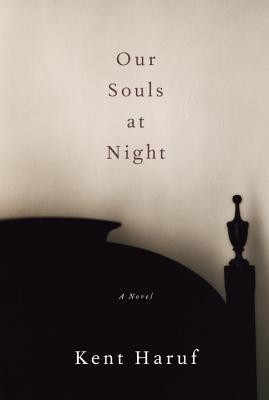
Our Souls at Night by Kent Haruf is best described as sweet. This terse novel was published posthumously, and its content makes me imagine that the author was in his final days when he penned it. This is a story of finding a way out of loneliness while believing that the opinions of others have little value or impact.
Addie Moore and Lewis Waters are widowed and living in the fictional town of Holt on Colorado’s eastern plains. This is Haruf’s preferred setting as many of his previous works have centered around this small communityand its residents. Anyone familiar with his writing will recognize names and places.
One day, Addie calls Lewis. They have known each other for years, but only peripherally. She wonders if he would like to spend the night. This is no brazen, immoral solicitation. It is one lonely heart reaching out to another.
Addie’s son and grandson figure into the narrative as does Lewis’s daughter. The townspeople make sure these adult children are aware of what their parents are doing.
Haruf provides a lot of detail such as teeth brushing and lawn care for someone trading in a scarcity of words (after all, the book is less than 200 pages long).
Unfortunately, the premise, which is touching and somewhat whimsical, overshadows the writing, which is too mundane to be enchanting. Anyone who has experienced a meaningful relationship (be it lover or friend) will appreciate the warmth drawn from conversations that happen just before sleep.
Our Souls at Night
Three bookmarks
Alfred A. Knopf, 2015
179 pages

For a minute forget that Elizabeth Gilbert wrote Eat, Pray, Love. It may take a little longer, but the idea is to not let this dissuade you from reading The Signature of All Things. Gilbert’s novel is as different from her memoir as ice milk is from ice cream. The latter is much richer and nuanced; it’s worth every moment of guilty pleasure spent under its grip.
Gilbert transports the reader from London, across the seas (on multiple occasions), and to Tahiti and Amsterdam. Philadelphia provides the lengthiest setting where the brilliant, unattractive Alma Whitaker is introduced to the world: her birth is literally the first sentence of this epic narrative. In Gilbert’s words, Alma’s childhood “was not yet noble, nor was it particularly interesting …” Thus, the focus turns, albeit temporarily, to Alma’s father, Henry Whitaker.
Henry stole his way out of poverty. He didn’t just acquire wealth, he attained knowledge and became a leading botanist and businessman. Alma’s mother, a stoic and harsh parent intent on fortifying her daughter’s intellect, also possessed a great mind and interest in botany.
Through humor, interesting botanical descriptions and strong, insightful characters, Gilbert creates a story that not only spans continents, but also scientific ideas along with notions regarding love and relationships. The vivid imagery of the various landscapes is a bonus.
Alma is a passionate character rich in curiosity (and foibles). Yet, despite the limits placed on her gender, she explores life in miniscule proportions and unexpectedly reveals its grand scale.
The Signature of All Things
Four-and-a-half Bookmarks
Viking, 2013
499 pages

The title of Kathleen Flinn’s experience at Le Cordon Bleu in Paris is what initially caught my eye: The Shaper Your Knife, The Less You Cry. These words are advice from one of her chef instructors as begins the first of three sections required to earn a diploma from the prestigious cooking school. The subtitle offered more foreshadowing than I would have liked, though: “Love, Laughter and Tears in Paris at the World’s Most Famous Cooking School.”
Flinn’s account combines her background, her romance and her Parisian education, which involved much more than cooking as she learned to navigate a new city with only un petit peu knowledge of French.
The book is divided into the three parts that correspond with the units at the school: Basic, Intermediate and Superior Cuisine. Flinn’s culinary undertaking is humorous, honest and, unfortunately, predictable. Of course she grows through this journey; of course she learned techniques that were as foreign as the language; and of course she is with the man of her dreams. The latter requires no spoiler alert; this is revealed early in the narrative.
Despite its predictability, Flinn gives an insider’s view of how the classes are taught, the types of people who enroll (not surprisingly from all over the world) and the friendliness of the French people. She also includes several recipes and even includes a menu guide for book groups. Fortunately, none require deboning a chicken or dealing with dead rabbit heads.
The Sharper Your Knife, The Less You Cry
Three-and-a-half Bookmarks
Penguin Books, 2007
278 pages

The adage that opposites attract is evident in Crooked Heart by Lissa Evans. Noel and Vera aren’t exactly drawn together as much as they are forced upon each other: Noel is an orphaned 10-year-old evacuee and Vera is a middle-aged woman who reluctantly agrees to care for him.
Before they meet, Noel has managed to fly under the radar in London with his elderly Godmother, Mattie, with whom he’s been living since the death of his parents. Both have a disdain for authority and are content in their relative isolation. As World War II becomes more imminent, Mattie’s health deteriorates and England increasingly is in Germany’s crosshairs.
Noel is unusual, and Vera is initially convinced he is not very bright. Today he’d be considered a nerd; certainly his intellect and lack of social skills don’t make him a popular child. Vera is widowed and trying to make ends meet, although her efforts aren’t on the up and up. Soon, Noel offers suggestions to improve upon Vera’s scams and their efforts prove to be quite successful, if not quite moral.
Among Noel and Vera’s prey is Mrs. Gifford who unwittingly (and repeatedly) donates to whatever charity the two have concocted. However, they don’t just take her money, they spend time getting to know her. Eventually, Noel becomes protective of the old woman.
Evans’ writing style is subtle as the relationships evolve. Attitudes begin to shift and bonds are created. The couple begins to accept each other’s flaws while recognizing their own.
Crooked Heart
Four Bookmarks
HarperCollins, 2015
282 pages

I am humbled and surprised when I run into someone who tells me my blog is enjoyable and a good place to learn about books (and restaurants when I write about them). When I started The Blue Page Special nearly three years ago, that’s what I hoped for. What’s even better is when one of my readers shares a book title with me, introducing me to a new author or genre. Such is the case with The Rosie Project by Graeme Simsion.
Simsion presents Don Tillman: a nerd. This renowned genetics professor at a Melbourne, Australia, university has created a life so structured that all of his activities are scheduled to the minute. He finds the slightest deviation unnerving. This, along with his intelligence and inclination to view the world through literal eyes, makes him socially inept.
Nonetheless, he decides it’s time to find a life partner and creates the Wife Project, complete with a multi-point questionnaire which has no place for romance. That is until Rosie Jarman, a graduate student in psychology, unwittingly becomes a candidate in the project. Don quickly dismisses her as a viable contender because of what he perceives as her many (human) faults.
The novel is predictable which might warrant a spoiler alert, but I encourage reading it anyway. Don’s voice and personality quirks are well-developed — complete with a few laugh-out-loud moments. Also, Rosie’s criticism that the Wife Project objectifies women is unarguable. Yet, the premise results in a fun read where transformations occur on several, some even surprising, levels.
The Rosie Project
Four Bookmarks
Simon & Schuster, 2013
292 pages

Our youngest son recently graduated from Knox College; I’d been vaguely aware of it years before because of Sixteen Pleasures, a book I enjoyed for its setting (Florence, Italy) and strong female narrator. This same son gave me an autographed copy of Hellenga’s most recent work, The Confessions of Frances Godwin, which had been languishing on my nightstand far too long.
The setting is mostly Galesburg, Ill., with Knox figuring prominently; other locales include Milwaukee, Rome and Verona. With Frances, Hellenga introduces another female narrator. I admit I’m intrigued by his ability to create such true female voices.
It’s 2006 and Frances has retired from a career as a high school Latin teacher. At first, the novel appears to be a vehicle for her to reflect on her past because she soon recounts how she met her husband, Paul, a Shakespeare scholar from whom she took classes (at Knox). She tells of their affair, their eventual marriage and life together in Galesburg. They have a daughter, Stella, who as a grown woman appears to make a series of bad choices when it comes to men.
The story is occasionally heavy handed. Consider, Frances’ name: Godwin. Several times, she converses with God, who, among other things, entreats her to go to confession. By this point it’s clear that she does have more than a few things to own up to.
Love and guilt are not unusual companions; for Frances, they’re a large part of who she is.
The Confessions of Frances Godwin
Four Bookmarks
Bloomsbury, 2014
305 pages

All the Living by C. E. Morgan is one of the most beautifully written novels I’ve read; unfortunately, the story doesn’t reach the same level as the words that embrace it. It’s not bad; it just doesn’t rise to the same level as the well-crafted images. I must admit that the opening sentence immediately grabbed me with its element of intrigue: “She had never lived in a house and now, seeing the thing, she was no longer sure she wanted to.”
She is Aloma, a young woman, who spent her early years living with relatives in a trailer before being sent, at age 12, to a “mission school” – essentially an orphanage. There, she discovers a talent (and passion) for the piano. Otherwise, there is little to set her apart.
The house, on a tobacco farm, is Orren’s. When his mother and brother are killed in an accident he asks Aloma, whom he had recently met, to join him as he tries to maintain the homestead. A young preacher who befriends Aloma is added to the mix, which also includes the harsh, isolated landscape.
There’s no time frame but basic amenities are evident; it’s clear this is not a back-in-the-day tale. The house has an old, hopelessly out-of-tune piano. Orren has the farm and a reticence that comes from grief and the responsibilities he’s inherited.
Possessing little, but more than they realize, Aloma and Orren’s story isn’t just about being lonely even when others are present, but about love and self-awareness.
All the Living
Three-and-a-half bookmarks
Farrar, Strauss and Giroux, 2009
199 pages

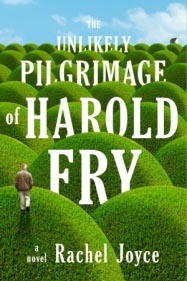
The Unlikely Pilgrimage of Harold Fry begins as a slow, methodical, unexpected journey – for the main character and the reader. Rachel Joyce’s novel practically crawls through the first few chapters. Then, like Harold, it picks up the pace only to falter on occasion like most adventures.
This poignant tale shares qualities of a love story and mystery, but is more the former than latter. And, it’s about different types of love: romantic, familial and companionable.
After receiving a letter from Queenie, a work colleague with whom he’s lost touch, Harold sets out to mail a response. Despite the fact that he left the house without his cell phone and is dressed somewhat formally, he decides to embark on a 600+ mile trek from one end of England to the other to talk to Queenie in person. He has no backpack, water bottle, map or other equipment. In fact, he walks in boating shoes.
The elements of a mystery come in the form of questioning the relationship between Harold and Queenie, as well as between Harold and his estranged son, David. There’s also the fact that Harold is married, although he and his wife, Maureen, do little more than share a past and the same house.
The characters’ imperfections are what make the story work, albeit inconsistently. As personalities evolve, foibles become more defined, but so do strengths. Harold loses his way in more than one manner, but he, like the reader, gains perspective even if it is not particularly satisfying.
The Unlikely Pilgrimage of Harold Fry
Three Bookmarks
Random House, 2012
320 pages

 The Blue Page Special