Archive for the ‘relationships’ Tag
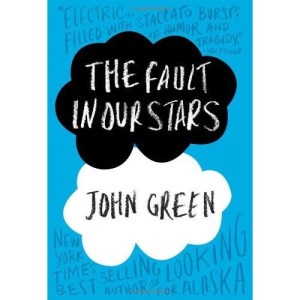
Hazel, the insightful narrator of John Green’s The Fault in Our Stars, is a 17-year-old who’s fought cancer most of her life. While talking about another book, she could just as easily be talking about this one: “But it’s not a cancer book, because cancer books suck.” Green has written much more than that, and it comes nowhere close to sucking.
This is about living with the knowledge of death’s inevitability loitering closer than it does for most, especially the young. Hazel meets Augustus at a cancer survivor’s support group. Eyes meeting across a semi-circle of young adults in varying degrees of bad health may not sound romantic, yet it’s the beginning of a beautiful relationship between two young adults who teeter alarmingly near to death’s grasp.
Hazel is an endearing character: intelligent, witty and aware of what she has in life, versus what she might be missing. She does not want to be defined by her diagnosis. Although Augustus might be a little too good to be true, he is fun and expands Hazel’s world.
Through a shared passion for the book that is “not a cancer book,” which simply stops with no real ending, the pair find a way to look toward the future. They want to know what happens. Yes, this may be a metaphor for their lives, but it’s far less dismal than that.
A few plot twists help overshadow the novel’s predictability. The story’s beauty is based not on what’s lost, but is grounded on what’s gained.
The Fault in Our Stars
Four Bookmarks
Dutton Books, 2012
313 pages
Anna Quindlen’s Lots of Candles, Plenty of Cake is a poignant, yet cheerful perspective on getting older. This is the kind of book to share with friends, particularly if they’re around the age of what is now considered to be the new-40s.
As in most of her writing, Quindlen relies on personal experience to make her points. Her writing career includes several stints as a columnist (at the New York Times and later Newsweek) as well as authoring several works of fiction, nonfiction and children’s books. She has a keen sense of observation. Better still, she’s an extraordinary wordsmith. Those two skills result in crafting pieces readers can easily make connections with. Of control, she writes: “I thought I had a handle on my future. But the future, it turns out, is not a tote bag.”
Quindlen examines the important aspects of life, which can be applied to most people, women in particular: friendship, family, love, parenting, and more. She’s humorous and honest. She writes of near-misses, both good and bad. She reflects on how much her younger self was sure she knew and how her older self readily acknowledges what she doesn’t. Without citing the tired phrase that youth is squandered on the young, it’s a major thread. Quindlen puts a new spin on it.
Yes, this is a memoir, but it is much more. It’s a guidebook to accepting that each morning we wake up is a gift – even if we’re older than we were the day before.
Lots of Candles, Plenty of Cake
Four Bookmarks
Random House 2012
182 pages

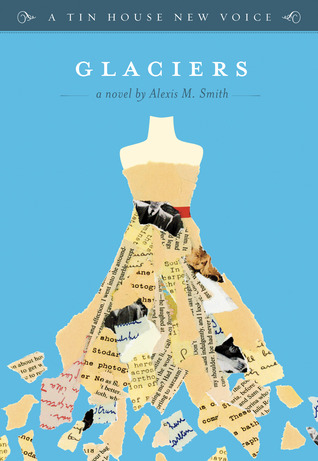
I hope the next book Alexis M. Smith writes will be much, much longer
than her debut novel, Glaciers. At only 174 pages it is obviously terse,
yet remarkably rich in detail with characters I wanted to spend a lot
more time with.
The storyline follows a day in the life of Isabel, a Seattle librarian who re-
pairs damaged books and whose primary interactions are with those who
are also somehow wounded. That may sound either dry or familiar (The Hours
comes to mind since Isabel plans to attend a party later that day), but Smith
writes in a lyrical, understated manner that is immediately enticing.
Isabel’s story takes place in less than 24 hours, but it is not confined to that
time frame. Her dreams, her family, and her childhood in Alaska are all beau-
tifully crafted to create a complex, sensitive woman with a penchant for vin-
tage clothing and old photographs. Isabel recounts her first trip to a thrift
store with her father who explained they were hunting for treasures. Initially,
the young girl is uncertain, even fearful she will miss the prize, until her father
says, “If you love it, you will treasure it, does that make sense?” The four-year-
old Isabel takes this to heart, and, ultimately, subtly applies the explanation
to everything from dresses to relationships.
Without giving anything away, one of Smith’s most impressive writing techniques
is the adroit manner in which she makes Glaciers Isabel’s story in more ways
than one.
Glaciers
Four and a half Bookmarks
Tin House Books, 2012
174 pages



 The Blue Page Special