Archive for the ‘acceptance’ Tag
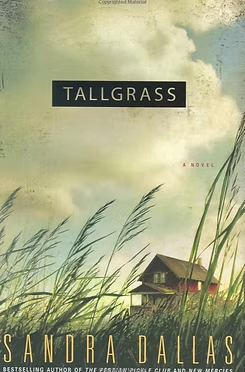
In 1942 Japanese Americans were forced to relocate to ten remote isolation camps under the guise of protecting the U.S. This is the foundation for Tallgrass, Sandra Dallas’s fictional portrayal of a small Eastern Colorado town that became home to an internment camp.
Tallgrass was published in 2007 yet remains timely in its illustration of unfounded prejudice and ill-conceived fear of those who are different.
Renny is the youngest daughter of a beet-farming family, whose property is near Tallgrass. Initially, the young teen doesn’t know what to think of the Japanese since there’s a clear division in town among those who think the idea of the camp is shameful and those adamantly opposed to its presence. The negative attitudes are fortified when a young girl is found raped and murdered. Guilt is immediately assigned to the Japanese.
Due to the war, finding farm laborers proves difficult, so Renny’s father hires three young Japanese men who prove to be hard workers and serve to dispel the misgivings held by Renny and her mother.
Dallas has crafted an engaging narrative proving that evil is not defined by one’s ethnicity or skin color. However, in her portrayal of some characters, there is little gray area. Still, as Renny’s family grows closer to the Japanese workers, she matures and is ultimately able to form her own opinions.
While there’s much that is predictable, the mystery of the murder, family secrets and a view of the hardscrabble life of farmers contribute to the well-paced novel.
Tallgrass
Four bookmarks
305 pages plus Reader’s Guide
St. Martin’s Griffin, 2007
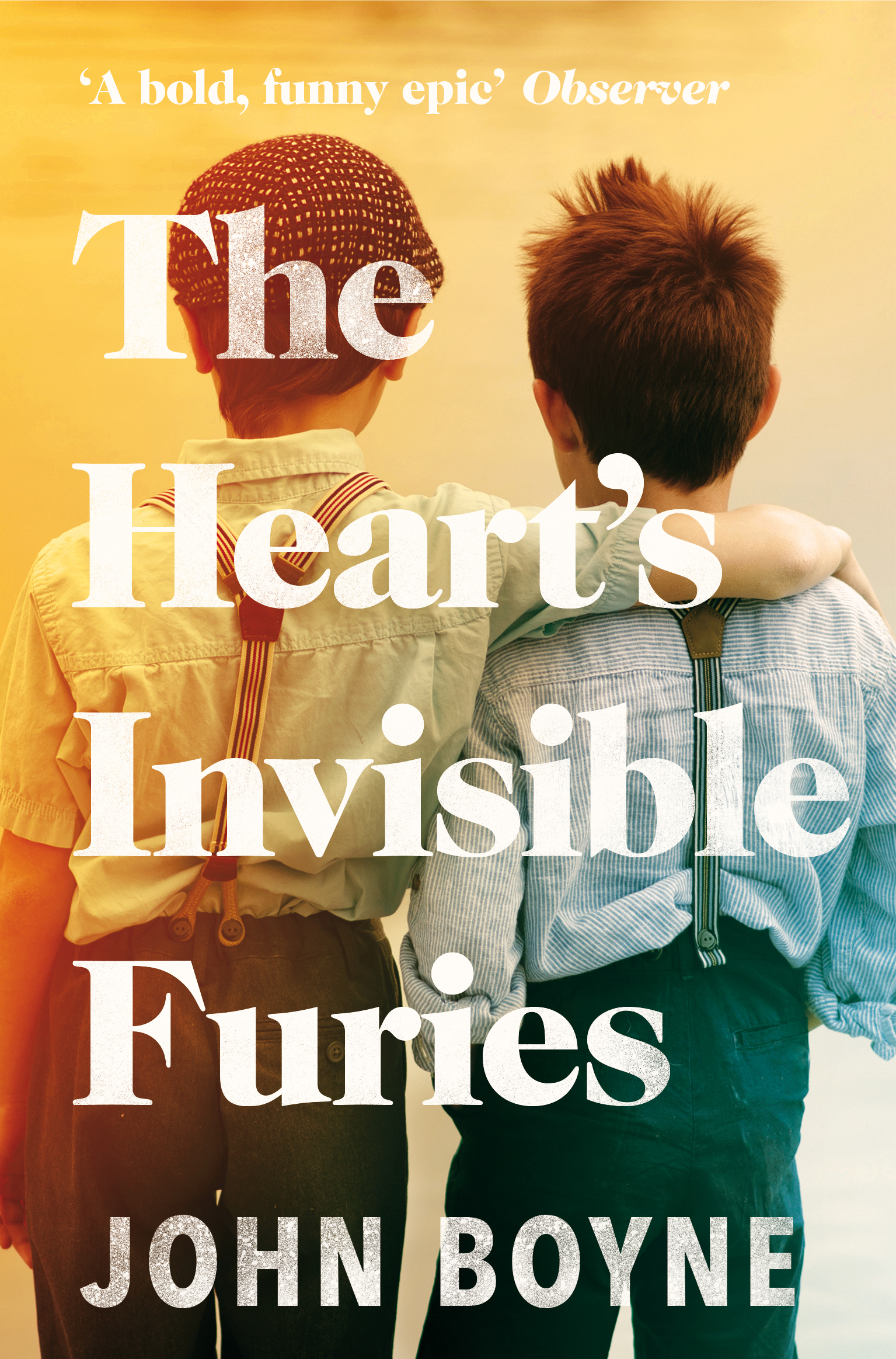
Repression, redemption, acceptance and truth are the themes of The Heart’s Invisible Furies by John Boyne primarily set in Ireland.
Catherine, a 16-year-old, girl from a rural community, is physically kicked out of the church and her community by the parish priest for being pregnant and unwed. She makes her way to Dublin, gives up her newborn son for adoption and moves on with her life. The boy, Cyril, is adopted by Charles and Maude Avery, a wealthy couple whose idea of parenting doesn’t include affection. Nonetheless, he lacks for little else. The narrative follows Cyril for seven decades.
Cyril is introspective. He’s told to call his adoptive parents by their first names and is frequently reminded he is “not an Avery.” When, at age seven, he meets Julian he is immediately enthralled. Later, they become best friends but couldn’t be more different: Cyril is gay and Julian loves (all) women.
For most of his life, Cyril hides the truth about himself. This haunts him and destroys the most important relationships in his life. There are rifts, disappointments and more lies until Cyril finally leaves Dublin in spectacular, yet shameful, fashion.
This beautifully crafted novel is rich with complex, interesting characters. Boyne injects humor, joy and sorrow into all of them, especially Cyril. He is someone to embrace and shake by the shoulders. He’s intelligent, funny and serious, and it takes years for him to recognize all his life holds. The abundance of which surprises the reader as much as him.
The Heart’s Invisible Furies
Five Bookmarks
Hogarth, 2017
585 pages, includes reader’s guide
The Silence of the Choir is, in fact, loud and clear. This timely, multi-voiced novel by Mohamed Mbougar Sarr addresses the plight of African refugees and their impact on a small Sicilian town.
The men, called “ragazzi” by the townspeople, have fled their respective countries for numerous reasons, including war and poverty. Few share the same language, but all endured subhuman conditions to reach Europe – at great cost physically and monetarily.
Not surprisingly, reaction to their arrival varies: some locals are eager to help, others are convinced they will take jobs and do harm. Few are indifferent.
The story is told from numerous perspectives including several refugees, the town physician, a priest, a reclusive poet, the mayor, the woman determined to help them attain asylum and a man equally resolute to send them back to where they came from.
Jogoy, is a former refugee working as an interpreter. Some of the ragazzi trust him, many don’t. Still, it’s his skill with languages that’s secured his place, but his past remains a burden that’s always close to the surface. The narrative is sporadically interrupted with his story, complete with a different font and chapter titles. His could easily be that of others in exile.
Though this is a poignant, contemporary and significant topic, the author injects moments of humor and joy with the agony of uncertainty the ragazzi and locals experience. There are also elements of mystery, romance and an array of often painful approaches dealing with the situation.
The Silence of the Choir
Four-and-a-half bookmarks
Europa Editions, 2024
391 pages

The Book of Unknown Americans by Cristina Henriquez is a timely read with the issue of immigration never far beneath the political surface. Yet, the novel isn’t about politics, but people.
Arturo and Alma leave Mexico for Delaware because they want to do more for their teen-aged daughter, Maribel, who suffered a brain injury. They believe she’ll benefit in a better school. They’re not illegals; they have work visas. Each chapter is told from one of the character’s perspectives, some in greater detail than others; only never Maribel’s.
Woven in with the challenges of living in a new land with a new language is the relationship that develops between Maribel and Mayor.
Sixteen-year-old Mayor Toro lives in Maribel’s apartment building; his parents left Panama when he was less than a year old, but he’s never fit in. From Mayor’s perspective, Henriquez writes: “The truth was that I didn’t know which I was. I wasn’t allowed to claim the thing I felt and I didn’t feel the thing I was supposed to claim (Panamanian).”
This sums up the experience of those introduced in the book. Henriquez has created a montage of immigrants: from Mexico, Panama, Puerto Rico, Guatemala, Nicaragua, even Venezuela and Paraguay. These places are all part of the Americas, which is what makes the title so appropriate with its double entendre. In brief, compelling chapters, among those told in Alma and Mayor’s voices, the neighbors share their pasts explaining why they left their native countries for the U.S.A.
The Book of Unknown Americans
Four Bookmarks
Alfred A, Knopf, 2014
286 pages

Similar themes, character types and unusual situations find their way to John Irving novels. His latest, In One Person, is no exception. Despite these commonalities, it’s an original look at acceptance and the secrets families hide in plain view, particularly when it comes to sex. The most covert issue is the sexuality of young Billy Abbott, the protagonist/narrator. Billy struggles with this; it’s also something family members have insight into but refuse to reveal – hoping they’re wrong. Yet all around him are mixed messages, from Billy’s loveable cross-dressing grandfather to the cruel teenage wrestling superstar. Billy’s story spans more than 50 years, and it’s clear his family’s hopes were dashed. Billy isn’t gay, he’s bi-sexual, but that’s not what they’re hiding.
Among the characters populating Irving’s novel are angry mothers (several), wrestlers (many), and transgenders (numerous, although Billy’s generation used the term transsexuals). A residential boys school in rural Vermont – another typical Irving element – is among the settings. Perhaps the strongest of the similarities is the power of friendship. Billy’s true friends are an eccentric bunch with shared worries. The complicated town librarian (my favorite character) probably knows Billy best.
The novel is like a one-sided conversation Billy has with the reader. Billy repeats some details, tells some things out of sequence and offers a few teasers. As in his other work, Irving’s irony and descriptive writing prevail.
A Prayer for Owen Meany is not just my favorite book by Irving, it’s one of my favorite books by anyone. In One Person is not on that pedestal, but it’s close.
In One Person
Four-and-a-half Bookmarks
Simon & Schuster, 2012
425 pages




 The Blue Page Special