
One house, 13 siblings, ghosts and the city of Detroit provide the foundation for The Turner House by Angela Flournoy. Thank goodness she provides a family tree to keep track of Francis and Viola Turner’s offspring. It helps that much of the present-day story focuses on Cha Cha, the eldest of the Turner children, and Lelah, the youngest. They’re separated by 23 years; their issues are familiar but not quite cliches.
Flournoy also takes the reader back to 1944 when Francis leaves Viola and young son in his rural Arkansas hometown to seek a better life in Detroit. Francis plans to send for his family once he’s settled. He stays away for more than a year, leaving Viola to consider other options.
This backdrop is interspersed with how the family has coped through the years. Francis is dead, Cha Cha has grandchildren of his own; even Lelah is a grandmother. Few have intact marriages or relationships, yet the family is close-knit. The house, the one in which all 13 Turners grew up, is empty and fallen into disrepair. Viola is no longer well enough to live on her own; she lives with Cha Cha and his wife in the suburbs.
The house, vividly described with Pepto Bismo pink bedroom walls, narrow stairs and large porch reflects the rise and fall of Detroit. Once alive with the large family’s comings and goings, its monetary worth is practically non-existent. The brothers and sisters, though, are mixed in their assessment of its sentimental value.
The Turner House
Four Bookmarks
Houghton Mifflin Harcourt, 2015
338 pages

A friend has talked about Louise Penny whodunits for years. I finally decided to check out the appeal for myself. The real mystery is what took me so long?
Using humor, a strong sense of place and an exceptionally-likeable main character in the form of Inspector Armand Gamache, Penny has a formula for success. In Still Life, her first foray into the genre, Gamache is brought in from Montreal to investigate the murder of a well-liked member of the small community of Three Pines.
There is an abundance of rcharacters for such a small town, which is actually more of a village. The only one I found extraneous was Agent Yvette Nichol, who is part of Garmache’s team. She’s new to investigation and it’s clear the inspector hopes to serve as her mentor. Through a series of misunderstandings and her own stubborn nature, Nichol falls short of everyone’s expectations – including her own.
The murder and subsequent efforts to solve it are intriguing. The victim, Jane Neal, is offed early (as in the first few sentences), yet Penny imbues a strong sense of amiability in her. Neal is later seen through the eyes of her friends, so even though she is not a “living” character, she remains a prominent one throughout the novel.
The pool of possible suspects is large with plenty of nuance and depth. Of course, it’s Gamache whose intelligence, sensitivity and humor are enough to make me want to read more about him and the investigations he leads.
Still Life
Four Bookmarks
Louise Penny
St. Martin’s Paperbacks, 2005
293 pages

Assimilation, family expectations and grief are at the heart of Mira Jacob’s The Sleepwalker’s Guide to Dancing, which is both humorous and poignant, albeit long.
Although Amina Eapen was born in the United States, her parents’ roots remain tied to their native India. Amina is a single, 20-something, professional photographer. Her mother, Kamala, convinces her to return to Albuquerque on the pretext that Amina’s father is not well.
The story alternates between present day and Amina’s youth. Her parents’ marriage is problematic while her relationship with her brother, Akhil, is more consistent. One of Jacob’s threads leads to a family visit to India when the children are young. Largely, though, the focus is on the siblings in high school and Amina’s struggle to see her mother as more than a manipulator and her father as someone with physical ailments.
The settings Jacob presents include India, a small town near Albuquerque and Seattle. None would seem to have much in common with the other, yet they all contribute to the characters’ personalities and the life paths Amina and her family follow. Interestingly, the Eapens create a tight-knit community with other Indian nationals. They are so close as to be like a large, surrogate family, which Amina finds both tiresome and comforting.
The sounds and smells of India are vibrant in the Eapen kitchen, where food is something that Kamala uses as both bribery and solace. These serve their purpose as the family comes to grip with loss they have long kept buried — literally.
The Sleepwalker’s Guide to Dancing
Three-and-three-quarter Bookmarks
Random House Trade Paperback, 2015
498 pages

Anthony Marra is the master of foreshadowing. At times he’s subtle, then he’s as obvious as an agitated teenager reeking of cigarettes claiming he doesn’t smoke. This was true of his first novel, A Constellation of Vital Phenomena, and follows suit in his most recent: The Tsar of Love and Techno.
Marra has chosen a similar setting in Russia with another interesting cast of characters; however, he spans more time, beginning in 1937 continuing to present day. He expands the setting from Siberia to Leningrad/St. Petersburg to Chechnya: landscape is a crucial element.
The narrative begins with an artist in the propaganda department whose job is to erase enemies of the state whose images appear in paintings and photographs. He does this by blotting out faces with ink or by painting something new, which is often his dead brother’s face. It appears in a myriad of scenes representing various phases of his life: child, teenager, middle age and old age.
With each chapter comes a new narrator, in a different setting providing a singular element to the overall novel. The stories are a progression. It’s no spoiler alert to note that the pieces do eventually fit together (very well). Even if they didn’t, Marra’s writing is full of wit and pathos. The images of the pollution-wreaked mining community in Siberia are stark and frigid; just as a Chechnyan hillside is pastoral and warm. The men and women introduced by the author are so human their breath practically turns the pages.
The Tzar of Love and Techno
Four bookmarks
Hogarth, 2015
365 pages

Even with plenty of objectionable characters and situations, it’s easy to empathize with the narrator, known only as the captain, in Viet Thanh Nguyen’s The Sympathizer.
The captain is the sympathizer; he’s an undercover agent in Viet Nam just as the country falls to communist rule in 1975. Nguyen’s writing is of the step-on-the gas and honk-the horn variety. It’s thrilling, witty and poignant. It demands well-deserved attention.
The captain receives orders from his communist handlers to travel with a South Vietnamese general as part of his entourage to the United States. They’re among those on the last planes to leave the war-torn country. It’s in the captain’s nature to consider both sides and see the value and downsides in each. He is the son of a Vietnamese woman and a French Catholic priest. This and his western education make him an outcast. In Nguyen’s hands, the captain is kind, albeit sarcastic, and exceptionally intelligent. It’s not difficult to understand his situation.
It’s clear from the beginning that the captain has been caught. Most chapters begin addressed to the commandant and it eventually becomes clear that the captain is recounting the days that led to his capture. However, this is not before the captain’s loyalty to his friends, his love for his mother and a handful of questionable decisions and actions are detailed.
The aftermath of war, the stigma of not fitting in and the lengths people go through to survive are all addressed by Nguyen in this compelling narrative.
The Sympathizer
Four-and-half Bookmarks
Grove Press, 2015
367 pages
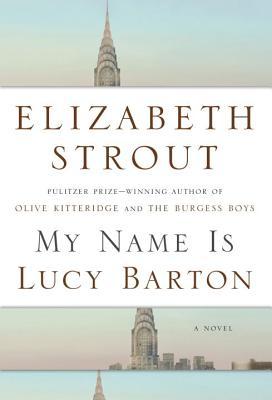
My Name is Lucy Barton is a statement and not only the title of Elizabeth Strout’s new novel. It’s an affirmation as Lucy reflects on the relationship with her mother, which is like a faulty wire: occasionally there’s no connection.
Lucy is from a rural Illinois town where growing up her family lived so far below the poverty line as to make it seem something to attain. Lucy’s life is revealed as she lies in a hospital bed with a view of the Chrysler Building in New York City talking with her mother whom she hasn’t seen or spoken with in years. Strout is methodical as she merges Lucy’s past with the present.
The rich, stark pacing and imagery serve to expose family dynamics in the narrative. That is, Strout’s writing provides enough detail to shape a situation or character, but not so much that there is little left to the imagination. In fact, this is what makes some aspects harrowing: imagining what life was like for young Lucy. She lived with her older siblings and parents in a garage until age 11.
Her mother’s brief presence provides the vehicle to see Lucy’s past; the extended hospitalization gives Lucy time to consider her adult life as a mother, wife and writer.
Lucy should despise her parents and her past, yet she doesn’t. Her family was shunned and her parents were apparently abusive in their neglect. Lucy is grateful for her mother’s presence. The mother-daughter bond, at least from Lucy’s perspective, overrides past sins.
My Name is Lucy Barton
Four and a half Bookmarks
Random House, 2016
191 pages

Just when it seems there can’t possibly be more to write about the horrors of the Holocaust, Jim Shepard in The Book of Aron reminds us why it is something we must never stop reading about – and, hopefully, learning from.
In Aron, the young narrator, Shepard has created a selfish, defiant, naïve and curious young boy. The German invasion of Poland and the subsequent establishment of the Warsaw Ghetto are described through Aron’s experience. He and his friends turn to smuggling. They couch their activities as efforts to help their families; however, the thrill of seeing not only what they can unearth, but also what they can get away with are, initially, stronger forces.
Shepard’s descriptions of the harsh living conditions, the threat of being caught by the authorities for dealing in contraband and the pain induced by being cold and hungry are painfully vivid. At first Aron treats the situation as little more than an inconvenience and the smuggling as something to keep him and his cohorts occupied.
As Aron slowly loses his family and friends, he finds himself on the streets struggling to survive. Dr. Janusz Korczak, who ran the Warsaw orphanage, rescues him. Before the war, Korczak was well-known as a children’s rights advocate. As portrayed by Shepard, he is a man old before his time motivated by a need to instill hope in children trying to endure hopeless lives.
This fictionalized account of the eventual friendship between Aron and the good doctor is harrowing and riveting.
The Book of Aron
Four Bookmarks
Alfred A. Knopf, 2015
253 pages

Families can be so complicated and Anne Tyler has banked on this fact in all of her novels. Her most recent, A Spool of Blue Thread, is no exception.
Abby and Red Whitshank are the kind of folks that raise their four kids, go to work every day, are regarded favorably, pay their bills, have a peripheral connection to a church and know little about either each other or their family history. At one point, in a jesting tone, the omniscient narrator notes there are two family stories: one about the family home on Bouton Road in a respectable, comfortable Baltimore neighborhood, and the other about Red’s sister’s marriage.
Of course, there are more, many more. And Tyler slowly, almost teasingly, reveals them. There’s a good reason why she spends so much time describing the Bouton Road house built by Red’s father.
Initially, the novel appears to focus on Denny, the ne’er-do-well son who floats in and out of the family’s vision. Once he’s clearly established as unreliable and secretive, the focus shifts. Multiple times. Denny has two sisters, but they are the least developed characters. Stem, the youngest son, soon becomes a focal point, as do Red’s parents. Though separated by a generation, the secrets and pasts associated with these three are what move the narrative.
Tyler is not afraid to throw in surprises, which in retrospect were actually subtly foreshadowed. Her ability to show the strengths and foibles of family life are engaging, occasionally humorous and always insightful.
A Spool of Blue Thread
Four Bookmarks
Alfred A. Knopf, 2015
368 pages

I was baffled by Emma Hooper’s Etta and Otto and Russell and James. It’s sweet but confusing. It’s a love story that considers lost chances and perhaps poor decisions. It’s also surprisingly descriptive in its brevity.
Etta is 83 years old when she embarks on a trek across Canada to the ocean. The five-sentence letter she leaves as explanation to her husband sets the tone for the novel: “Otto, I’ve gone. I’ve never seen the water, so I’ve gone there. Don’t worry, I’ve left you the truck. I can walk. I will try to remember to come back.”
This isn’t the kind of thing she’s planned, she simply leaves to see the coast. Briefly, Otto considers trying to find her. Ultimately, it’s Russell who does so, while Otto remains on the farm.
Along her trek, Etta gains unwanted attention from the media and towns people she encounters. She also acquires a companion in James, a source of bewilderment.
The relationships among the four title characters are complex. Otto and Russell have known each other since childhood. Both love Etta. Hooper develops the bond between Etta and Otto through letters the pair exchanged during the war. Their correspondence evolves from the mundane to the heartfelt.
Hooper intersperses the characters’ backstories with their present day adventures: Etta bound for the sea, Russell in search of Etta and Otto discovering daily rhythms on his own. Meanwhile, there’s James, who’s difficult to describe. Hooper has crafted a terse novel unpredictably rich with humor and longing.
Etta and Otto and Russell and James
Almost Four Bookmarks
Simon & Schuster, 2015
305 pages

Full disclosure: I’m a John Irving fan. However, at around page 39, in Avenue of Mysteries, I wondered if he’d lost his touch. Before I knew it, I was on page 100 and realized I had nothing to worry about Irving’s storytelling mastery.
Fourteen-year-old Juan Diego and his younger sister, Lupe, are dump kids in Oaxaca, Mexico. That is, they live and work among the trash heaps where garbage is sorted, saved and burned. Through books he’s salvaged, Juan Diego has taught himself to read and learn English. He also serves as translator for Lupe, whose words are unintelligible to everyone else. What she lacks in comprehensibility, she compensates for in her mindreading ability. She’s no fortune teller. Although she has a sense of what will happen, she knows peoples’ histories.
The narrative moves between Juan Diego’s youth and his adult self, a successful writer living in the U.S., who visits the Philippines. Juan Diego’s dreams reveal his past: the dump, the Catholic Church, his mother (the prostitute and cleaning woman for the church), the would-be priest from Iowa and the circus, among many other elements. It wouldn’t be John Irving without the numerous components and the way they intersect.
As he travels, Juan Diego’s state of mind is manipulated by the medication he takes and forgets to take, as he meets Miriam and Dorothy, introduced as mother and daughter. The relationships with the women and a former student are complicated and interesting, but not nearly as engaging as Juan Diego’s earlier life.
Avenue of Mysteries
Four Bookmarks
Simon & Schuster, 2015
460 pages


 The Blue Page Special