We planned to arrive in time for “cruffins” the cross between a muffin and croissant, because why settle for one when a combo will work? The decision to get to Mr. Holmes Bakehouse in the Highland Park neighborhood of Los Angeles early was based on my brother’s experience in San Francisco. There, it’s not unusual for lines to wrap around the block.
According to the lovely person behind the counter, the LA cruffins don’t even come out of the oven until 9 a.m. — unlike their northern California counterparts where they’re history before 8 a.m. “I think people like to sleep-in here,” she said by way of explanation.
Although the cruffin remains a mystery to me, I wasn’t disappointed by the pastries we sampled.
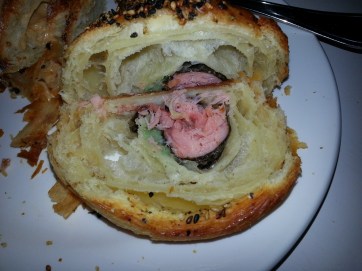
The California Croissant and the blue cheese bacon danish were our savory choices. The California featured smoked salmon, nori and wasabi all encased in a buttery, flakey croissant. It was a baker’s version of a sushi roll – it even came with a small packet of soy sauce.
I’m a fan of bacon and bleu cheese, the addition of diced dates made me even happier.
The Matcha croissant, featuring Matcha green tea, was a new-to-me flavor. The churro croissant featured another spin on familiar goodies: cinnamon with dulce de leche filling. It’s a surprise that the cookie dough croissant, filled with cookie dough mousse, was not overwhelmingly sweet.

The pastries we had were impressive, and now I know I can sleep longer the next time I go to Mr. Holmes.
Mr. Holmes Bakehouse
111 S. Ave. 59
Los Angeles, CA

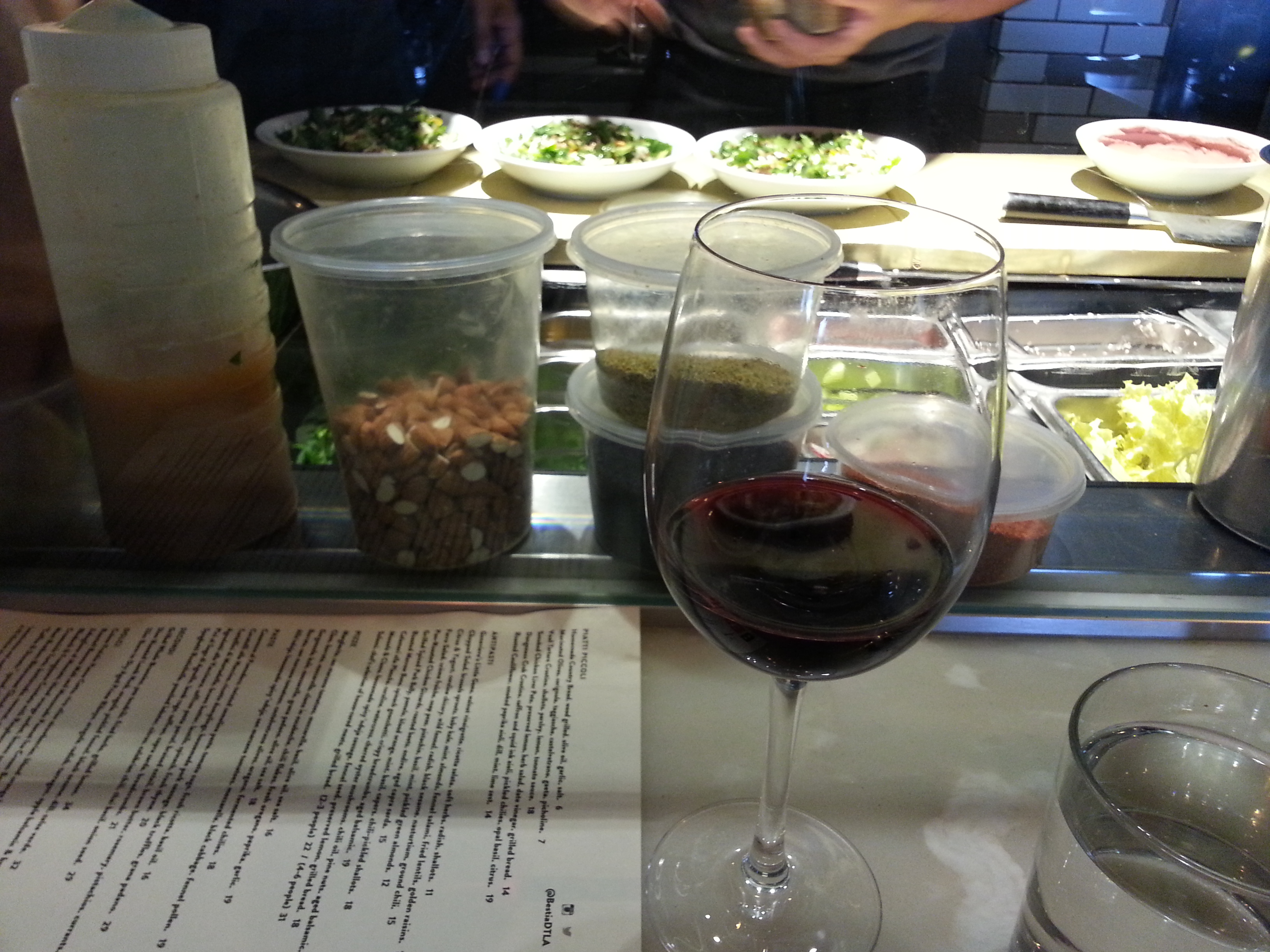
Reservations at the highly-rated Bestia in industrial Los Angeles are hard to snare. Although unable to reserve a table, we did, nonetheless, get two seats at the chef’s counter. (Thanks to my brother.)

Some people might not have appreciated the view. However, we were thrilled to have our line of vision occupied by the well-orchestrated crew preparing colorful, creative salads. Interestingly, we didn’t begin our meal with a salad. We ordered one later.

Our well-versed server suggested sharing several small plates. His subtle nod of approval when we decided on the crab crostino suggested we were off to a great start. Ordinarily, squid ink aoili, crab and Thai basil might vie as the leading flavor. Instead they all win.
I can’t resist bone marrow. It’s served here with spinach gnocchetti that we scraped it into.

Next, agnolotti, one of six pasta offerings; house-made, of course. The mini ravioli-like “parcels” were light and savory. Coated with brown butter and filled with braised oxtail, it was silky and surprisingly light. Toasted pistachios and currants added texture and sweetness.

Finally, the chopped salad, a combination of Brussels sprouts, endive, mint, salami, and fried lentils — all thinly sliced, er chopped.
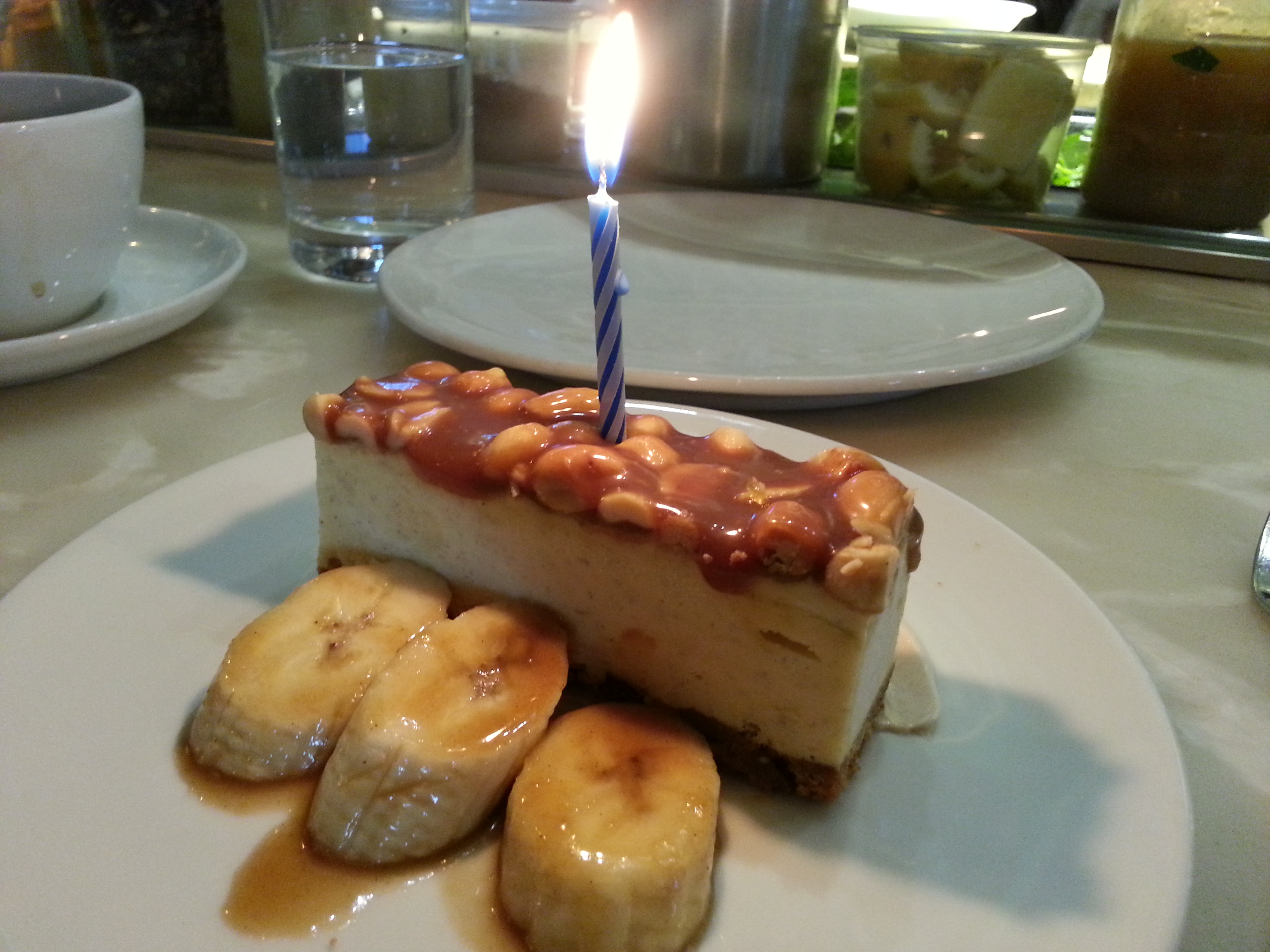
We had to have dessert. Really! Imagine bananas Foster with peanut butter ice cream. I couldn’t. The ingredients, only a playful mind could conjure, was childlike in the best possible way: fun, crunchy, salty and sweet. The ice cream is made in-house.
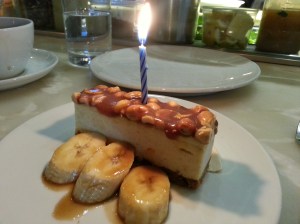
Bestia is in a reclaimed warehouse. It’s loud, lively and its accolades are well deserved. I can’t wait to return.
Bestia
Five Plates
2121 7th Place
Los Angeles
 Somebody get Nathan Hill an editor! The author of The Nix is creative, daring and has a good – no excellent – story to tell. The problem is that it’s about 250 pages too long, including an 11-page sentence. Really?!
Moving back an fourth between a tumultuous Chicago in 1968 just before the Democratic national convention and a calmer 2011, the novel ‘s focus is on the relationship between Samuel Andresen-Anderson and his estranged mother, Faye. It’s been decades since he last saw her. When Samuel was a child, Faye abandoned him and her husband.
Samuel teaches literature at a Chicago university. His heart isn’t in his work; his students are neither inspired, nor inspiring. After hours, on his faculty computer, he plays an immersive video game. He is also 10 years behind on a book that he’s been contracted to write. Samuel is a likeable guy and it’s painful to consider him a loser. But.
Hill is at his best in his descriptions of Samuel’s childhood, before his mother left. It’s vivid, engaging and explains so much about this character. Equally engrossing are the sections about Faye’s youth in a rural town in Iowa.
Less appealing are some of the other characters and situations, if only because the depth of their portrayal is extraneous. Take the sentence that is a chapter unto itself. It chronicles the symptom-by-symptom, reaction-by-reaction experience of a compulsive gamer as his body shuts down.
Ultimately, all the reader, like Samuel, wants is to understand why Faye left.
The Nix
Almost Four Bookmarks
Alfred A. Knopf, 2016
620 pages

In the Woods by Tana French is a double mystery. The first occurred in the mid-1980s and the second takes place 20 years later. There are numerous common threads, not the least of which is Adam Robert Ryan, the main character.
Ryan is also the narrator. His tone is engaging, self-deprecating and intelligent. Known as Rob, he’s a detective in Dublin’s Murder Squad. He and his partner, Cassie Maddox, work to solve the murder of 12-year-old Katy Devlin, whose body is found in the same general area where three pre-teens went missing all those years ago. One was Ryan who went by his first name, Adam, and was found covered in blood with no recollection of what happened to him or his friends.
Are the disappearance and murder related? Will Ryan’s memory be jarred? Should he even be involved in the more recent investigation? These questions drive the well-paced novel; the characters make it an interesting and intense journey. French provides plenty of suspects and plot twists. The result is a richly nuanced suspenseful novel.
Only Maddox knows of Ryan’s past. The two are close friends; they’re like siblings in their banter and knowledge of each other. As partners on the case they complement each other in their skills, thought processes and a shared, ironic, disrespect of authority – at least when it comes to their superintendent.
Anyone looking for resolution to both mysteries may be disappointed. This doesn’t necessarily require a spoiler alert, but it should add to the intrigue.
In the Woods
Four-and-half Bookmarks
Viking, 2007
429 pages

Magic and love are complimentary notions, but author Charlie Jane Anders adds more to the mix: science. Strangely, the menage a trois of genres works well in All the Birds in the Sky.
The novel evolves into an apocalyptic tale from what initially seems like something in the realm of young adult fiction. A lot of sci-fi elements also are thrown in along the way. Nonetheless, it’s consistently a love story.
Laurence and Patricia meet in junior high school as social outcasts. Laurence is a science nerd; no one can quite figure out Patricia. At first their inability to fit in attracts them, ultimately it’s what drives them apart. Laurence views the world through scientific theories/applications. He builds a super-computer in his bedroom closet. Patricia talks to birds and relies on magic. Circumstances separate them until they are reunited as adults in a world soon to face mass destruction.
The development of the major characters is like watching children grow. Sometimes it’s very fast and other times not so much. Still, it’s always interesting.
Anders injects the narrative with humor, which in the face of an apocalypse is impressive. The escalation of events that lead to power outages, water scarcity and death is gradual; Anders creates a sense of urgency, but isn’t heavy handed about it. There’s empathy with fear.
To say the main characters are star-crossed is too much of a cliché, yet … when love, magic and science are thrown into the same dystopia it’s the perfect description.
All the Birds in the Sky
Four Bookmarks
Tom Doherty Associates, 2016
313 pages
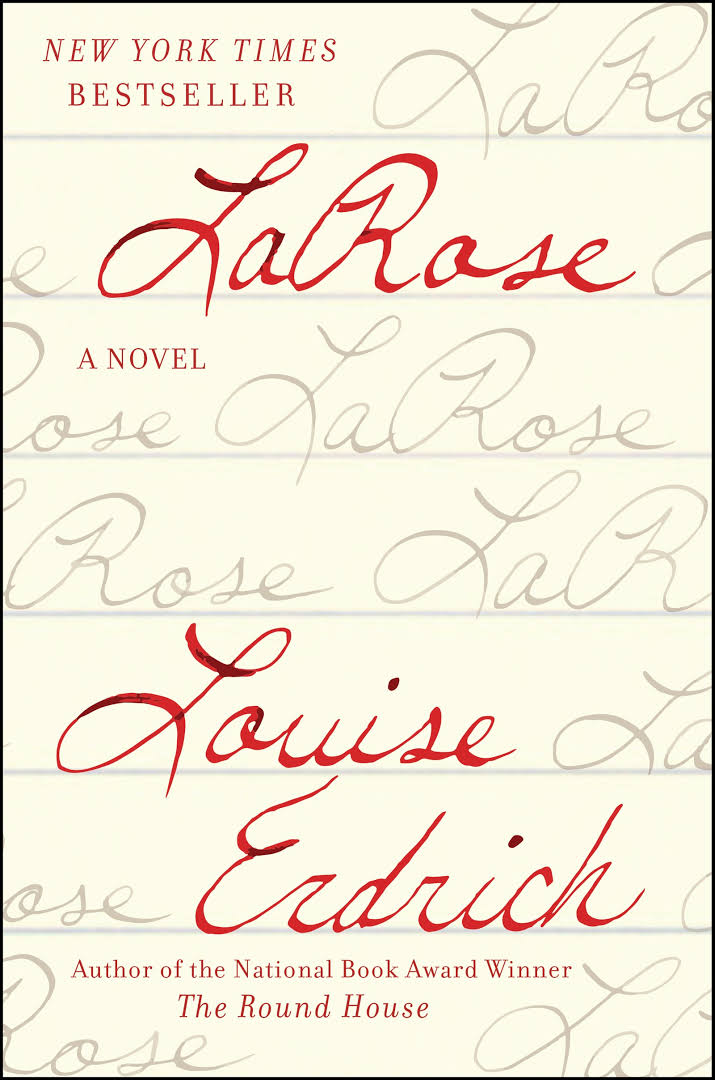
Grief, atonement and tradition are all bound together in LaRose by Louise Erdrich. The title refers not only to the young boy shuttled back and forth between two families, but also previous ancestors, all women, with the same name.
LaRose’s father accidently shoots his young son’s best friend, the child of neighbors. As part of Ojibwe custom of retribution, La Rose’s parents give him to the grieving parents. Interspersed with the adjustments this entails are stories of the original LaRose, a strong, intelligent woman able to see more than others with knowledge others don’t possess. Her traits, that include tribal medicine and a keen awareness of others, are passed down through four generations. Even the youngest of the namesakes has special, insightful characteristics.
This is more than an account about two families who lose a son. Although, the descriptions of the two sets of parents and siblings are full of depth and richness. It is also a narrative that examines the personal histories of many of the reservation’s residents, including the parish priest and a ne’er-do-well.
Erdrich blends the traditional Indian ways with modern life; the novel begins in 1999. Humor, rich descriptions of the landscape and dynamic characters make this an engaging work. It is sad, even heartbreakingly so; yet there are also moments of joy and revelation of life’s beauty.
Ultimately, this is a love story – in fact, many love stories: parental love and sacrifice; husband and wife love (and sacrifice); the relationships among siblings; and new relationships.
La Rose
Four Bookmarks
HarperCollins, 2016
373 pages

Carrying an umbrella in case of rain is almost a sure sign that it won’t be needed. Upon arriving in Barcelona we worried that the final weekend of our European vacation would be wet and dreary. For the first hour, it was. So, I unpacked the umbrella and the rain in Spain stayed mainly away.
Although, I’m sure we would have enjoyed the sites and food no matter what, the blue skies were an exclamation mark. We marveled at Barcelona’s beauty while also taking the opportunity to sample Catalan cuisine such as tapas, paella and other dishes that expanded our waistlines.
Tapas aren’t only only found in Spain, but that is certainly where they’re an art form. Following a walking tour of the Gothic quarter we wandered into a small tapas bar. Our server spoke wonderful English, which she said she was happy to practice.
We ordered jamon (paper thin slice of cured ham big on salty flavor), tomato bread, a cheese plate and potato balls. There is nothing like Spanish ham (jamon) and as much as I loved it, the potato balls were my favorite. Golf ball-size rounds of mashed potatoes were quickly fried creating a crusty, non-greasy exterior encasing creamy potatoes. Each had dollops of aioli. I could have eaten several platefuls.

My tapas-sized order of paella at another restaurant was uninspiring. The flavors were fine, but the abundance of shellfish made it difficult to eat. I suppose, in retrospect, that wasn’t a bad thing.
My favorite meal was grilled chicken and French fries topped with roasted pepitos. These mild, savory peppers were smoky. The crispy chicken skin, which I ordinarily would have discarded, provided contrast to the juicy meat.
We enjoyed pastries at breakfast and gelato for afternoon/evening snacks.
We did a lot of walking in Barcelona; we had to!

I’ve seen enough Viking Cruise-sponsored Masterpiece Theatre episodes on PBS to have sailed around the world. At least it seems that way, so when the opportunity arose to actually book a Viking ocean cruise, my husband and I grabbed it.
Unlike the river cruises, Viking’s liners on the open seas, in this case the Mediterranean, are larger. With 888 passengers, plus more than 400 crew members, the new Viking Sky is a mini-city with a Norwegian flair.
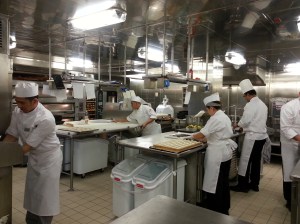
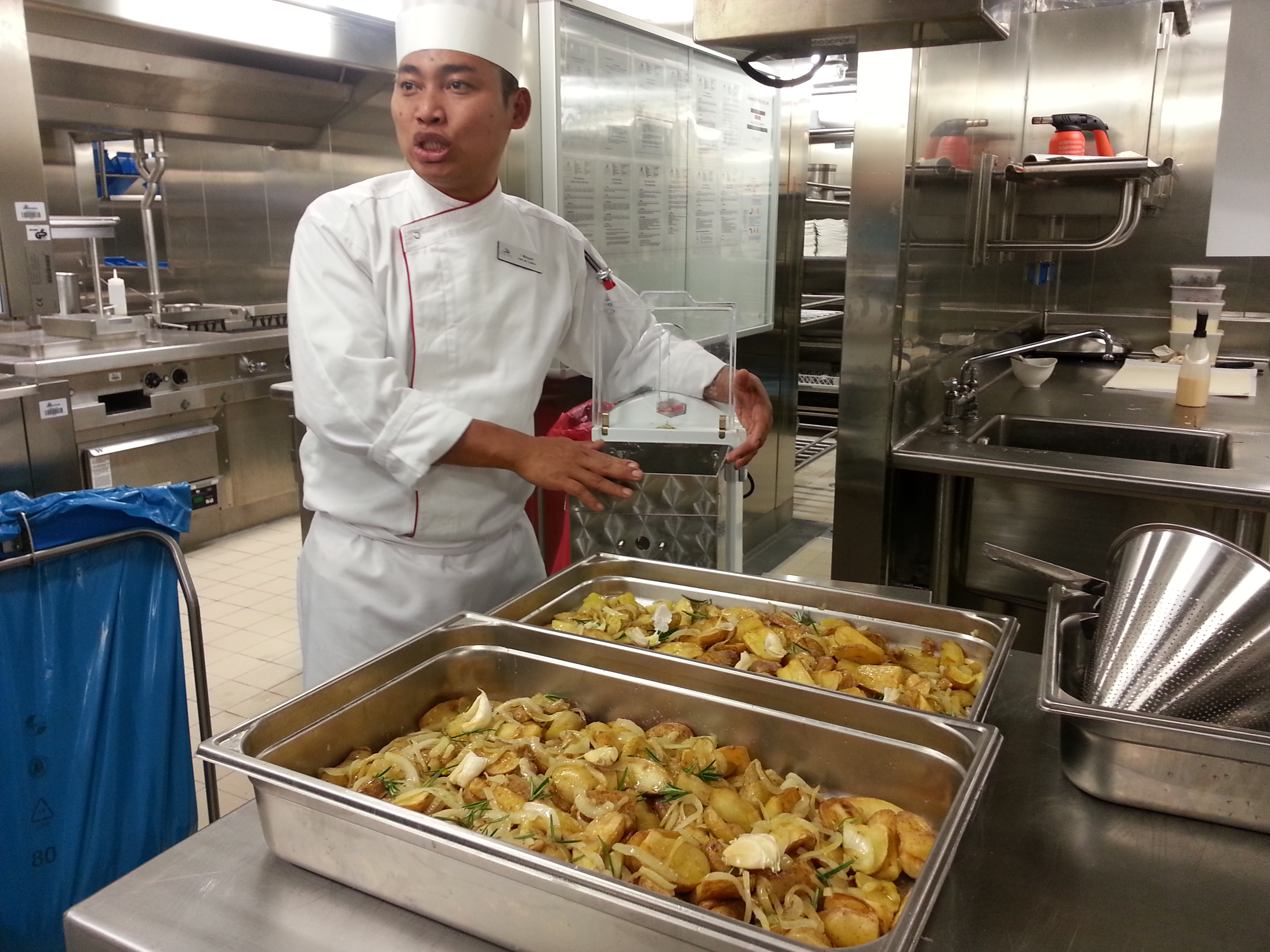
Like other cruise ships, dining is a major activity. With six dining areas, plus the option for room service, the Viking Sky doesn’t disappoint. A recent tour of one of the galleys helped put a few things into perspective. First, there are 13 kitchens with more than 100 chefs, chefs de cuisine and sous chefs, who work 10-hour shifts to ensure that everyone on board gets more than they need to eat.

Everything is made fresh, from the breads and pastries to pasta. Chef de cuisine Wayan explained that formulas are used to determine how much of each food item is needed on a daily basis. This involves a heavy reliance on past experience and nationality of the guests, among other factors. For example, the kitchen goes through 3,200 eggs per day!
Much more was shared on the tour and each meal on our 8-day cruise has been exceptional from crispy calamri to grilled sea bass, from fork-tender Chateaubriand to a hamburger. The combination of well-prepared dishes and exceptional service has made each meal a special dining experience.

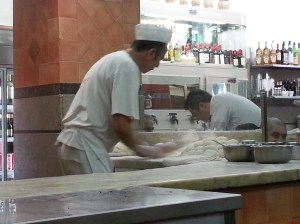
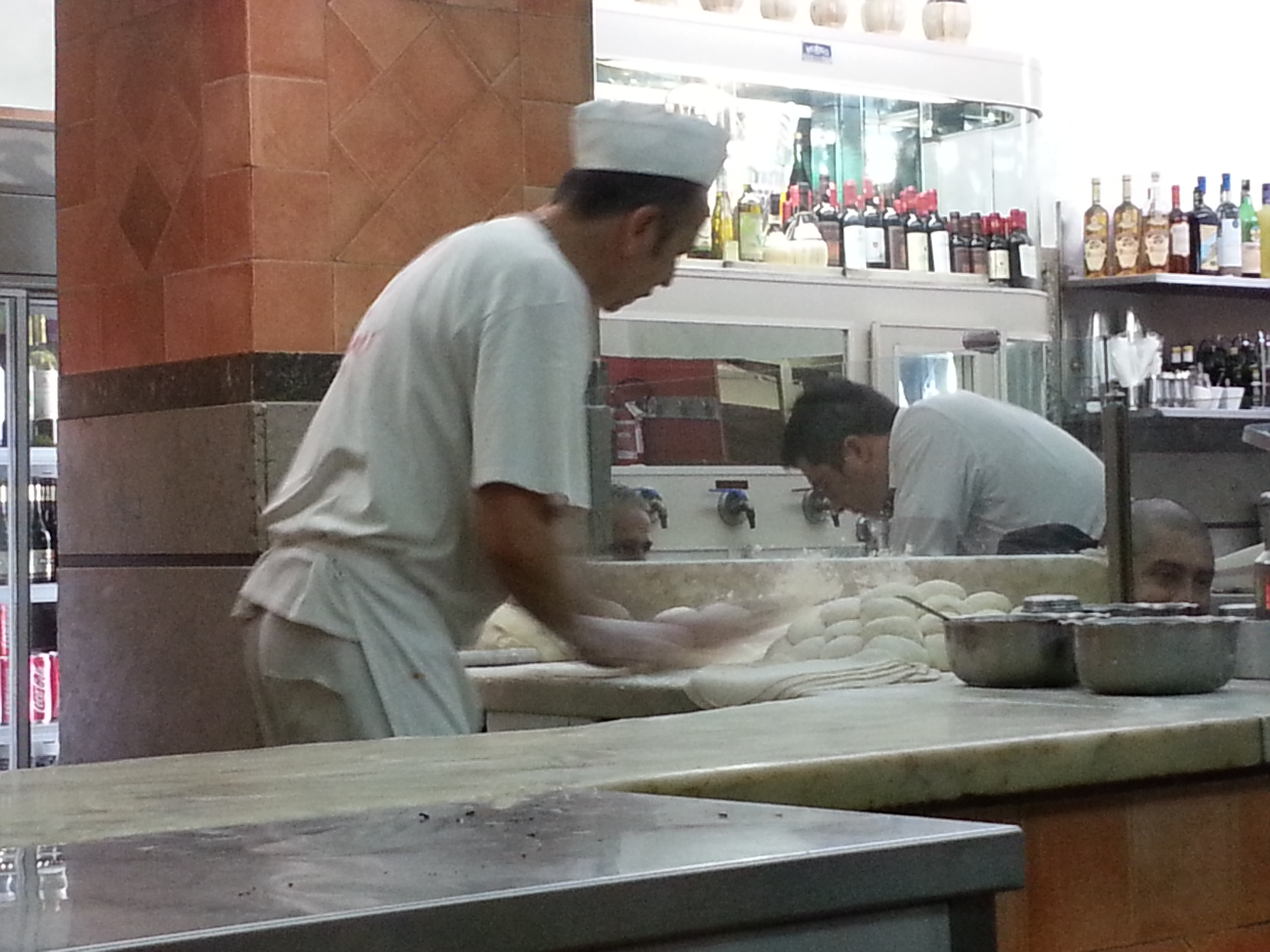
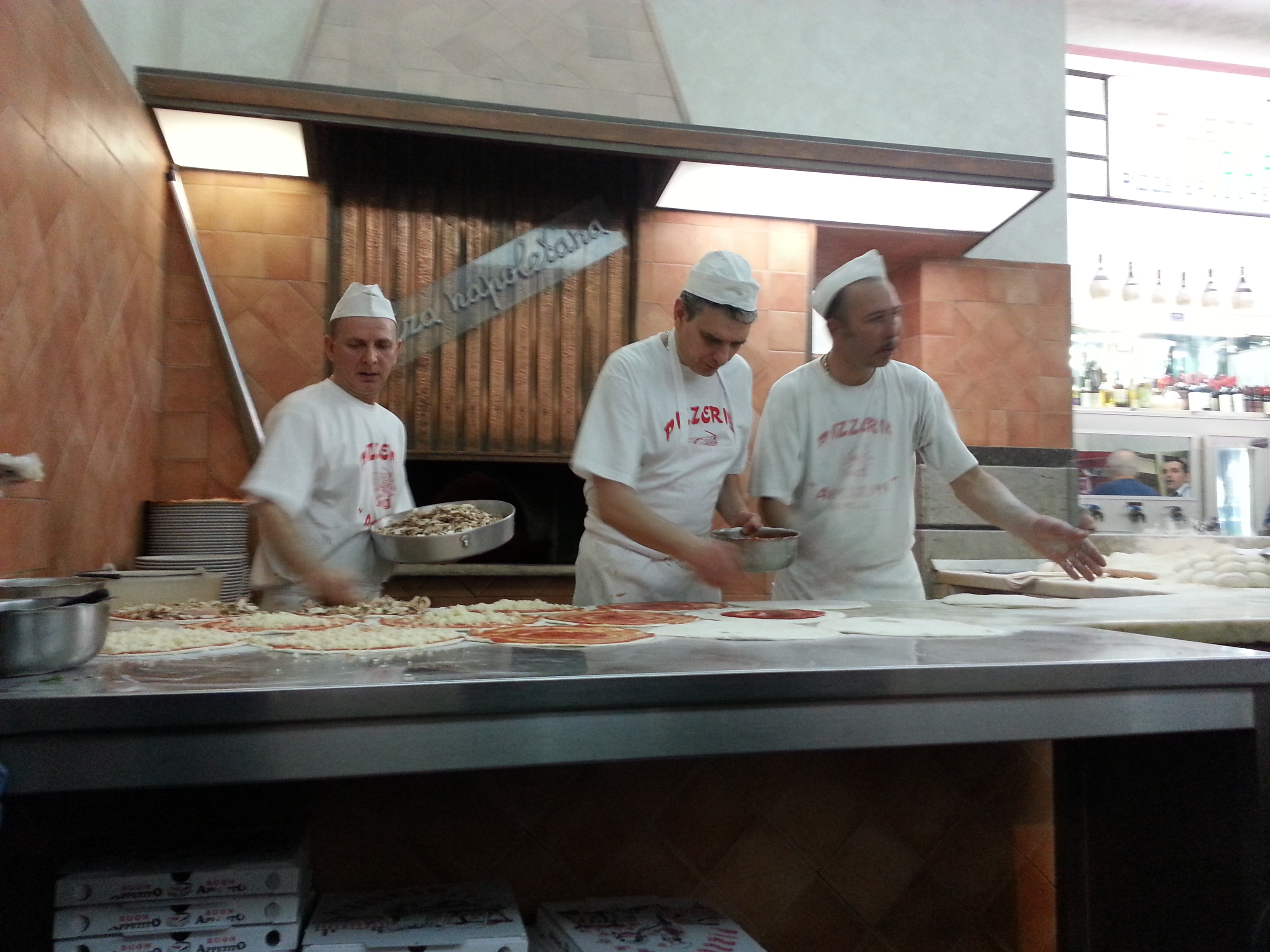
Mani ai Pizzeria’s doors open at 6:30 p.m. We arrived just as a small line was forming. This is a no-frills pizza joint that serves great pies and entertains, at least we were entertained by the pizzamakers. There was neither tossing nor twirling of unbaked dough, but a calm, systematic approach to churning out 15 made-to-order pizzas at a time.
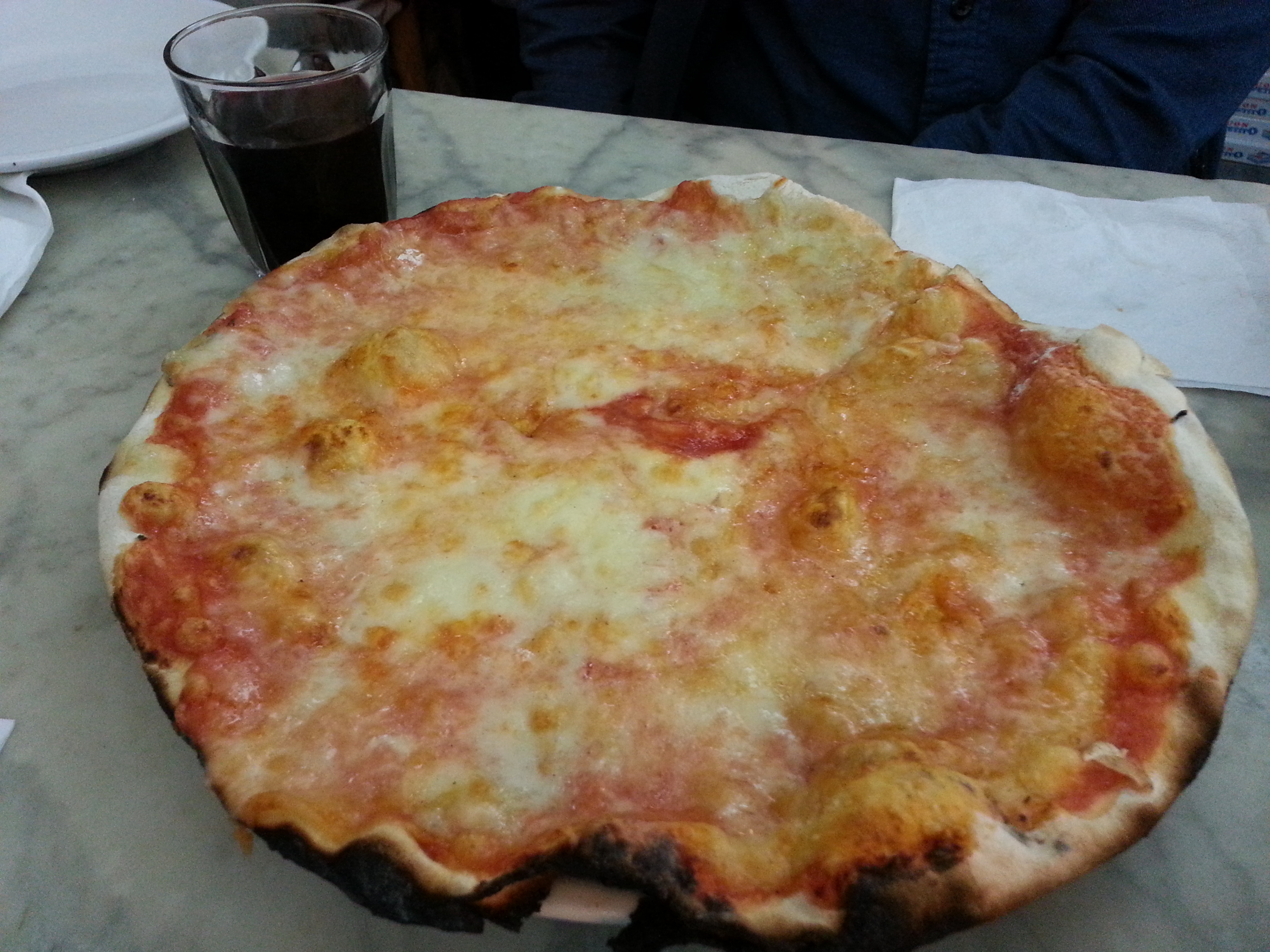
 We shared a mixed salad, a liter of the house red and a Margarita pizza. That was our first order before we were mesmerized by the assembly-line process with a personal touch.
Pieces of dough are pulled from a large mound and formed into the size of tennis balls. These are rolled flat and stacked. Initially, there were two men making the pies. One rolled, creating a flurry of flour, one checked supplies and fed the wood-burning oven. The maestros then methodically cover some with sauce, most with cheese – a lot of cheese – and then the specific topics that included mounds of mushrooms, zucchini blossoms, raw sausage (it cooked in the oven), more cheese and a drizzle of olive oil. The marble slab looked like a carpet of pizzas.
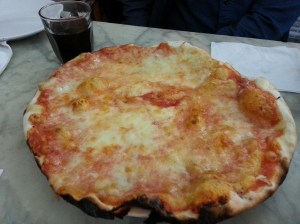
I wondered if the first ones in the oven would be the last out. This wasn’t the case. The guys know their stuff. The pizzas are served unsliced. The crust is thin and easily folds in half. The ingredients are fresh and flavorful. We enjoyed ours so much we ordered a second just so we could keep watching — and eating!

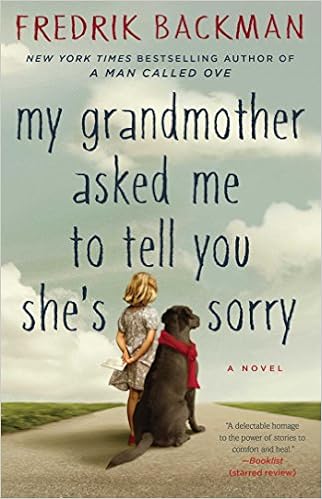
Fredrik Backman author of the acclaimed A Man Called Ove has found a successful formula, which once again emerges in My Grandmother Asked Me To Tell You She’s Sorry. The title is a successful attention-getter – certainly more so than the earlier book. Like Ove, My Grandmother Asked Me assembles diverse characters who are, initially, only tenuously connected.
The major difference between the two novels, though, lies in the main protagonist. Here it’s seven-year-old-soon-to-be-eight Elsa. Although there are plenty of explanations for her being so precocious, Elsa’s behavior, vocabulary and thought-processes, at times, leans more to incredulity than not. Her grandmother is partly to blame and mostly to be celebrated for the young girl’s sense of curiosity, intellect and strong sense of self. But, and this is no spoiler alert since the book cover reveals as much, the grandmother dies leaving Elsa to navigate a world where being different is difficult.
Elsa is charged with delivering a series of letters written by her grandmother. They’re for tenants in the building where Elsa lives but whom she barely knows. Wanna guess what happens?
Humor and pathos move hand-in-hand throughout the narrative, which also includes fairy tales of secret lands. Again, this is thanks to Elsa’s grandmother.
I found My Grandmother Asked Me to be less engaging that Ove, but nonetheless satisfying by its conclusion. Tying up loose ends isn’t always a bad thing. It certainly fits with Backman’s storytelling technique and his ability to create interesting characters full of foibles and heart.
My Grandmother Asked Me To Tell You She’s Sorry
Four Bookmarks
Washington Square Press, 2015
372 pages