Archive for the ‘Books’ Category
Piglet may be the name of a beloved children’s book character, but it’s the fictional main character in Lottie Hazell’s debut novel. And, it’s far from childish. In fact, it’s dark and disturbing.
Piglet and Kit are soon to be married; they’ve just purchased a new home in Oxford, she’s a successful cookbook editor and Kit, who’s from a wealthy family, seemingly adores his fiancé. That is until 13 days before the wedding when Kit confesses to Piglet a transgression that the reader can only guess. Despite his profuse apologies, it is enough to upend Piglet’s world and send her spiraling into a literal feeding frenzy.
Of course, the childhood nickname is enough of a clue that self-esteem may not be the main character’s strong suit. It’s eventually explained which only emphasizes the issues that have been part of Piglet for most of her life.
Although the author doesn’t describe Piglet’s size at the novel’s beginning, the character grows on the page. How could she not after ordering one of everything on a restaurant menu?! The most graphic image comes when her sister, parents and sister’s boyfriend struggle to get Piglet into her wedding dress. If it wasn’t so sad, it would be comical. This is an eating disorder gone off the rails before our very eyes.
Piglet’s anxiety about whether to go through with the wedding is palpable. Initially, she seemed to have everything, but after losing trust in Kit, there’s little that can satisfy her ravenous appetite for more.
Piglet
Three-and-half bookmarks
Henry Holt and Company, 2024
309 pages (includes acknowledgements)
In Creation Lake by Rachel Kushner, “Sadie Smith” is a secret agent for undisclosed clients. She’s adept at manipulation, which she demonstrates while ingratiating herself, first with a Parisian man, and later a counter-culture group in rural France.
As she learns more about the group she becomes intrigued by a hermit, Bruno, who lives in a cave and mentors those in the commune. He does this via emails, which Sadie intercepts; she becomes enthralled by his writing on early man. He wants the group to return to pre-industrial, and even prehistoric lifestyles. But, there’s more to Bruno than his knowledge of prehistory (the recounting of the history of the medieval Cagots is fascinating); Sadie is captivated by his ideas for not just what it means for Bruno’s mentees, but what a less deceptive life could mean for her.
As the narrative expands, it becomes less clear who’s manipulating who. Sadie works with the group to plan a protest against the government’s plan to divert water meant for farming to “megabasins” to be used by agricultural corporations. However, her intent is to have the commune members make it a violent demonstration.
There’s a lot of intrigue and double-crossing, and Kushner’s fast-paced writing makes it difficult to keep up with who are the good guys, or if anyone is. Certainly, Sadie’s ability to disregard and/or exploit others makes her unlikeable, yet, strangely, she’s the character you care about who she trusts, while maintaining her cover, which has a bearing on her safety.
Creation Lake
Three and-a-half bookmarks
Scribner, 2024
404 pages
Even after reading 19 books featuring Inspector Armand Gamache, his investigative team and the quirky residents of Three Pines, none of it gets old. Louise Penny continues to keep the magic and intrigue going strong in her latest, The Grey Wolf.
Repeated phone calls, which Gamache refuses to answer, interrupt an otherwise peaceful, late summer morning. This is only the beginning of disturbances that threaten to go beyond his quiet village. He soon discovers the entire Quebec province is at risk.
Through a series of seemingly unrelated events such as a stolen coat, a cryptic note and, of course, a murder lead Gamache, Jean-Guy and Isabel LaCoste to far reaching locales in order to avert a national catastrophe. This includes revisiting characters and places from previous novels (investigations), such as the remote Gilbertine monastery.
Gamache suspects colleagues and a self-serving politician with an axe to grind against him are involved.
While the potential danger moves the narrative forward, the novel is rich with descriptions of the recurring people and places readers have come to know. Subtle humor and meaningful relationships remain hallmarks of the Gamache series.
In thinking about the appeal of the series, Louise Penny sums it up best in the book’s acknowledgements: “The Gamache books are proudly crime novels … but at their core they’re about community. Acceptance. Belonging. Courage. … About trying to do better.” After all, who doesn’t want to read about such attributes, especially when there’s good writing, engaging characters and a murder to solve?!
The Grey Wolf
Four Bookmarks
Minotaur Books, 2024
419, includes acknowledgements
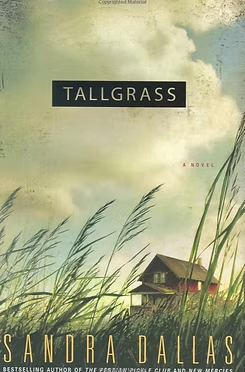
In 1942 Japanese Americans were forced to relocate to ten remote isolation camps under the guise of protecting the U.S. This is the foundation for Tallgrass, Sandra Dallas’s fictional portrayal of a small Eastern Colorado town that became home to an internment camp.
Tallgrass was published in 2007 yet remains timely in its illustration of unfounded prejudice and ill-conceived fear of those who are different.
Renny is the youngest daughter of a beet-farming family, whose property is near Tallgrass. Initially, the young teen doesn’t know what to think of the Japanese since there’s a clear division in town among those who think the idea of the camp is shameful and those adamantly opposed to its presence. The negative attitudes are fortified when a young girl is found raped and murdered. Guilt is immediately assigned to the Japanese.
Due to the war, finding farm laborers proves difficult, so Renny’s father hires three young Japanese men who prove to be hard workers and serve to dispel the misgivings held by Renny and her mother.
Dallas has crafted an engaging narrative proving that evil is not defined by one’s ethnicity or skin color. However, in her portrayal of some characters, there is little gray area. Still, as Renny’s family grows closer to the Japanese workers, she matures and is ultimately able to form her own opinions.
While there’s much that is predictable, the mystery of the murder, family secrets and a view of the hardscrabble life of farmers contribute to the well-paced novel.
Tallgrass
Four bookmarks
305 pages plus Reader’s Guide
St. Martin’s Griffin, 2007
It’s 1980 when Carl Fletcher, the owner of his family’s Styrofoam manufacturing plant, is kidnapped from the driveway of his home In Middle Rock, a wealthy, mostly Jewish, Long Island community. Thus begins Taffy Brodesser-Akner’s novel Long Island Compromise.
There’s certainly intrigue regarding the kidnapping, but it’s not much of a spoiler to note that after his harrowing experience, Carl is ultimately reunited with his pregnant wife, Ruth, six-year-old son Nathan and four-year-old Bernard (later known as Beamer). Carl’s mother, Phyllis, insists the family move onto her estate with the intent that all will be safer.
The family’s affluence has its roots in Phyllis’s late husband, who escaped from Nazi-occupied Poland with a formula for plastics, founded the factory.
Although Jenny, is born soon after her father’s kidnapping, she and her brothers are forever marked by their father’s ordeal and the wealth of their upbringing. For the rest of their lives Ruth and Phyllis go to extremes to protect Carl who remains traumatized.
The novel is loosely based on a true story, but the characters are composites of stereotypes with personality twists. They’re interesting, amusing, pathetic and occasionally surprising, often predictable – sometimes in the same breath (or sentences as the case may be).
The Fletchers’ tale spans four decades with narration changes as each family member’s personal story is portrayed. There are contemporary issues such as drug abuse, mental health issues, financial concerns and familial turmoil. Yet, Brodesser-Akner’s writing is rich with an abundance of humor, irony and empathy.
Long Island Compromise
Four Bookmarks
Random House, 2024
444 pages
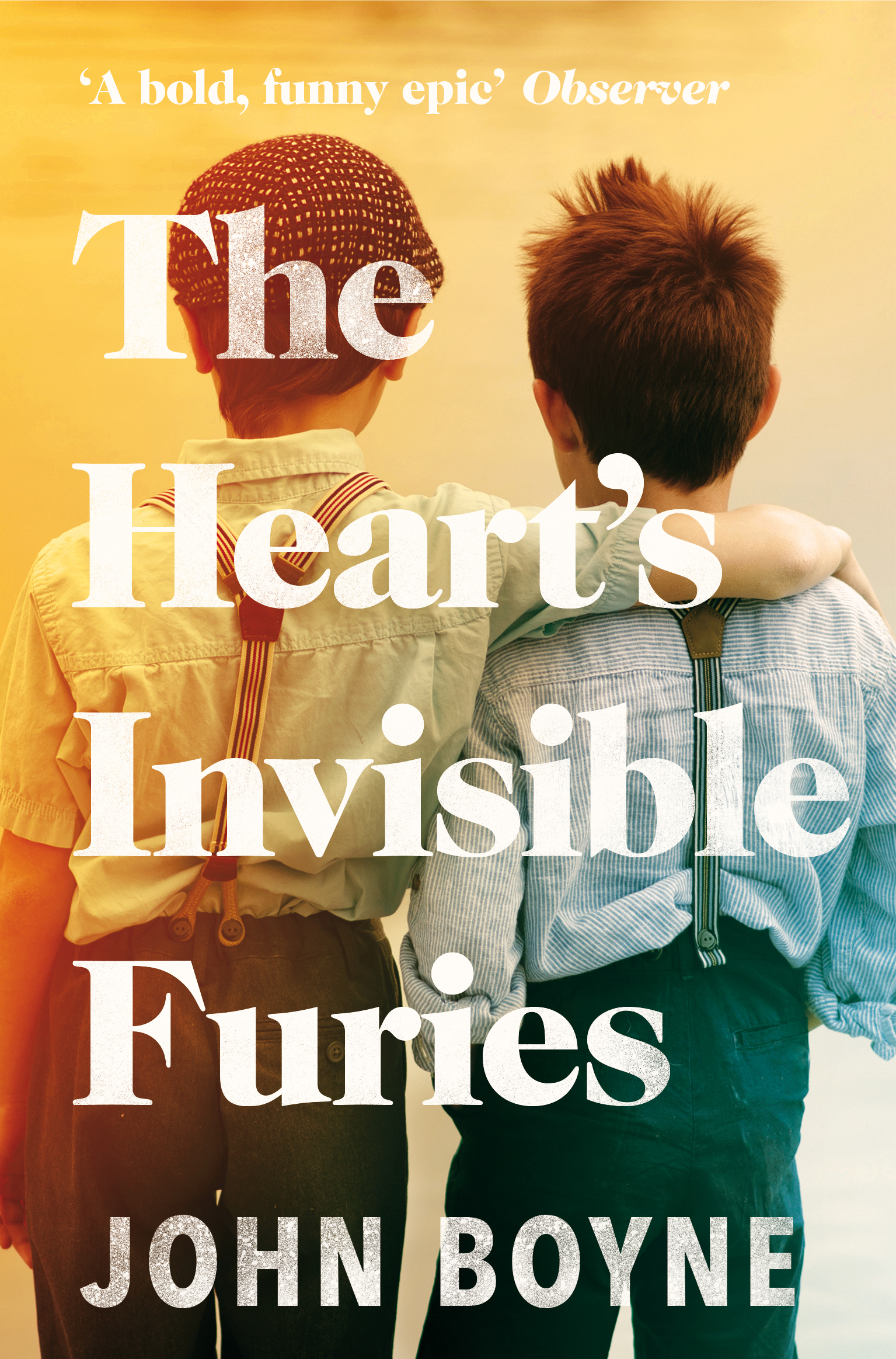
Repression, redemption, acceptance and truth are the themes of The Heart’s Invisible Furies by John Boyne primarily set in Ireland.
Catherine, a 16-year-old, girl from a rural community, is physically kicked out of the church and her community by the parish priest for being pregnant and unwed. She makes her way to Dublin, gives up her newborn son for adoption and moves on with her life. The boy, Cyril, is adopted by Charles and Maude Avery, a wealthy couple whose idea of parenting doesn’t include affection. Nonetheless, he lacks for little else. The narrative follows Cyril for seven decades.
Cyril is introspective. He’s told to call his adoptive parents by their first names and is frequently reminded he is “not an Avery.” When, at age seven, he meets Julian he is immediately enthralled. Later, they become best friends but couldn’t be more different: Cyril is gay and Julian loves (all) women.
For most of his life, Cyril hides the truth about himself. This haunts him and destroys the most important relationships in his life. There are rifts, disappointments and more lies until Cyril finally leaves Dublin in spectacular, yet shameful, fashion.
This beautifully crafted novel is rich with complex, interesting characters. Boyne injects humor, joy and sorrow into all of them, especially Cyril. He is someone to embrace and shake by the shoulders. He’s intelligent, funny and serious, and it takes years for him to recognize all his life holds. The abundance of which surprises the reader as much as him.
The Heart’s Invisible Furies
Five Bookmarks
Hogarth, 2017
585 pages, includes reader’s guide
Lorrie Moore has multiple threads in her novel I Am Homeless If This Is Not My Home, some are easier to digest than others. First, there are letters from a woman to her dead sister written shortly after Abraham Lincoln’s assassination. The main plot, though, follows Finn, a middle-aged man fumbling through life.
Finn and Lily have ended a long relationship. She worked as a clown therapist; that is, a therapist dressed as a clown) with a history of threatening suicide. He’s suspended from his teaching job because of his attitude issues. After receiving a call about Lily’s latest attempt, he leaves his brother’s deathbed and drives through the night to be with her.
Here’s where things get strange. Lily is, in fact, dead, but her remains were not placed where she wanted them to be, so she and Finn take a road trip to her desired final resting spot.
Despite the bizarre turn off events, or maybe because of them, Moore’s writing is imbued with humor, poetic phrasing and sharp wit. Her descriptive language is vivid. Interspersed with the road trip are other letters from the woman to her dead sister.
Finn is still in love with Lily and as they make their way from one cemetery to another, her body continues to slowly decay. When Finn needs to stop to rest, they land at an old inn that is almost as decrepit as Lily. The inn is significant, but I’ll avoid a spoiler here.
I Am Homeless If This Is Not My Home
Three-and-a-half bookmarks
Random House, 2023
193 pages
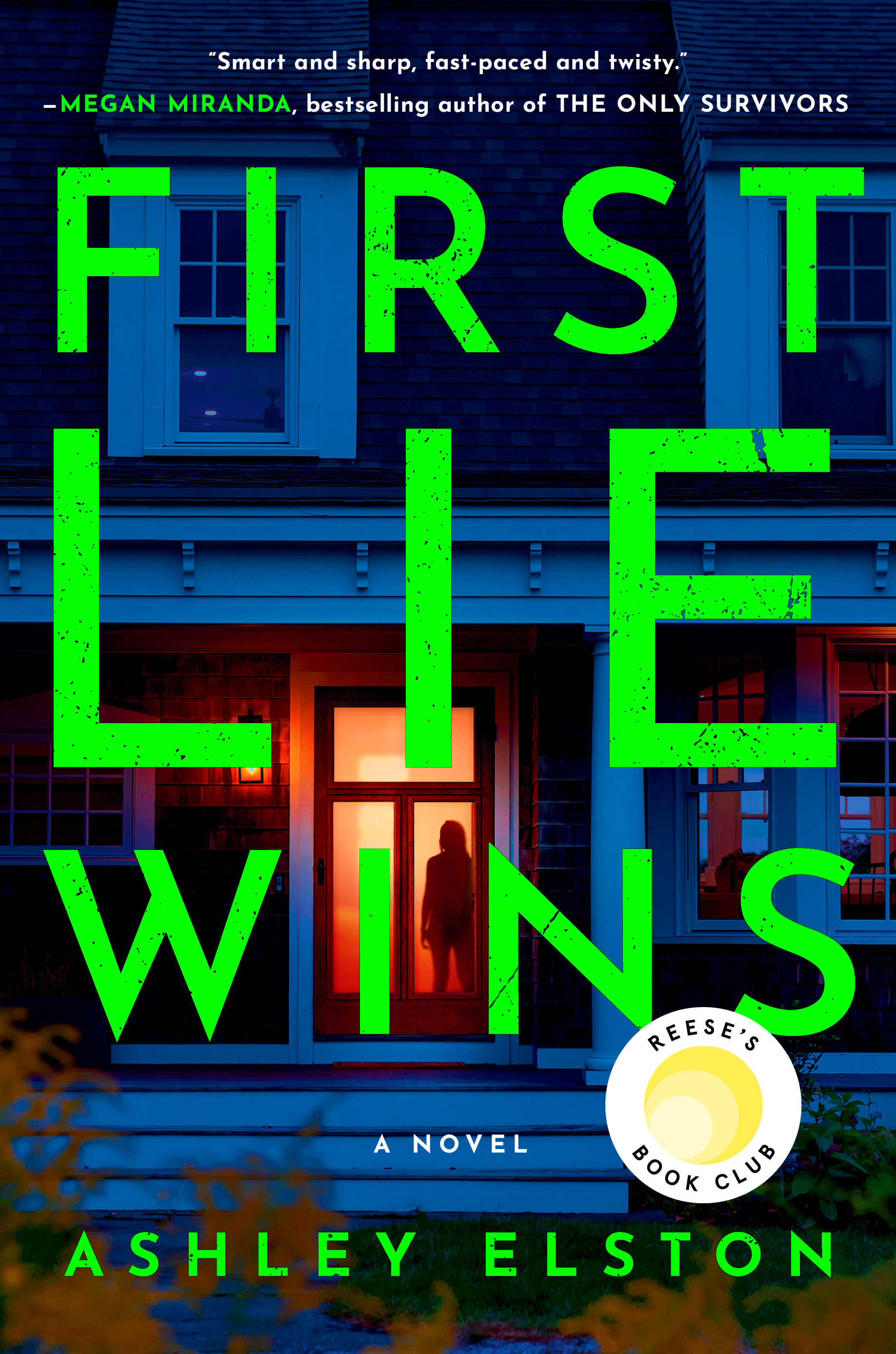
The title alone gives away that this is a mystery with trust issues. First Lie Wins by Ashley Elston follows Evelyn “Evie” Porter on a secret assignment to get romantically involved with Ryan Sumner.
It’s soon evident that Evie isn’t who she says she is; parts of her backstory are interspersed with the mysteries at hand: who is Ryan, why is it necessary to know him, and more, importantly, who is the elusive, enigmatic “Mr. Smith”?
It’s no spoiler to reveal Evie, is aka Lucca Marino, who explains that Smith is the person who clandestinely hires her and pays her handsomely to get the dirt on people. Consequently, Evie moves from location to location, mostly in the South, with different identities, looks and ways of ingratiating herself into her targets’ lives.
The problem Evie encounters with Ryan is that she finds herself actually falling in love with him. Yet, she knows there’s a lot he’s hiding from her. Of course, everyone has their secrets but in this case, there are a lot to keep track of!
Evie, a smart, engaging character, and Devon, the assistant she’s secretly hired to help her unbeknownst to Smith, make for a strong team. The relationship between Evie and Ryan is credible and one the reader actually roots for.
Elston incorporates a number of plot twists to keep the reader guessing and it mostly works. However, there are so many threads to untangle it often gets a little messy; this serves to break the tension rather than enhance it.
First Lie Wins
Viking, 2024
Three-and-a-half Bookmarks
340 pages
The Frozen River by Ariel Lawhon is part mystery and historical fiction inspired by the experiences and diary of Martha Ballard, the novel’s narrator, who relates her story as the town midwife and life in rural late-1700s Maine.
When a body is found and recovered from the frozen Kennebec River, Martha is immediately suspicious of the cause of death. The victim is one of two men accused of committing rape; the other is a judge and respected citizen.
Despite numerous obstacles, including being a woman whose opinions are quickly dismissed by the men who oversee the social norms of the day, Martha is determined to fight for the preacher’s wife who was raped.
Martha is happily married and a mother, most of her children are in their teens and early 20s. She takes her role, as not just a midwife but medical care provider for the town and surrounding area, seriously and professionally – even after a Harvard-educated physician arrives and questions her knowledge and abilities.
The harsh elements of the wintry landscape and the hardscrabble life the townspeople endure are vividly described. Martha’s efforts to prove the rape victim told the truth while also trying to determine how one of the accused died results in an engaging work.
This is a portrayal of a strong, intelligent woman ahead of her time in her recognition of the sexism women faced. Martha’s story is one of life in a rural community impacted by the season, gossip and mores of the times.
The Frozen River
Four Bookmarks
Doubleday 2023
432 pages, includes author’s notes and acknowledgements
James is Percival Everett’s retelling of Mark Twain’s Adventures of Huckleberry Finn told from James’ (Jim’s) perspective.
After learning he’s to be sold and forced to leave his family, James runs away. Jim is the name he’s been given by his white owner; his peers know him by his more formal name. Huck fakes his own death to avoid further beatings by his father and discovers Jim in hiding. The two make their way down the Mississippi River, each with different goals in mind.
There’s a reward for James’s capture, and he worries he’s suspected of Huck’s “death.”
While this has Twain’s classic as its foundation, the architecture is all Everett’s. James speaks in the vernacular associated with slaves when spoken to by slave owners and other white people. However, among each other, slaves converse in perfect English, that’s not only grammatically correct but rich in vocabulary. James also knows how to read, as do many in his circle.
Occasionally, he slips in a word that Huck doesn’t know but quickly makes its clear he’s misspoken, when, in fact, James hasn’t.
The book is full of irony, humor and sadness. In their travels they encounter kindness, brutality and fear. At one point the pair is briefly separated and James fares well, including, ironically, being recruited by a minstrel group and is befriended by another black man who passes for white.
Like its predecessor, this is an adventure story but more profoundly addresses still existing racial inequities and social injustice.
James
Four bookmarks
Doubleday, 2024
303 pages









 The Blue Page Special