Archive for the ‘kristin hannah’ Tag
It’s 1966 and young men are going off to war in Viet Nam; except they’re not alone. Young women go, too, which is the topic of The Women by Kristin Hannah.
Frankie McGrath volunteers for the Army Nurse Corps soon after learning her brother has been killed in the war. She is part of a field medical unit treating wounded soldiers. Many of whom can’t be saved. As her nursing skills get stronger so does her friendship with fellow nurses, Ethel and Barbara. She also falls in love with a naval pilot.
Dealing with the natural elements, seeking safety from enemy bombardments and never getting used to the carnage wrought by war is almost nothing compared to Frankie’s return to the States following two tours of duty.
Hannah’s descriptions of the attitude toward Viet Nam vets are heart wrenching because of their truth. This is compounded by the mindset held by many, including other vets, that there were no women in Viet Nam. Even Frankie’s father refuses to admit to his country club social circle that his daughter served in the war.
The novel is divided into two parts. The first focuses on Frankie’s naiveté and gradual realization that the situation in Viet Nam is uncompromising for those in its midst. The second section deals with her reintroduction to society vehemently opposed to the war without acknowledging its toll. Thankfully, Frankie’s nursing friends provide unending love and support as she fights her inner battles and struggles to move forward.
The Women
Four Bookmarks
St. Martin’s Press, 2024
470 Pages, includes Author’s note and acknowledgements
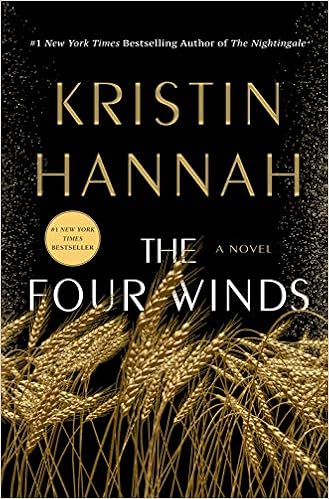
Although I’ve only read a few of Kristen Hannah novels, it’s clear she does her homework. This is true whether the novel’s setting is France during World War II, Leningrad or the Pacific Northwest; her writing evokes a strong sense of time and place. The Four Winds, set in the 1930s Dust Bowl era, is no exception. Hannah’s work also features strong, independent women; here Elsa Wolcott follows the pattern.
At 25 Elsa is considered past her prime as a marriage candidate. When she meets Rafe Martinelli, seven years her junior, her life changes. With no intention of a marrying Elsa, Rafe has no choice when she becomes pregnant.
By the 1930s, Elsa has settled in on the Martinelli farm, which in Northern Texas does not escape the devastation of the drought and dust storms that wreaked havoc across the Great Plains. Rafe abandons Elsa, their two children and his parents. Eventually, Elsa makes the trek to California, where word has it life is better.
Hannah’s vivid descriptions of the poverty, prejudice and injustices faced by the flood of migrants could easily, and unfortunately, be applied today. Elsa and her children aren’t immune to the incivilities, but the family’s relationships grow stronger in its struggle to find a better life.
The weakest element of the narrative is the insertion of efforts by union organizer Jack Valen. He comes across as the hero the family, and all farm workers, need. Yet, in some ways this negates Elsa’s intelligence and inner strength.
The Four Winds
Four Bookmarks
St. Martin’s Press, 2021
454 pages

The heroics/horrors of war, tests of familial love and loyalty to one’s country merge in Kristin Hannah’s The Nightingale.
In Oregon 1995 an unnamed elderly woman prepares to move from her home at the insistence of her adult son. This sets in motion her recollection of life in France during World War II. At its heart, the novel is about the relationship between sisters Vianne and Isabelle, ten years her junior. Following the death of their mother, their father leaves them with a stranger. Despite their shared grief and sense of abandonment, the two have nothing else in common.
The war years show how, as adults, the sisters remain at odds. Vianne struggles to keep her daughter safe and maintain the family home after her husband goes to fight. Meanwhile, Isabelle wants a role in her helping her country overcome German authority.
The sisters’ personality differences are repeatedly described, yet the strained relationship doesn’t always ring true. Vianne acknowledges that she failed in her responsibility as the older sibling to help Isabelle; she attributes this failure to dealing with her own sorrow at the time. Isabelle has an air of entitlement – at least when it comes to emotions; this sense of privilege doesn’t follow her as she works with the French Resistance.
The novel progresses with the war; occasional interruptions remind the reader of the elderly woman. This becomes a guess-who exercise: who is it and how did she end up in Oregon. Only one of the questions is answered.
The Nightingale
Three-and-a-half Bookmarks
St. Martin’s Press, 2015
438 pages
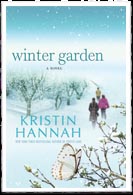
Often, stories within stories are enchanting, muddled, lopsided or boring. Fortunately, Winter Garden by Kristin Hannah is captivating without any confusion. One narrative is not more interesting than the other; both have equal appeal.
Much of what makes Hannah’s novel so successful is the clever way in which her characters evolve. Sisters Meredith and Nina are grown women who have always basked in the light of their father’s love. Meredith is the older sister, pragmatic and harried; Nina lives the adventurous life of a freelance photographer. Theirs is not a close a relationship. If not for Evan, their father, there would be little for anyone in the family to hold dear.
Unlike Evan, their mother is a cold, distant woman incapable of showing or articulating affection. This could be a black and white story, but Hannah has enough sense, and talent, to show the nuances. A secret past, painful memories and the harsh reality of war culminate in a fairy tale the sisters’ mother is ultimately compelled to tell. The story moves from the idyllic, contemporary life on the family’s apple orchard to cold, war-torn Russia. Like any good fairy tale, this one begins with a handsome prince, an evil overseer, and a young girl who falls in love.
As the fairy tale evolves, it’s clear this the only way the mother can explain herself and for her daughters to recognize their own strengths, weaknesses and connections. There’s nothing jumbled in either side of Hannah’s engaging account.
Winter Garden
Four Bookmarks
St. Martin’s Griffin, 2010
391 pages


 The Blue Page Special