I’m probably not alone in my preference to read the book before I see its film adaptation. The Perks of Being a Wallflower was no exception. I am now anxious to watch the movie.
Stephen Chbosky’s novel is told through letters written by Charlie, an insecure 15-year-old, to an unknown recipient. Charlie’s letters are brutally honest in their reflection of his life as the youngest of three children in a traditional family. It’s clear from the outset, though, that he is far more sensitive than most teenage boys. Sure, he faces teen angst like most kids, but his sensitivity and intelligence set him apart from his peers. Through what can only best be described as chutzpah, he introduces himself to Patrick and Sam (Samantha) – step-siblings in their senior year. Charlie is a freshman, but his new friends don’t seem to mind and welcome him into their circle.
As Charlie becomes more involved with his new friends, he discovers that he is not the only teenager with problems. His letters reveal more and more about himself and those around him. It’s evident that his issues are intense: misplaced guilt and an ability to keep a family secret he shouldn’t be burdened with. Lingering in the background are topics of sexuality, identity, and perceptions.
Charlie may never be a popular boy, but he has friends and family who care deeply about him. Even for those of us long removed from school days, it’s still possible to appreciate the value of those intangibles.
The Perks of Being a Wallflower
Four Bookmarks
Gallery Books, 1999
213 pages

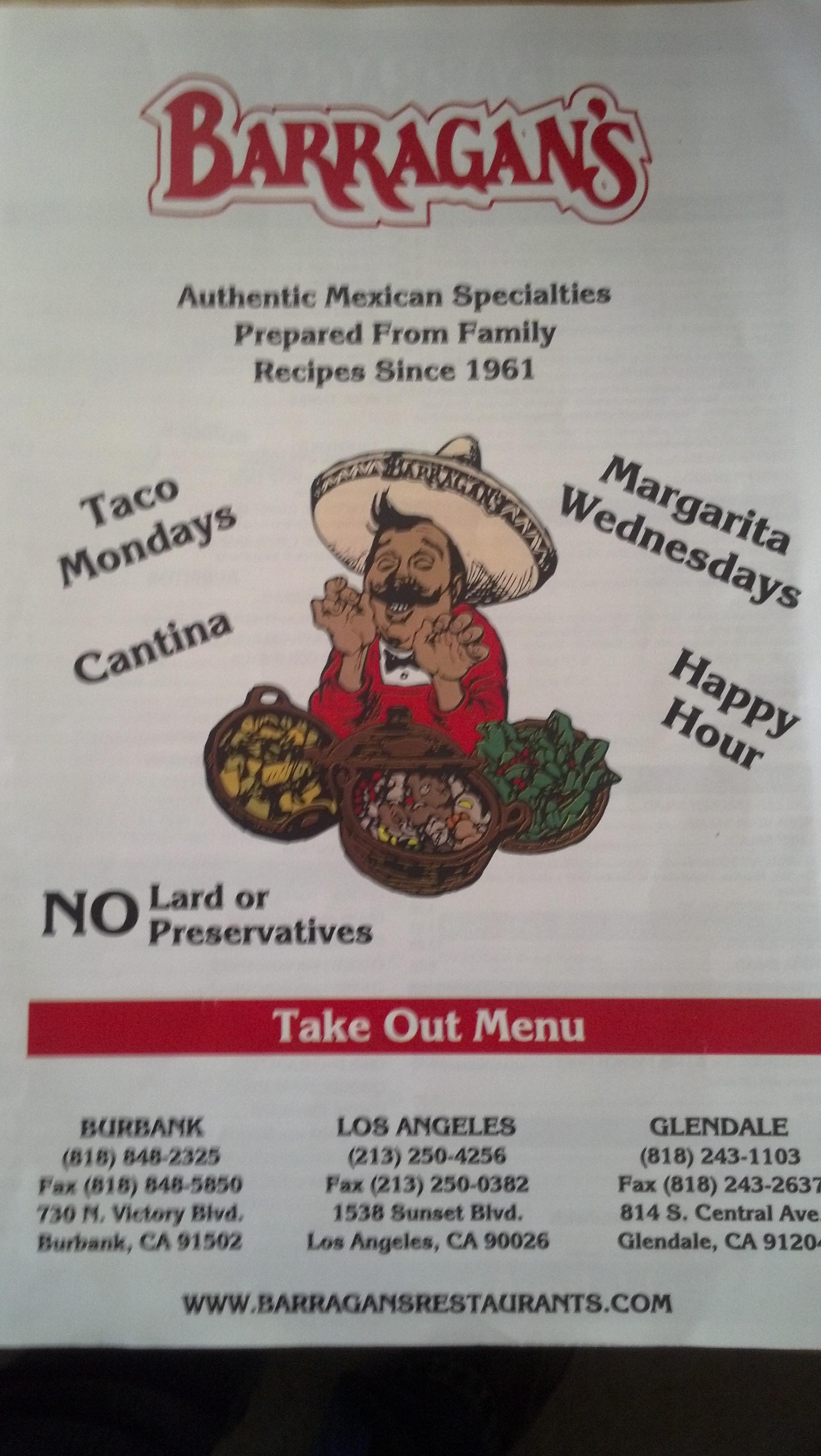
A recent trip to Los Angeles to see my mom was a bit different than previous visits. She’d had surgery last month and I had gone to provide some belated help. Mostly I cooked. And cooked some more, filling her freezer until the next time I can return to offer more over-due assistance. Dining at special or new restaurants is one of the many things we usually do when I go to LA, but on this trip circumstances allowed for only one restaurant meal, which we ate at my mom’s. Thank goodness, one of our long-time favorite Mexican restaurants, Barragan’s, has take-out.
It’s practically a tradition for us to dine at Barragan’s when I’m in town. We’ve gone for dinner, lunch and even brunch. We take friends there. We’ve got a thing for Barragan’s because the food is consistently fresh and flavorful. I am glad to know those same qualities carry over when ordering in.
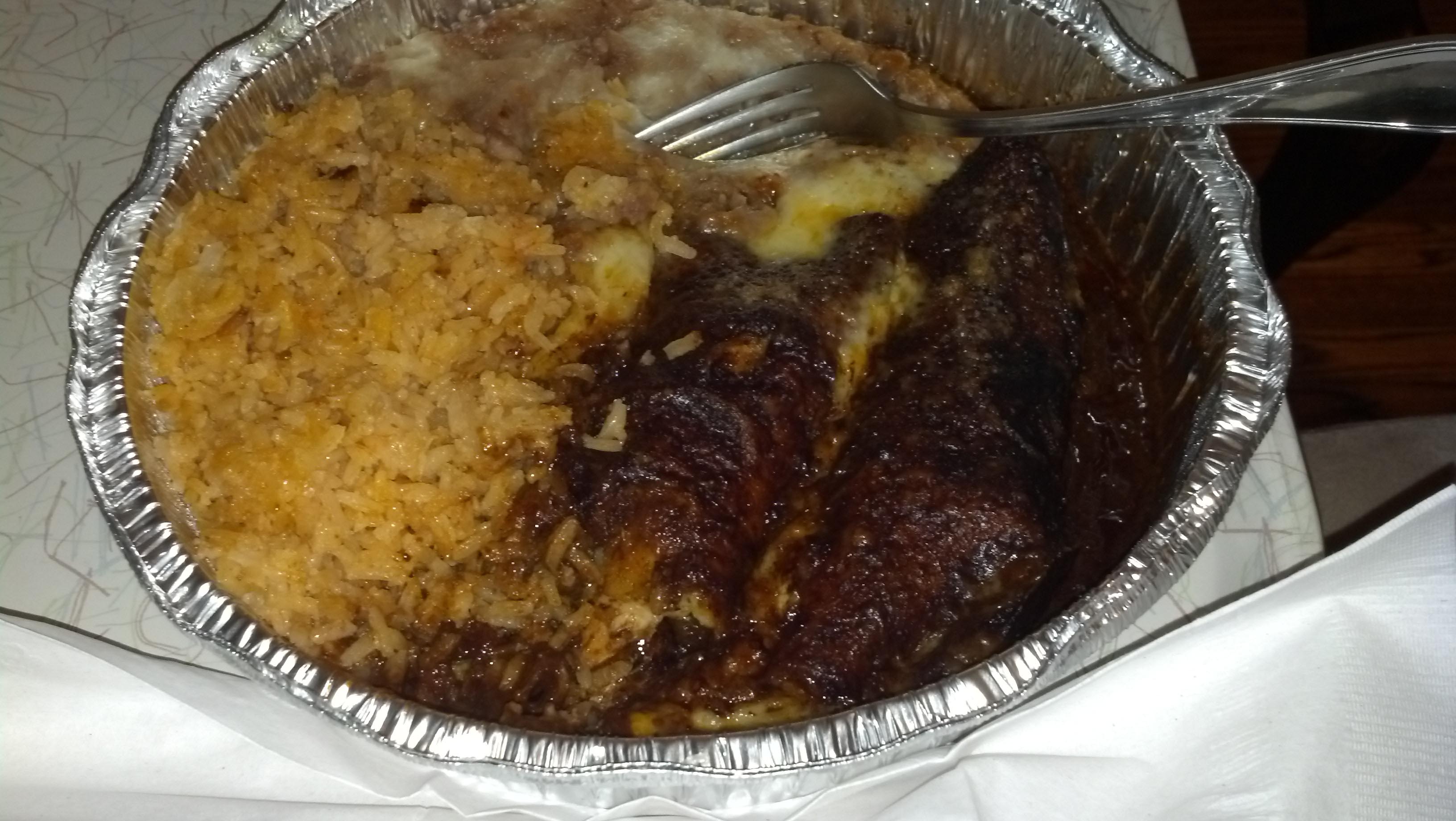
I ordered the Mole Enchiladas which came with a salad, rice and beans. The enchiladas were filled with chunks of chicken slathered in mole thick with an abundance of spices that blend perfectly with one another. The sweet taste of cinnamon was the perfect foil for the hint of bittersweet chocolate. Not only were my taste buds enamored with the entrée, but the rice and beans – especially the beans – were also loaded with flavor. These are no canned variety.
My mom ate very little, but I made up for it relishing my meal – food I didn’t cook.
Barragan’s
Four Plates
814 S. Central Ave.
Glendale, CA

Beautiful Ruins is a cinematic novel. It’s easy to imagine this story playing on the silver screen. It spans years and continents, relies heavily on the relationship between Elizabeth Taylor and Richard Burton, and features a strong connection to the movie industry. At its core, this is a love story, and a beautiful one at that.
Jess Walter’s tale involves a young actress, Dee, who arrives in an isolated Italian fishing village on the Ligurian Sea, where she meets Pasquale the owner of the Adequate View Hotel. Dee has been sent from Rome, where she had a bit part in the filming of Cleopatra. Dee is also pregnant with Burton’s child. Although it may sound like a blurb from People magazine, Walter imbues his narrative with deep feelings, humor, interesting characters and a clear passion for romance.
However, just when it seems the story will settle in the fishing village (the most interesting place) or even Los Angeles (because of the Hollywood scene), several miscellaneous locales are introduced: Seattle, London, Spokane, Florence, even Donner Pass in Northern California. Walter includes an assortment of characters, none of whom, surprisingly, are superfluous. Added, to this mix are different time periods: the early 1960s, the 1800s, and something more contemporary. The myriad of people, places and eras at first seems disparate, but they actually are essential what makes this such an engaging work.
Ruins are most often associated with architecture. Here Walter incorporates them into the erosion, but not extinction, of human emotions.
Beautiful Ruins
Four Bookmarks
Harper, 2012
337 pages
Having an open mind and an empty belly are important when dining. I admit I struggled with the former when my family wanted to have breakfast at The Dive. They loved it; I was less enamored. I couldn’t tell how much of my reaction had to do with the name or if I let some minor problems overshadow the meal.
When five of us order and only three get our food at the same time, I take issue. And, toast should be toasted, not simply dry bread. That was the downside – mostly.

I confess that, once it arrived, I enjoyed my vegetarian omelet. The onions, green peppers and mushrooms had been sautéed before being added to the eggs. Along with fresh tomatoes, this extra step made for a very flavorful dish. My husband and two of our sons ordered traditional scrambled eggs and bacon – along with the marginally toasted bread. They were pleased with the plentiful serving sizes.

The Dive is open 24 hours and serves breakfast and burgers all day/all night. With this in mind, my youngest son opted for a burger. His nod to the time of day was to have it topped with an egg. His French fries were better than my too-crispy, somewhat oily hash browns.

For most of the meal the only other female in the joint besides me was the server. Maybe men don’t care what a place is called as long as the food is good. Maybe I should try to follow their lead.
The Dive
Three Plates
3040 W. Pikes Peak Ave
Colorado Springs, CO

Any number of factors figure into how I, or anyone for that matter, respond to a book. Experience, age, education, even mood, come quickly to mind. I was struck by these considerations as I read Sheila Heti’s How Should A Person Be? because the novel makes me feel that whatever I bring to this particular reading experience is a negative: my experience, my age, and yes, my mood.
Sheila is the narrator, a young writer in Toronto struggling to finish a long-overdue play; she is easily distracted by life, specifically people in her life. She is so caught up with what others think and do that she lacks focus. Sheila stretched my patience as a reader. She has a wonderful friend in Margaux, an unhealthy but lively sex relationship with a man named Israel, and an undiguised inability to recognize or accept what is good and positive in her life. She is not quite a loser, but teeters awfully close to becoming one.
Perhaps the issue lies in Heti’s attempt to fictionalize her autobiography, for she is clearly the narrator and there is little reason not to believe that the other characters comprise her circle of friends. Frankly, Sheila is not that interesting. That honor goes to Margaux who comes across as honest, talented and a good friend, but it’s hard to explain what she sees in Sheila. Israel is depicted as a depraved man who uses Sheila to fulfill his debased sexual fantasies. Unfortunately, it’s too easy to see he’s attracted to her.
How Should A Person Be?
Two-and-a-half Bookmarks
Henry Holt and Co., 2012
306 pages
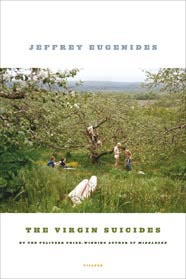
First published twenty years ago, The Virgin Suicides by Jeffrey Eugenides remains poignant and rich with dark humor. The account of the Lisbon sisters, whose mere existence – and ultimate demise – captured the attention of their entire community, is told in a plural form of the third person voice representing the neighborhood’s teenage boys. It’s not quite the “royal we” but is an interesting technique nonetheless.
Eugenides’s narrative takes place in a quiet Detroit suburb. Seasons are noted by references to fish-flies, fallen leaves and holiday lights. For the Lisbons, however, there are complications. The narrator(s) rely on observation and references to interviews conducted with other neighbors, teachers and clergy. Mention is also made of several “exhibits” which include medical reports and photographs.
The five sisters range in age from 13 to 17, and the youngest is the first to kill herself. It’s clear not just from this suicide which takes place early in the novel, but also from the title, that the others will follow suit. The narrators share this sense of the girls’ impending self-destruction. Eugenides masterfully creates tension, and toys with the reader suggesting the possibility that, perhaps, the girls will be unsuccessful.
However, this is not a work simply about teen angst with no way out. It is a coming of age chronicle and a love story. The narrator(s) are forever changed by their connection to the Lisbon family, but the impression is that would have been true even without suicide as part of the tale.
The Virgin Suicides
Four Bookmarks
Picador, 1993
243 pages
We aren’t planning any trips to Albuquerque anytime soon, but when we do we’ll make sure to include a stop at a Flying Star Café. There are eight in the Duke City area, plus one in Santa Fe. It’s similar to Panera Bread, but with a far more ambitious menu. Dinner and breakfast are served all day, which means the lunch options are plentiful.
A recent road trip resulted in our introduction to the Flying Star. Orders are placed at the counter, but the fare is delivered to the table. The emphasis is on comfort food that can be prepared quickly without sinking to a fast food template.

I chose the smaller portion of the Buddha Bowl (appropriately called the Baby Buddha). Featuring stir-fried vegetables in a lemongrass-ginger sauce served over brown rice. The ginger adds a nice zing to the medley, and the fried wontons provide texture.

The Macaroni and Cheese has apparently developed a cult-like following among diners trying to discern the types of cheese included in this classic dish. A few years ago, it was the recipient of an area newspaper’s Best Mac and Cheese Award. Curly pasta is coated in a very rich, very creamy cheese sauce. It’s decadent. One of the most elevated, and least expensive, menu items is the $5.99 Grilled Cheese Sandwich: gobs of melted cheddar on toasted sourdough bread.

The café was bustling, but the food provided a nice respite from the basic off-the-highway-for-a-quick-bite meal we’ve settled for in the past.
Flying Star Café
Three-and-a-half Plates
8000 Paseo Del Norte
Albuquerque, N.M.
I took last week off; I read, I hiked, I ate too much, I slept some, I wrote a bit, but mostly I decided to take a break from the Blue Page Special. In the process, I discovered that I missed it.

I just finished reading Tell the Wolves I’m Home by Carol Rifka Brunt and can’t stop thinking about it. Although the writing doesn’t fall into the take-your-breath-away category, the story certainly does. I still want to spend time with the characters: June, a 14-year-old misfit; Greta, her super-achieving sister; Finn, their deceased uncle; and Toby, Finn’s lover.
June is devastated when Finn, her best friend, dies of AIDS. She struggles, then Toby enters her life, and she continues to flounder. Except now she has someone to help her keep Finn’s memory alive. Toby and Finn lived together and, even though she spent a lot of time in their apartment, June never knew about Toby. This aspect has the potential to be implausible; instead, it enhances June’s character as a naïve teenager. Another potentially hard-to-believe feature is the bond that develops between the young girl and the thirty-something Toby. Remarkably, there is never anything creepy or uncomfortable about it. This is largely due to their love for Finn, and the tentative manner in which their friendship evolves. Equally important is the sisters’ relationship.
Brunt masterfully creates relationships that are rich, painful, and grow before our very eyes. The novel is about friendship, first loves, misplaced jealousy and sibling relationships. Set in the mid 1980s, AIDS has just begun to make itself felt in American culture. Yet, that is simply a background element. This is a coming-of-age story that considers the way people change based on age, interests, opportunities, and circumstances.
Tell the Wolves I’m Home
Four-and-a-half Bookmarks
The Dial Press, 2012
355 pages
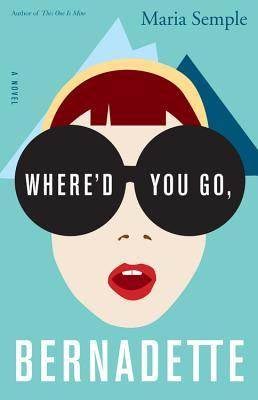
Where’d You Go, Bernadette by Maria Semple is engaging, funny, poignant, and even a bit silly. Set primarily in Seattle, the story also includes a few situations in Los Angeles and the Antarctic as Bernadette Fox tries to ward off a nervous breakdown in an environment seemingly designed to push her over the edge.
Bernadette is a semi-misanthrope; she dislikes nearly everyone except her husband, Elgie, and their daughter, Bee. Bernadette doesn’t make it easy to like her. She refuses to get involved with the parent groups at Bee’s school, and she avoids interaction – no matter how casual – with others to such an extreme that she relies on a virtual personal assistant who lives in India.
Semple has created an appealing dysfunctional family that has trouble meshing with an often-dysfunctional world. Bernadette, a one-time architect, is, in fact, a genius; she’s a past recipient of a McArthur Foundation Genius Grant. But she responds to stressful situations through radical reactions, including disappearing. Bernadette’s story is told through emails, letters and mostly Bee’s eyes. Bee is no intellectual slouch herself. She’s convinced there’s a logical explanation for her mother’s absence. And here’s where the real adventure begins as Bee sets off to find Bernadette.
Russian spies, potential identity thieves, private school students, and parents blind to their children’s excesses and foibles are just a few of the extras populating Semple’s novel. There are plenty of laugh-out-loud situations as well as a few shoulder-shrugging moments as Bee, who has a very good understanding of her mother, refuses to stop looking.
Where’d You Go, Bernadette
Four-and-a-half Bookmarks
Little, Brown and Co., 2012
326 pages

Josephine’s in Flagstaff, Ariz., describes itself as a “Modern American Bistro,” which is an apt description. The only missing detail is how successful it is at reaching its mark.
The occasion being celebrated, the companionship of the dining party, the holiday ambiance inside – and out, thanks to a mid-December snowstorm – and the homelike comfort of the restaurant contributed to an excellent dining experience. Without a doubt, though, the quality of the food was the exclamation point. The interior and exterior of the craftsman-style bungalow are captivating. Listed on the National Historic Register, it’s easy to be distracted by the stonework, wainscoting and exposed beams. Still, the food is the real attraction.
The menu features fewer than a dozen entrees; several in our group had trouble making choices. I was torn: Diablo Shrimp Macaroni and Cheese, Josephine’s Pot Pie or Smoked Pork Tenderloin with Ranchero Sauce. I thought the Eggplant Enchilada also sounded intriguing.

When placing our orders, the server consistently said “Great choice” or “Very nice.” I pointed this out, to which he responded, “What can I say? Everything is fantastic.”
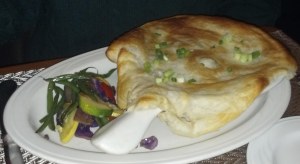
I was very pleased with my pot pie. Simmering beneath the flakey pastry were tender pieces of beef, mushrooms and other vegetables in a rich wine sauce. The savory beef practically melted in my mouth. I sampled the mac and cheese, with plump, juicy shrimp, which had a spicy kick in a gouda cheese sauce.
Although the events may not conspire to recreate this perfect dining experience, I am confident the food will.
Josephine’s
Five Plates
503 N. Humphreys St.
Flagstaff, Ariz.