The best books are those you don’t want to pick up because once you do, you don’t want to put them down. It’s a conundrum. Lessons in Chemistry by Bonnie Garmus is one such book. It’s a love story (on many levels) wrapped in science, specifically chemistry.
Elizabeth Zott is not a woman to be dismissed. Even after her post-graduate education is derailed due to sexual assault, she’s relentless in her pursuit of science.
Well ahead of her time in the late 1950s early ‘60s, she refuses to let her gender restrict her dreams, nor does she allow her good looks to dictate how’s she’s perceived. She’s exceptionally intelligent with a strong sense of self and a desire to be a chemist in the male-dominated scientific community.
She’s hired at a research lab where she meets Calvin Evans, a socially-awkward but distinguished scientist. A relationship based on mutual respect, desire and, ultimately, love flourishes despite the ill-will of their colleagues.
Garmus deftly illustrates the sexism and hypocrisy of the era. Yet, this is not a male-bashing narrative. When circumstances change, Elizabeth finds another way – round-about though it is – to pursue a career in chemistry: she hosts a television cooking show where she takes an unusual approach. Instead of identifying ingredients by their common names, she uses scientific terminology (ie., sodium chloride vs salt). Surprisingly, the program is a hit.
Humor and tragedy are incorporated in equal measures with several endearing characters the reader would love to spend more time with.
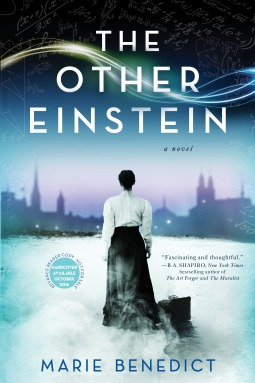
Thanks to National Geographic’s limited TV series, “Genius,” several years ago, I knew of Albert and Mileva Einstein’s marriage and his dismissal of her. Marie Benedict’s fictionalized account of her life in The Other Einstein adds nothing new.
It does, however, reinforce my negative perception of Albert. More disappointing is the portrayal of Mileva. Although her brilliance is never underplayed, she’s rendered as a weak, indecisive woman where Albert is concerned.
The narrative focuses on their courtship, which begins at the Polytechnic Institute in Zurich where she and Albert are studying physics. It soon becomes evident that she is an excellent student, despite being scorned by her professor because she is a woman.
Her gender is a constant obstacle to her ability to make a name for herself as a scientist. Benedict gives credence to Mileva’s contributions to numerous theories, particularly that of relativity for which Albert is, perhaps, most well-known. Although. her name is never included in any of the studies.
In Benedict’s hands, Albert is a selfish, insensitive man. Mileva recognizes this, yet she still falls for him. The relationship distracts from her ability to obtain her degree. She becomes pregnant, something Albert comes to view as an impediment to his own future. When their daughter is born, he has nothing to do with her.
I have enjoyed Benedict’s other novels about interesting, strong women in men’s shadows. However, this is the most unsatisfying. Mileva is pathetic in her vulnerability to what she mistakenly sees as Albert’s charms.
Some things aren’t as simple as One Two Three, the title of Laurie Frankel’s novel about triplets who call themselves by those numbers. Their given names are Mab (One), Monday (Two) and Mirabel (Three). They live in the small town of Bourne, where 17 years ago the poisonous discharge from a chemical plant turned its water green with many residents suffering a range of illnesses and repercussions.
This was the cause of the girls’ father’s death, shortly before they were born. Their mother has been fighting for justice ever since, and the triplets were not left untouched. Mirabel is considered a genius, but she only has the use of one hand to control her wheelchair and voice box. Monday will only eat yellow foods, does not like to be touched and has assumed the role of the town librarian. Books are stashed throughout the family’s small home. Only Mab is left unscathed, which is not necessarily as easy as one might think.
When plans are announced to reopen the plant, despite assurances from the owners that things will be different, the girls become detectives certain there are secrets to unearth.
Chapters are alternately narrated by one of the triplets, each providing her own perspective. The narrative incorporates laugh-out-loud humor, instances of impending doom and even a sense of joy as the girls work together despite their physical and mental limitations. Mab, meanwhile, is distracted by a love interest. Yet, despite their differences and abilities, they’re committed to uncovering the truth.
I’ve never reviewed a hotel, inn, Airbnb or other away-from-home accommodation, but The Lincolnville Motel in Maine warrants mention.
Lincolnville is barely a distraction on U.S. Highway 1 and we almost missed the driveways into the motel. I’m glad we didn’t (even though we had reservations).
We were greeted by Alice, the owner, and Lucy, her affectionate Golden Retriever. Along with keys to our retro motel cabin, we received an envelope with house rules and suggestions for nearby attractions, and two sets of earplugs. Alice pointed out the pool, now closed for the season, and led us to the large sitting area lined with shelves of books, board games and record albums.
Our room featured a queen bed, small table with a record player, a globe, small refrigerator and an expansive view across a field leading to the ocean. Unfortunately, the road to the water leads to private property, but the view is public!
Maine in early October gets chilly and our room certainly was. The small wall heater took some time getting up to speed. Due to the chill in the air, we felt like we were camping in a large, exceptionally comfortable tent.
It’s been years since I’ve listened to albums, so it was fun going through the large selection in the common room and taking a few back to our room.
I eventually figured out that the earplugs were provided because of the proximity to the highway. Yet, they weren’t needed. The night’s sleep was certainly peaceful.
Part of the fun of traveling is enjoying cuisine specific to the area visited. So, when in Maine that means fresh seafood.
We had some excellent meals and others best be described as meh; nothing special. I’ll focus on the former.
To say Red’s Eats in Wiscasset draws a crowd is an understatement. The line to order wrapped around the block and movement was negligible. Sprague’s Lobster, across the street, overlooking the Sheepscot River had plenty of full picnic tables, but the line was only a few people deep. There we ordered a lobster roll with drawn butter on the side and fries. The toasted hot dog bun was hidden beneath large pieces of fresh, sweet and slightly briny lobster. It was a great start to our vacation.
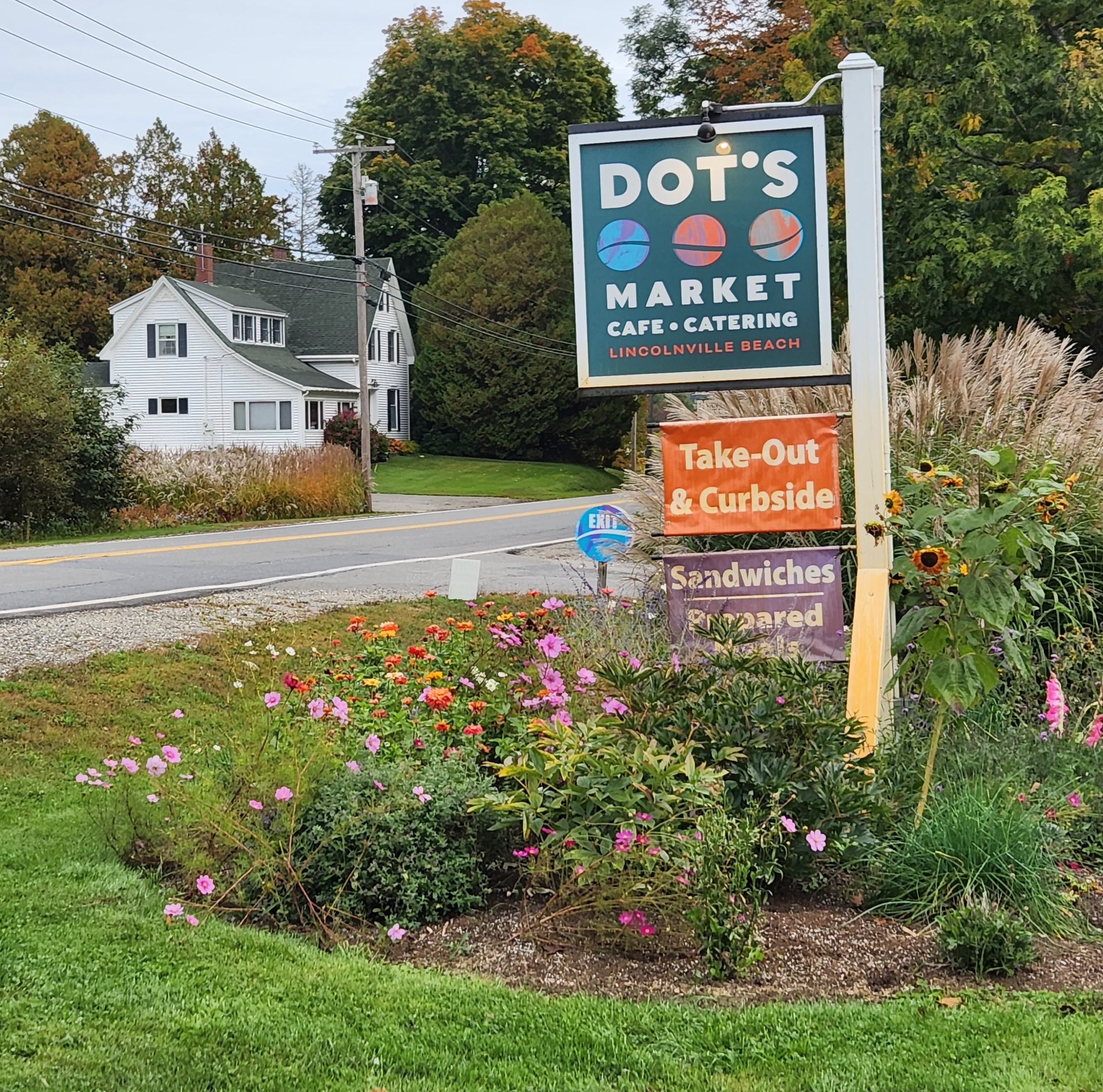
If ever on U.S. Highway 1, which closely follows the coast (although it’s mostly hidden by dense woods), fresh-baked goods are worth a stop at Dot’s Market in Lincolnville.
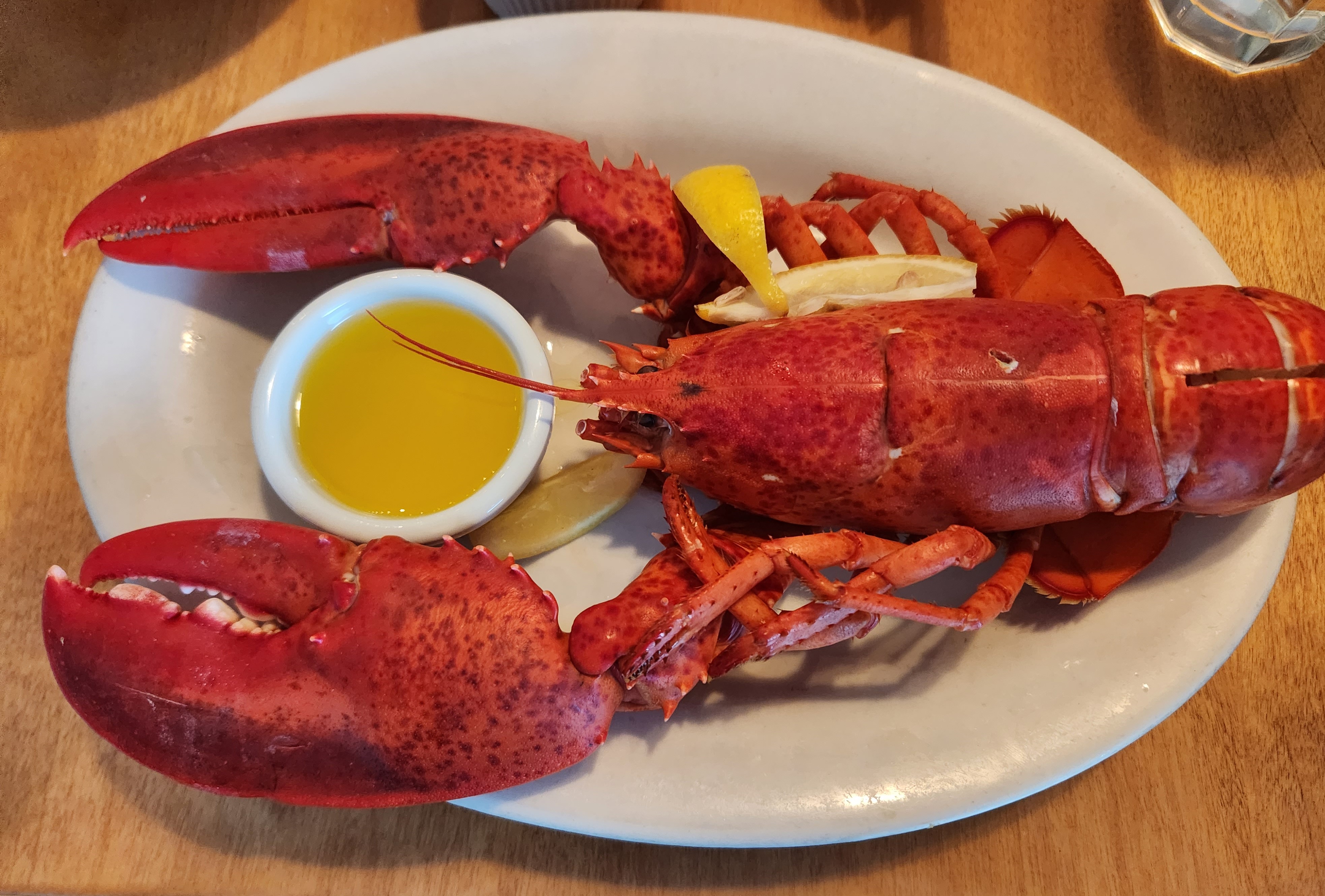
A full lobster dinner at West Street Café in Bar Harbor was just what I’d been anticipating. Unlike many restaurants, market prices were provided without having to ask. My “Downeast Special” included clam chowder, a 1-1/4 pound lobster, slaw and blueberry pie.
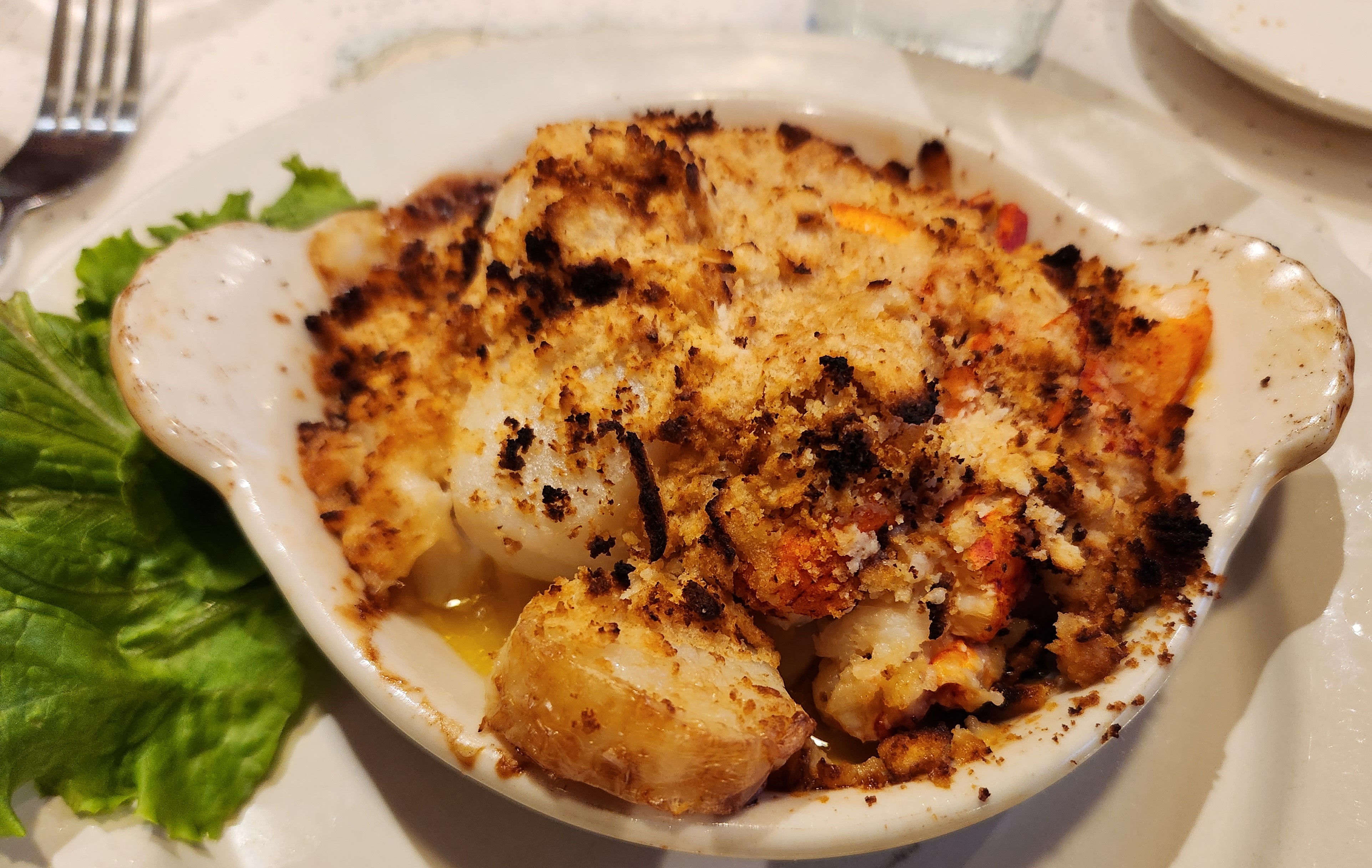
The Colonel’s Restaurant and Bakery in Northeast Harbor had another of my favorites: scallop and lobster bake. Not particularly beautifully plated, this was a combo of 1/3 lobster pieces and too many rich, creamy scallops to count cooked in butter and topped with cracker crumbs. Mixed together it created a sweet/savory gravy.
Horse by Geraldine Brooks is much more than about the equestrian world. Along with some history of horse racing, other topics include slavery, art history, modern science and even romance. However, racism is the primary underlying theme throughout.
The narrative incorporates several threads across different, non-chronological time periods: 1850-75; 1954; and 2019. Blending perspectives and experiences of several characters across time to create a complete picture is one of Brooks’ trademarks.
Although Theo, a Black art history graduate student in Washington, D.C., in 2019, is the first character introduced, readers spend the most time with a 13-year-old slave identified by his masters’ name as Warfield’s Jarret in 1850. As the story progresses and Jarret matures, his owners’ names change as do his situations. Jarret has inherited his father’s horse training skills making a name for himself as an exceptional trainer working with Lexington, a thoroughbred whose lineage now extends through generations.
Other major characters include Jess, an Australian scientist working at the Smithsonian Museum of Natural History; Thomas J. Scott, a 19th century artist, whose paintings of Lexington are a significant part of the plot; several of Lexington’s owners; and a 20th century gallery owner.
A discarded painting of a horse leads Theo to learn more about the work, and Jess to discover more about its subject.
As the novel moves back and forth through time, the issue of race remains a constant. Brooks’ deft approach provides an engaging look into the past and an important reflection on our times.
There’s no doubt Chicago is a culinary haven. Mention a culture and its cuisine is represented. A recent, albeit quick, trip included stops at two brunch spots, a bahn mi shop and an excellent dinner enhanced by the company of one of my sons and a new friend. I have no photos of our food at Ba Le Sandwiches or Pauline’s, but I would return to both — especially to the former for the barbecue pork bahn mi.
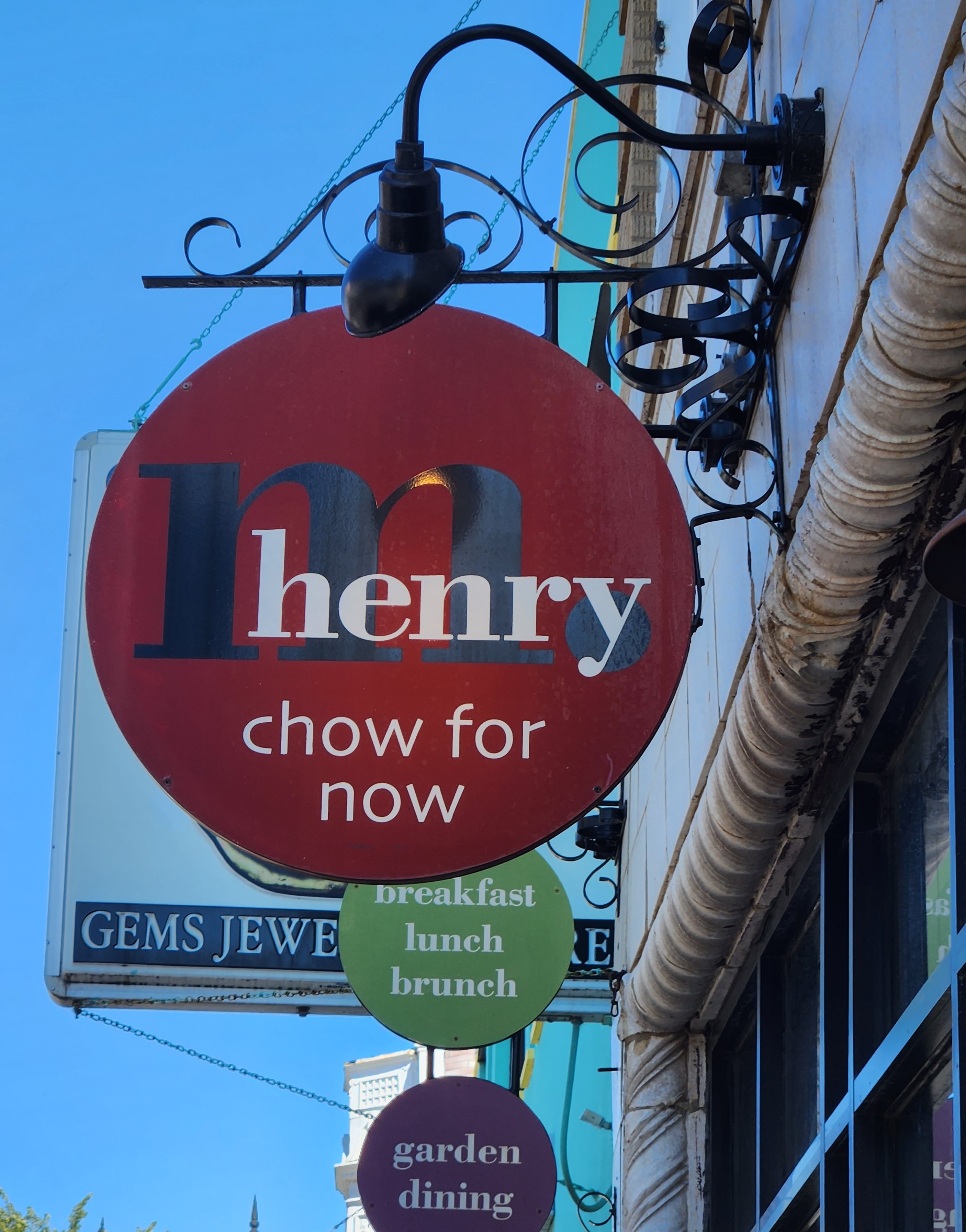
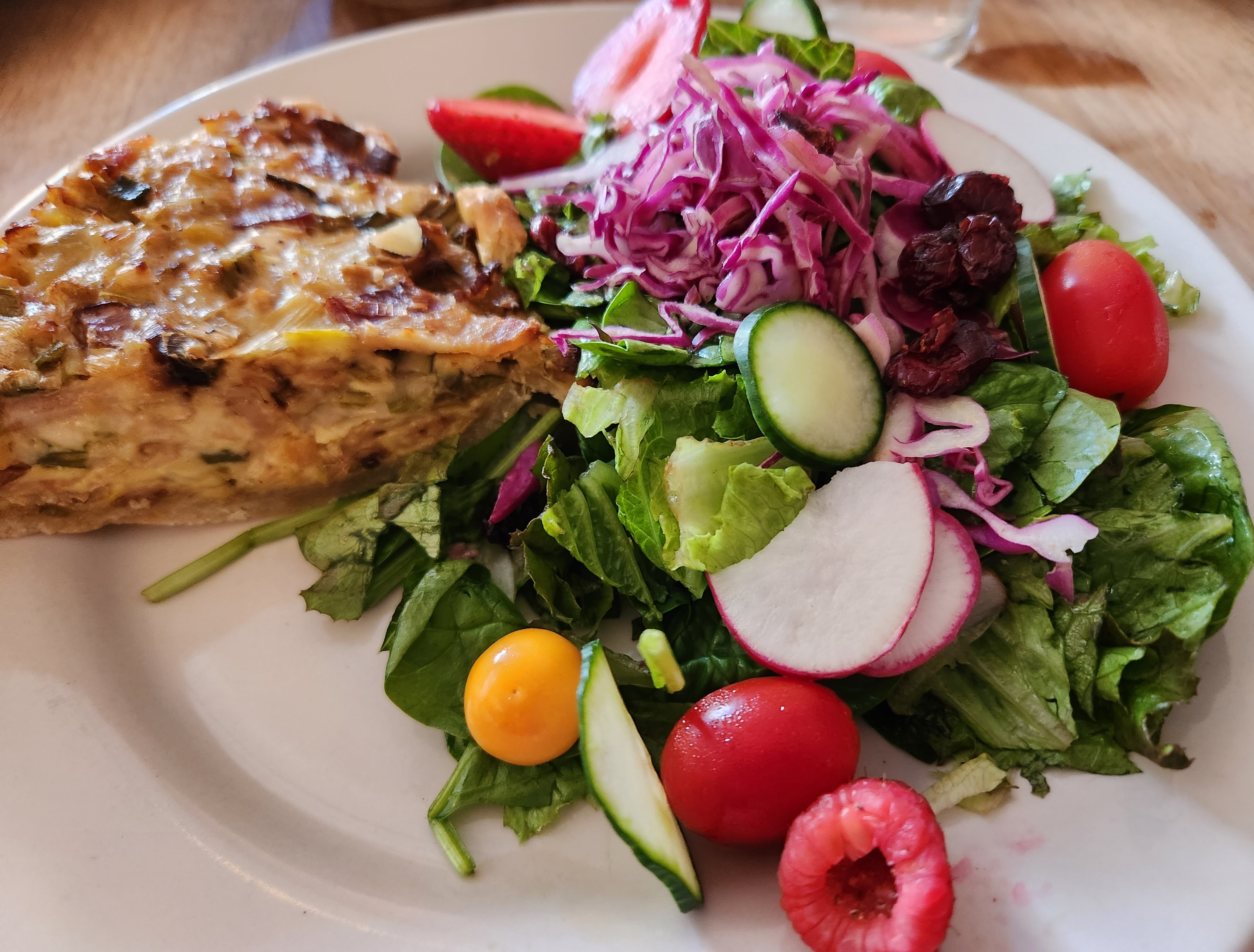
m.henry, a popular spot in Andersonville, features an array of baked goods, traditional egg entrees and quiche, among other items. The rustic peasant quiche was chock full of asparagus, leeks, bacon and gruyere cheese on a flakey crust. The side salad was practically a meal in itself.
Oaxaca, Mexico, is known for its mole — among other food specialties. The red mole, in particular, at Kie-Gol-Kanee is among the best I’ve ever had. Mole enchiladas and Oaxaquenos tamales are two preparations here. In order to sample the two types of moles on the menu, I had the pork green mole and chicken red mole tamales. These are wrapped in plantain leaves with a thin layer of masa. Once the leaves are removed, the mole escapes onto the plate. The green is tart and spicy, but my palate belongs to the dark red, earthy variety.
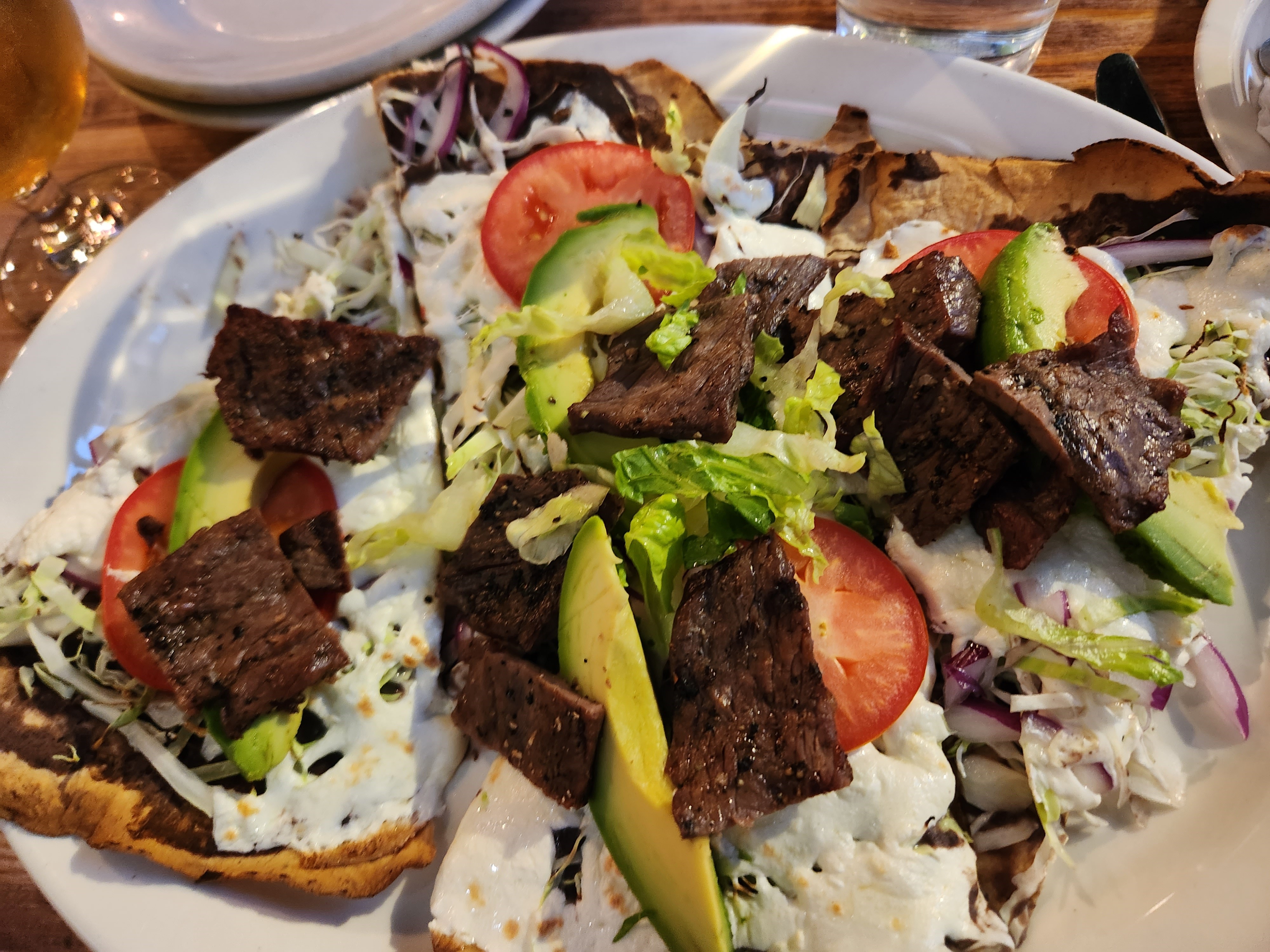
Another typical Oaxacan dish is the tlayuda, a large,crispy handmade corn tortilla is topped with a choice of meats, sliced tomatoes, avocados and cabbage. Think nachos on steroids.
After watching the HBO series about Julia Child and how she not only elevated American cuisine but also played a significant role in the rise of Public Television, I became interested in Judith Jones.
Jones edited Child’s Mastering the Art of French Cooking. As a fictional work, the TV series played with some facts, not just about the Childs, but also Jones. This led me to her memoir The Tenth Muse: My Life in Food.
Jones grew up in a privileged family where food was given little attention. If not for the family cook, meals would have been completely uninspired. Food was meant to be consumed not talked about. This makes it fascinating to learn about how not only her palate but also her passion evolved.
Jones approach is unassuming and engaging. Yes, she drops names, as in culinary celebrities, but not before she shares her experiences as a college coed in New York City and Paris. The City of Lights is where she met the loves of her life: Evan who she would marry and fine cuisine.
After spending several years in Paris, The Joneses return to New York, where she worked first at Doubleday and later at Knopf. It was there she saved The Diary of Anne Frank from oblivion and made her name as an editor.
Jones recounts her interaction with chefs, her own cooking endeavors and her efforts that helped home cooks move from the bland to the sublime. Jones also includes many recipes in the memoir.
Ironically-named Eve narrates. On vacation at a lakeside mansion, she’s one of 12 children whose parents pass the time drinking and doing drugs. The kids have nothing but disdain for the neglectful adults. Instead, they create their own games and adventures, including a camping trip via canoes to the shore.
These are not your average youths. They carefully plan their excursion ensuring they bring the right supplies. They also know that when weather alerts forecast a major storm it’s time to return to the estate.
To their credit, the parents are aware of the approaching tempest, which evolves into a storm of massive proportions. However, once power is lost and food supplies run low, it’s the adolescents who understand it’s time to go. Unable to convince their parents how urgent the situation is, the kids leave them behind.
Tension builds as the children discover their world is now an apocalyptic nightmare. Although they encounter kindness from some adults, they also face armed men willing to battle for any resources needed to survive.
Eve’s little brother, Jack, has a picture book of Bible stories with many connecting to the dire conditions.
Relying on the younger generation to first recognize the danger caused by the storm and then seek solutions is symbolic given the existing climate crisis.
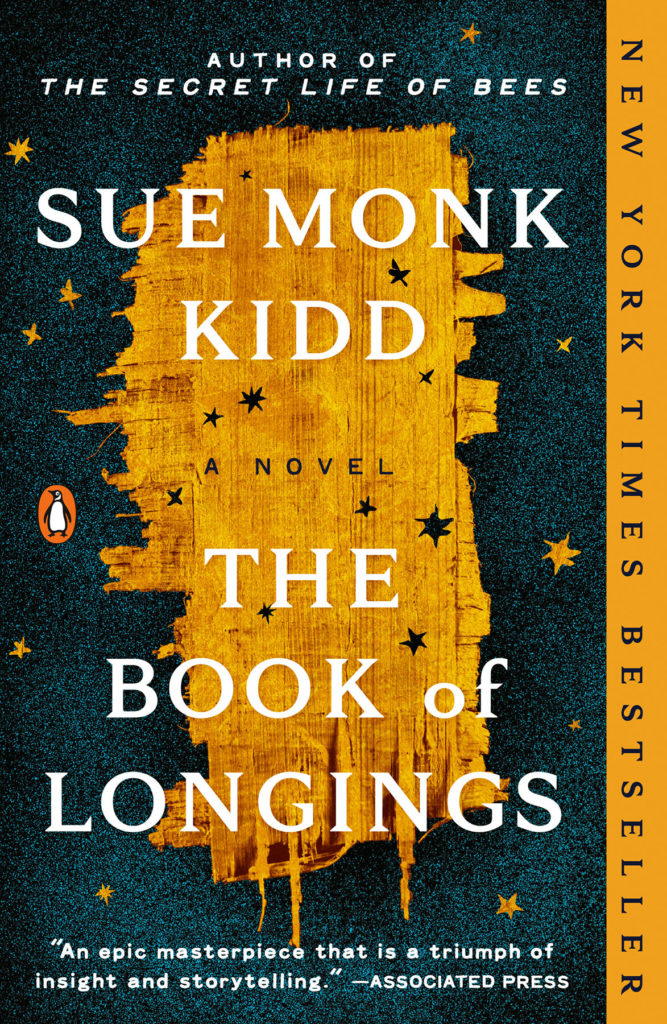
Sue Monk Kidd’s The Book of Longings is the kind of creative and well-researched novel that’s hard to put down. The premise is based on the idea of what if Jesus had married?
It’s addressed with the fictional portrayal of the life of Ana, Jesus’s wife. As the daughter in a wealthy family in Galilee, Ana is expected to bide her time until she is suitably married. However, this is not what she sees as her life’s objective. Instead, she surreptitiously studies and writes about women whose lives are ignored or silenced. This is her personal rebellion in a patriarchal society.
Ana first briefly meets Jesus in a Galilean markets. She’s drawn to him but can’t explain why. Through some not-so-chance subsequent meetings, they become further acquainted.
The author draws from the Bible and fills in the blanks with Ana’s life, from her near-arranged marriage with a much older man, to her ultimate union with Jesus, and later her escape from Galilee to Alexandria with her intrepid aunt.
Interestingly, Jesus is a minor character, as are his mother and his brothers. The focus is on Ana. Once married, although she has Jesus’s support and appreciation of her talents as a writer, she is too busy on the family compound near Nazareth to pursue such aspirations.
Tension builds as Ana and Jesus independently evade authorities for different transgressions. Jesus’s fate is known, Ana’s isn’t. However, her intelligence, passion and understanding of Jesus’s purpose, in Kidd’s hands, make her the ideal partner.














 The Blue Page Special