Archive for the ‘writing’ Tag
It’s 1980 when Carl Fletcher, the owner of his family’s Styrofoam manufacturing plant, is kidnapped from the driveway of his home In Middle Rock, a wealthy, mostly Jewish, Long Island community. Thus begins Taffy Brodesser-Akner’s novel Long Island Compromise.
There’s certainly intrigue regarding the kidnapping, but it’s not much of a spoiler to note that after his harrowing experience, Carl is ultimately reunited with his pregnant wife, Ruth, six-year-old son Nathan and four-year-old Bernard (later known as Beamer). Carl’s mother, Phyllis, insists the family move onto her estate with the intent that all will be safer.
The family’s affluence has its roots in Phyllis’s late husband, who escaped from Nazi-occupied Poland with a formula for plastics, founded the factory.
Although Jenny, is born soon after her father’s kidnapping, she and her brothers are forever marked by their father’s ordeal and the wealth of their upbringing. For the rest of their lives Ruth and Phyllis go to extremes to protect Carl who remains traumatized.
The novel is loosely based on a true story, but the characters are composites of stereotypes with personality twists. They’re interesting, amusing, pathetic and occasionally surprising, often predictable – sometimes in the same breath (or sentences as the case may be).
The Fletchers’ tale spans four decades with narration changes as each family member’s personal story is portrayed. There are contemporary issues such as drug abuse, mental health issues, financial concerns and familial turmoil. Yet, Brodesser-Akner’s writing is rich with an abundance of humor, irony and empathy.
Long Island Compromise
Four Bookmarks
Random House, 2024
444 pages
Until August Gabriel Garcia Marquez‘s posthumously-published novel lets readers revel in something new by the renowned author who died in 2014.
The novel’s background is interesting. Its bones were first published in The New Yorker in 1999. The Editors Notes at the book’s conclusion indicate the short story was to be part of something larger featuring the same main character. Garcia Marquez finished the work, but it had yet to be fully edited before his death and he felt the work should be destroyed. His sons decided otherwise: “In an act of betrayal, we decided to put his readers’ pleasure ahead of all other considerations,” they wrote in the preface.
Every August, Anna Magdalena Bach travels by herself to a nearby island to place flowers at her mother’s gravesite. It was her mother’s final wish to be buried there, although Anna never knew why.
Yet, the flowers are not the only reason she goes every August for one day and catches the return ferry to the mainland the next day. She also takes a lover for that one night. Each year, it’s a different man. Up until the first time, she had never previously been unfaithful.
Through the years, the island becomes more popular among tourists, which affect her visits. And, of course, Anna gets older. Readers learn about her reading habits, her preferred drink, how her family has changed and more. It’s all succinctly described in 107 pages rich with humor, tension and intelligence – complete with a surprising revelation.
Until August
Four Bookmarks
Alfred A. Knopf, 2024
129 pages, includes Editor’s Notes and Facsimiles of the Original Manuscript
The Lightkeeper by Linda Duval is a tale of a young woman who seeks to be independent and then becomes fiercely so in a time when it is far from the norm.
Because of the Civil War there’s a shortage of men to staff the lighthouses on the Massachusetts coast. Amy Pritchard is mourning the death of her husband when not long afterwards her infant daughter also dies. Seeking refuge and a desire to prove herself as a capable person, she is hired to care for the Point Peril lighthouse.
Amy becomes adept in her role caring for the lighthouse and its grounds, teaches herself to swim, garden and manages life, mostly, on her own. A ferocious storm changes things when she saves a shipwrecked sailor. Amy and the man, who she later learns was the ship’s captain, are destined to meet again months later. From this point the plot becomes predictable, but no less engaging.
Later, a young man is available to take over the lighthouse and Amy must give up her job. The captain offers her a position at his family’s shipbuilding company and housing in Boston, which she reluctantly accepts. This further tests her resolve to maintain her independence.
DuVal has crafted a richly descriptive narrative with interesting characters, although she resorts to caricature in her portrayal of the rural pastor. Still, the story flows well and Amy’s insistence of staying true to herself despite the limitations imposed on women of that era is impressive.
The Lightkeeper
Three-and-three-quarters bookmarks
Ryolite Press, 2024
178 pages

In Lily King’s Writers & Lovers 31-year-old Casey Peabody has been working on a novel for six years. Her mother recently died, she’s in debt and she works as server. She’s ended one relationship and soon becomes involved with two other men.
There’s no smut here. Instead, King creates intrigue and empathy for Casey, who’s kind, good with dogs and kids, and lives on the fringe of Boston’s literary society. She has writer friends, becomes involved with Oscar, an established author, and Silas, a struggling writer, all while agonizing over her own work. King’s characters are warm, likable people.
If this were a play, Casey would be upstaged by Oscar’s two young sons. He’s published, widowed and is several years older than Casey. She deliberately shares little of her writing efforts with him, but his boys are awfully cute. Then there’s Silas who’s closer to her age, teaches and writes in his spare time. Silas is initially off-putting because shortly after meeting Casey and making arrangements for a date, he leaves town for an indeterminate time. Not a great way to make a good impression; although he does return, which when things get complicated.
Casey’s deceased mother is an important character. She’s who Casey would turn to about her life’s dilemmas. Instead, Casey’s left alone to figure out things for herself. The result is a back-and-forth sideline cheering for one man than the other, all while rooting for Casey to not only finish her novel, but publish it.
Writers & Lovers
Four+ Bookmarks
Grove Press, 2020
324 pages

That Kind of Mother by Rumaan Alam makes one wonder whether to emphasize the word that with a judgmental tone or of nonchalance. In either case, Jacob is Rebecca Stone’s firstborn who fills her with love and anxiety; she is certain she doesn’t know how to mother. Thanks to Priscilla, the kind, easy-going La Leche League liaison, Rebecca gradually gains confidence as a new parent. However, this slow-to-reach self-assurance is, initially, completely dependent on Priscilla to the point that Rebecca offers the African-American woman employment as Jacob’s nanny.
The situation allows Rebecca to pursue her endeavors as a poet. It also creates a strong friendship between the two women that transcends race and maternal roles. A few years later, when Priscilla becomes pregnant and dies during childbirth, Rebecca immediately offers to adopt the baby. Rebecca’s husband uneasily goes along with the plan. Rebecca’s adult daughter, who is also expecting a child, agrees. The result is a melding of the two families, but less so of the different cultures.
Rebecca has grown up with privilege and her marriage to Christopher, an older, English diplomat, allows her to maintain the lifestyle to which she’s accustomed. Consequently, she’s made a lot of assumptions regarding race. Even after formally adopting Priscilla’s son, there is much she misunderstands.
Interestingly, Alam writes from a female perspective, and gets things right. His writing is engaging as Rebecca’s life, her family and career undergo major changes leaving the reader to question how else to face similar experiences.
That Kind of Mother
Four Bookmarks
Ecco, 2018
291 pages
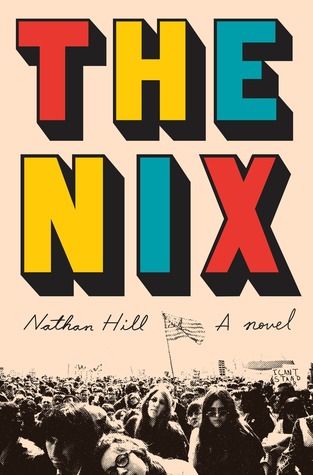 Somebody get Nathan Hill an editor! The author of The Nix is creative, daring and has a good – no excellent – story to tell. The problem is that it’s about 250 pages too long, including an 11-page sentence. Really?!
Moving back an fourth between a tumultuous Chicago in 1968 just before the Democratic national convention and a calmer 2011, the novel ‘s focus is on the relationship between Samuel Andresen-Anderson and his estranged mother, Faye. It’s been decades since he last saw her. When Samuel was a child, Faye abandoned him and her husband.
Samuel teaches literature at a Chicago university. His heart isn’t in his work; his students are neither inspired, nor inspiring. After hours, on his faculty computer, he plays an immersive video game. He is also 10 years behind on a book that he’s been contracted to write. Samuel is a likeable guy and it’s painful to consider him a loser. But.
Hill is at his best in his descriptions of Samuel’s childhood, before his mother left. It’s vivid, engaging and explains so much about this character. Equally engrossing are the sections about Faye’s youth in a rural town in Iowa.
Less appealing are some of the other characters and situations, if only because the depth of their portrayal is extraneous. Take the sentence that is a chapter unto itself. It chronicles the symptom-by-symptom, reaction-by-reaction experience of a compulsive gamer as his body shuts down.
Ultimately, all the reader, like Samuel, wants is to understand why Faye left.
The Nix
Almost Four Bookmarks
Alfred A. Knopf, 2016
620 pages

It’s interesting that I’ve recently read two nonfiction books that both include the word betrayal in their subtitles. After all, it’s a powerful assertion. Michael Paterniti shares his in The Telling Room: A Tale of Love, Betrayal, Revenge, and the World’s Greatest Piece of Cheese. Initially the last word, the cheese, is what caught my attention more than the previous three. Those are experiences most of us know on some level, but the best cheese in the world? That’s something outside my realm.
Paterniti tells three stories: that of Ambrosio Molinos, a Spanish farmer turned cheesemaker; of life in rural Spain; and of the author’s own infatuation with the subject of his book, which isn’t the cheese at all, but the man behind it. Although Paterniti’s self-revelations are the least interesting, they’re fun to ride along with since he does such a magnificent job of bringing the larger-than-grand Ambrosio to life off the pages. It’s easy to see how he became so enmeshed in Ambroiso’s world, which is described in rich and vivid detail.
A combination of greed, poor business decisions and, ultimately, different versions of the same story result in Ambrosio’s fall from grace as a gentleman farmer to a man plagued with debt who is no longer able to produce the cheese that garnered worldwide attention.
The Telling Room could easily have been subtitled the power of friendship. It is power that comes from the beauty of reliance, fun and sharing to the more destructive and sad aspects that emerge when friendships fail.
The Telling Room: A Tale of Love, Betrayal, Revenge, and the World’s Greatest Piece of Cheese
Four Bookmarks
The Dial Press, 2013
349 pages
In a twist on the what-did-you-bring-me refrain from my kids’ childhood reactions to out-of-town trips, my oldest son brought me a book. I appreciate that it made him think of me. Shaggy Muses by Maureen Adams examines the relationships between five female writers and their dogs. I’ve had several dogs in my life and all hold special places in my heart. My dog Jackson and I have a strong bond; although I’m not sure I consider him my muse, he might prove me wrong.

Adams’s book is subtitled The Dogs Who Inspired Virginia Woolf, Emily Dickinson, Elizabeth Barrett Browning, Edith Wharton and Emily Bronte. It’s part academic, largely anecdotal, and for dog lovers who happen to enjoy literature it’s particularly enjoyable. The book started as a series in scholarly journals on the bond between dogs and their humans.
The relationships between these writers and their dogs were strong to the point of distraction. In fact, the dogs served as buffers making it possible to limit expressing real emotion. Adams writes, “Elizabeth and Robert [Browning] used Flush as a symbolic go-between to help them express their feelings in conversations and letters.” The other women did the same.
Some of the writers had numerous dogs, other just a single source of inspiration. One narrative involving Bronte and Keeper, her large, intimidating part-Mastiff, is exceptionally disturbing. Bronte beat her dog, and then comforted him, which suggests the love-hate relationship often evident in abusive relationships. Fortunately, the other stories Adams provides are more endearing.
Shaggy Muses: The Dogs Who Inspired Virginia Woolf, Emily Dickinson, Elizabeth Barrett Browning, Edith Wharton and Emily Bronte
Three-and-a-half Bookmarks
The University of Chicago Press, 2007
299 pages, with notes and index

Hazel, the insightful narrator of John Green’s The Fault in Our Stars, is a 17-year-old who’s fought cancer most of her life. While talking about another book, she could just as easily be talking about this one: “But it’s not a cancer book, because cancer books suck.” Green has written much more than that, and it comes nowhere close to sucking.
This is about living with the knowledge of death’s inevitability loitering closer than it does for most, especially the young. Hazel meets Augustus at a cancer survivor’s support group. Eyes meeting across a semi-circle of young adults in varying degrees of bad health may not sound romantic, yet it’s the beginning of a beautiful relationship between two young adults who teeter alarmingly near to death’s grasp.
Hazel is an endearing character: intelligent, witty and aware of what she has in life, versus what she might be missing. She does not want to be defined by her diagnosis. Although Augustus might be a little too good to be true, he is fun and expands Hazel’s world.
Through a shared passion for the book that is “not a cancer book,” which simply stops with no real ending, the pair find a way to look toward the future. They want to know what happens. Yes, this may be a metaphor for their lives, but it’s far less dismal than that.
A few plot twists help overshadow the novel’s predictability. The story’s beauty is based not on what’s lost, but is grounded on what’s gained.
The Fault in Our Stars
Four Bookmarks
Dutton Books, 2012
313 pages

Living Out Answers – Twelve Trips of a Lifetime by Dave Jackson, is one of two indie books I recently read for pleasure (others I read for one of my few paid writing gigs). In the interest of full disclosure: I almost know the author. We’ve never met, but Jackson’s the father of a good friend who gave me the book as a gift.
This is a memoir based on trips, yup 12 of them, that he began taking when he turned 50 in 1979. He kept journals of the adventures which are the book’s foundation supplemented by recent afterthoughts. The trips include finding a way to spend time on the Mississippi River, to working for a circus, to learning about coal mines in West Virginia, along with nine others. He hitchhiked, hopped trains, hiked, rode in the cabs of big rigs and developed sea legs on boats.
Nearly as interesting is how the book evolved: Jackson’s granddaughter was prompted by a photo which led to discussions about the travels. Others entered the picture offering advice and encouragement. Although the book became a family endeavor of sorts, the stories are Jackson’s.
Jackson embraced the new opportunities and experiences no matter how exciting, frustrating or unpleasant, but there was always the safety net of a comfortable lifestyle awaiting him after each exploit. What’s most impressive is that Jackson made these journeys at a point in his life where many think self-reflection is either unnecessary or inconvenient. He demonstrates neither is the case.
Living Out Answers – Twelve Trips of a Lifetime
Three and a half bookmarks
Brokey’s, 2012
281 pages





 The Blue Page Special