Archive for the ‘relationships’ Tag

The title of Kathleen Flinn’s experience at Le Cordon Bleu in Paris is what initially caught my eye: The Shaper Your Knife, The Less You Cry. These words are advice from one of her chef instructors as begins the first of three sections required to earn a diploma from the prestigious cooking school. The subtitle offered more foreshadowing than I would have liked, though: “Love, Laughter and Tears in Paris at the World’s Most Famous Cooking School.”
Flinn’s account combines her background, her romance and her Parisian education, which involved much more than cooking as she learned to navigate a new city with only un petit peu knowledge of French.
The book is divided into the three parts that correspond with the units at the school: Basic, Intermediate and Superior Cuisine. Flinn’s culinary undertaking is humorous, honest and, unfortunately, predictable. Of course she grows through this journey; of course she learned techniques that were as foreign as the language; and of course she is with the man of her dreams. The latter requires no spoiler alert; this is revealed early in the narrative.
Despite its predictability, Flinn gives an insider’s view of how the classes are taught, the types of people who enroll (not surprisingly from all over the world) and the friendliness of the French people. She also includes several recipes and even includes a menu guide for book groups. Fortunately, none require deboning a chicken or dealing with dead rabbit heads.
The Sharper Your Knife, The Less You Cry
Three-and-a-half Bookmarks
Penguin Books, 2007
278 pages

The adage that opposites attract is evident in Crooked Heart by Lissa Evans. Noel and Vera aren’t exactly drawn together as much as they are forced upon each other: Noel is an orphaned 10-year-old evacuee and Vera is a middle-aged woman who reluctantly agrees to care for him.
Before they meet, Noel has managed to fly under the radar in London with his elderly Godmother, Mattie, with whom he’s been living since the death of his parents. Both have a disdain for authority and are content in their relative isolation. As World War II becomes more imminent, Mattie’s health deteriorates and England increasingly is in Germany’s crosshairs.
Noel is unusual, and Vera is initially convinced he is not very bright. Today he’d be considered a nerd; certainly his intellect and lack of social skills don’t make him a popular child. Vera is widowed and trying to make ends meet, although her efforts aren’t on the up and up. Soon, Noel offers suggestions to improve upon Vera’s scams and their efforts prove to be quite successful, if not quite moral.
Among Noel and Vera’s prey is Mrs. Gifford who unwittingly (and repeatedly) donates to whatever charity the two have concocted. However, they don’t just take her money, they spend time getting to know her. Eventually, Noel becomes protective of the old woman.
Evans’ writing style is subtle as the relationships evolve. Attitudes begin to shift and bonds are created. The couple begins to accept each other’s flaws while recognizing their own.
Crooked Heart
Four Bookmarks
HarperCollins, 2015
282 pages

I am humbled and surprised when I run into someone who tells me my blog is enjoyable and a good place to learn about books (and restaurants when I write about them). When I started The Blue Page Special nearly three years ago, that’s what I hoped for. What’s even better is when one of my readers shares a book title with me, introducing me to a new author or genre. Such is the case with The Rosie Project by Graeme Simsion.
Simsion presents Don Tillman: a nerd. This renowned genetics professor at a Melbourne, Australia, university has created a life so structured that all of his activities are scheduled to the minute. He finds the slightest deviation unnerving. This, along with his intelligence and inclination to view the world through literal eyes, makes him socially inept.
Nonetheless, he decides it’s time to find a life partner and creates the Wife Project, complete with a multi-point questionnaire which has no place for romance. That is until Rosie Jarman, a graduate student in psychology, unwittingly becomes a candidate in the project. Don quickly dismisses her as a viable contender because of what he perceives as her many (human) faults.
The novel is predictable which might warrant a spoiler alert, but I encourage reading it anyway. Don’s voice and personality quirks are well-developed — complete with a few laugh-out-loud moments. Also, Rosie’s criticism that the Wife Project objectifies women is unarguable. Yet, the premise results in a fun read where transformations occur on several, some even surprising, levels.
The Rosie Project
Four Bookmarks
Simon & Schuster, 2013
292 pages

Our youngest son recently graduated from Knox College; I’d been vaguely aware of it years before because of Sixteen Pleasures, a book I enjoyed for its setting (Florence, Italy) and strong female narrator. This same son gave me an autographed copy of Hellenga’s most recent work, The Confessions of Frances Godwin, which had been languishing on my nightstand far too long.
The setting is mostly Galesburg, Ill., with Knox figuring prominently; other locales include Milwaukee, Rome and Verona. With Frances, Hellenga introduces another female narrator. I admit I’m intrigued by his ability to create such true female voices.
It’s 2006 and Frances has retired from a career as a high school Latin teacher. At first, the novel appears to be a vehicle for her to reflect on her past because she soon recounts how she met her husband, Paul, a Shakespeare scholar from whom she took classes (at Knox). She tells of their affair, their eventual marriage and life together in Galesburg. They have a daughter, Stella, who as a grown woman appears to make a series of bad choices when it comes to men.
The story is occasionally heavy handed. Consider, Frances’ name: Godwin. Several times, she converses with God, who, among other things, entreats her to go to confession. By this point it’s clear that she does have more than a few things to own up to.
Love and guilt are not unusual companions; for Frances, they’re a large part of who she is.
The Confessions of Frances Godwin
Four Bookmarks
Bloomsbury, 2014
305 pages

All the Living by C. E. Morgan is one of the most beautifully written novels I’ve read; unfortunately, the story doesn’t reach the same level as the words that embrace it. It’s not bad; it just doesn’t rise to the same level as the well-crafted images. I must admit that the opening sentence immediately grabbed me with its element of intrigue: “She had never lived in a house and now, seeing the thing, she was no longer sure she wanted to.”
She is Aloma, a young woman, who spent her early years living with relatives in a trailer before being sent, at age 12, to a “mission school” – essentially an orphanage. There, she discovers a talent (and passion) for the piano. Otherwise, there is little to set her apart.
The house, on a tobacco farm, is Orren’s. When his mother and brother are killed in an accident he asks Aloma, whom he had recently met, to join him as he tries to maintain the homestead. A young preacher who befriends Aloma is added to the mix, which also includes the harsh, isolated landscape.
There’s no time frame but basic amenities are evident; it’s clear this is not a back-in-the-day tale. The house has an old, hopelessly out-of-tune piano. Orren has the farm and a reticence that comes from grief and the responsibilities he’s inherited.
Possessing little, but more than they realize, Aloma and Orren’s story isn’t just about being lonely even when others are present, but about love and self-awareness.
All the Living
Three-and-a-half bookmarks
Farrar, Strauss and Giroux, 2009
199 pages

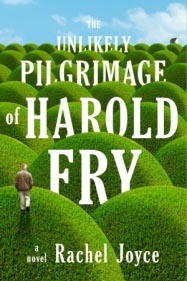
The Unlikely Pilgrimage of Harold Fry begins as a slow, methodical, unexpected journey – for the main character and the reader. Rachel Joyce’s novel practically crawls through the first few chapters. Then, like Harold, it picks up the pace only to falter on occasion like most adventures.
This poignant tale shares qualities of a love story and mystery, but is more the former than latter. And, it’s about different types of love: romantic, familial and companionable.
After receiving a letter from Queenie, a work colleague with whom he’s lost touch, Harold sets out to mail a response. Despite the fact that he left the house without his cell phone and is dressed somewhat formally, he decides to embark on a 600+ mile trek from one end of England to the other to talk to Queenie in person. He has no backpack, water bottle, map or other equipment. In fact, he walks in boating shoes.
The elements of a mystery come in the form of questioning the relationship between Harold and Queenie, as well as between Harold and his estranged son, David. There’s also the fact that Harold is married, although he and his wife, Maureen, do little more than share a past and the same house.
The characters’ imperfections are what make the story work, albeit inconsistently. As personalities evolve, foibles become more defined, but so do strengths. Harold loses his way in more than one manner, but he, like the reader, gains perspective even if it is not particularly satisfying.
The Unlikely Pilgrimage of Harold Fry
Three Bookmarks
Random House, 2012
320 pages
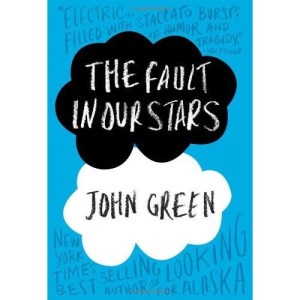
Hazel, the insightful narrator of John Green’s The Fault in Our Stars, is a 17-year-old who’s fought cancer most of her life. While talking about another book, she could just as easily be talking about this one: “But it’s not a cancer book, because cancer books suck.” Green has written much more than that, and it comes nowhere close to sucking.
This is about living with the knowledge of death’s inevitability loitering closer than it does for most, especially the young. Hazel meets Augustus at a cancer survivor’s support group. Eyes meeting across a semi-circle of young adults in varying degrees of bad health may not sound romantic, yet it’s the beginning of a beautiful relationship between two young adults who teeter alarmingly near to death’s grasp.
Hazel is an endearing character: intelligent, witty and aware of what she has in life, versus what she might be missing. She does not want to be defined by her diagnosis. Although Augustus might be a little too good to be true, he is fun and expands Hazel’s world.
Through a shared passion for the book that is “not a cancer book,” which simply stops with no real ending, the pair find a way to look toward the future. They want to know what happens. Yes, this may be a metaphor for their lives, but it’s far less dismal than that.
A few plot twists help overshadow the novel’s predictability. The story’s beauty is based not on what’s lost, but is grounded on what’s gained.
The Fault in Our Stars
Four Bookmarks
Dutton Books, 2012
313 pages
Anna Quindlen’s Lots of Candles, Plenty of Cake is a poignant, yet cheerful perspective on getting older. This is the kind of book to share with friends, particularly if they’re around the age of what is now considered to be the new-40s.
As in most of her writing, Quindlen relies on personal experience to make her points. Her writing career includes several stints as a columnist (at the New York Times and later Newsweek) as well as authoring several works of fiction, nonfiction and children’s books. She has a keen sense of observation. Better still, she’s an extraordinary wordsmith. Those two skills result in crafting pieces readers can easily make connections with. Of control, she writes: “I thought I had a handle on my future. But the future, it turns out, is not a tote bag.”
Quindlen examines the important aspects of life, which can be applied to most people, women in particular: friendship, family, love, parenting, and more. She’s humorous and honest. She writes of near-misses, both good and bad. She reflects on how much her younger self was sure she knew and how her older self readily acknowledges what she doesn’t. Without citing the tired phrase that youth is squandered on the young, it’s a major thread. Quindlen puts a new spin on it.
Yes, this is a memoir, but it is much more. It’s a guidebook to accepting that each morning we wake up is a gift – even if we’re older than we were the day before.
Lots of Candles, Plenty of Cake
Four Bookmarks
Random House 2012
182 pages

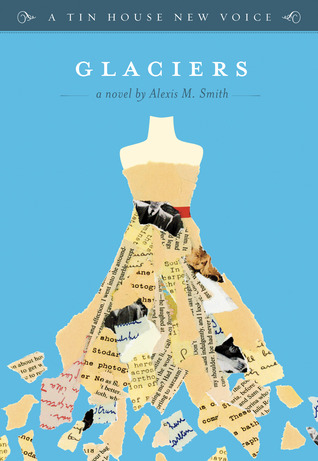
I hope the next book Alexis M. Smith writes will be much, much longer
than her debut novel, Glaciers. At only 174 pages it is obviously terse,
yet remarkably rich in detail with characters I wanted to spend a lot
more time with.
The storyline follows a day in the life of Isabel, a Seattle librarian who re-
pairs damaged books and whose primary interactions are with those who
are also somehow wounded. That may sound either dry or familiar (The Hours
comes to mind since Isabel plans to attend a party later that day), but Smith
writes in a lyrical, understated manner that is immediately enticing.
Isabel’s story takes place in less than 24 hours, but it is not confined to that
time frame. Her dreams, her family, and her childhood in Alaska are all beau-
tifully crafted to create a complex, sensitive woman with a penchant for vin-
tage clothing and old photographs. Isabel recounts her first trip to a thrift
store with her father who explained they were hunting for treasures. Initially,
the young girl is uncertain, even fearful she will miss the prize, until her father
says, “If you love it, you will treasure it, does that make sense?” The four-year-
old Isabel takes this to heart, and, ultimately, subtly applies the explanation
to everything from dresses to relationships.
Without giving anything away, one of Smith’s most impressive writing techniques
is the adroit manner in which she makes Glaciers Isabel’s story in more ways
than one.
Glaciers
Four and a half Bookmarks
Tin House Books, 2012
174 pages



 The Blue Page Special