Archive for the ‘relationships’ Tag

My Sister, the Serial Killer by Oyinkan Braithwaite is both engaging and unnerving. The writing accounts for the former and the subject, which the title clearly reflects, explains the latter.
Korede is the good sister. She’s older, responsible and works as a nurse. She is single but is attracted to a doctor with whom she is friends. Her looks are considered plain. Meanwhile, her sister, Ayoola, is beautiful, flippant and kills off the men she dates. She relies on Korede to, literally, clean up the mess.
Yet, Ayoola’s most recent – the third — murder leaves her sister filled with guilt. She begins to worry that the same fate will befall the doctor who has succumbed to Ayoola’s charms.
In addition to the deaths, which for the most part warrant little attention from the police, the narrative explores the sisters’ relationship with their father. He’s an abusive, powerful man, whose character is portrayed in the past tense. The more that’s shared about him, the more one has to wonder how he died, particularly given Ayoola’s penchant for murder.
Braithwaite’s novel is about the strength of sisterly love, no matter how misguided, and the way in which dreams can be so easily burst in the name of loyalty. Short chapters and the terse vivid writing make this a fast read. The characters are easily imagined and a range of emotions, from sympathy to disappointment, is evoked. It’s clear from the beginning that Ayoola isn’t good; the real surprise comes from Korede.
My Sister, the Serial Killer
Four Bookmarks
Doubleday, 2018
226 pages

Fans of Trevor Noah will hear his voice when reading Trevor Noah: Born a Crime. His humor, sensitivity and ability to engage his audience are evident from the first chapter.
Noah recounts his experiences growing up in South Africa. He is the son of black South African woman and a white German father. Interracial relationships were forbidden.
Interspersed with his personal accounts of his childhood and adolescence are explanations of Apartheid. Consequently, Born a Crime not only entertains, but also educates. Hypocrisy and racial discrimination are dominant themes.
Yet, Noah learns to rely on his street smarts. He discovers early that language is a great equalizer. Thanks to his mother, English was the first language he learned. He picked up several others as a child he saw the ways his mother used language to “cross boundaries, handle situations, navigate the world.”
This was not the only important lesson from his mother. She instilled in him the importance of an education even if it took years for him to appreciate its value.
Religion, poverty and domestic violence also are addressed in Noah’s memoir. His mother was religious, to the extreme. His attempts to avoid going to church, which would be an all-day activity on Sundays, were thwarted by his mother’s deep faith.
Noah doesn’t sugarcoat his past, neither as the biracial son born out of wedlock, nor some poor decisions made in an effort to overcome economic injustice. His mother always has his back and her faith in God never wavers.
Trevor Noah: Born a Crime
Stories from a South African Childhood
Four Bookmarks
Speigel & Grau, 2016
304 pages

An Orchestra of Minorities by Chigozie Obioma is creatively written drawing on Nigerian folklore to tell a modern story of love, personal freedom and expectations.
Chinonso, a chicken farmer, meets Ndali, a young woman about to jump off a bridge. He convinces her not to leap, and they go their separate ways. His parents are deceased, his sister estranged. Ndali is in pharmacy school and is the daughter of a wealthy family. She tracks him down, they fall in love, and happily ever should come next.
Of course, her parents disapprove not just because he is a chicken farmer, but because he isn’t well-educated. He decides to pursue a college education knowing it will be a long process. An old friend arrives boasting of life in Cyprus where it’s easy to find a good-paying job and finish college in less time than in Nigeria. The friend makes the necessary arrangements; Chinonso sells his flock, his house, gives his friend money and leaves Ndali to become a better man.
Chinonso’s chi, inner spirit, narrates Chinonso’s story to the Igbo deities, of which there are several. Most paragraphs, directed to one or more in particular, are full of lengthy details foretelling of something ruinous to come motivated by Chinonso’s deep love for Ndali.
Chinonso believes in his decision; Ndali is less sure. His journey is a roller coaster of hope and despair, which the reader shares with Chinonso. This is far from uplifting, yet the narrative lingers long after the last page.
An Orchestra of Minorities
Four Bookmarks
Little, Brown and Co., 2019
448 pages
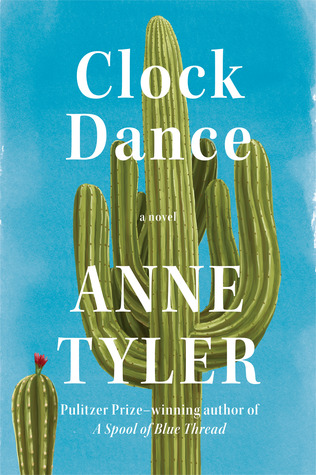
Clock Dance is distinguished from Anne Tyler’s other works because of its setting. Yes, Baltimore does figure into the plot, but not immediately. Other locales provide the initial settings. The story doesn’t come alive, though, until the main character arrives in Charm City.
Three phases of Willa Drake’s life ultimately influence her character: as a child when her mother randomly, and temporarily, leaves the family; as a college coed considering whether or not to accept a marriage proposal without finishing her degree; finally, in her sixties when she receives a call to come to Baltimore from Arizona to care for Cheryl, the 9-year-old daughter of her grown son’s injured ex-girlfriend, Denise. Yes, that’s a tenuous connection.
Before Baltimore, Willa is widowed when her boys are teenagers. They grow up, she remarries and has little communication with them. The surprise request is from Denise’s neighbor who sees Willa’s number on a list of emergency contacts. It takes some persuasion, but Willa agrees to help people about whom she knows nothing. In the process of caring for others who need her, Willa discovers a sense of belonging she hasn’t experienced.
Tyler’s characters are vulnerable, real and endearing. Cheryl is a no-nonsense kid whose strong sense of independence comes from being the daughter of a single mother. The author brings Baltimore to life through descriptions of Denise and Cheryl’s neighborhood and its quirky residents, of which there are many.
Although somewhat predictable, Clock Dance is a charming tale of the need to belong.
Clock Dance
Four+ Bookmarks
Alfred A. Knopf, 2018
292 pages

Initially, it was the title of Jackie Copleton’s novel, A Dictionary of Mutual Understanding, I found intriguing. Fortunately, as the story progressed, so did my interest.
The novel begins with Amaterasu opening her front door to a disfigured, middle-aged man claiming to be her grandson, Hideo. He was presumed dead 40 years ago following the bombing of Nagasaki. Amaterasu’s daughter was also killed on that fateful August day. Hideo bears the scars of radiation making it difficult to discern any recognizable features. He gives Amaterasu a sealed box of letters written by Sato, his adoptive father, the same man with whom she shares a history she prefers to forget.
The narrative moves back and forth in time to life before and after the bomb based on Amaterasu’s memories, her daughter’s diaries and Sato’s letters. Hideo has no memories of his life before the bombing. He has no stories to share with Amaterasu to convince her he is, indeed, her grandson. She refuses to consider the possibility, yet she meets with Hideo on multiple occasions.
Copleton begins each chapter with an explanation of some aspect of Japanese culture. This is both interesting and helpful in trying to understand Amaterasu’s mindset. She is old and alone following the death of her husband of many years. They left Japan long before in a hopeless effort to try to forget their losses.
Hideo’s fortitude and patience are tested in his efforts to convince Amaterasu of their connection and she must consider her past relationships.
A Dictionary of Mutual Understanding
Three-and three-quarter bookmarks
Penguin Books 2015
292 pages

Kent Haruf’s slow moving, methodical novels immediately embrace readers. Eventide is no exception. The setting is rural Colorado, where seasons dictate life’s pace.
Haruf reintroduces several characters from his bestselling Plainsong, including brothers Harold and Raymond McPheron, Victoria Robideaux and Colorado’s eastern plains. The McPherons, who have spent their entire lives working side by side on the family farm, have never married. Victoria, the unwed teenage mother they took in in the previous novel, is ready to leave for college with her young daughter. The impact the mother and child have had on the McPherons is tangible; their reaction to the pair leaving is parental.
Yet theirs is only part of the narrative. Holt is a small town, where, it seems, everyone is acquainted, whether personally or indirectly, with everyone else – or at least knows of their business. There’s Luther and Betty, with their two children, living on food stamps who meet regularly with a social worker, Rose. Despite her best efforts, the parents have no parenting skills and the children suffer.
Haruf describes relationships in the sparsest of terms, yet they’re vivid. Some are painful, others humorous, many loving, but all are real. For example, Betty and Luther don’t intentionally put their kids in harm’s way, but neither do they know how to protect them.
Even with the subplots involving other residents of Holt, the focus always returns to the McPherons, particularly Raymond after tragedy strikes.
Haruf uses no quotation marks and terse dialog, yet the conversations speak volumes.
Eventide
Four Bookmarks
Alfred A. Knopf, 2004
300 pages

The Atomic Weight of Love begs the question: how heavy is love? Elizabeth J.Church’s novel has war as its bookends: World War II and Vietnam. The passage of time reflects changes in attitudes toward conflict and women.
Meridian Wallace is a brilliant, young student interested in pursuing not only a college education, but an advanced degree in ornithology. This is unusual in 1940s Chicago. While at university she meets and falls in love with professor Alden Whetstone, who is secretly involved with the Manhattan Project in Los Alamos, N.M. Although he can’t reveal his research, he convinces Meridian to postpone her studies, move across the country and marry him. There will be plenty of time later to pick up where she left off academically. Ha!
Alden’s commitment to his work and the slow disintegration of a loving relationship could seem a cliché. Yet, Meridian manages to flourish even when the attitudes of the day bear down on her. On her own, she continues to study birds without the benefit of academic resources, she makes a few friends despite being ostracized for not having a doctoral degree like most of the wives in her community. Although they are well-educated they do nothing with their education.
Meridian falls in love with a much younger man but maintains the façade of her marriage with Alden, who becomes increasingly narrow-minded and unlikable as the novel progresses.
The author is masterful in the transformation she ascribes to Meridian and the world around her.
The Atomic Weight of Love
Five Bookmarks
Algonquin Books, 2016
352 pages
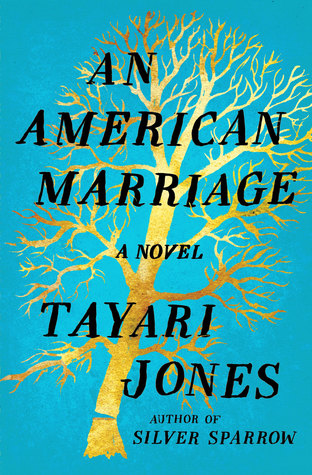
An American Marriage is about the institution of matrimony and race in America. Author Tayari Jones introduces readers to Celestial and Roy as each provides their perspectives on their relationship from its early stages to the circumstances that shake its foundation.
Roy’s a country boy with grand aspirations who left rural Louisiana at his first opportunity; Celestial is an artist born and raised in Atlanta. She could be considered haughty, just as he could be seen as arrogant in his drive to move far beyond his roots. Yet, Celestial is the more appealing character of the two. She’s intelligent, independent and creative. There’s just something about Roy that makes him less sympathetic.
This is true even after he is sentenced to serve a 12-year prison term for a crime he did not commit. During his incarceration, the narrative is told through the couple’s exchange of letters. Initially, their correspondence is warm, loving, a continuation of their previous life together. Slowly, the letters become less personal, more terse and infrequent.
The other significant character is Andre, literally the boy next door; Celestial has known him all her life. They have always been close friends and it was Andre who introduced her to Roy.
One year quickly becomes five. Life moves forward for all concerned through professional success, a death and realizations about the past. Following an early release, Roy hopes the passage of time hasn’t completely removed him from Celestial’s world. All are left to wonder what future their marriage holds.
An American Marriage
Three and three-quarter bookmarks
Algonquin Books, 2018
306 pages
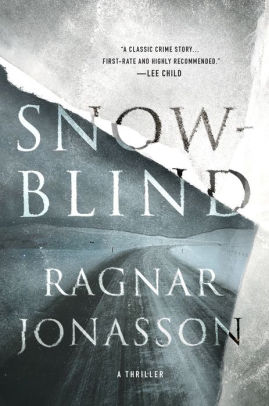
I get on book kicks and my latest has been mysteries; they’re my reading guilty pleasure. It’s especially satisfying to come across something as well-written and intriguing as Snow Blind by Ragnar Jonasson.
Set in a small town in northern Iceland, Jonasson’s novel is dark –thanks to the limited hours of daylight so close to the Arctic Circle – and is filled with intelligent characters with plenty of positive traits and foibles – like most of us.
Ari Thor is in the process of completing his exams at the Reykjavik police academy when he’s offered a job in a small, but once-thriving fishing community on the other side of the country. Without consulting his live-in girlfriend, he accepts the position and leaves her behind.
What he initially encounters is the difficulty of fitting in where most of the residents have lived, if not all at least most, of their lives. He’s an outsider. He’s repeatedly told by his captain “Nothing ever happens here.”
The narrative is told in two different parts: one beginning in spring 2008 and ending in January 2009; the other, set off in separate chapters and in italics, describing a murder. The reader knows the two will intersect, but the question is not just when but how. Jonasson deftly teases curiosity while leaving very few clues along the way.
In the place where nothing happens, Ari Thor deals first with an accidental death and then the brutal beating of a woman. Yet, these are only part of the plot.
Snow Blind
Four-and-a-half Bookmarks
Minotaur Books, 2010
302 pages
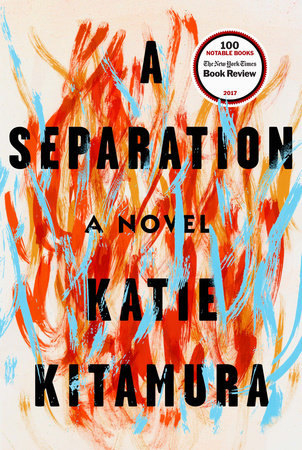
The narrator in Katie Kitamura’s novel, A Separation, is never named. Nonetheless, we learn other, more intimate details about her.
The title has multiple implications beginning with the fact that the narrator is separated from her husband, Christopher, and has been for six months. The couple has not announced the split; in fact, the pair has promised vowed to continue waiting before going public with the news.
Kitamura is terse in her descriptions. Yet her characters are well-developed, even the ones we never actually meet. Christopher, for example, has gone missing in Greece. Still, he is seen through the narrator’s eyes and experience.
In London, his mother Isabella, who is unaware of any change in Christopher’s marital status, contacts the narrator since messages to her son have gone unheeded. In just a few sentences, Kitamura deftly portrays the uncomfortable relationship the women share. Isabella is incredulous that her daughter-in-law has no idea of Christopher’s exact whereabouts. Both know he is in Greece and the resort hotel he checked into, but nothing beyond that.
What ensues is the narrator’s trip to Greece in search of the man from whom she is no longer in love. He’s not been seen at the hotel for several days, although all of his belongings are still there. She’s curious, but her heart isn’t in it. Her voice is stoic, matter-of-fact, with occasional flashes of anger or disappointment as she discovers new secrets and is placed in the awkward position of being presumed a devoted wife.
A Separation
(Barely) Four Bookmarks
Riverhead Books, 2017
229 pages


 The Blue Page Special