Archive for the ‘relationships’ Tag
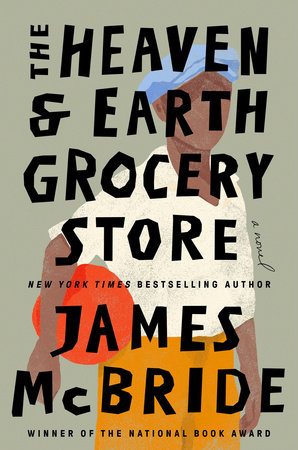
Despite the racism, hardships and wrongs done to the Blacks and Jews who inhabit the landscape of James McBride’s The Heaven and Earth Grocery Store, there is redemption — on numerous levels.
The appropriately-named store is a gathering place for the myriad of immigrants in the Chicken Hill community of Pottstown, Penn. It’s run by Chona, a kind, rabble-rousing Jewess. She’s idolized by her husband Moshe, a Romanian immigrant who runs a successful dance hall. Nate is his Black handyman.
It’s the early-1970s when the remains of a body are found in the neighborhood; the identity keeps readers wondering throughout the novel. The engaging storyline switches to the mid-1920s. The interactions among the Jews, Blacks and whites (who include Klu Klux Klan members) are vividly detailed.
Nate, needs to hide, Dodo, his deaf, orphaned nephew from authorities who want to institutionalize him believing him to be feeble-minded. Chona insists on harboring him in her apartment above the store. While the boy doesn’t hear, he is far from stupid — something Chona recognizes. The two become close and she does what she can to keep safe from the white powers that be.
McBride’s story is rich with characters, although many are one-dimensional; many more — the ones readers will care most about — are multi-faceted. The result is a poignant narrative about people living and working together toward a better life.
Humor and injustice are an odd couple, but here McBride deftly proves them to be a good match here.
The Heaven and Earth Grocery Store
Four-and-a-half Bookmarks
Riverhead Books, 2023
400 pages, includes acknowledgements.
The one-time punk rocker, tattooed, cigarette smoking, gay Sister Holiday, doesn’t fit the mold when it comes to Catholic nuns. In Margot Douaihy debut novel, Scorched Grace, she’s a member of the Sisters of Sublime Blood order, which runs the Saint Sebastian School where she’s the music teacher. The convent adjoins the school.
When not one, but two fires and two deaths occur at the school, Sister Holiday initiates her own investigation convinced authorities aren’t moving fast enough to find the culprit – and avoid potential further harm to her school and church community.
Set in New Orleans, the storylines moves between Holiday’s past and what at first appears as her new-found faith. In fact, one of the strengths of Douaihy’s writing lies in slowly revealing the nun’s deepening convictions, in spite of her rebellious personality and the obstacles she encounters in her attempts to solve the crimes.
The list of suspects is credible, even as evidence points to Sister Holiday herself. The investigating police officers are convinced of her guilt. While the fire investigator, Magnolia Riveaux, is less ready to pin the blame on Holiday.
Descriptions of the Big Easy, the humidity and other characters are vivid. Sister Holiday is tenacious and the authorities consider her a pest. Her relationship with the other nuns (there aren’t many) are a way the author deftly merges the past and present. Sister Holiday is, indeed, the sum of her history: colorful tats and all.
Based on the subtitle, Sister Holiday isn’t being cloistered anytime soon.
Scorched Grace: A Sister Holiday Mystery
Three-and-a-half bookmarks
Gillian Flynn Books, 2023
307 pages
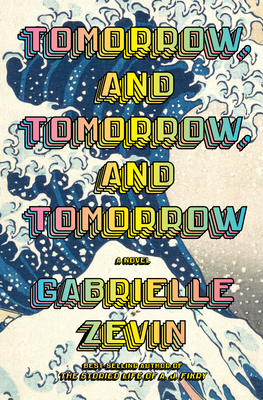
Personal connections through friendship, love and virtual worlds are examined in Gabrielle Zevin’s Tomorrow, and Tomorrow, and Tomorrow.
Sadie Green and Sam Masur meet as 11- and 12-year-olds, respectively, for a short time. The confluence of their lives doesn’t fully occur until a decade later in Cambridge where both are in college; her at MIT, him at Harvard.
The novel spans more than 30 years as Sadie, Sam, Marx (Sam’s roommate and eventual business manager) and others design and develop popular, lucrative video games. They’re the wunderkinds of computer-generated universes.
The games are essential elements of the novel, particularly how their creators conceive the ideas, develop the technology and ultimately promote them. However, it’s the bonds among the characters that have the greatest impact. Each is intelligent, flawed and loveable; each makes significant contributions to the games, although there is often tension as to who merits the attention for their success.
It should come as no surprise this is also a story about love and loss. Sam loves Sadie but is unable to articulate his feelings. Yet, they are close. Marx is like a brother to Sam and initially Sadie is suspicious of him. The evolution of these relationships is what drives the narrative.
The title reflects the endless loop of many video games while also referencing a soliloquy from Macbeth on the inevitability of death:
“Tomorrow, and tomorrow, and tomorrow
Creeps in this petty pace from day to day,
To the last syllable of recorded time” (Act V, scene 5)
Tomorrow, and Tomorrow, and Tomorrow
Four Bookmarks
Alfred A. Knopf, 2022
401 pages, includes notes and acknowledgements
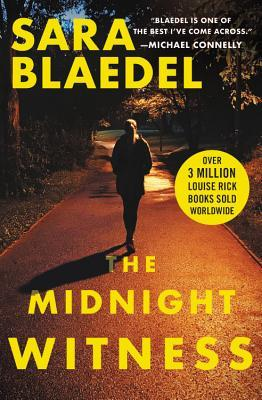
In Sara Blaedel’s The Midnight Witness, set in Copenhagen, the strangled body of a young woman is found in a park. Before long, a journalist investigating drug trafficking is discovered dead in a hotel alley. Questions soon arise: Could these cases be related but how?
Detective Louise Rick is initially assigned to the young woman’s case; later, she’s transferred to the second murder.
Blaedel’s writing is engaging thanks to well-crafted characters. Louise is smart and despite her expertise she’s often diminished because she’s a woman; nonetheless, she has worked her way through the ranks to become a detective. Her best friend Camilla Lind, a journalist investigating the same murders, is set on establishing a connection.
The author provides enough detail about the women’s lives without it overshadowing the who-dun-its. Both are single, although Louise is in a long-term relationship with a man who’s been offered a job in Scotland wanting her to join him. She’s confronted with the personal vs professional battle many women face. Camilla is earnest in her journalistic role, but also is often not taken seriously due to her gender. She’s motivated to prove otherwise.
As they pursue the cases in their respective roles their bond is strained. The tension between the two is palpable. Even as Louise becomes increasingly frustrated with her friend’s involvement she can’t help being concerned for Camilla’s safety.
A third murder victim not only amps up the police efforts, but also raises suspicions about possible leaks among everyone involved in the investigation.
The Midnight Witness
Almost four bookmarks
Grand Central Publishing, 2018
284 pages
Our Missing Hearts by Celeste Ng starts slow; initially it’s too easy to put down, until, well, it isn’t.
Much has to do with the mystery surrounding the absence of 12-year-old Bird’s mother who his father refuses to acknowledge while insisting his son to do the same. They live in a not-too-distant dystopian world where fear and suspicion rule based on safeguarding America’s culture known as PACT.
It’s a time when children are removed from parents suspected of seditious thoughts and behaviors. Those of Chinese, and by default all Asians, are considered threats. Bird’s mother Margaret is Chinese American and a poet. Her work goes largely unnoticed until one day PACT protesters use a line from one of her poems for their cause: Our Missing Hearts. To protect her son, she leaves the family.
Despite his father’s pleas, Bird’s curiosity about his mother becomes a driving force. These efforts to find her are where the narrative revs up.
Margaret’s story catches the past up with the present. This includes her childhood in the neighborhood’s only Asian family, later surviving on the streets when the economy collapses (blamed on the Chinese), and meeting Bird’s father and becoming a mother.
It’s been years since Margaret has written poetry, but she embraces a new passion based on the protester’s slogan: she tries to meet and interview as many parents as possible whose children have been taken from them.
Ng’s writing is vivid and frightening in its depiction of how self-preservation is manipulated by fear.
Out Missing Hearts
Four Bookmarks
Penguin Press, 2022
335 pages (includes author’s notes and acknowledgements)
The best books are those you don’t want to pick up because once you do, you don’t want to put them down. It’s a conundrum. Lessons in Chemistry by Bonnie Garmus is one such book. It’s a love story (on many levels) wrapped in science, specifically chemistry.
Elizabeth Zott is not a woman to be dismissed. Even after her post-graduate education is derailed due to sexual assault, she’s relentless in her pursuit of science.
Well ahead of her time in the late 1950s early ‘60s, she refuses to let her gender restrict her dreams, nor does she allow her good looks to dictate how’s she’s perceived. She’s exceptionally intelligent with a strong sense of self and a desire to be a chemist in the male-dominated scientific community.
She’s hired at a research lab where she meets Calvin Evans, a socially-awkward but distinguished scientist. A relationship based on mutual respect, desire and, ultimately, love flourishes despite the ill-will of their colleagues.
Garmus deftly illustrates the sexism and hypocrisy of the era. Yet, this is not a male-bashing narrative. When circumstances change, Elizabeth finds another way – round-about though it is – to pursue a career in chemistry: she hosts a television cooking show where she takes an unusual approach. Instead of identifying ingredients by their common names, she uses scientific terminology (ie., sodium chloride vs salt). Surprisingly, the program is a hit.
Humor and tragedy are incorporated in equal measures with several endearing characters the reader would love to spend more time with.
Lessons in Chemistry
Five Bookmarks
Doubleday, 2022
390 pages (includes acknowledgements)
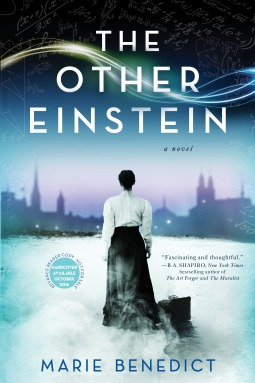
Thanks to National Geographic’s limited TV series, “Genius,” several years ago, I knew of Albert and Mileva Einstein’s marriage and his dismissal of her. Marie Benedict’s fictionalized account of her life in The Other Einstein adds nothing new.
It does, however, reinforce my negative perception of Albert. More disappointing is the portrayal of Mileva. Although her brilliance is never underplayed, she’s rendered as a weak, indecisive woman where Albert is concerned.
The narrative focuses on their courtship, which begins at the Polytechnic Institute in Zurich where she and Albert are studying physics. It soon becomes evident that she is an excellent student, despite being scorned by her professor because she is a woman.
Her gender is a constant obstacle to her ability to make a name for herself as a scientist. Benedict gives credence to Mileva’s contributions to numerous theories, particularly that of relativity for which Albert is, perhaps, most well-known. Although. her name is never included in any of the studies.
In Benedict’s hands, Albert is a selfish, insensitive man. Mileva recognizes this, yet she still falls for him. The relationship distracts from her ability to obtain her degree. She becomes pregnant, something Albert comes to view as an impediment to his own future. When their daughter is born, he has nothing to do with her.
I have enjoyed Benedict’s other novels about interesting, strong women in men’s shadows. However, this is the most unsatisfying. Mileva is pathetic in her vulnerability to what she mistakenly sees as Albert’s charms.
The Other Einstein
Two Bookmarks
Sourcebooks Landmark, 2016
304 pages
Olga Dies Dreaming by Xochitl Gonzalez is beautifully written with tough themes portrayed with a disarming touch. Abandonment, betrayal, family secrets, relationships, rebellion and politics are among the many themes throughout this debut work.
Olga and her older brother, Prieto, were abandoned by their mother, a revolutionary for Puerto Rico’s independence. The children were raised in Brooklyn by their father, a former activist, before dying from AIDs, the result of his heroin addiction. Relatives, especially their grandmother, took charge. Despite this rocky upbringing, Olga and Prieto are seemingly successful adults. She’s a wedding planner and he’s a congressman.
Although their mother never returns to see them, she is aware of their lives as proven in the sporadic letters written to Olga. The letters, sent from 1990 to 2016, are like harsh lectures about Puerto Rico’s history.
The narrative begins in July 2017 leading to before and after the devastating hurricanes that struck the island. Olga’s life is filled with her business, her relationships with her family, clients and a new romance. Prieto is a popular politician in his Brooklyn community, although Olga and others soon wonder about his recent voting record.
The characters are vibrant and the settings, Brooklyn and Puerto Rico, are vivid. Olga is a likeable. She credibly weathers her personal storms. Her circumstances, and her family’s, may be different than those of many readers. Yet, Gonzalez makes them relatable.
Olga’s mother is harsh in denouncements of the status quo. Although her methods are questionable, her cause isn’t.
Olga Dies Dreaming
Four+ Bookmarks
Flat Iron Books, 2021
373 pages
I recently discovered the unexpected pleasure of Carol Anshaw’s Carry the One, which had been buried in my nightstand stack. (The unforeseen is or should be, after all, one of the joys of picking up a new book.)
Through richly developed characters, smooth transitions of the progression of time and several relatable subthemes, Anshaw has crafted a meaningful story about the impact of tragedy – even when there are degrees of separation from it.
Soon after Carmen’s wedding reception, five guests including her siblings Alice and Nick and their partners Maude and Olivia, who are all on drugs or drunk, are involved in an accident. On a dark, deserted road their car runs over a young girl.
Each passenger, as well as the wedding couple, deal with the accident in different ways. Olivia, who was driving is sent to prison where she undergoes a dramatic personality change. Alice immerses herself in her art by painting portraits of the deceased girl as she would have grown up. Carmen, who was not in the car, engages in community activism; and Nick, who is overwhelmed with guilt, tries to overcome his addictions in order to be the man Olivia insists he become.
Their success in their respective endeavors varies as time passes. This progression is smooth. It’s subtly indicated through someone’s birthday, a current event and the age of a beloved dog – among other observations.
Anshaw incorporates wry humor in this engaging, relevant narrative while portraying vivid emotional pain through familial and romantic love.
Carry the One
Four+ Bookmarks
Simon & Schuster, 2012
253 pages
Ruth Ozeki’s A Tale for the Time Being philosophically considers the relationship between writer and reader. It’s an intriguing idea connected to numerous topics shared from the two main characters’ perspectives: one from Nao writing a diary; the other through Ruth as her reader.
Nao is a 16-year-old girl whose family recently returned to Tokyo from Northern California where she’d lived most of her life. She plans to write in her diary about her 104-year-old great grandmother, Jiko, a Buddhist nun. However, the more Nao writes, the less it’s about Jiko. Instead, she details the bullying she endures in her new school, her father’s depression and his suicide attempts. As Nao writes, she addresses her reader as if it is a single person. After all, reading is a solo experience.
Through unknown circumstances, the diary washes up on a sparsely populated island in Western Canada where Ruth and her artist/naturalist husband live. The book is in a Hello Kitty lunchbox with a collection of letters and an antique wristwatch. The letters are another cause for intrigue as Ruth discovers they were written by Nao’s uncle, a kamikaze pilot.
Ozeki describes the unforgiving conditions of island life; it’s not a place of sandy beaches and calm seas. Rather, the threat of powerful storms, rocky terrain and limited access to goods and services requires resilient residents.
As Ruth reads she comes to care about Nao and her family; she even searches for their whereabouts. Nao, of course, knows nothing of Ruth’s existence.
A Tale for the Time Being
Four Bookmarks
Viking, 2013
422, includes appendices







 The Blue Page Special