Archive for the ‘fear’ Tag
In 1942 Japanese Americans were forced to relocate to ten remote isolation camps under the guise of protecting the U.S. This is the foundation for Tallgrass, Sandra Dallas’s fictional portrayal of a small Eastern Colorado town that became home to an internment camp.
Tallgrass was published in 2007 yet remains timely in its illustration of unfounded prejudice and ill-conceived fear of those who are different.
Renny is the youngest daughter of a beet-farming family, whose property is near Tallgrass. Initially, the young teen doesn’t know what to think of the Japanese since there’s a clear division in town among those who think the idea of the camp is shameful and those adamantly opposed to its presence. The negative attitudes are fortified when a young girl is found raped and murdered. Guilt is immediately assigned to the Japanese.
Due to the war, finding farm laborers proves difficult, so Renny’s father hires three young Japanese men who prove to be hard workers and serve to dispel the misgivings held by Renny and her mother.
Dallas has crafted an engaging narrative proving that evil is not defined by one’s ethnicity or skin color. However, in her portrayal of some characters, there is little gray area. Still, as Renny’s family grows closer to the Japanese workers, she matures and is ultimately able to form her own opinions.
While there’s much that is predictable, the mystery of the murder, family secrets and a view of the hardscrabble life of farmers contribute to the well-paced novel.
Tallgrass
Four bookmarks
305 pages plus Reader’s Guide
St. Martin’s Griffin, 2007
Reading The Power of Strangers made me think about how I interact with people I don’t know, which I suspect is among author Joe Keohane’s goals. He presents a lot to consider in an entertaining, applicable, albeit often research-heavy, manner.
Through interviews with psychologists, anthropologists, and average citizens , among others, Keohane identifies the good feelings resulting from an exchange, no matter how brief, with those with whom we share our world. Engaging in such interactions isn’t all about personality type. Innate fears of rejection and lack of trust often inhibit extending ourselves.
Examples of other cultures where the importance of an initial greeting determines the safety of those involved are referenced. Details are shared about individuals in public spaces who encourage strangers to share their stories or simply talk about whatever is on their minds.
The work is split into three sections: “What Happens When we Talk to Strangers;” “Why Don’t We Talk to Strangers;” and “How to Talk to Strangers.”
Admittedly, sometimes I don’t want to talk to someone I don’t know: for example, when on a plane in the middle of a good book. I always acknowledge people and try to establish eye contact. And, when ignored, I am disgruntled. I live in a place where I encounter fellow hikers on beautiful trails. There is usually some exchange of trail talk. Keohane likely would consider this a start, but for a more meaningful connection he offers a lot of interesting ideas worth reading about.
The Power of Strangers: The Benefits of Connecting in a Suspicious World
Four Bookmarks
Random House, 2021
328 pages (includes index)
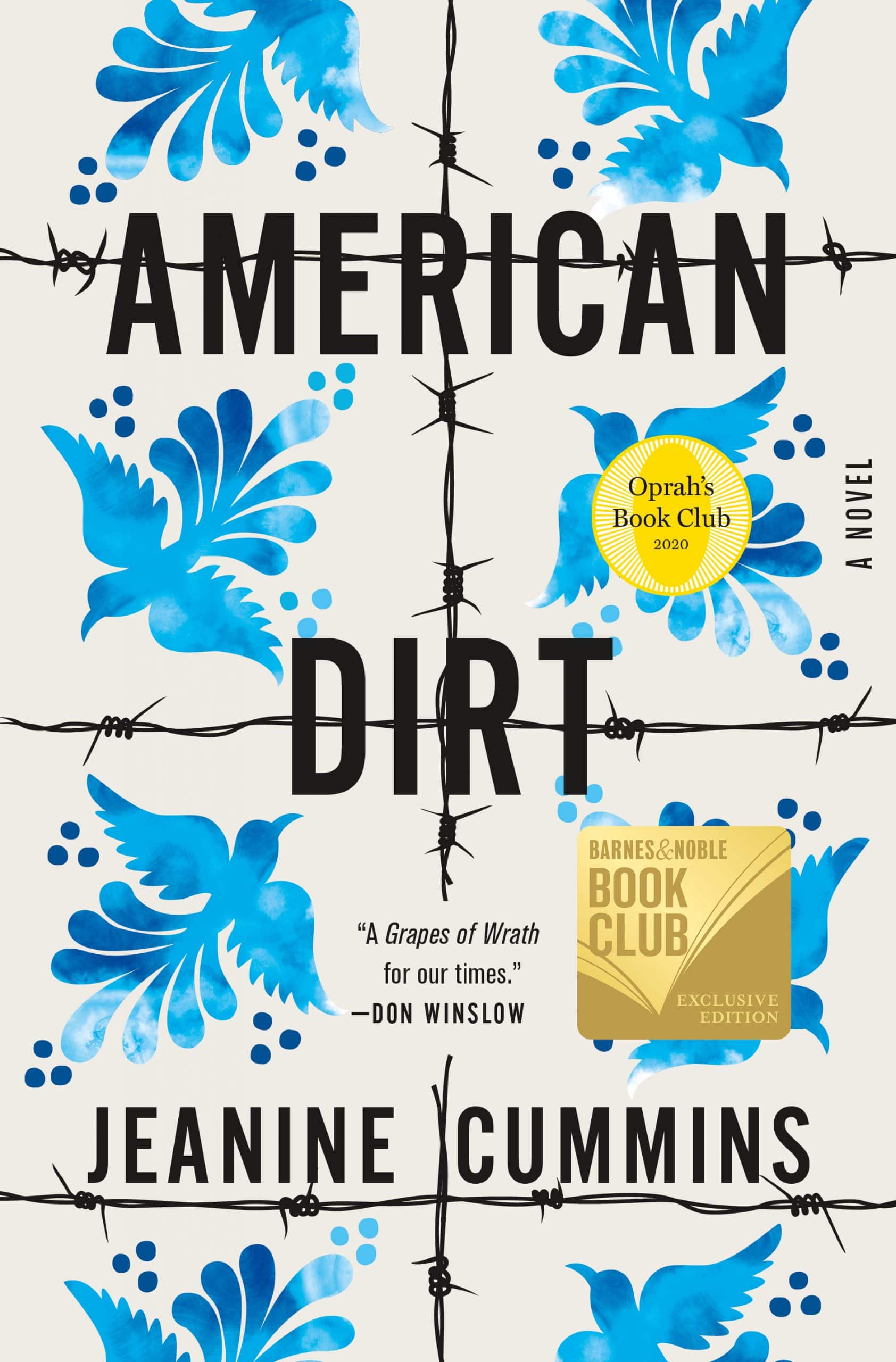
This may not be a popular stance to take, but American Dirt by Jeanine Cummins doesn’t deserve all the negative hype surrounding its publication. Primarily, she’s accused of misappropriating the migrant stories of those from Mexico, Guatemala, El Salvador and Honduras because she isn’t Latina.
Not all stories about the Holocaust are written by those with a direct or indirect connection. That’s the beauty of imagination: it shouldn’t have limits.
Granted, Cummins’ novel isn’t perfect due to predictability, extraneous characters and the perceived need to translate Spanish words and phrases. Nonetheless, it’s a riveting story that’s difficult to put down and stop thinking about.
In her author’s notes/acknowledgements, Cummins describes the extent of her research, which is impressive. The narrative’s power lies in the truth of the ordeal her characters endure seeking a better life in el norte.
Sixteen members of Lydia’s family are killed by a cartel at her niece’s quiceanera. Lydia and her eight-year-old son are the sole survivors and know they need to run or face a similar end. The story’s rapid pace rarely slows down as mother and son attempt to elude the cartel first by bus to Mexico City where they discover it’s impossible for them to board a plane, then by train but not as comfortable passengers. Instead, they join other migrants trying to reach the United States and risk their lives by riding atop the railroad cars.
Their journey is fraught with obvious danger, surprise friendships, palpable fear, and self-discovery. It’s worth reading.
American Dirt
Four-and-a-half Bookmarks
Flatiron Books, 2020
383 pages

Active imaginations, fear of the unknown, religion, science and a bit of romance are among the themes in Sarah Perry’s epic novel, The Essex Serpent.
The setting is 1893 England. Cora Seaborne is introduced as a soon-to-be well-off widow. Her marriage is an unhappy one, so her husband’s death, which occurs within the first chapter, is not unwelcome. Her husband’s physician is enchanted with Cora, so is her friend/companion, Martha. Her son Francis is less enamored. These characters, and several others integral to the narrative, are well-developed as passionate, intelligent and flawed.
Cora, Martha and Francis travel to Essex where there are long-standing rumors of an unseen, but terrifying creature lurking near a small coastal town. The idea of documenting its presence appeals to Cora. Her friendship with Will, the local pastor, and his wife provide friendship.it’s clear there is the potential for something more than platonic between Cora and Will, this is an attraction of minds. He is certain the panic stirred by the unseen, unnamed creature reflects a lack of faith among his parishioners. She, on the other hand, is intrigued by the idea of discovering, perhaps, a new species.
Cora is aware of the feelings held by her late husband’s doctor, yet she does little to discourage his interest. When she beckons, he appears. Generally, the women are portrayed as strong-minded and intelligent, while several of the men are satisfied simply being in their presence.
Despite the dark setting, Perry injects humor and light moments.
The Essex Serpent
Four Bookmarks
Custom House, 2016
418 pages

Although I read a lot, it’s been a while since I held a book I didn’t want to put down. Even at 500-plus pages, I hated to turn the final one of Anthony Doerr’s All the Light We Cannot See. Doerr is garnering a lot of well-deserved attention including being named a finalist for the 2014 National Book Award and #1 New York Times bestseller.
This story is about hope and connections, those that are tangible and those we simply know exist. Marie-Laure, a young girl in Paris, is blind. Her story is told in turns with that of Werner, a German mining town orphan with an aptitude for science and gadgets. The novel jumps around the years just before WWII and during the August 1944 bombing of Saint-Malo on the French coast.
From the onset, there’s a sense the two youths will meet, but how and when leave much to the imagination. Werner builds a small, crude radio from scrap parts. This ability ultimately earns him a spot in Hitler’s army. Marie-Laure relies on her father who builds small models to recreate, first, their Parisian neighborhood and later Saint-Malo where they flee. The hand-crafted items are meant to aid communication with good intentions in a world rife with evil.
Doerr’s work is easy to embrace for its vivid descriptions of the kindness and fear individuals extended or induced during the war. Mostly, though, the characters are so finely fashioned that they come alive in the mind’s eye.
Five Bookmarks
All the Light We Cannot See
Scribner, 2014
530 pages



 The Blue Page Special