
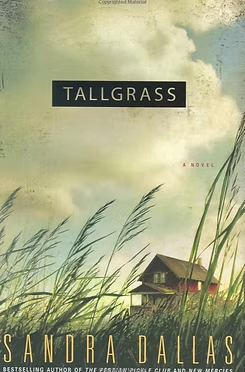
In 1942 Japanese Americans were forced to relocate to ten remote isolation camps under the guise of protecting the U.S. This is the foundation for Tallgrass, Sandra Dallas’s fictional portrayal of a small Eastern Colorado town that became home to an internment camp.
Tallgrass was published in 2007 yet remains timely in its illustration of unfounded prejudice and ill-conceived fear of those who are different.
Renny is the youngest daughter of a beet-farming family, whose property is near Tallgrass. Initially, the young teen doesn’t know what to think of the Japanese since there’s a clear division in town among those who think the idea of the camp is shameful and those adamantly opposed to its presence. The negative attitudes are fortified when a young girl is found raped and murdered. Guilt is immediately assigned to the Japanese.
Due to the war, finding farm laborers proves difficult, so Renny’s father hires three young Japanese men who prove to be hard workers and serve to dispel the misgivings held by Renny and her mother.
Dallas has crafted an engaging narrative proving that evil is not defined by one’s ethnicity or skin color. However, in her portrayal of some characters, there is little gray area. Still, as Renny’s family grows closer to the Japanese workers, she matures and is ultimately able to form her own opinions.
While there’s much that is predictable, the mystery of the murder, family secrets and a view of the hardscrabble life of farmers contribute to the well-paced novel.
Tallgrass
Four bookmarks
305 pages plus Reader’s Guide
St. Martin’s Griffin, 2007

 The Blue Page Special