Archive for the ‘family’ Tag

For some reason it seems the stack of books on my nightstand never, ever shrinks. Some titles have been there for longer than I care to confess. When I saw that The Light Between Oceans has been made into a movie, it was time for me to rescue it from the mountain of titles. (If I decide to see the film I need to read the book first.)
Written in 2012, this is M.L. Stedman’s debut novel set off the rocky coast of Australia following World War I. The author provides lyrical descriptions of the harsh life of a lighthouse keeper, Tom, made more comfortable by the love and vibrant personality of his wife, Isabel.
Tom has returned from the war surprised and guilt-ridden by his survival. He is well suited to the solitary life on an isolated thread of land. It isn’t until he meets Isabel while waiting for his next lighthouse assignment that he realizes what’s been missing from his life. They marry, and after Isabel miscarries multiple times, they believe their hopes of having a family will elude them. That is until a small boat washes ashore with an infant child and a drowned man.
Tom wants to turn the baby over to authorities; Isabel does not. What follows is a succession of heartache and lies borne of love. Stedman’s characters are real, full of faults. She raises poignant questions for all involved and readers are left to consider what they might do in a similar situation.
The Light Between Oceans
Four Bookmarks
Scribner, 2012
343 pages

I’m a fan of Alice Hoffman’s prolific work and her most recent, The Marriage of Opposites, reminds me why. She often incorporates elements of little-known history with a touch of the mystical. On the surface that may not sound enticing, but in Hoffman’s hands it is never overwhelming.
Set on the Caribbean island of St. Thomas in the early 1800s, Rachel’s father is among a group of Jewish immigrants who fled persecution from the European Inquisition. To describe his daughter as headstrong is an understatement.
The narrative primarily focuses on Rachel’s life, but later alternates with others. While still in her teens, Rachel is forced to marry Isaac, a man nearly twice her age. Following his death she’s left without property of own and seven children – three from Isaac’s first marriage.
This is not a tale of survival, though. It is part biography but largely a love story. It’s full of passion that emerges when Rachel meets Isaac’s young cousin, Frederic Pizzaro*, who arrives from Paris to take over the family business.
Going against their religion and social mores, Rachel and Frederic marry. Their youngest son, Camille, shares his mother’s obstinate nature; she acknowledges him as her favorite, although the two are often in conflict. The story soon becomes his as he struggles to pursue his artistic endeavors and eventually find his place among the French Impressionists.
Hoffman’s tale is also about of the influence of the island’s bright colors, cultural expectations and what happens when they collide with dreams.
The Marriage of Opposites
Four Bookmarks
Simon & Schuster, 2015
365 pages
*Camile changed the spelling of the name when he moved to Paris.

Our youngest son recently graduated from Knox College; I’d been vaguely aware of it years before because of Sixteen Pleasures, a book I enjoyed for its setting (Florence, Italy) and strong female narrator. This same son gave me an autographed copy of Hellenga’s most recent work, The Confessions of Frances Godwin, which had been languishing on my nightstand far too long.
The setting is mostly Galesburg, Ill., with Knox figuring prominently; other locales include Milwaukee, Rome and Verona. With Frances, Hellenga introduces another female narrator. I admit I’m intrigued by his ability to create such true female voices.
It’s 2006 and Frances has retired from a career as a high school Latin teacher. At first, the novel appears to be a vehicle for her to reflect on her past because she soon recounts how she met her husband, Paul, a Shakespeare scholar from whom she took classes (at Knox). She tells of their affair, their eventual marriage and life together in Galesburg. They have a daughter, Stella, who as a grown woman appears to make a series of bad choices when it comes to men.
The story is occasionally heavy handed. Consider, Frances’ name: Godwin. Several times, she converses with God, who, among other things, entreats her to go to confession. By this point it’s clear that she does have more than a few things to own up to.
Love and guilt are not unusual companions; for Frances, they’re a large part of who she is.
The Confessions of Frances Godwin
Four Bookmarks
Bloomsbury, 2014
305 pages
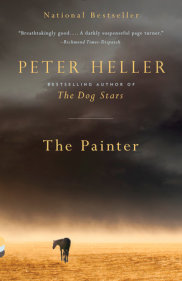
The Painter by Peter Heller is a story of redemption. It’s also part thriller. The who-dunnit isn’t in question, but the underlying reasons and the chase(s) help make it a page turner.
Jim Stegner is a painter with a temper, a broken heart and a soft spot for children and animals. His passions are his art and fishing, both of which usually bring him a sense of peace. Set in southwestern Colorado and northern New Mexico, Heller’s writing renders vivid landscapes with careful, albeit, broad strokes. The images accurately evoke the beauty of the Rocky Mountains.
An encounter with a poacher leads Jim from one bad decision to another. At times it’s easy to think the best solution is for Jim’s mistakes to catch up with him. They come close, very close. The problem is there several other characters with whom the reader becomes invested, including – perhaps especially – Sophia, the young model with whom Jim befriends. Irmina, his long-time friend/occasional lover, is also likeable.
There’s more to Jim than his canvases and waders. His past is slowly revealed providing possible explanations for his rash behaviors. The pain he carries regarding his daughter is palpable. So is the disdain he has for law enforcement, art collectors and others. And, he’s a man capable of murder. Ironically, though his actions are crimes and can’t be condoned, they’re almost justified.
Despite Jim’s frustrating behavior, the moments of joy and a fair amount of intrigue make Heller’s novel an enjoyable read.
The Painter
Four Bookmarks
Vintage Contemporaries, 2014
363 pages

Anthony Marra’s A Constellation of Vial Phenomena demonstrates that families are often created by need, proximity and shared experiences – sometimes more than bloodlines.
Marra writes of worn-torn Chechnya. More accurately, his story involves the newly-formed family of Akhmed, Havaa and Sonja, three genetically-unrelated characters whose lives intersect because of friendship, obligation and fate.
Moving back and forth between 1994 and 2004, Marra details the poverty and fear of those living in a small Chechen village. Eight-year-old Havaa is rescued by Akhmed, a long-time family friend, when the girl’s father is “disappeared” by military authorities.
Akhmed, a third-rate physician, takes the child to the city hospital 11 kilometers away. There, he convinces Sonja, a surgeon, in charge of the facility to keep Havaa. In exchange, Akhmed offers his medical services, which prove to be lacking.
The novel’s beauty is Marra’s writing. The people and landscape are bleak, and are vividly portrayed. Yet hope surfaces in spite of the harsh conditions. Havaa is optimistic about her father returning; Akhmed hopes he can keep the child safe; and Sonja needs to believe that her younger sister, Natasha, is still alive. Hope also makes cameo appearances when Marra foretells characters’ futures. At first this is done with incidental players, then minor ones and finally those about whom the reader cares most.
Trying to understand the historical context of Chechnya is confusing. Fortunately, Marra’s emphasis is on a handful of characters, each who do what it takes to survive while trying to remain true to themselves.
A Constellation of Vital Phenomena
Four Bookmarks
Hogarth, 2013
384 pages
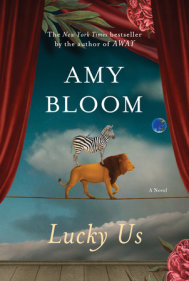
Lucky Us by Amy Bloom is a great title, because it can be uttered in different ways: with a note of sarcasm or with an emphasis on appreciation. Thanks to Bloom’s strength as a story teller, the reader is the lucky one.
From the onset, this is a captivating story of how families get by, not in a financial way but emotionally. It’s a look at the way we create families when those we’re born into cause disappointment and pain. This is the case for all of the main characters. Twelve-year-old Eva, abandoned by her unmarried mother, is left to live with her father and his daughter, Iris. Iris’s own mother has recently died and the girls are motherless, but now each has a sister. The two are as different as salt and pepper, but together they add zest to what could otherwise be uneventful lives.
The book has a surprisingly large number of significant characters who appear like traffic cops signaling directions. Bloom moves her characters from Ohio to Hollywood to Brooklyn – and points beyond. Yet, no one is superfluous.
Love, both carnal and platonic, is a major force, but the strongest elements are familial connections. Eva and Iris support each other’s strengths: Eva has brains, Iris has beauty. Both have limited common sense. The appeal of Bloom’s writing escalates as the friends/family they add to their circle grows. At times it seems far-fetched, but mostly it’s a matter of luck, the kind we all know: good and bad.
Lucky Us
Four Bookmarks
Random House, 2014
240 pages
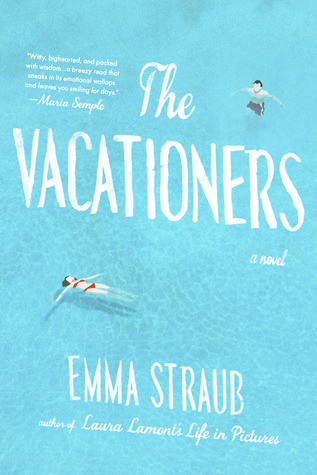
The Vacationers by Emma Straub is as bright as a day on the beach and also as gritty. Full of poignant, laugh-out-loud descriptions, Straub masterfully portrays a family in crisis.
Jim and Franny Post, with their teenage-daughter, thirty-something son, his girlfriend, and Franny’s best friend Charles and his partner are slated to spend two weeks together in a large rented house on Mallorca. Each chapter represents one day of the vacation and every day includes various perspectives provided by the connected tourists. These are separate views more than distinct voices. Each character hopes to project, or better yet protect, a certain image, because everyone has a secret – some known to a few, others hidden.
The Posts, married 35 years, are financially well-off, privileged. Their daughter, Sylvia, is set to start at Brown in the fall, and the trip was planned as a family celebration. However, in the interim from when the trip was conceived and actually occurs, Jim has had an affair and lost his job. Some know this; others don’t.
As the emotional baggage is shuffled around, the Posts direct their own disappointments to Carmen, the girlfriend. She’s perhaps the most honest among the group, but she is also subjected to the family’s rude behavior. Only Sylvia demonstrates fleeting moments of kindness and understanding.
Yet, the novel isn’t about being mean to others. It’s focused on what people do to live with themselves, even when they’re basking in the sun and have been out too long without sunscreen.
The Vacationers
Four Bookmarks
Riverhead Books, 2014
292 pages
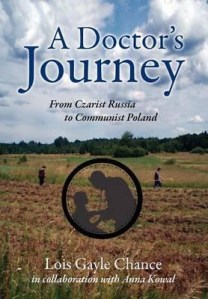
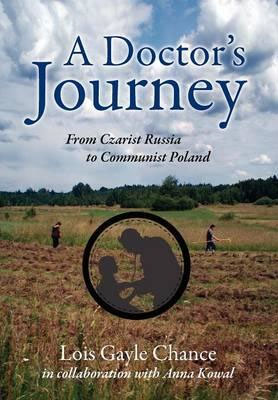
A Doctor’s Journey by Lois Gayle Chance, in collaboration with Anna Kowal, is the true story of Alexander Kowal’s arduous trek from farm boy to physician during World Wars I and II. The book is subtitled From Czarist Russia to Communist Poland.
This independently published work incorporates Alexander’s written accounts, family memories, and, as the author notes in her preface, “the imagination of the writer.” The result is an engaging account of a remarkable man in a historic period. With a few missteps here and there, it, nonetheless, deserves praise for Chance’s ability to set credible scenes and smooth dialogue (which is where, she admits, she took creative license).
The story begins in 1907 when Alexander’s aspirations of becoming a teacher are thwarted; as the oldest son he’s destined to inherit the family land, which has been handed down for generations. Nonetheless, a teacher encourages him apply to become a doctor, and Alexander is awarded a scholarship to study medicine. After ultimately receiving his father’s blessing, Alexander begins his journey.
Chance is weakest in her repeated foreshadowing of the obvious. She writes, “Once home, his family gathered around and he showed them this precious possession, his medical diploma. He never dreamed that nearly a century later it would be cherished by a daughter who hung it proudly in her office …” Of course not! Who can, let alone would, imagine such things?
Alexander’s story, driven by his determination, is filled with aspects of ordinary life, except it occurs in an extraordinary era.
A Doctor’s Journey
Three Bookmarks
Outskirts Press, 2013
271 pages

Easy to visualize characters, plots driven by class conflict, issues of the heart (or both) and a very proper sense of, well, what’s proper are what make English Lit so appealing to me. Yes, the above could easily refer to classic British literature, but it also applies to Helen Simonson’s Major Pettigrew’s Last Stand – a very contemporary work.
Simonson’s novel begins with a chance meeting between the Major (his first name is Ernest, while apt doesn’t fit him as snugly as his military title) and Mrs. Jasmina Ali, a Pakistani shopkeeper. Although their paths have crossed in the past, this encounter comes at a vulnerable point in the Major’s life: he’s just learned of his brother’s death. What follows is the evolution of a friendship based on a passion for books and widowhood.
Both characters are thoroughly engaging. The Major in his stilted, decorous yet sensitive manner has appeal, and Mrs. Ali is an exceptionally intelligent woman burdened by a certain sadness associated with being considered an outsider in her home country. Simonson portrays people we know or would like to; they’re well-defined individuals with foibles, principles and dreams. The cast of lesser characters, including Roger, the Major’s obnoxious status-seeking son, enhance the story.
The novel moves at a leisurely pace as the Major and Mrs. Ali embark on a relationship that puts a spark in their step and ultimately has tongues wagging throughout the village. Simonson clearly enjoys thumbing her nose at what’s considered suitable or not.
Major Pettigrew’s Last Stand
Four Bookmarks
Random House Trade Paperbacks, 2011
358 pages (not including the Reader’s Guide)

I’m probably not alone in my preference to read the book before I see its film adaptation. The Perks of Being a Wallflower was no exception. I am now anxious to watch the movie.
Stephen Chbosky’s novel is told through letters written by Charlie, an insecure 15-year-old, to an unknown recipient. Charlie’s letters are brutally honest in their reflection of his life as the youngest of three children in a traditional family. It’s clear from the outset, though, that he is far more sensitive than most teenage boys. Sure, he faces teen angst like most kids, but his sensitivity and intelligence set him apart from his peers. Through what can only best be described as chutzpah, he introduces himself to Patrick and Sam (Samantha) – step-siblings in their senior year. Charlie is a freshman, but his new friends don’t seem to mind and welcome him into their circle.
As Charlie becomes more involved with his new friends, he discovers that he is not the only teenager with problems. His letters reveal more and more about himself and those around him. It’s evident that his issues are intense: misplaced guilt and an ability to keep a family secret he shouldn’t be burdened with. Lingering in the background are topics of sexuality, identity, and perceptions.
Charlie may never be a popular boy, but he has friends and family who care deeply about him. Even for those of us long removed from school days, it’s still possible to appreciate the value of those intangibles.
The Perks of Being a Wallflower
Four Bookmarks
Gallery Books, 1999
213 pages



 The Blue Page Special