Archive for the ‘Viking’ Tag
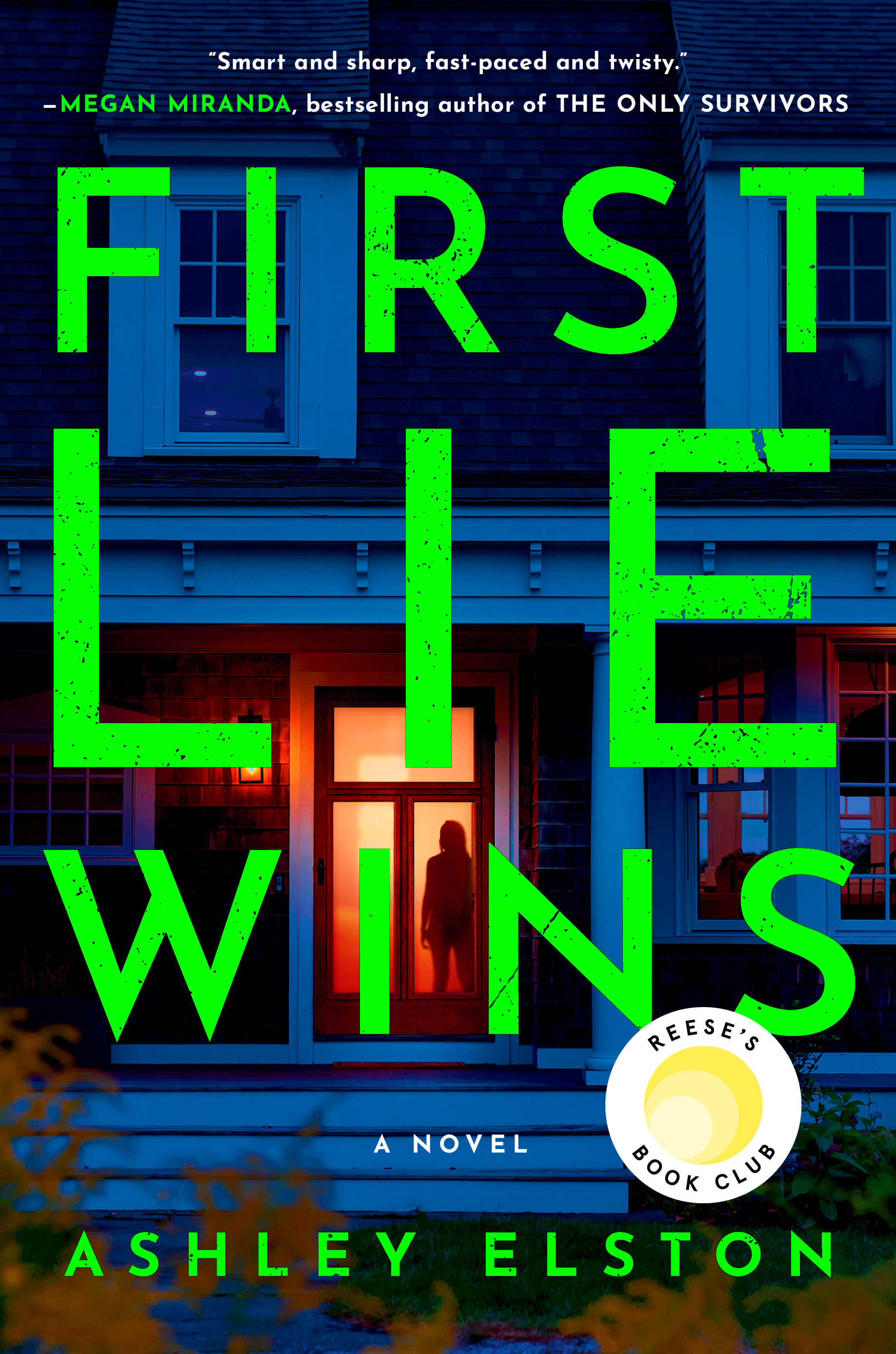
The title alone gives away that this is a mystery with trust issues. First Lie Wins by Ashley Elston follows Evelyn “Evie” Porter on a secret assignment to get romantically involved with Ryan Sumner.
It’s soon evident that Evie isn’t who she says she is; parts of her backstory are interspersed with the mysteries at hand: who is Ryan, why is it necessary to know him, and more, importantly, who is the elusive, enigmatic “Mr. Smith”?
It’s no spoiler to reveal Evie, is aka Lucca Marino, who explains that Smith is the person who clandestinely hires her and pays her handsomely to get the dirt on people. Consequently, Evie moves from location to location, mostly in the South, with different identities, looks and ways of ingratiating herself into her targets’ lives.
The problem Evie encounters with Ryan is that she finds herself actually falling in love with him. Yet, she knows there’s a lot he’s hiding from her. Of course, everyone has their secrets but in this case, there are a lot to keep track of!
Evie, a smart, engaging character, and Devon, the assistant she’s secretly hired to help her unbeknownst to Smith, make for a strong team. The relationship between Evie and Ryan is credible and one the reader actually roots for.
Elston incorporates a number of plot twists to keep the reader guessing and it mostly works. However, there are so many threads to untangle it often gets a little messy; this serves to break the tension rather than enhance it.
First Lie Wins
Viking, 2024
Three-and-a-half Bookmarks
340 pages
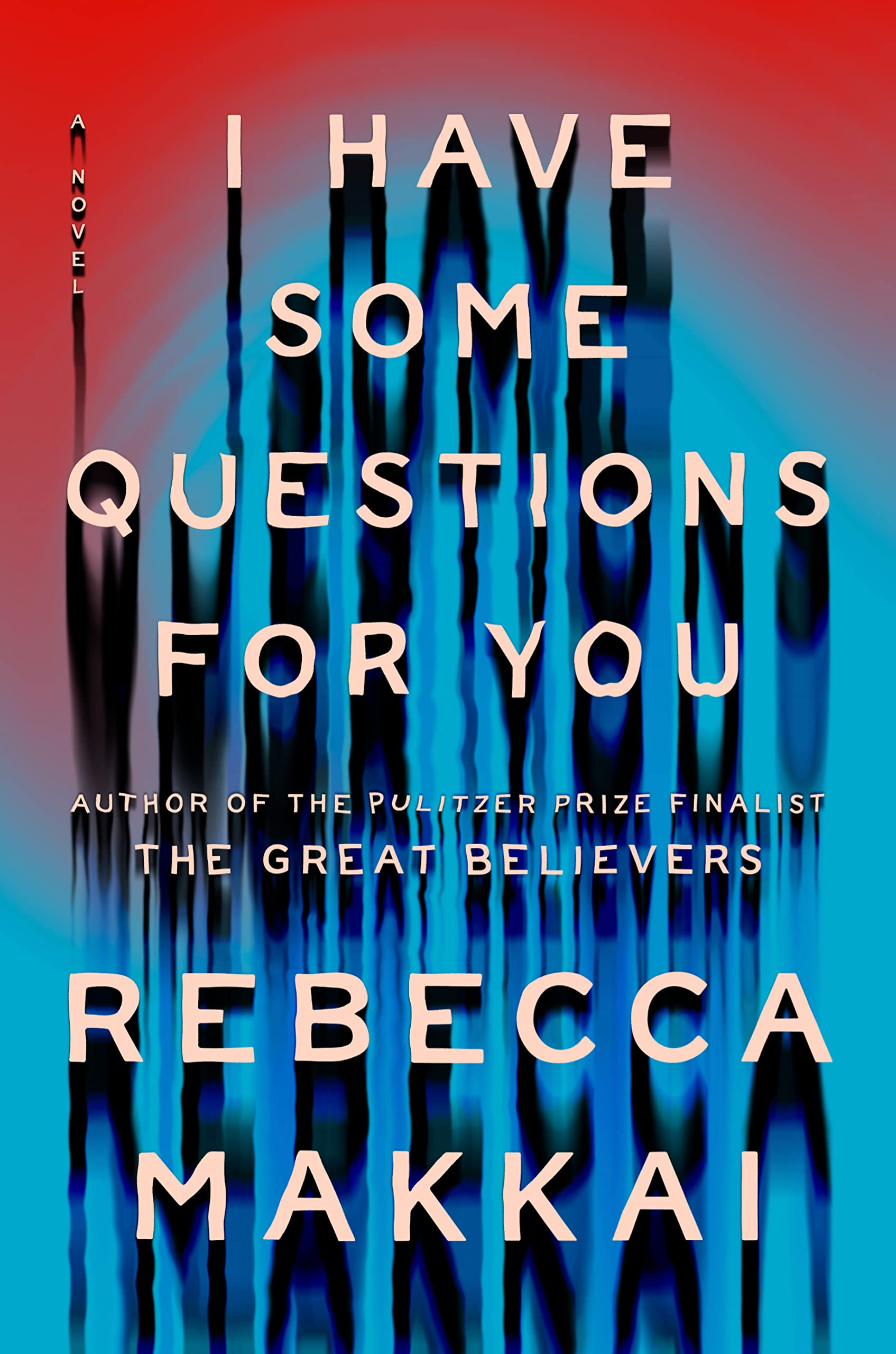
Bodie Kane, a successful podcaster living in Los Angeles, returns to her alma mater, a private boarding school in New Hampshire, to teach a podcasting and a film class. The trek down memory lane reveals several unresolved issues; including questioning her role in what she now suspects is the wrongful conviction of the school’s athletic trainer for the murder of her high school roommate.
In I Have Some Questions For You, Rebecca Makkai has crafted an engaging narrative by combining elements of a murder mystery with the transience of memory.
When two of her students choose the murder as their podcast topic, Bodie is both intrigued and uncomfortable, although the former soon overrides the latter. Bodie is forced to examine her own past at the school.
As narrator, Bodie occasionally addresses questions to an unknown reader. The identity is eventually revealed, but the inquiries help guide her as she learns more about the night of the murder, initially viewed as suicide. She considers the school’s eagerness to settle the matter and the possible culpability of numerous students and faculty.
Makkai’s characters are intelligent and credible thanks to an array of foibles. Bodie is separated from her husband with whom she’s maintained a friendly relationship. When he’s called out on social media as sexual predator, Bodie unwittingly comes to his defense, which leads to a new set of problems. All of this comes down to power and privilege, themes further raised as the students’ podcast assumes a life of its own.
I Have Some Questions For You
Four Bookmarks
Viking, 2023
438 pages
Horse by Geraldine Brooks is much more than about the equestrian world. Along with some history of horse racing, other topics include slavery, art history, modern science and even romance. However, racism is the primary underlying theme throughout.
The narrative incorporates several threads across different, non-chronological time periods: 1850-75; 1954; and 2019. Blending perspectives and experiences of several characters across time to create a complete picture is one of Brooks’ trademarks.
Although Theo, a Black art history graduate student in Washington, D.C., in 2019, is the first character introduced, readers spend the most time with a 13-year-old slave identified by his masters’ name as Warfield’s Jarret in 1850. As the story progresses and Jarret matures, his owners’ names change as do his situations. Jarret has inherited his father’s horse training skills making a name for himself as an exceptional trainer working with Lexington, a thoroughbred whose lineage now extends through generations.
Other major characters include Jess, an Australian scientist working at the Smithsonian Museum of Natural History; Thomas J. Scott, a 19th century artist, whose paintings of Lexington are a significant part of the plot; several of Lexington’s owners; and a 20th century gallery owner.
A discarded painting of a horse leads Theo to learn more about the work, and Jess to discover more about its subject.
As the novel moves back and forth through time, the issue of race remains a constant. Brooks’ deft approach provides an engaging look into the past and an important reflection on our times.
Horse
Four-and-a-half Bookmarks
Viking, 2022
401 pages (including “Lexington’s Historical Connections”)
Ruth Ozeki’s A Tale for the Time Being philosophically considers the relationship between writer and reader. It’s an intriguing idea connected to numerous topics shared from the two main characters’ perspectives: one from Nao writing a diary; the other through Ruth as her reader.
Nao is a 16-year-old girl whose family recently returned to Tokyo from Northern California where she’d lived most of her life. She plans to write in her diary about her 104-year-old great grandmother, Jiko, a Buddhist nun. However, the more Nao writes, the less it’s about Jiko. Instead, she details the bullying she endures in her new school, her father’s depression and his suicide attempts. As Nao writes, she addresses her reader as if it is a single person. After all, reading is a solo experience.
Through unknown circumstances, the diary washes up on a sparsely populated island in Western Canada where Ruth and her artist/naturalist husband live. The book is in a Hello Kitty lunchbox with a collection of letters and an antique wristwatch. The letters are another cause for intrigue as Ruth discovers they were written by Nao’s uncle, a kamikaze pilot.
Ozeki describes the unforgiving conditions of island life; it’s not a place of sandy beaches and calm seas. Rather, the threat of powerful storms, rocky terrain and limited access to goods and services requires resilient residents.
As Ruth reads she comes to care about Nao and her family; she even searches for their whereabouts. Nao, of course, knows nothing of Ruth’s existence.
A Tale for the Time Being
Four Bookmarks
Viking, 2013
422, includes appendices
The Great Believers begins in 1985 Chicago when a group of friends, who’ve been excluded from a funeral, gather to celebrate Nico’s life. He died of AIDS. It’s early days of the epidemic and their friend’s death foretells of what lies ahead for many.
Yale Tishman is among the group, as is Fiona, younger sister of the deceased. Nico’s parents kicked him out of the family home years ago, but Fiona stayed in contact providing him food, money and support as best she could. Consequently, she grew up around Nico’s circle of friends, including Yale.
Time is an element of Rebecca Makkai’s novel which alternates between Chicago 1985/86 and Paris 2015. The earlier period focuses on Yale. He’s a development director for an art gallery, is in a monogamous relationship and comes across as an intelligent, sensitive young man. Through Fiona he’s put in touch with her aunt with an art collection from the 1920s Yale tries to secure for his gallery.
The latter time frame follows Fiona to Paris in her attempt to locate her estranged daughter and granddaughter. The younger Fiona is more interesting than the older version. She took care of Nico, and many of his friends, as they contracted AIDS. She apparently exhausted her caretaking abilities when it came to her immediate family.
Still, the beauty of the novel lies in the power of friendship and acceptance. Yale, and others, faced threats and, initially, medical care for AIDS patients was scattered, at best.
The Great Believers
Four Bookmarks
Viking, 2018
421 pages

Epic Russian novels have long appealed to me for many reasons: the history, the descriptions of stark landscapes and lively urban settings, the storytelling, and the names. Ah, the names.
Author Amor Towles ties all these elements together in A Gentleman in Moscow.
Count Alexander Ilyich Rostov, known as Sasha among a few and as the Count among many, is sentenced to house arrest at Moscow’s grand Metropol Hotel in 1922. This is an engrossing tale about a man who grew up with every comfort and advantage during tsarist Russia. Although his lifestyle changes, it unexpectedly expands.
At the beginning of his confinement, the mother country is in the early stages of political and economic changes that continue for decades. The Count is undeterred by his reversal of fortunes. Towles presents a contented man, knowledgeable, kind, charismatic, happy with routines, yet imaginative. As the Count’s story moves through the years he faces challenges greater than the restrictions of his movements, but always with a good attitude.
Towles injects humor and history with a hotel guestbook of intriguing characters. Interestingly, each chapter begins with the letter A, like the count’s (and author’s) first name.
Here is a novel of the never-wanting-it-to-end variety. The Count’s humanity, his relationships/friendships, and the rich memories of his childhood overshadow his loss of freedom. At times it’s easy to forget that he is a captive in a majestic hotel. He can’t actually check out any time he wants, but why would he want to leave?
A Gentleman in Moscow
Five Bookmarks
Amor Towles
Viking, 2016
462 pages

For a minute forget that Elizabeth Gilbert wrote Eat, Pray, Love. It may take a little longer, but the idea is to not let this dissuade you from reading The Signature of All Things. Gilbert’s novel is as different from her memoir as ice milk is from ice cream. The latter is much richer and nuanced; it’s worth every moment of guilty pleasure spent under its grip.
Gilbert transports the reader from London, across the seas (on multiple occasions), and to Tahiti and Amsterdam. Philadelphia provides the lengthiest setting where the brilliant, unattractive Alma Whitaker is introduced to the world: her birth is literally the first sentence of this epic narrative. In Gilbert’s words, Alma’s childhood “was not yet noble, nor was it particularly interesting …” Thus, the focus turns, albeit temporarily, to Alma’s father, Henry Whitaker.
Henry stole his way out of poverty. He didn’t just acquire wealth, he attained knowledge and became a leading botanist and businessman. Alma’s mother, a stoic and harsh parent intent on fortifying her daughter’s intellect, also possessed a great mind and interest in botany.
Through humor, interesting botanical descriptions and strong, insightful characters, Gilbert creates a story that not only spans continents, but also scientific ideas along with notions regarding love and relationships. The vivid imagery of the various landscapes is a bonus.
Alma is a passionate character rich in curiosity (and foibles). Yet, despite the limits placed on her gender, she explores life in miniscule proportions and unexpectedly reveals its grand scale.
The Signature of All Things
Four-and-a-half Bookmarks
Viking, 2013
499 pages
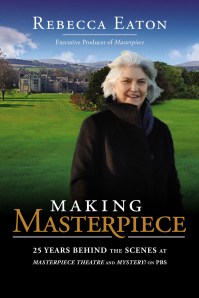
Although I think Rebecca Eaton, long-time producer of Masterpiece (formerly known as Masterpiece Theatre) is an interesting person, I am thankful the focus of her book, Making Masterpiece, is on the series. To be honest, I knew nothing about Eaton before reading her book, but that’s how I discovered she’s so charming. Still, the show’s longstanding quality programming is what drew me to the title.
Eaton shares enough of her life to explain how she became executive producer in 1985. From there, she recounts anecdotes involving actors, producers and writers; many of whom share their own memories of their involvement in the series.
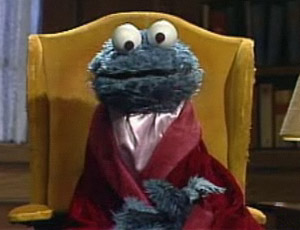
I remember when Alistair Cooke used to introduce the Sunday night programs; I also recall that Sesame Street created Alistair Cookie and Monsterpiece Theatre which mimicked the austerity often associated with classic British literature.

Eaton incorporates self-deprecating humor, which is most evident when she confesses to initially rejecting Downton Abbey as a possibility for Masterpiece. Of course, she soon realized the error of her judgment.
Masterpiece Theatre first aired in 1971. On Eaton’s watch several changes have occurred: the name has been altered and there are now three seasons: Classic, Contemporary and Mystery. She explains how this came about and also details, as much as is possible, the day-to-day duties of being an executive producer.
Among the book’s pleasures is being reminded of past programs, or learning of ones I missed. Most of all, if it’s possible, it’s made me even more excited for the next episode of Downton Abbey and Sherlock and …
Making Masterpiece
Four Bookmarks
Viking 2013
291 pages




 The Blue Page Special