Archive for the ‘racism’ Tag
Vanessa Miller author of The Filling Station has crafted a novel based on the historic events surrounding the 1921 Tulsa Race Massacre.
Greenwood was a prosperous, self-sustaining community known as “Black Wall Street.” It was home to movie theatres, clothing stores, law and medical offices, banks and much more until it was completely destroyed by an angry mob of white men. Homes and businesses were burned to the ground, hundreds died and thousands were displaced.
The narrative focuses on sisters Margaret and Evelyn Justice, the daughters of Greenwood’s grocery store. It’s the eve of Evelyn’s high school graduation and Margaret has returned home from college with an offer to teach in the fall. Evelyn’s been accepted to a fashion design school in New York City.
When the violence begins the Justice girls’ world is upended. Their home is burnt; they left with only the clothes on their backs fleeing for their lives. Exhausted, hungry and afraid they walk for miles before arriving at the Threatt Filling Station, a black-owned business, where they’re taken in by the Threatt family.
The horrific actions and devastating loss are vividly described. Margaret and Evelyn deal with the loss in different ways with the older sister willing herself to find a way forward to rebuild what was taken; and Evelyn looks for ways to numb her pain.
Grief, hope, faith and love are among the many themes Miller weaves. The writing is occasionally stilted, but knowing the factual roots of the story is overwhelmingly powerful.
The Filling Station
3.75 bookmarks
Thomas Nelson, 2025
365 pages, includes Author’s notes, acknowledgements, discussion questions and sources.
James is Percival Everett’s retelling of Mark Twain’s Adventures of Huckleberry Finn told from James’ (Jim’s) perspective.
After learning he’s to be sold and forced to leave his family, James runs away. Jim is the name he’s been given by his white owner; his peers know him by his more formal name. Huck fakes his own death to avoid further beatings by his father and discovers Jim in hiding. The two make their way down the Mississippi River, each with different goals in mind.
There’s a reward for James’s capture, and he worries he’s suspected of Huck’s “death.”
While this has Twain’s classic as its foundation, the architecture is all Everett’s. James speaks in the vernacular associated with slaves when spoken to by slave owners and other white people. However, among each other, slaves converse in perfect English, that’s not only grammatically correct but rich in vocabulary. James also knows how to read, as do many in his circle.
Occasionally, he slips in a word that Huck doesn’t know but quickly makes its clear he’s misspoken, when, in fact, James hasn’t.
The book is full of irony, humor and sadness. In their travels they encounter kindness, brutality and fear. At one point the pair is briefly separated and James fares well, including, ironically, being recruited by a minstrel group and is befriended by another black man who passes for white.
Like its predecessor, this is an adventure story but more profoundly addresses still existing racial inequities and social injustice.
James
Four bookmarks
Doubleday, 2024
303 pages
Ann Patchett is one of my favorite authors, so when she praised Bluebird, Bluebird by Attica Locke I added it to my reading list. I’m glad I did.
A young white local woman is found dead in Lark, a rural East Texas town, a week after a Black man was discovered dead, and questions begin to surface – primarily among the Black community. The man’s death draws little attention, but the second one leads Texas Ranger Darren Mathews to suspect a connection between them.
Darren’s career and marriage are on the rocks. He grew up in the area, but left for college, law school in Chicago and eventually life in Houston to pursue a career in law enforcement. When he first arrives, Darren isn’t officially involved in the murder investigations. Local authorities resist the idea they’re related and resist his presence.
Locke’s fast-paced and timely novel addresses racism and justice that is neither heavy-handed nor underplayed. With the exception of a few stereotypical characters, most are interesting, intelligent and very human rich with strengths and plenty of foibles. Even those whose bigotry is never masked have some (limited) interesting qualities. Ironically, what they all have in common is love.
This may seem contradictory, but the various relationships among those related to the victims as well as Darren’s history with the region reflect unexpected tenderness in an otherwise harsh situation.
Darren’s tenacity, despite his flaws, and the subplot involving a long-ago romance make for an engaging narrative that’s more than a mystery.
Bluebird, Bluebird
Four Bookmarks
Mulholland Books, 2017
303 pages
Presented as a coming of age tale, Go as a River by Shelley Read relies on the spirit of place while addressing romantic and maternal love. And, the author incorporates Colorado history.
Victoria Nash is 17 when she meets a drifter in her small town of Iola. This quickly evokes feelings she’s never experienced. Wilson Moon is not much older than Victoria but his wisdom and sensitivity captivate her. They embark on a brief, clandestine affair. He’s suspected of theft, although his only crime is being Native American in a mostly racist community.
When his body is found at the bottom of a gulch, Victoria suspects her brother of murder. However, her attention soon turns to dealing with her pregnancy. When she can no longer hide her swollen stomach, she runs away from the family peach orchard to hide in the nearby mountains.
Read’s descriptions of the land, Victoria’s feelings and determination to survive on her own are vivid Victoria endures harsh conditions alone, including giving birth. This, and coming upon a young family picnicking in the forest with whom she furtively abandons her son, make belief difficult to suspend.
The impending destruction of Iola, a consequence of the creation of Blue Mesa Reservoir is among the losses she carries the rest of her life. Yet, she moves forward. With assistance from a botanist and others, Victoria moves the peach trees to Paonia before Iola is submerged. And thoughts of the son she gave away remain close to the surface.
Go as a River
Spiegel and Grau, 2023
305 pages, includes acknowledgements
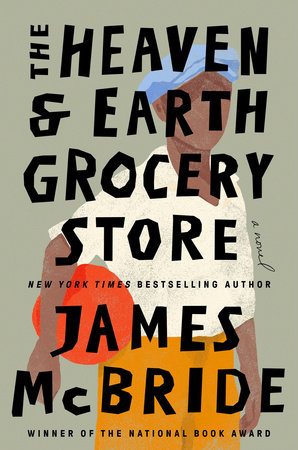
Despite the racism, hardships and wrongs done to the Blacks and Jews who inhabit the landscape of James McBride’s The Heaven and Earth Grocery Store, there is redemption — on numerous levels.
The appropriately-named store is a gathering place for the myriad of immigrants in the Chicken Hill community of Pottstown, Penn. It’s run by Chona, a kind, rabble-rousing Jewess. She’s idolized by her husband Moshe, a Romanian immigrant who runs a successful dance hall. Nate is his Black handyman.
It’s the early-1970s when the remains of a body are found in the neighborhood; the identity keeps readers wondering throughout the novel. The engaging storyline switches to the mid-1920s. The interactions among the Jews, Blacks and whites (who include Klu Klux Klan members) are vividly detailed.
Nate, needs to hide, Dodo, his deaf, orphaned nephew from authorities who want to institutionalize him believing him to be feeble-minded. Chona insists on harboring him in her apartment above the store. While the boy doesn’t hear, he is far from stupid — something Chona recognizes. The two become close and she does what she can to keep safe from the white powers that be.
McBride’s story is rich with characters, although many are one-dimensional; many more — the ones readers will care most about — are multi-faceted. The result is a poignant narrative about people living and working together toward a better life.
Humor and injustice are an odd couple, but here McBride deftly proves them to be a good match here.
The Heaven and Earth Grocery Store
Four-and-a-half Bookmarks
Riverhead Books, 2023
400 pages, includes acknowledgements.
In Nick Herron’s Slow Horses, Slough House is where disgraced and shunned Great Britain’s MI5 agents are sent on the theory it’s where they can do no further harm.
Jackson Lamb is in charge of the has-beens who’ve been relegated to his watch for various security infringements. These include, among others, alcoholism; misplaced classified documents and misidentifying a terrorist in a training exercise. Besides being crude and disdainful, Lamb has his own reasons for being at Slough House.
Mostly, the disgraced agents do nothing but while away the hours. River Cartwright, whose task is to transcribe phone conversations, resents being among the misfits. He’s anxious to return to the spy game. He’s also the one accused of botching the training drill.
When a young man of Pakistani descent is abducted and his captors threaten to live broadcast his beheading, River sees an opportunity to restore his reputation.
A discredited journalist, an addition to the Slough House team and River’s family history contribute to the fast-paced narrative. At the risk of providing a spoiler, high level corruption is an evolving factor.
Different viewpoints are provided, as are brief histories of some of the other “slow horses.” That of the kidnap victim is compelling. He’s a British citizen with no ties to any radical groups. Yet, his racist abductors think otherwise.
Slow Horses is the first in a series by Herron, an award-winning crime writer. A television production of the same name closely follows the book, but lacks its character detail.
Slow horses
Four Bookmarks
Soho Crime, 2010
329 pages
Our Missing Hearts by Celeste Ng starts slow; initially it’s too easy to put down, until, well, it isn’t.
Much has to do with the mystery surrounding the absence of 12-year-old Bird’s mother who his father refuses to acknowledge while insisting his son to do the same. They live in a not-too-distant dystopian world where fear and suspicion rule based on safeguarding America’s culture known as PACT.
It’s a time when children are removed from parents suspected of seditious thoughts and behaviors. Those of Chinese, and by default all Asians, are considered threats. Bird’s mother Margaret is Chinese American and a poet. Her work goes largely unnoticed until one day PACT protesters use a line from one of her poems for their cause: Our Missing Hearts. To protect her son, she leaves the family.
Despite his father’s pleas, Bird’s curiosity about his mother becomes a driving force. These efforts to find her are where the narrative revs up.
Margaret’s story catches the past up with the present. This includes her childhood in the neighborhood’s only Asian family, later surviving on the streets when the economy collapses (blamed on the Chinese), and meeting Bird’s father and becoming a mother.
It’s been years since Margaret has written poetry, but she embraces a new passion based on the protester’s slogan: she tries to meet and interview as many parents as possible whose children have been taken from them.
Ng’s writing is vivid and frightening in its depiction of how self-preservation is manipulated by fear.
Out Missing Hearts
Four Bookmarks
Penguin Press, 2022
335 pages (includes author’s notes and acknowledgements)

The cinematic worlds created in 1940s Hollywood collide with the realities
of World War II and personal battles of the characters in Anthony Marra’s Mercury
Pictures Presents.
After her father is arrested for his anti-fascist writings and imprisoned in
an Italian penal colony, young Maria immigrates with her mother from Rome to
Los Angeles. The move does nothing to assuage the guilt she carries for
inadvertently alerting authorities to her father’s political transgressions.
Years later she’s hired at Mercury Pictures, a second-rate movie studio, where
she becomes an associate producer.
Marra incorporates multiple storylines tied together by Maria and Mercury
Pictures. Numerous characters populate the novel; most have emigrated to escape
persecution in their home countries. All, perhaps especially Maria,
try to reinvent themselves. Humor, irony and pathos merge as they navigate new
lives despite their status as second-class residents while making propaganda
films to support the war effort.
Much of the story is set in Hollywood/Los Angeles, but other locales
prominently figure in the epic Marra crafts, including San Lorenzo, Italy,
where Maria’s father lives out his days. The Utah desert is a surprising setting:
where, during the war, a crew from Mercury recreates German village to film a
war scene.
All of the characters are nuanced and interesting. They’re talented and
ambitious. These include Maria’s Chinese-American boyfriend; the German
miniaturist; the Italian cinematographer and the Jewish studio head, among
others. None are caricatures and all face some form of prejudice, much of which
is anticipated, some unexpected.
Mercury Pictures Presents
Four Bookmarks
Hogarth, 2022
416 pages
Horse by Geraldine Brooks is much more than about the equestrian world. Along with some history of horse racing, other topics include slavery, art history, modern science and even romance. However, racism is the primary underlying theme throughout.
The narrative incorporates several threads across different, non-chronological time periods: 1850-75; 1954; and 2019. Blending perspectives and experiences of several characters across time to create a complete picture is one of Brooks’ trademarks.
Although Theo, a Black art history graduate student in Washington, D.C., in 2019, is the first character introduced, readers spend the most time with a 13-year-old slave identified by his masters’ name as Warfield’s Jarret in 1850. As the story progresses and Jarret matures, his owners’ names change as do his situations. Jarret has inherited his father’s horse training skills making a name for himself as an exceptional trainer working with Lexington, a thoroughbred whose lineage now extends through generations.
Other major characters include Jess, an Australian scientist working at the Smithsonian Museum of Natural History; Thomas J. Scott, a 19th century artist, whose paintings of Lexington are a significant part of the plot; several of Lexington’s owners; and a 20th century gallery owner.
A discarded painting of a horse leads Theo to learn more about the work, and Jess to discover more about its subject.
As the novel moves back and forth through time, the issue of race remains a constant. Brooks’ deft approach provides an engaging look into the past and an important reflection on our times.
Horse
Four-and-a-half Bookmarks
Viking, 2022
401 pages (including “Lexington’s Historical Connections”)
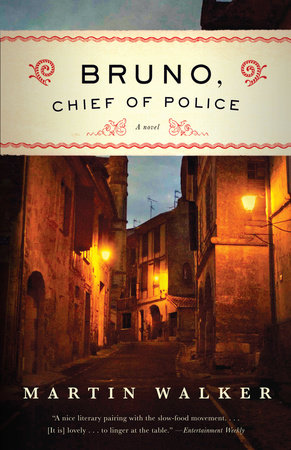
Author Martin Walker introduces readers to Bruno in the first of the Chief of Police series. The title character, whose formal name is Benoit Courreges, is a former soldier who’s drawn to the peaceful existence surrounding the small village of St. Denis in Southern France. This doesn’t mean his life is boring.
The brutal murder of an elderly North African, a veteran who fought with the French army, draws national attention. The novel addresses racism, victims of war, Nazis and more.
Although Bruno is not the point man in a murder investigation he contributes a lot when it comes to solving the case. Initially, two young people, including the son of the town doctor, are arrested as suspects. Bruno is certain their only crime involves drugs.
While working behind the scenes with the national police, Bruno enjoys his pastoral lifestyle living in a restored cottage in the country with his hunting dog, playing tennis and helping the locals stay one step ahead of the EU inspectors. He’s respected, intelligent and knows good wine when it crosses his lips.
Walker’s descriptions of the landscape, townspeople, French food and wine are enticing on their own. The murder investigation is almost secondary. Three women attract his attention, which creates another mystery wondering which one will ultimately win his affections.
The narrative is sweet, at times humorous and engaging without being saccharine. Bruno is a likeable, credible character full of common sense and a sharp mind. Identifying the murderer was logical without being predictable.
Bruno: Chief of Police
Four Bookmarks
Vintage Books, 2008
273 pages






 The Blue Page Special