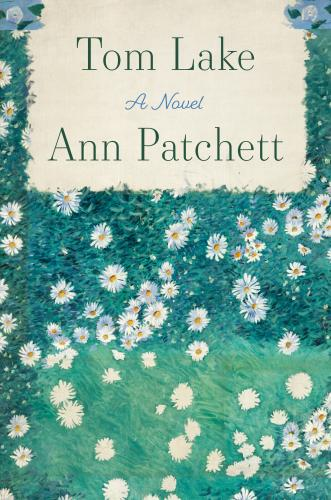
Except for lives lost and residual health issues faced by those infected by COVID-19, the pandemic was, in many ways, positive. It was a time for introspection and, if lucky, being together. This is the starting point for Tom Lake, Ann Patchett’s newest novel.
It’s cherry picking season on the Nelson family orchard in northern Michigan. Due to the pandemic, Lara and Joe Nelson’s young adult daughters are home to help harvest the crop. They plead with their mother to tell the story of her long-ago romance with Duke, a famous actor.
The narrative seamlessly moves between Lara’s descriptions of present-day life and her involvement with Duke. They met doing a summer stock production of Our Town. Duke was beginning his trajectory while Lara awaited release of a movie she was in. However, it, and her role as Emily, was as far as her acting career would go.
Lara does little to embellish the relationship and spares few details regarding the intensity of their short-lived affair; she, via Patchett, tells a good story over the span of several days. She’s happily married to Joe, relishes her life on the farm and being with her daughters. How this evolved is entangled in Duke’s story, which has several (credible) surprises. Fortunately, readers are privy to info Lara does not share with her kids.
Patchett’s writing is engaging from page one and never wavers. Like those in Thornton Wilder’s play, Patchett has created a family of extraordinary characters living conventional lives in unusual times.
In my effort not to binge read Louise Penny mysteries, I discovered I’m still not up to date on her oeuvre. The Madness of Crowds gets me closer. Written in the midst of the pandemic, this novel incorporates an element of timeliness unlike most of Penny’s previous works.
Beginning with the loosening of mask mandates and the availability of vaccinations, the residents of Three Pines are finally comfortable venturing out to enjoy the companionship of family and friends.
Between Christmas and New Year’s, Chief Inspector Armand Gamache is tasked with overseeing security at a nearby university for a controversial speaker. Professor Abigail Robinson believes the pandemic demonstrated the need to euthanize the physically weak and mentally feeble but otherwise healthy human beings. Her thesis slowly gains attention from supporters and detractors.
The usual cast of characters is featured, including Gamache’s family, his closet colleagues Jean-Guy Beauvoir and Isabelle Lacoste, along with the quirky, but endearing residents, of the serene, isolated village of Three Pines. Added to the mix are Robinson, her assistant, the university’s chancellor and a Sudanese refugee being considered for the Nobel Peace Prize.
No Gamache tale would be complete without plenty of intrigue. In this case several issues arise, in addition to that of euthanizing, there’s murder, defending free speech, family secrets, tortuous mental health treatments and how far one has – or might have – to go to protect a loved one.
The murder investigation is at the forefront, but everything else is always near the surface.
I choose books based on reviews I’ve read, recommendations from friends or sometimes the title alone is enough to intrigue me. The latter and a review led me to Emma Donoghue’sThe Pull of the Stars.
Unfortunately, there was no pull for me; I discovered this within the first 20 pages. The problem is that the background is the 1918 flu epidemic and the references to quarantines are simply too immediate — even more than a century later.
Donoghue’s novel is set in Dublin and its main character is Julia Power, a nurse in an obstetrics unit in a hospital decimated by the flu. By the way, World War II is still raging.
I’m usually not drawn to apocalyptic novels, but Emily St. John Mandel’sStation Eleven is so much more than a foreboding tale about a small group of people who survive a pandemic. It’s also about getting through the trials of what we might consider the normal elements of life: existence before the disaster. She blends the backstory of the half dozen characters she masterfully introduces with their lives following the devastation; and it works!
The story follows the characters whose lives shared parallel paths with Arthur Leander, a famous actor, and which orbit around the fall of society. Unrelated to the flu that kills most of the world’s population, Arthur dies of a heart attack. Nonetheless, he remains a substantial character as viewed by those who knew him: one of his ex-wives, his best friend, a young girl who watches him die and the man who tries to save him. Another ex-wife and Arthur’s son have important, albeit tangential, roles. Each character is connected to Arthur, although they don’t all intersect with one another.
St. John Mandel creates a bleak, but not black and white picture, which is often the case in similarly-themed novels. Cormac McCarthy’s The Road comes to mind as a portrayal of a dismal post-catastrophe world. Sure, there is plenty of anarchy and death in Station Eleven, but somehow they don’t overshadow the power of friendship, love and art.
The author deftly illustrates that fear and loss exist before and after the collapse of civilization – as does hope.




 The Blue Page Special