Archive for the ‘history’ Tag
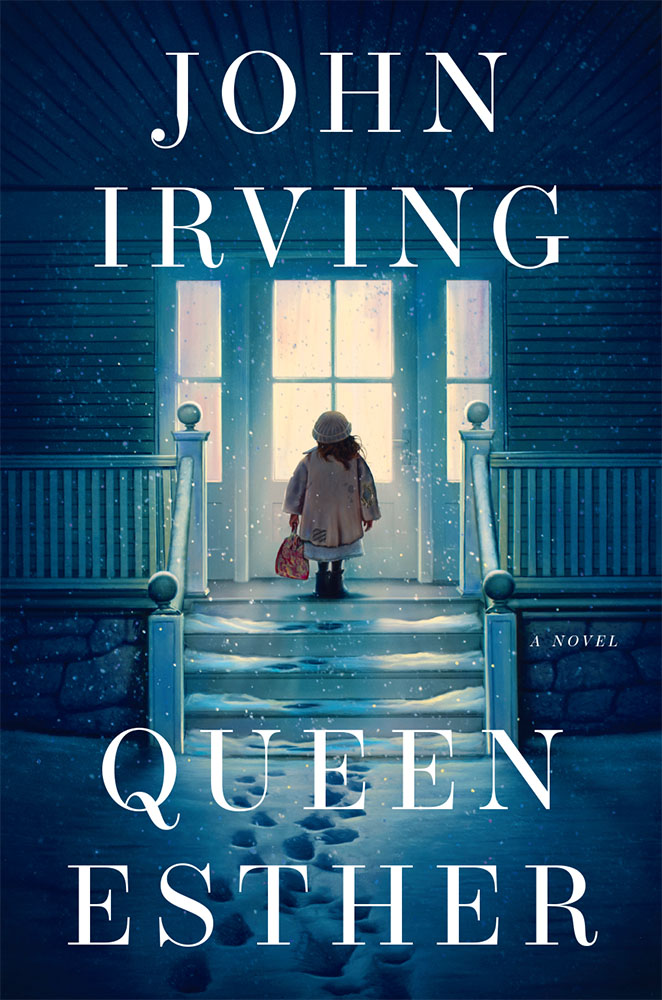
In Queen Esther, John Irving introduces readers to the Winslows of Pennacook, N.H., an intelligent, generous family with five daughters and several adopted caregivers for the girls from St. Cloud’s Orphanage (this may stir memories of an earlier Irving work particularly references to Dr. Larch).
The last adoptee is Esther, a Jewish orphan whose early and continued influence on the family is inexplicable: one of the novel’s shortcomings. When efforts to place her with a Jewish family fail, the Winslows’ aversion to anti-Semitism makes them the most likely candidates.
Through a winding narrative that moves from New Hampshire to Vienna, from Amsterdam to Jerusalem, from the early 1900s to 1981, Jimmy Winslow, the grandson of Thomas and Constance Winslow is the main character more than Esther. Jimmy is reared by the five Winslow sisters; yet, Hope, is the mother of record and Esther gave him birth. She has no direct role in his upbringing but is always a shadow in his life. As a young adult after leaving the Winslows, Esther spends her life searching for her Jewish self; this coincides with Israel’s contemporary political history. She provides Jimmy no tangible attributes – only a lot of questions.
Likeable and earnest, Jimmy grows up to be a writer, eventually a father, but someone whose curiosity about Esther is always a shadow.
As is true with most Irving works, there’s humor and an array of interesting, if not always necessary, characters. The novel is too long with little to redeem its wordiness.
Queen Esther
3.75 Bookmarks
Simon & Schuster, 2025
408 pages + acknowledgements and Reader’s Guide
Bold Spirit by Linda Lawrence Hunt is subtitled Helga Estby’s Forgotten Walk Across Victorian America. That’s the grabber; unfortunately, the writing doesn’t quite measure up, but that’s not Hunt’s fault. She had to rely on deep-in-the-weeds research, primarily old newspapers. Helga’s notes about her journey were destroyed by family members.
In 1896, in pursuit of the opportunity to win $10,000 to save the family farm facing foreclosure, Helga and her oldest daughter Clara embarked on a walk across the United States. The journey took more than seven and a half months.
Helga was born in Norway, but immigrated as a young child with her mother and stepfather. She married at a young age and was soon homesteading with her husband and young child on the Minnesota plains. Thus, she was no stranger to hardship, which made the trek seem like a reasonable goal.
Stopping to find jobs along the way, they often sold their story to the local newspapers. The women also met with local and state politicians. This was in the midst of the William McKinley vs. William Jennings Bryan presidential election, and the suffrage movement was in full swing.
It was Helga and Clara’s plan to write a book once finished with their quest. However, reaction to their completed endeavor was unfavorable. After all, she’d left her husband, seven children, including an infant, behind. It wasn’t just her Norwegian community in Spokane who considered it scandalous. Once she returned, Helga’s family members were shamed by what was undertaken.
Bold Spirit: Helga Estby’s Forgotten Walk Across Victorian America
Three Bookmarks
First Anchor Books, 2003
307 pages, includes notes, bibliography, acknowledgements
In Creation Lake by Rachel Kushner, “Sadie Smith” is a secret agent for undisclosed clients. She’s adept at manipulation, which she demonstrates while ingratiating herself, first with a Parisian man, and later a counter-culture group in rural France.
As she learns more about the group she becomes intrigued by a hermit, Bruno, who lives in a cave and mentors those in the commune. He does this via emails, which Sadie intercepts; she becomes enthralled by his writing on early man. He wants the group to return to pre-industrial, and even prehistoric lifestyles. But, there’s more to Bruno than his knowledge of prehistory (the recounting of the history of the medieval Cagots is fascinating); Sadie is captivated by his ideas for not just what it means for Bruno’s mentees, but what a less deceptive life could mean for her.
As the narrative expands, it becomes less clear who’s manipulating who. Sadie works with the group to plan a protest against the government’s plan to divert water meant for farming to “megabasins” to be used by agricultural corporations. However, her intent is to have the commune members make it a violent demonstration.
There’s a lot of intrigue and double-crossing, and Kushner’s fast-paced writing makes it difficult to keep up with who are the good guys, or if anyone is. Certainly, Sadie’s ability to disregard and/or exploit others makes her unlikeable, yet, strangely, she’s the character you care about who she trusts, while maintaining her cover, which has a bearing on her safety.
Creation Lake
Three and-a-half bookmarks
Scribner, 2024
404 pages
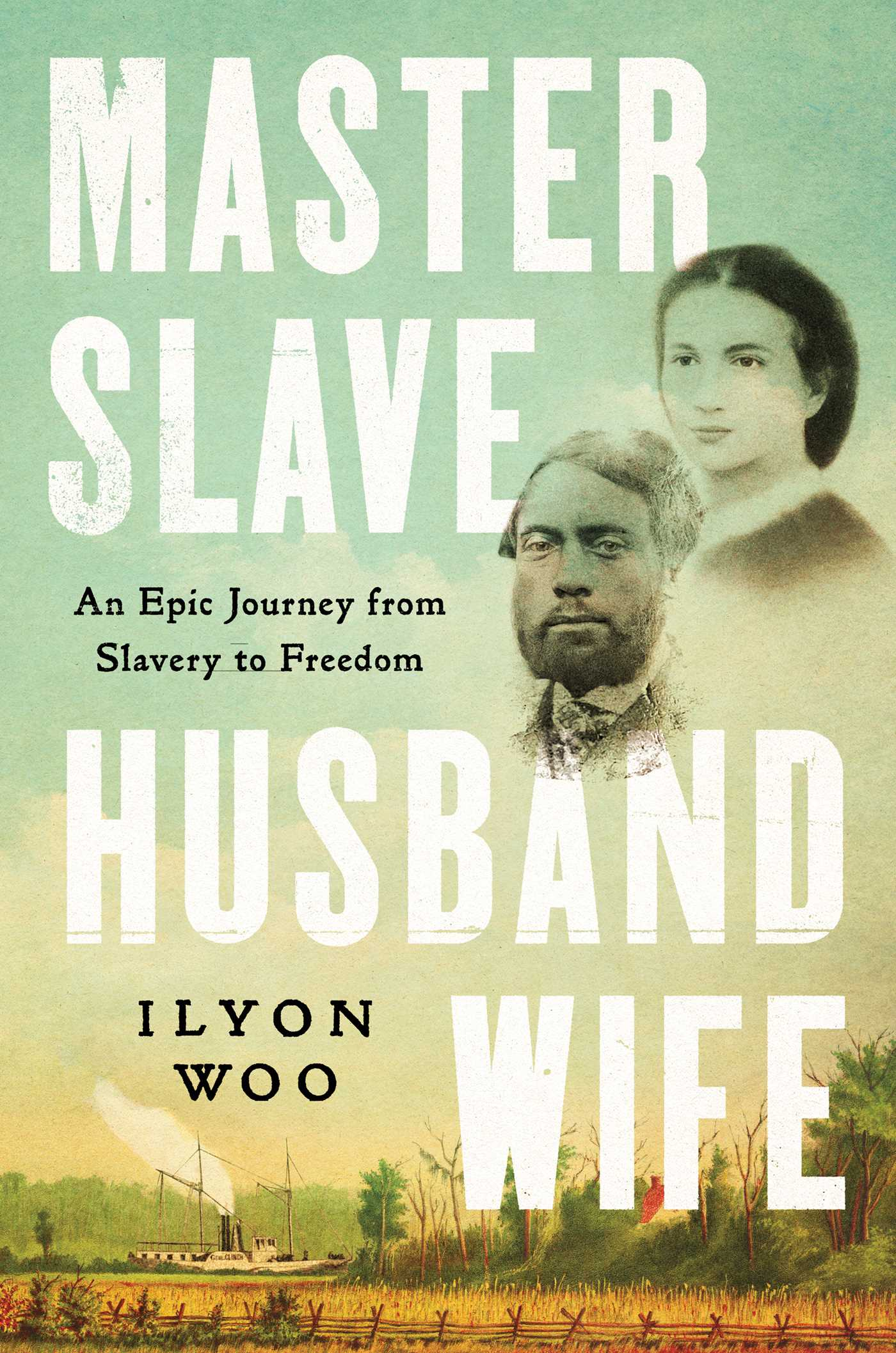
Master Slave Husband Wife by Ilyon Woo is the account of the enterprising quest for freedom by Ellen and William Craft. They left slavery in the south, became celebrities in the north and ultimately found freedom in England.
What sets their story apart is the manner in which they executed their getaway: Ellen dressed as a man accompanied by her slave, William, traveled by train and boat to free states. It helped that she was fair-skinned and her disguise allowed her to appear sickly; thus in need of William’s assistance.
Woo sets the scene for their daring escape by describing the lives they left behind, including patrimonies and their roles: Ellen as the property of wealthy landowners and William in bondage as a cabinet maker. Their fear of being caught is palpable, yet with each receding mile, glimmers of hope surface.
Once in the north, first Philadelphia and later Boston, they are revered and celebrated for their bold exodus. Here, however, is where the narrative loses steam. Woo mentions abolitionist after abolitionist, from Frederick Douglass to William Wells Bell, among numerous others. She also names the many individuals who harbored the Crafts. Despite their assistance, the threat of being caught and returned to the South never diminishes.
Realizing they’ll always be at risk, they continue their journey northward to Canada and finally, Halifax, where they board a ship bound for England.
Woo’s research is extensive and the Crafts’ story is an important one. However, there’s an abundance of unnecessary detail.
Master Slave Husband Wife
Three-and-a-half Bookmarks
Simon & Schuster, 2023
420 pages, includes Notes on Sources, Notes and Index
Horse by Geraldine Brooks is much more than about the equestrian world. Along with some history of horse racing, other topics include slavery, art history, modern science and even romance. However, racism is the primary underlying theme throughout.
The narrative incorporates several threads across different, non-chronological time periods: 1850-75; 1954; and 2019. Blending perspectives and experiences of several characters across time to create a complete picture is one of Brooks’ trademarks.
Although Theo, a Black art history graduate student in Washington, D.C., in 2019, is the first character introduced, readers spend the most time with a 13-year-old slave identified by his masters’ name as Warfield’s Jarret in 1850. As the story progresses and Jarret matures, his owners’ names change as do his situations. Jarret has inherited his father’s horse training skills making a name for himself as an exceptional trainer working with Lexington, a thoroughbred whose lineage now extends through generations.
Other major characters include Jess, an Australian scientist working at the Smithsonian Museum of Natural History; Thomas J. Scott, a 19th century artist, whose paintings of Lexington are a significant part of the plot; several of Lexington’s owners; and a 20th century gallery owner.
A discarded painting of a horse leads Theo to learn more about the work, and Jess to discover more about its subject.
As the novel moves back and forth through time, the issue of race remains a constant. Brooks’ deft approach provides an engaging look into the past and an important reflection on our times.
Horse
Four-and-a-half Bookmarks
Viking, 2022
401 pages (including “Lexington’s Historical Connections”)
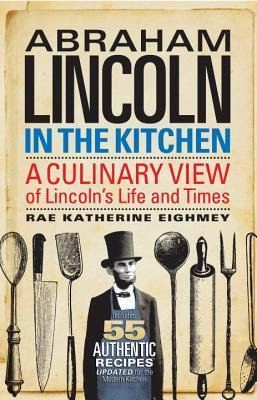
Rae Katherine Eighmey unites history with cooking in Abraham Lincoln in the Kitchen: A Culinary View of Lincoln’s Life and Times. The author chronologically describes Lincoln’s life based on locale, the people he frequently interacted with and the foods he most likely ate. There are only a few actual accounts of meals and menus, so Eighmey relies on cookbooks from Lincoln’s era and references made in letters to, from or about the Lincoln family.
This is not especially engaging, as cookbooks go, but it does have some interesting elements which should especially appeal to history buffs. Eighmey includes 55 recipes, which she has “updated for the modern kitchen.” Some are basic such as Roast Turkey with only butter and flour as added ingredients to the bird. Others are more complicated, including December Sausages. Consider recipes such as cucumber catsup (also a recipe for tomato ketchup; the spelling changes as do the ingredients).
Several interesting recipes like nutmeg donuts and almond pound cake do tempt the palate, though. Surprisingly, the latter calls for ½ cup of white wine, something I’d not previously considered for a cake. Wine is also part of the Apees recipe, which is a blend of a digestive cookie and cracker.
Abraham Lincoln in the Kitchen: A Culinary View of Lincoln’s Life and Times
Three bookmarks
Smithsonian Book, 2013
270 pages, including Notes, Bibliography and Index
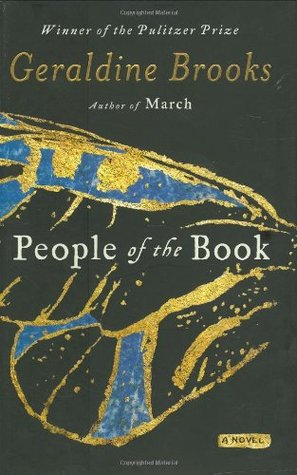
People of the Book traverses science, religion and history when rare book conservationist Hannah Heath is tasked with examining the Sarajevo Haggadah, rescued from the Bosnian War. In the process, Hannah unearths clues about its antiquity while restoring it for the future.
Geraldine Brooks has crafted an engaging account that delves not only into Hannah’s life, but the origins of the Haggadah, considered one of the earliest Jewish books created. Its vivid illustrations make it unique.
Thanks to Hannah’s expertise and the accessibility of modern technology, she’s able to take microscopic artifacts from the pages to analyze. The results reveal the book’s journey through Middle Eastern and early European history, with a focus on the persecution of Jews and a realization of the Haggadah’s significance and the need to protect it.
Hannah is introduced in 1996 where she first comes into contact with the book and discovers a miniscule part of an insect wing in the book’s binding. The chapters alternate between Hannah’s narrative and those of the people associated with the elements she uncovers in her analysis. While her life moves forward, the book’s moves backward in time and place. From the initial identification of the insect fragment traced to Sarajevo in 1940. to a feather and a rose to a wine stain, from salt to, finally, a white hair traced to 1480, the stories of those who held the book are told.
Hannah’s background also comes to light. Her own past confirms the unknown is part of everyone and everything.
People of the Book
Four Bookmarks
Penguin Books, 2008
372 pages, plus Reader’s Guide
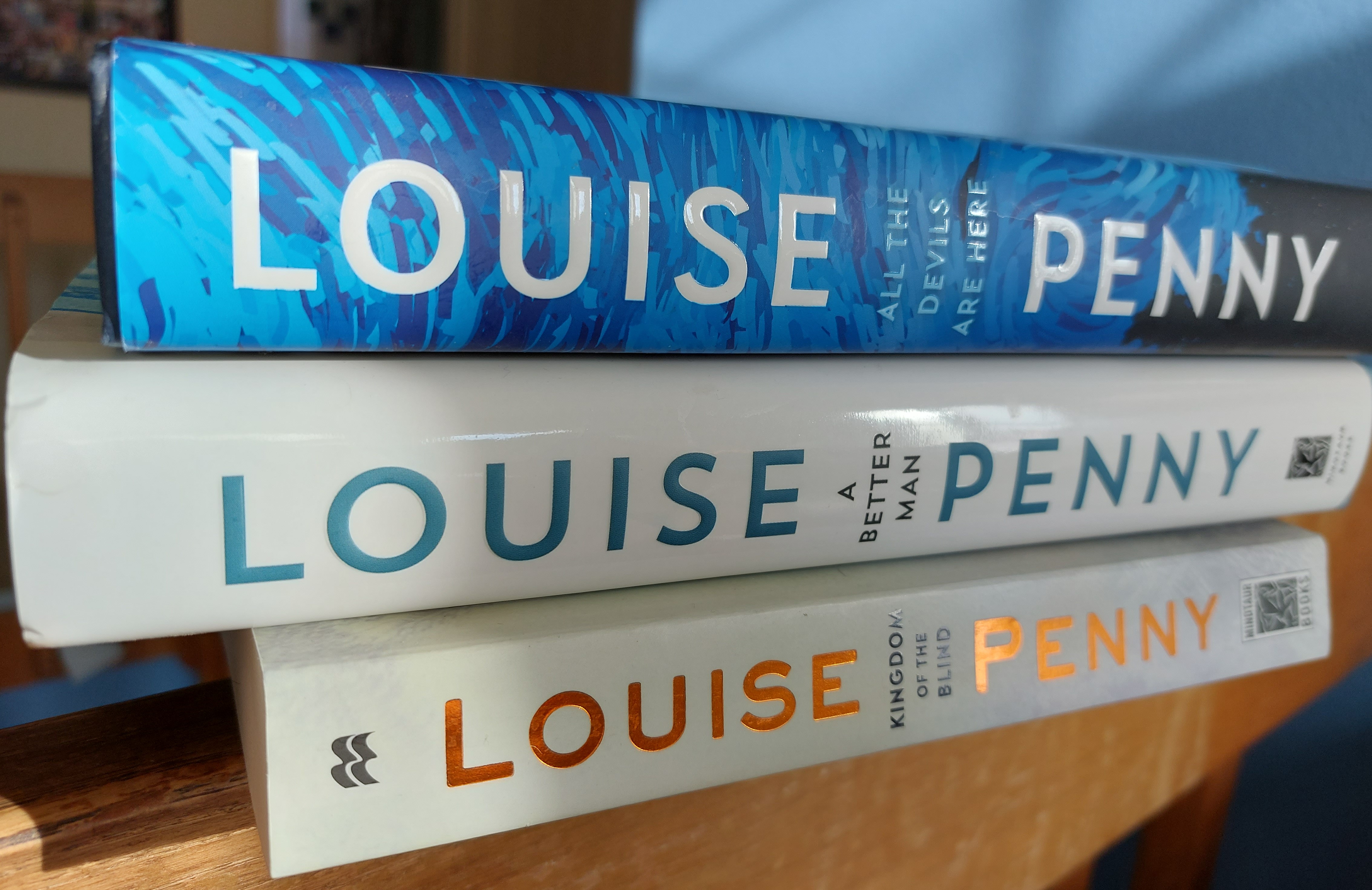
I finally did it: binged on three* Louise Penny novels back to back. There’s still another to read, but since it isn’t on my nightstand (per my New Year’s Books Resolution), it has to wait.
Most readers I know are fans of the Inspector Armand Gamache series. To those few who admit to me they aren’t, we can still be friends; although, I am disappointed.
Nonetheless, I’ll focus on All the Devils are Here, which allows me to also highlight what I enjoy so much about Penny’s work: the relatable characters, the descriptions (and significance) of settings, and, of course, the mystery to be solved. Unlike most of the previous novels, this one is set in Paris, with brief references to Three Pines, the small, tight-knit community in rural Quebec. I was initially disappointed the usual cast of characters (residents of Three Pines) was relegated to barely-existent roles. Yet, Paris is, after all, a magical place, which comes to life through the author’s vivid imagery of people, sites and food – lots of food.
In addition to the mystery at hand, are several back stories: Armand’s relationship with his estranged son Daniel; the imminent birth of his granddaughter; and his memories of visiting the City of Lights.
Suspicions abound as Gamache works to discover who tried to kill his godfather. The inspector encounters corporate espionage, corrupt police and rumors involving the French Resistance. It’s an intriguing combination. This and the benevolent qualities of her main character are what Penny does best.
All the Devils are Here
Four Bookmarks
Minotaur Books, 2020
439 pages
*Kingdom of the Blind
A Better Man
All the Devils are Here

You‘d be forgiven for thinking A History of the World in 10-1/2 Chapters is massive with each section retelling what’s already been shared in the Bible, scientific journals and cultural studies. Instead, Julian Barnes evokes humor and pathos as he draws from those chronicles while creating a narrative about survival.
The half chapter, between 9 and 10, entitled “Parenthesis” is about love.
An unlikely narrator in the first chapter shares its experience as a stowaway aboard Noah’s ark. In a vastly differing account from what’s taught in Sunday schools, Noah is portrayed as unintelligent and a drunk. Although references to the stowaway occur in a few subsequent chapters, its role as narrator ends once the ark reaches shore much, much longer than the 40 days told in popular versions.
Ships, passengers and violent seas – well, in some cases, just violence at sea – set the scene throughout the narrative, as does a trial, space travel and contemporary searches for the ark. Each section (chapter) can stand alone, but it’s important to remember the book’s theme, which is what the title implies.
Just as some history books often get bogged down in too much detail, Barnes falls in line with the genre. For example, the chapter appropriately entitled “The Wars on Religion,” about the trial of woodworm accused of blasphemy, while initially amusing, gets old fast.
Even the final chapter, “The Dream,” which provides an idea of heaven is too long, especially since even the narrator grows tired of it.
A History of the World in 10-1/2 Chapters
Three-and-a-half bookmarks
Vintage International, 1989
307 pages
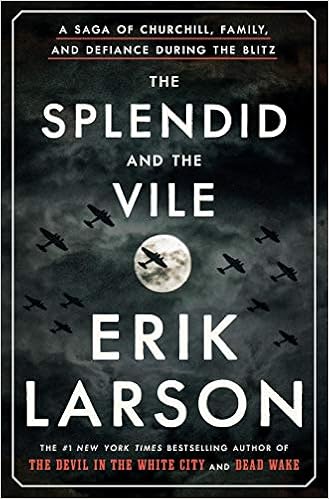
Erik Larson’s 500+ page look at Winston Churchill’s first year as prime minister in The Splendid and The Vile is, no surprise, exhaustive. The author did his homework. Focusing on the time frame of May 10, 1940, to May 10, 1941, is smart. After all, much has already been written about the man who instilled hope in a daunting time.
The work is subtitled “A Saga of Churchill, Family and Defiance During the Blitz.” Of the three, the sections about members of the family and those who worked closely with the prime minister are the most interesting – especially about his younger daughter, Mary; his daughter-in-law, Pamela; and one of his private secretaries, John “Jock” Colville.
Although there’s little interaction between Mary and her father during this time frame, as Larson chronicles. Yet, her love for her father and her realization of the changes facing her comfortable, upper class lifestyle are compelling as told through excerpts of her diary; she turned 18 in September 1940.
From the beginning, Churchill knew U.S. involvement was necessary for Germany to lose the war. His efforts to maintain calm in his country, while appealing to Franklin Roosevelt for assistance and enduring the devastation of London being bombed is well documented.
Interspersed with accounts from and/or about colleagues and family are brief sections about Hitler and his cohorts in Germany. Perhaps photos are all that’s missing. History buffs and anyone concerned about history repeating itself more than it already has should find this book of interest.
The Splendid and the Vile
Four Bookmarks
Crown, 2020
585 pages, includes sources, acknowledgments and index





 The Blue Page Special