Archive for the ‘friendships’ Tag
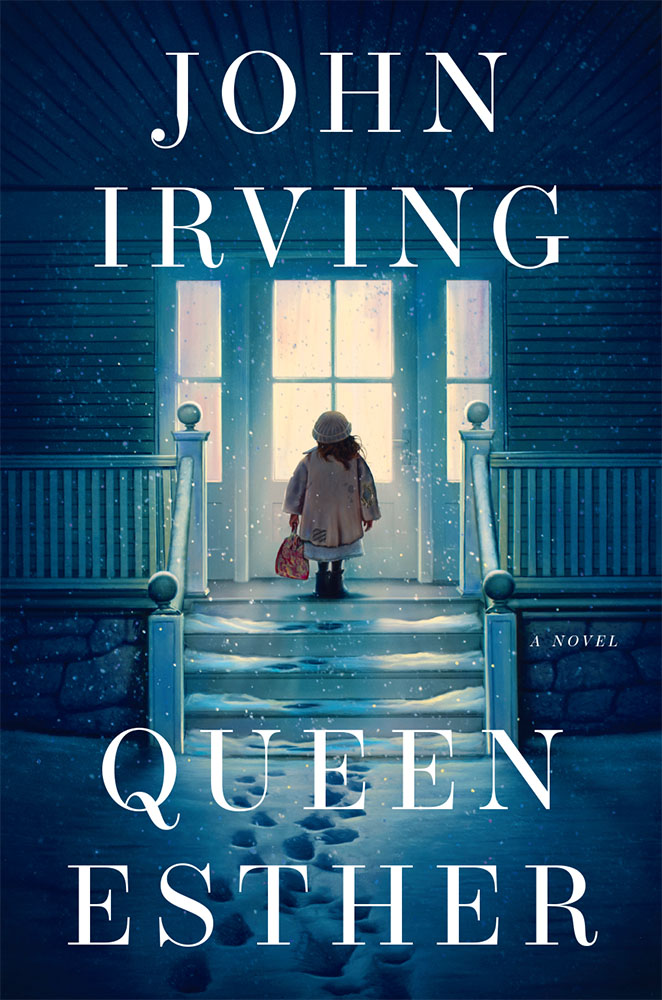
In Queen Esther, John Irving introduces readers to the Winslows of Pennacook, N.H., an intelligent, generous family with five daughters and several adopted caregivers for the girls from St. Cloud’s Orphanage (this may stir memories of an earlier Irving work particularly references to Dr. Larch).
The last adoptee is Esther, a Jewish orphan whose early and continued influence on the family is inexplicable: one of the novel’s shortcomings. When efforts to place her with a Jewish family fail, the Winslows’ aversion to anti-Semitism makes them the most likely candidates.
Through a winding narrative that moves from New Hampshire to Vienna, from Amsterdam to Jerusalem, from the early 1900s to 1981, Jimmy Winslow, the grandson of Thomas and Constance Winslow is the main character more than Esther. Jimmy is reared by the five Winslow sisters; yet, Hope, is the mother of record and Esther gave him birth. She has no direct role in his upbringing but is always a shadow in his life. As a young adult after leaving the Winslows, Esther spends her life searching for her Jewish self; this coincides with Israel’s contemporary political history. She provides Jimmy no tangible attributes – only a lot of questions.
Likeable and earnest, Jimmy grows up to be a writer, eventually a father, but someone whose curiosity about Esther is always a shadow.
As is true with most Irving works, there’s humor and an array of interesting, if not always necessary, characters. The novel is too long with little to redeem its wordiness.
Queen Esther
3.75 Bookmarks
Simon & Schuster, 2025
408 pages + acknowledgements and Reader’s Guide
Set in the small town of Crosby, Maine, many of Elizabeth Strout’s previous (and distinctly different) characters populate the town and novel.
Bob Burgess, a semi-retired lawyer, takes on a case involving a lonely, isolated man accused of murdering his mother.
Bob has a long-standing relationship with Lucy Barton and reluctantly finds himself falling in love with her, despite being married. Lucy is divorced, but lives with her ex-husband William. Still, Lucy and Bob regularly walk together talking about the many aspects of their lives. There are many things they reveal only to each other.
Olive Kitteridge is another familiar character known for her cantankerous, usually, insensitive, dealings with others. Olive lives in a retirement home; she and Lucy often spend time together sharing stories about people they’ve known or situations they’ve experienced. The women attempt to give these stories meanings, but often they are simply glimpses of life’s ups, downs and unknowns.
Strout imbues the novel with empathy and intrigue. There are Bob’s emotions, not just his love for Lucy, but the emptiness he feels following his sister-in-law’s death and concern for his client charged with murder. Interestingly, even Olive has more empathy than disdain for those around her (although in limited doses). Lucy is in more of a recipient; her feelings for Bob are never fully disclosed, although suggestions are inferred.
Descriptions of small-town life, changes in seasons and day-to-day routines of the characters are, in Strout’s hands, much more interesting than they might otherwise be.
Tell Me Everything
Four Bookmarks
Random House, 2024
326 pages
Imagine receiving texts or missed calls from a deceased friend. MIT tenured physics professor Helen is initially baffled, if not quite haunted, when she finds herself in this situation in Nell Freudenberger’s Lost and Wanted.
Helen’s friend Charlotte (aka Charlie) has recently died, but they had ceased being close long ago. Nonetheless, Helen is saddened to learn her best friend from college is dead. Charlie’s husband, Terrence, and their daughter, Simmi, move to Boston from California to be near his in-laws. Consequently, Helen becomes involved with them, which is familiar yet different. Helen is a single parent by choice. Her young son and Simmi become friends.
Helen is a respected physicist. Her books on physics are well received for their accessibility on the subject. Thus, her scientific background is what keeps her from considering that the texts are supernatural.
While the novel may initially seem to have roots in the paranormal, it’s not the case. Rather, friendship and grief are the themes driven by the loss of someone’s friend, daughter, wife and mother.
The texts are a mystery, Charlie’s husband is a potential love interest — or is he — and Helen’s memories of Charlie during their Harvard days are all intriguing.
However, because of Helen’s career, there are a lot, as in too many, references to physics. Freudenberger did her homework, but it’s questionable whether so many details are necessary.
The title was initially puzzling to, but the deeper I got into the novel, the more I appreciated it.
Lost and Wanted
Three-and-three-quarter stars
Alfred A. Knopf, 2019
315 pages
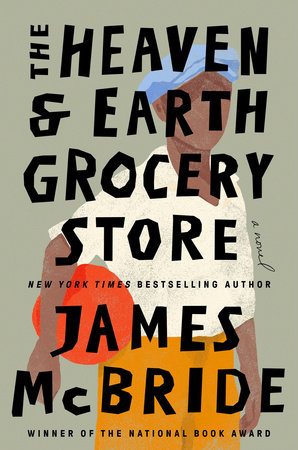
Despite the racism, hardships and wrongs done to the Blacks and Jews who inhabit the landscape of James McBride’s The Heaven and Earth Grocery Store, there is redemption — on numerous levels.
The appropriately-named store is a gathering place for the myriad of immigrants in the Chicken Hill community of Pottstown, Penn. It’s run by Chona, a kind, rabble-rousing Jewess. She’s idolized by her husband Moshe, a Romanian immigrant who runs a successful dance hall. Nate is his Black handyman.
It’s the early-1970s when the remains of a body are found in the neighborhood; the identity keeps readers wondering throughout the novel. The engaging storyline switches to the mid-1920s. The interactions among the Jews, Blacks and whites (who include Klu Klux Klan members) are vividly detailed.
Nate, needs to hide, Dodo, his deaf, orphaned nephew from authorities who want to institutionalize him believing him to be feeble-minded. Chona insists on harboring him in her apartment above the store. While the boy doesn’t hear, he is far from stupid — something Chona recognizes. The two become close and she does what she can to keep safe from the white powers that be.
McBride’s story is rich with characters, although many are one-dimensional; many more — the ones readers will care most about — are multi-faceted. The result is a poignant narrative about people living and working together toward a better life.
Humor and injustice are an odd couple, but here McBride deftly proves them to be a good match here.
The Heaven and Earth Grocery Store
Four-and-a-half Bookmarks
Riverhead Books, 2023
400 pages, includes acknowledgements.
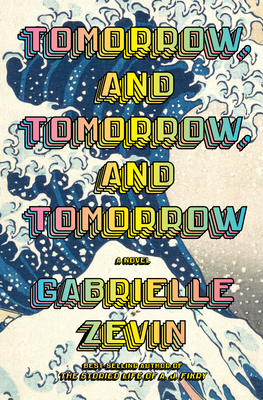
Personal connections through friendship, love and virtual worlds are examined in Gabrielle Zevin’s Tomorrow, and Tomorrow, and Tomorrow.
Sadie Green and Sam Masur meet as 11- and 12-year-olds, respectively, for a short time. The confluence of their lives doesn’t fully occur until a decade later in Cambridge where both are in college; her at MIT, him at Harvard.
The novel spans more than 30 years as Sadie, Sam, Marx (Sam’s roommate and eventual business manager) and others design and develop popular, lucrative video games. They’re the wunderkinds of computer-generated universes.
The games are essential elements of the novel, particularly how their creators conceive the ideas, develop the technology and ultimately promote them. However, it’s the bonds among the characters that have the greatest impact. Each is intelligent, flawed and loveable; each makes significant contributions to the games, although there is often tension as to who merits the attention for their success.
It should come as no surprise this is also a story about love and loss. Sam loves Sadie but is unable to articulate his feelings. Yet, they are close. Marx is like a brother to Sam and initially Sadie is suspicious of him. The evolution of these relationships is what drives the narrative.
The title reflects the endless loop of many video games while also referencing a soliloquy from Macbeth on the inevitability of death:
“Tomorrow, and tomorrow, and tomorrow
Creeps in this petty pace from day to day,
To the last syllable of recorded time” (Act V, scene 5)
Tomorrow, and Tomorrow, and Tomorrow
Four Bookmarks
Alfred A. Knopf, 2022
401 pages, includes notes and acknowledgements
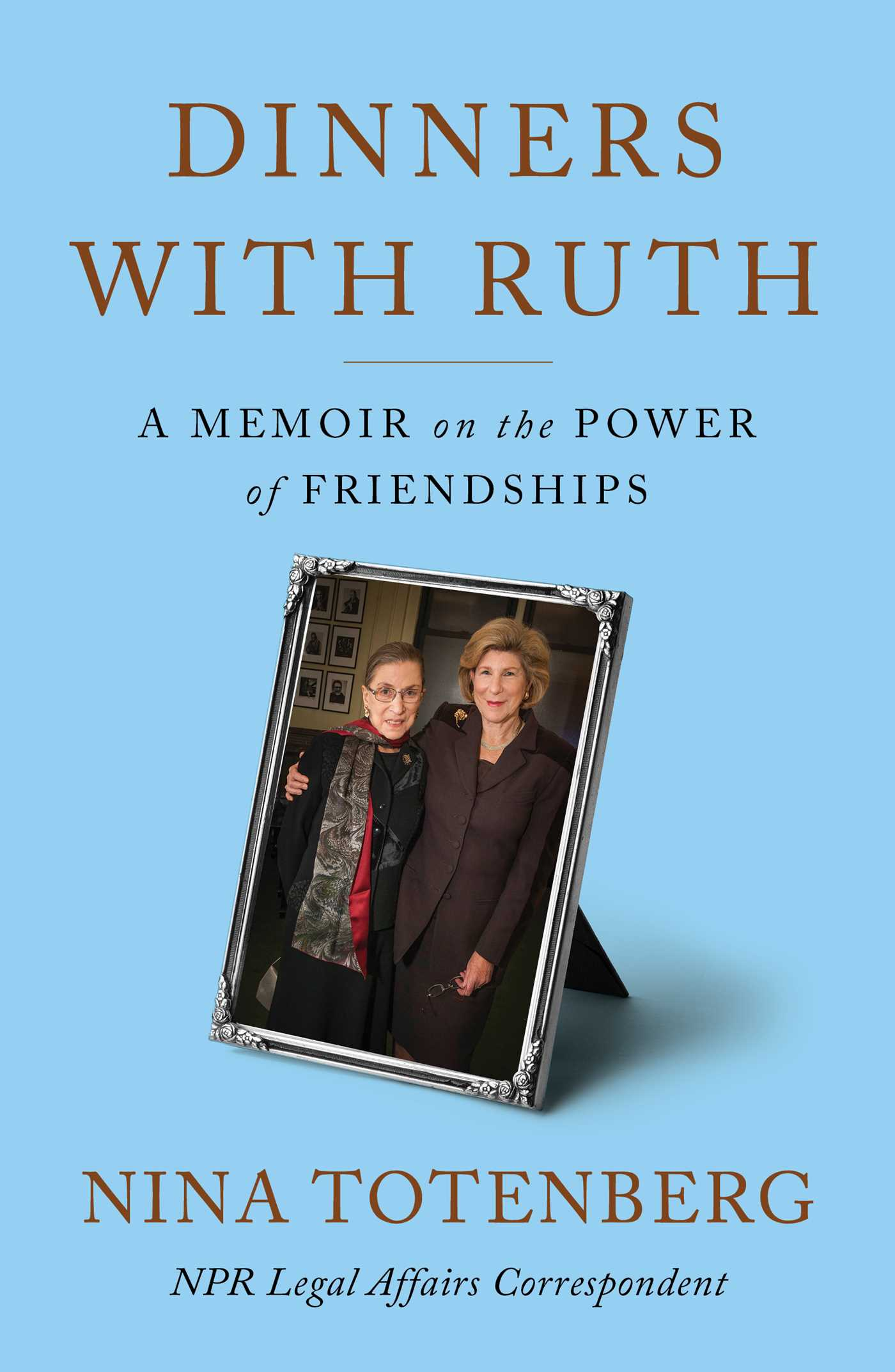
Dinners with Ruth by Nina Totenberg is subtitled A Memoir on the Power of Friendships, which could be changed to A Memoir on Power Friendships.
Totenberg, legal affairs correspondent for NPR, first met Ruth Bader Ginsberg long before either had established their careers. As their stars rose, their relationship flourished. Yet, RBG’s isn’t the only name Totenberg drops recounting dinner parties and other social events.
Friendships with her NPR colleagues, in particular Susan Sontag and Cokie Roberts, have been previously celebrated in another memoir. Additionally, Totenberg counts several former Supreme Court justices, reporters, her sisters and many others among her friends.
Certainly, the most engaging narratives are those regarding RBG. Totenberg refers to her intelligence, kindness, quiet nature and love for her husband Martin who died in 2010. Earlier, Totenberg’s first husband died after a long illness. Both women provided support and comfort to the other. When the journalist remarried, the justice officiated.
Totenberg briefly shares her family background and her entrée into journalism: first in print media and later among the first of NPR’s staff. She remains a contributing journalist and has received numerous accolades for her work.
Each of the 17 chapter names includes the word friend or friendship. From love to fame, from hardships to lost, aspects of various significant connections significant in Totenberg’s life are recounted. Not only does the reader learn more about the author, but an added benefit is the opportunity to reflect on the importance, and variety, of friends in one’s own life.
Dinners With Ruth
Four Bookmarks
Simon & Schuster, 2022
304 pages, includes notes, acknowledgements and index
I’ve seen a lot of Stanley Tucci’s movies; of his many screen appearances, my two favorites are Big Night and the television series Searching for Italy. His memoir, Taste: My Life Through Food, reflects both.
Beginning with his childhood and Italian family background, he recalls school lunches, weeknight dinners and holiday get-togethers with equal enthusiasm and vivid descriptions. He also includes occasional recipes.
Tucci moves through the different phases of his life: his early acting days augmented by waiting tables, his relationship and love for his late wife, his success as an actor, remarrying, movie sets and how food is such an integral part of it all.
Humor, mixed with heartfelt emotion, a little snobbery and his enjoyment of a good stiff drink fill the pages. His writing voice is distinct. Its cadence evokes memories of the TV series wherein he visits different parts of Italy identifying the unique foods of each region.
The memoir is not without plenty of name dropping, something Tucci acknowledges. Yes, he’s acted with numerous well-known celebrities, but it’s the many shared meals themselves that breed envy – even if all of the food isn’t delicious … although most of it is.
Tucci isn’t just a dining connoisseur; he recounts his enjoyment of cooking, which includes planning, shopping, preparing and serving. Whether describing the catering on movie sets or meals with his children, parents and wife (or fellow actors and friends), Tucci clearly acknowledges an appreciation not only for good food, but the community it creates.
Taste: My Life Through Food
Four Bookmarks
Gallery Books, 2021
291 Pages

The life phase Kiley Reid refers to in her debut novel Such a Fun Age could be one of several: mid-20s, high school, early 30s, preschool or all of the above. Each contributes to the plot. Yet this work is far more important than time frames. It’s opportune as we examine our perceptions of race and racism.
Emira Tucker is soon to be 26 and no longer eligible for coverage under her parents’ health insurance. College-educated without a clue what to do with her life, she has two part-time gigs: babysitter and typist. It’s the former that drives much of the narrative. She’s African American; Alix Chamberlain, the woman whose child she watches, isn’t. Late one Friday night, Emira is with Alix’s daughter in an upscale market when confronted by a security guard. He questions why the black woman is with a young, white a child. The exchange is recorded on a bystander’s phone. The incident has the potential to go viral, but Emira’s not interested in taking the situation further and Alix is mortified it happened at all.
Reid’s characters are smart, funny and credible. Even with her lack of ambition, Emira is likable. It’s obvious she enjoys the toddler she babysits, but as a reader I found myself wanting more her. I don’t like admitting it, this is what Alix wants, too. Alix is a character I otherwise don’t want to identify with: she’s clueless and privileged. Yet …
This is an important story told with a surprisingly light touch.
Such a Fun Age
Four-and-a-half Bookmarks
G.P. Putnam’s Sons, 2019
310 pages

Jacques Pepin practically grew up in kitchens, which he chronicles in The Apprentice – a memoir with recipes. Born in southern France, he was a child during World War II when the scarcity of food was at its height. He learned to scavenge and worked on a farm before his mother opened a village restaurant when the war ended. This led to several apprenticeships, essentially trial and error experiences, before moving to Paris as a young adult.
Pepin’s writing voice is strong and vivid; the only thing missing is his French accent. His narrative reveals his work ethic, determination and a sense of fun. He goes from a lowly kitchen boy whose first assignment was nothing more than a prank to becoming the personal chef of President Charles de Gaulle – all before making a name for himself in the United States.
His move the New York City was both an adventure (meant to last a year or two at the most) and a leap of faith. Pepin spoke no English. Still, he becomes friends with fellow foodies – long before the term was conceived. Accounts of his friendships with Craig Claiborne, Julia Child and James Beard, among others, are peppered throughout like perfect seasonings to enhance but not overwhelm. Descriptions of meals add further appeal.
It’s fascinating to see his career evolve from cooking to teaching cooking techniques (and more) to authoring cookbooks and hosting television programs. Pepin shares his emotions, his appreciation of well-prepared food and the value he places on family and friends.
The Apprentice: My Life in the Kitchen
A Memoir with Recipes
Four Bookmarks
A Rux Martin Book, 2003
318 pages with index
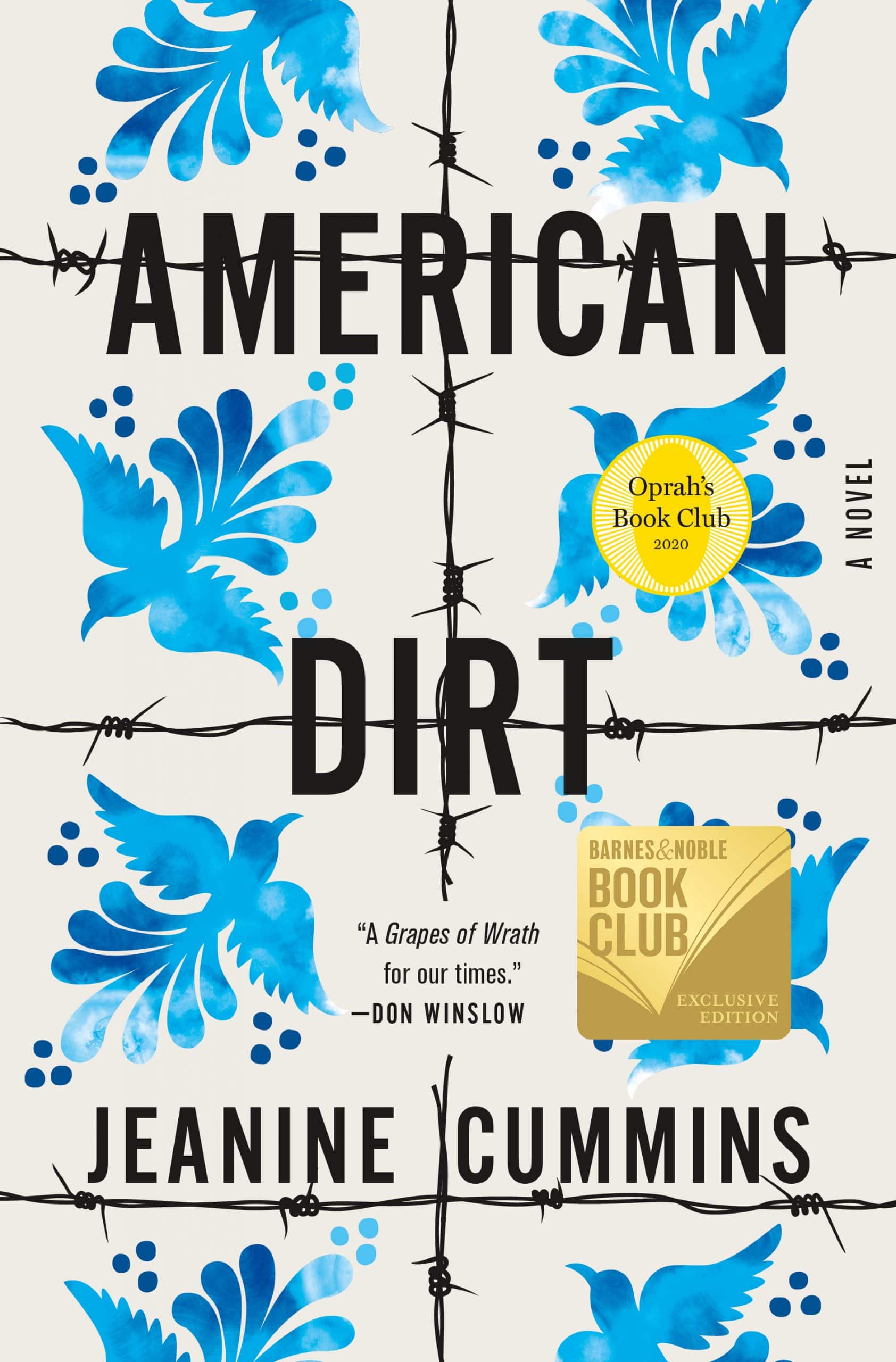
This may not be a popular stance to take, but American Dirt by Jeanine Cummins doesn’t deserve all the negative hype surrounding its publication. Primarily, she’s accused of misappropriating the migrant stories of those from Mexico, Guatemala, El Salvador and Honduras because she isn’t Latina.
Not all stories about the Holocaust are written by those with a direct or indirect connection. That’s the beauty of imagination: it shouldn’t have limits.
Granted, Cummins’ novel isn’t perfect due to predictability, extraneous characters and the perceived need to translate Spanish words and phrases. Nonetheless, it’s a riveting story that’s difficult to put down and stop thinking about.
In her author’s notes/acknowledgements, Cummins describes the extent of her research, which is impressive. The narrative’s power lies in the truth of the ordeal her characters endure seeking a better life in el norte.
Sixteen members of Lydia’s family are killed by a cartel at her niece’s quiceanera. Lydia and her eight-year-old son are the sole survivors and know they need to run or face a similar end. The story’s rapid pace rarely slows down as mother and son attempt to elude the cartel first by bus to Mexico City where they discover it’s impossible for them to board a plane, then by train but not as comfortable passengers. Instead, they join other migrants trying to reach the United States and risk their lives by riding atop the railroad cars.
Their journey is fraught with obvious danger, surprise friendships, palpable fear, and self-discovery. It’s worth reading.
American Dirt
Four-and-a-half Bookmarks
Flatiron Books, 2020
383 pages





 The Blue Page Special