Archive for the ‘families’ Tag
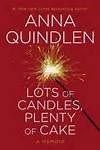
Anna Quindlen’s Lots of Candles, Plenty of Cake is a poignant, yet cheerful perspective on getting older. This is the kind of book to share with friends, particularly if they’re around the age of what is now considered to be the new-40s.
As in most of her writing, Quindlen relies on personal experience to make her points. Her writing career includes several stints as a columnist (at the New York Times and later Newsweek) as well as authoring several works of fiction, nonfiction and children’s books. She has a keen sense of observation. Better still, she’s an extraordinary wordsmith. Those two skills result in crafting pieces readers can easily make connections with. Of control, she writes: “I thought I had a handle on my future. But the future, it turns out, is not a tote bag.”
Quindlen examines the important aspects of life, which can be applied to most people, women in particular: friendship, family, love, parenting, and more. She’s humorous and honest. She writes of near-misses, both good and bad. She reflects on how much her younger self was sure she knew and how her older self readily acknowledges what she doesn’t. Without citing the tired phrase that youth is squandered on the young, it’s a major thread. Quindlen puts a new spin on it.
Yes, this is a memoir, but it is much more. It’s a guidebook to accepting that each morning we wake up is a gift – even if we’re older than we were the day before.
Lots of Candles, Plenty of Cake
Four Bookmarks
Random House 2012
182 pages
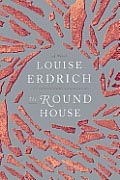
I’ve read a few books by Louise Erdrich, but none has captivated me as much as The Round House. I was hooked from the opening sentence, which in retrospect isn’t much: “Small trees had attacked my parents’ house at the foundation.” Yet, this simple statement reveals much about the narrator whose life is shaken at its roots by a violent crime against his family.
Thirteen-year-old Joe Coutts lives on a reservation in North Dakota. On an ordinary Sunday afternoon, his life is changed forever after his mother is brutally assaulted and refuses to reveal the identity of her attacker. Joe, his friends, and several family members do what they can to help each other heal, but at the core of that process is naming the man responsible.
Erdrich writes with a sense of determination, there is a need for this story to be told. The crime is complicated by the fact the location of the crime determines which law enforcement jurisdiction oversees the investigation: tribal police, state patrol or local police – entities not known for working together.
The story is full of wonderful characters, each richly developed, particularly Joe and his pals. Within the parameters of the novel are several sub-stories, Indian lore and personal histories, that strengthen those portrayed.
In her afterword, Erdrich notes, “1 in 3 Native women will be raped in her lifetime (and that figure is certainly higher as Native women often do not report rape).” This sobering statistic adds another dimension to an exceptionally well-crafted story.
The Round House
Four-and-a-half Bookmarks
Harper, 2012
321 pages

When I first picked up Faith by Jennifer Haigh, I almost immediately put it down. I was afraid it was going to further magnify the bull’s eye on the back on the Catholic church, which is already too easy a target for many. Yes, Haigh’s book is framed by the possibility of a priest molesting a young boy, but it’s much more than that. It is, indeed, about faith in its many manifestations: belief, conviction, trust, reliance and loyalty.
Old school Catholics, priests, families and perceptions are all deftly portrayed by Haigh as she tells the story of Father Art Breen, a quiet, unassuming parish priest whose primary vice is that he smokes like a steam engine. Father Art’s story is told through his sister’s eyes. Sheila begins with her step-brother’s progression through school, details his seminary years, his parish assignments and how he came to be accused of molesting a second-grader. Sheila also shares details about her family background: her mother who is a staunch Catholic unable to find fault with her church; her younger brother, Mike, who immediately believes Art is guilty; and her own conflicted thoughts as she discovers she is unsure who and what to believe.
The setting is Boston in the spring of 2002, just as the news of numerous molestation cases begin to emerge. The reader is asked to consider Art’s innocence or guilt just as his family struggles with this question. It seems so unlikely, and that is exactly what makes the possibility real.
Faith
Four Bookmarks
Harper, 2011
318 pages

Beautiful Ruins is a cinematic novel. It’s easy to imagine this story playing on the silver screen. It spans years and continents, relies heavily on the relationship between Elizabeth Taylor and Richard Burton, and features a strong connection to the movie industry. At its core, this is a love story, and a beautiful one at that.
Jess Walter’s tale involves a young actress, Dee, who arrives in an isolated Italian fishing village on the Ligurian Sea, where she meets Pasquale the owner of the Adequate View Hotel. Dee has been sent from Rome, where she had a bit part in the filming of Cleopatra. Dee is also pregnant with Burton’s child. Although it may sound like a blurb from People magazine, Walter imbues his narrative with deep feelings, humor, interesting characters and a clear passion for romance.
However, just when it seems the story will settle in the fishing village (the most interesting place) or even Los Angeles (because of the Hollywood scene), several miscellaneous locales are introduced: Seattle, London, Spokane, Florence, even Donner Pass in Northern California. Walter includes an assortment of characters, none of whom, surprisingly, are superfluous. Added, to this mix are different time periods: the early 1960s, the 1800s, and something more contemporary. The myriad of people, places and eras at first seems disparate, but they actually are essential what makes this such an engaging work.
Ruins are most often associated with architecture. Here Walter incorporates them into the erosion, but not extinction, of human emotions.
Beautiful Ruins
Four Bookmarks
Harper, 2012
337 pages
I took last week off; I read, I hiked, I ate too much, I slept some, I wrote a bit, but mostly I decided to take a break from the Blue Page Special. In the process, I discovered that I missed it.

I just finished reading Tell the Wolves I’m Home by Carol Rifka Brunt and can’t stop thinking about it. Although the writing doesn’t fall into the take-your-breath-away category, the story certainly does. I still want to spend time with the characters: June, a 14-year-old misfit; Greta, her super-achieving sister; Finn, their deceased uncle; and Toby, Finn’s lover.
June is devastated when Finn, her best friend, dies of AIDS. She struggles, then Toby enters her life, and she continues to flounder. Except now she has someone to help her keep Finn’s memory alive. Toby and Finn lived together and, even though she spent a lot of time in their apartment, June never knew about Toby. This aspect has the potential to be implausible; instead, it enhances June’s character as a naïve teenager. Another potentially hard-to-believe feature is the bond that develops between the young girl and the thirty-something Toby. Remarkably, there is never anything creepy or uncomfortable about it. This is largely due to their love for Finn, and the tentative manner in which their friendship evolves. Equally important is the sisters’ relationship.
Brunt masterfully creates relationships that are rich, painful, and grow before our very eyes. The novel is about friendship, first loves, misplaced jealousy and sibling relationships. Set in the mid 1980s, AIDS has just begun to make itself felt in American culture. Yet, that is simply a background element. This is a coming-of-age story that considers the way people change based on age, interests, opportunities, and circumstances.
Tell the Wolves I’m Home
Four-and-a-half Bookmarks
The Dial Press, 2012
355 pages

When our boys were little, and not so little, we read to them. Often, that wasn’t enough for our middle son, Tim, who insisted on a special story as he was tucked into bed each night. These were the Tim Stories, and each one always began the same way: Once upon a time there was a little boy named Tim whose parents loved him very much…
I don’t remember when the Tim Stories stopped, but the reading aloud continued for many, many years. We read at night. We read in the car on road trips. We read on camping trips, in tents when it rained or by the campfire with the help of a flashlight when it was clear. We read series written by C.S. Lewis, Lemony Snicket and J.K. Rowlands. Heck, we had a book we read during dinner for a while. It was a fun one about manners (Do I have to Say Hello by Delia Ephron). We read a lot out loud.
Reading has always been hard for Tim. Although he struggled with it in school, he developed some great strategies. He is an excellent listener, he discovered books on tape, and he learned to ask questions for clarification, for help. He studied with tutors. He worked more than his brothers, harder than his friends or anyone else around.
This week Tim graduates from college — early. And, he still knows a good story when he hears one: Once upon a time there was a young man named Tim whose parents love him very much…
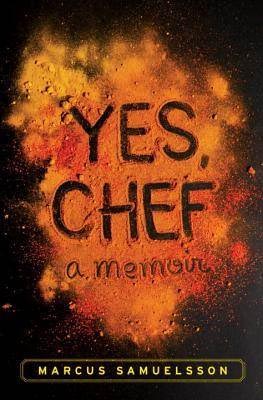
I know a few local chefs by name; I know a lot about others from different places, thanks to the books they write – and the Food Network or Bravo. The latter is where Marcus Samuelsson’s name surfaced on my radar. His memoir, Yes, Chef, provides a detailed, honest look at how he emerged onto the contemporary food scene.
Samuelsson begins his story with a powerful sentence that has nothing to do with food, but everything to do with who he is: “I have never seen a picture of my mother.” He shares how he and his sister made their way from Ethiopia to Goteborg (Gothenburg), Sweden, where they were adopted by Lennart and Anne Marie Samuelsson. He learned to cook by watching his grandmother. He learned technique by apprenticing in Switzerland, France and the United States.
As much as the memoir is about his progression through various kitchens, Yes, Chef is also about finding passion, experiencing prejudice and learning how these disparate aspects can be powerful motivators. Samuelsson reveals his flaws, his quirks as well as his strengths in a straightforward voice.
Ethiopian by birth, Swedish through adoption, and now a naturalized U.S. citizen, Samuelsson might seem an unlikely poster boy in the food world. Yet, it is his internationality that makes him so appealing. His quest as a chef, as he says, was to “chase flavors.” So far, it appears to be quite a pursuit.
Yes, Chef
Three-and-a-half Bookmarks
Random House, 2012
315 pages

Often, stories within stories are enchanting, muddled, lopsided or boring. Fortunately, Winter Garden by Kristin Hannah is captivating without any confusion. One narrative is not more interesting than the other; both have equal appeal.
Much of what makes Hannah’s novel so successful is the clever way in which her characters evolve. Sisters Meredith and Nina are grown women who have always basked in the light of their father’s love. Meredith is the older sister, pragmatic and harried; Nina lives the adventurous life of a freelance photographer. Theirs is not a close a relationship. If not for Evan, their father, there would be little for anyone in the family to hold dear.
Unlike Evan, their mother is a cold, distant woman incapable of showing or articulating affection. This could be a black and white story, but Hannah has enough sense, and talent, to show the nuances. A secret past, painful memories and the harsh reality of war culminate in a fairy tale the sisters’ mother is ultimately compelled to tell. The story moves from the idyllic, contemporary life on the family’s apple orchard to cold, war-torn Russia. Like any good fairy tale, this one begins with a handsome prince, an evil overseer, and a young girl who falls in love.
As the fairy tale evolves, it’s clear this the only way the mother can explain herself and for her daughters to recognize their own strengths, weaknesses and connections. There’s nothing jumbled in either side of Hannah’s engaging account.
Winter Garden
Four Bookmarks
St. Martin’s Griffin, 2010
391 pages

Shilpi Somaya Gowda’s first novel, Secret Daughter, is about families – especially mother-daughter relationships. Two women, one unable to have a child and the other unable to keep hers, are the primary focus – along with Asha, the daughter given up by one and adopted by the other.
Somer, a pediatrician in the San Francisco Bay area is married to Kris, a surgeon originally from Mumbai. Across the world in an Indian village, Kavita gives birth to a daughter she knows her husband does not want, and will not let her keep. Although the women never meet their lives are unwittingly bound when Kavita leaves her child at an orphanage. Through a series of coincidences that often only occur in fiction, the girl, Asha, is adopted by Somer and Kris.
Gowda’s narrative moves from the Bay Area to Mumbai, as it shifts from one woman’s perspective to the other, before, thankfully, settling on Asha. Somer‘s character is whiney and distant; Kavita is mostly sad and compliant. Despite environment and genetics working against her, Asha grows up to be an intelligent, inquisitive young woman. That’s not to say, she is flawless. At her worse, as a teenager, she is rude and insensitive; at her best, as a college student interning at a Mumbai newspaper, she is empathetic and appreciative. Of course, it takes time for the latter qualities to evolve.
Gowda’s writing is strongest describing the contrasts between India’s wealthy and the destitute. The colors, sights, and smells are vivid – even when the reader might prefer otherwise.
Secret Daughter
Three Bookmarks
William Morrow, 2010
339 pages

The title alone, Cocktail Hour Under the Tree of Forgetfulness, is sufficient to lure the imagination, and Alexandra Fuller’s colorful, poignant memoir of her mother is enough to keep it willingly ensnared. This is a sequel to Fuller’s Don’t Let’s Go to the Dogs Tonight: An African Childhood, which I did not read. But then I didn’t read Cocktail Hour either. Instead, I listened to it.
Conditions have to be just right for me to turn to an audiobook. Usually, it means a road trip, but in this case I wasn’t going anywhere. In fact, I was stuck painting the downstairs bathroom.
Fuller’s mother, “Nicola Fuller of Central Africa,” is a character full of flaws, passion and imagination. The author makes it clear it was not easy being her daughter. Nicola is exuberant to the point of embarrassment of all around her. While Fuller does not hold back in detailing her mother’s domineering persona, neither does she waffle in showing the occasional moments Nicola allowed an approachable, sensitive side to appear. This is not a daughter-as-victim tell all memoir. It is a daughter recognizing who she is thanks to, and in spite of, her mother.
One of the joys of listening to this, rather than having read the book is that Nicola loves to sing. Like Nicola Fuller of Central Africa, the narrator breaks into song. Sure, I can imagine a tune in my head as I read, but here it was treat hearing this aspect of Nicola’s personality.
Cocktail Hour Under the Tree of Forgetfulness
Four Stars
Alexandra Fuller
Recorded Books, LLC, 2011