Archive for the ‘England’ Tag
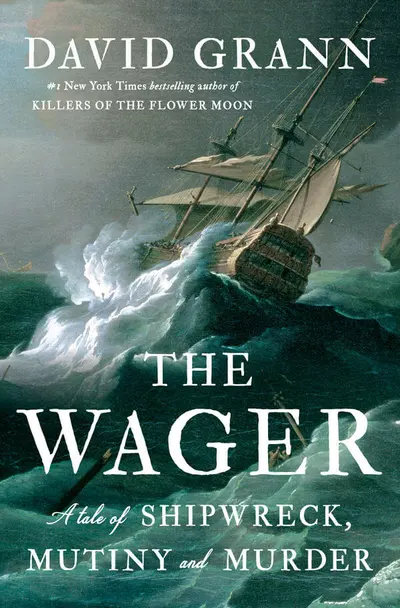
A detailed narrative about a British warship in the 1700s might not sound like the most gripping read. However, David Grann has crafted a compelling story about the power of the sea, the determination to survive and an unexpected outcome.
Relying on journal entries from several men aboard the HMS Wager, Grann provides different perspectives of what occurred. The Wager was part of a fleet on a secret mission during the Britain’s War with Spain.
However, before the ships ever left port, a shortage of crewmen and illness delayed the ability to set sail. This foretells of an ominous outcome.
Unrelenting storms and conditions while making the passage around Cape Horn, scurvy, loss of life, a tyrannical captain and separation from the rest of the fleet are just the beginning of the misfortunes, including the shipwreck. The survivors land on a desolate, mountainous island they name after their lost vessel.
The journals bring the seamen to life and the existence of their writings address the question of who survives, so no spoiler alert is needed. What’s intriguing is how long they endured the harsh conditions, the steps taken to leave the island, the factions established by those efforts and, perhaps most captivating is what happens once the men do return to England (and not all arrive together).
The publication of several conflicting accounts of what occurred resulted in charges and countercharges thus leading to a court martial. Its outcome is as surprising as the sailors’ impressive ability to survive.
The Wager: A tale of Shipwreck, Mutiny and Murder
Four Bookmarks
Doubleday, 2023
329 pages, includes notes, bibliography, index and list of illustrations
The disgraced, humiliated M-15 spies in London’s Slough House are as disgruntled as ever. Yet, each has aspirations of returning to action – if only given a chance.
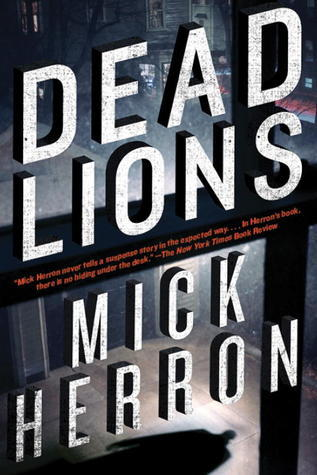
In Dead Lions, Mick Herron adds two new characters to Slough House, the rundown offices far from M-15’s sleek command center, while continuing to reveal more about those introduced in Slow Horses. This time the chance for redemption comes in the form of a one-time, low-level Cold War spy found dead of a heart attack.
Jackson Lamb, the slovenly, sharp-tongued superior of Slough House, suspects the death wasn’t accidental and begins an off-the-record investigation. He’s still supposed to report to M-15 headquarters, but resolutely follows his own rules.
Perhaps the most ardent in his determination to redeem himself is River Cartwright. He goes undercover in an English village after convincing Lamb to include him in the investigation.
Meanwhile, River’s colleagues Min Guy and Louisa Guy are approached by Spider Webb. He’s an M-15 underling with ambitions of making a name for himself by recruiting a Russian businessman to spy for the agency. Also off the record, Webb wants the pair to “babysit” the Russian before making his pitch.
Herron combines humor with intrigue. Like River, Min and Louisa believe these opportunities mean it won’t be long before they’re back in the agency’s good graces. Lamb’s motivation is driven by a need to understand why something occurred, especially if there’s a possibility of a national threat. Otherwise, he’s satisfied with things just as they are at Slough House.
Dead Lions
Four Bookmarks
Soho Press, 2013
347 pages
In Nick Herron’s Slow Horses, Slough House is where disgraced and shunned Great Britain’s MI5 agents are sent on the theory it’s where they can do no further harm.
Jackson Lamb is in charge of the has-beens who’ve been relegated to his watch for various security infringements. These include, among others, alcoholism; misplaced classified documents and misidentifying a terrorist in a training exercise. Besides being crude and disdainful, Lamb has his own reasons for being at Slough House.
Mostly, the disgraced agents do nothing but while away the hours. River Cartwright, whose task is to transcribe phone conversations, resents being among the misfits. He’s anxious to return to the spy game. He’s also the one accused of botching the training drill.
When a young man of Pakistani descent is abducted and his captors threaten to live broadcast his beheading, River sees an opportunity to restore his reputation.
A discredited journalist, an addition to the Slough House team and River’s family history contribute to the fast-paced narrative. At the risk of providing a spoiler, high level corruption is an evolving factor.
Different viewpoints are provided, as are brief histories of some of the other “slow horses.” That of the kidnap victim is compelling. He’s a British citizen with no ties to any radical groups. Yet, his racist abductors think otherwise.
Slow Horses is the first in a series by Herron, an award-winning crime writer. A television production of the same name closely follows the book, but lacks its character detail.
Slow horses
Four Bookmarks
Soho Crime, 2010
329 pages
The Dictionary of Lost Words by Pip Williams is an engaging novel about how the complete edition of the Oxford English Dictionary came to be. In addition to its development, perhaps more importantly, it addresses women’s roles in the achievement.
Along with the words that make it into the initial version is the vocabulary that the mostly male lexicographers overlooked – either by design or ignorance. Here’s where narrator Esme comes in. As a young child she spent most of her time under the table where her widowed father and his colleagues collected words for inclusion in the dictionary.
When not in the “Scriptorium,” Esme is in the nearby home of James Murray where housemaid Lizzie cares for the young girl. Despite class differences, theirs is a relationship that endures as Esme grows up and begins her own collection of words. She starts with some discarded by the men and later adds the vernacular of working class women she discovers with Lizzie’s help.
Williams’s novel is inspired by true events, but isn’t just historical. The story is brought to life by the vivid personalities of the main characters, but also lesser, nonetheless equally important, ones. While the dictionary is being compiled (a decades-long endeavor), the arduous battle of the women’s suffrage movement is underway (another lengthy process). The backdrop of societal mores, the Great War and personal relationships imbues the work with emotion.
Words and their meanings are significant but their power is reflected in how they’re used and by whom.
The Dictionary of Lost Words
Four Bookmarks
Ballentine Books, 2021
388 pages (includes epilogue, author’s notes, timeline and book group discussion questions)
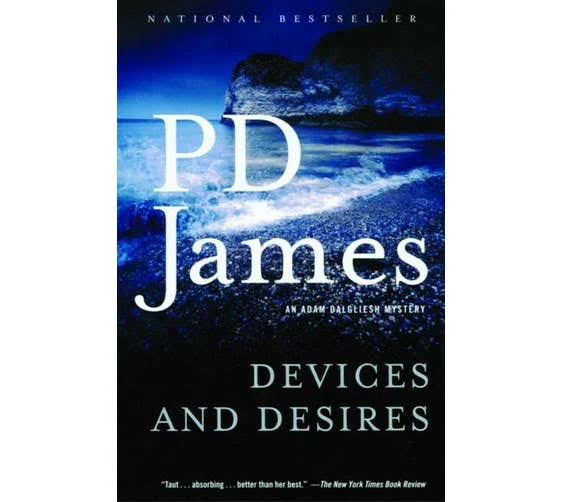
Even when detectives go on vacation, there’s always a crime scene nearby. What sets Devices and Desires by P.D. James apart from the pack is that Scotland Yard Commander Adam Dalgleish isn’t the one to solve it – at least not overtly.
Dalgleish has inherited his deceased aunt’s house, a converted lighthouse, on England’s Northern coast near a nuclear power plant. He leaves London to work on the house and to consider what to do with it.
A serial killer is on the loose in Norfolk, which keeps tensions taut. Known as “The Whistler”, the killer’s prey are young women. Yet, this is only one of the numerous threads running through the novel. The local authorities acknowledge Dalgliesh’s presence, but are determined to the find the culprit on their own. His eventual involvement is part of the mystery.
Chapters are brief, only one to four pages, and the story covers the period of a few weeks: September 15 to October 6.
The landscape descriptions are vivid, as are the townspeople’s quirks. Dalgliesh figures into many of James’ novels. Here he has just published his second book of poetry, which is less cause for celebration than might be expected. There’s an underlying cynicism regarding this accomplishment by many Dalgliesh comes into contact with.
Other themes include illicit liaisons and the dangers of atomic energy. The large number of characters also weighs down the narrative. Although some are intelligent and interesting, the problem is that there are too many to keep track of.
Devices and Desires
Three bookmarks
Warner Books, 1989
466 pages
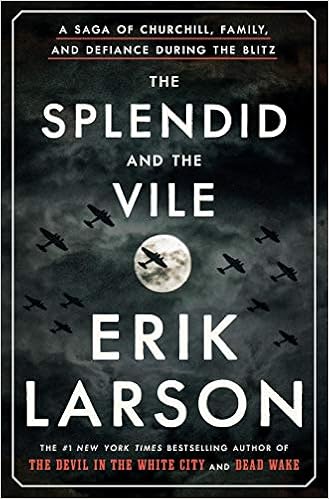
Erik Larson’s 500+ page look at Winston Churchill’s first year as prime minister in The Splendid and The Vile is, no surprise, exhaustive. The author did his homework. Focusing on the time frame of May 10, 1940, to May 10, 1941, is smart. After all, much has already been written about the man who instilled hope in a daunting time.
The work is subtitled “A Saga of Churchill, Family and Defiance During the Blitz.” Of the three, the sections about members of the family and those who worked closely with the prime minister are the most interesting – especially about his younger daughter, Mary; his daughter-in-law, Pamela; and one of his private secretaries, John “Jock” Colville.
Although there’s little interaction between Mary and her father during this time frame, as Larson chronicles. Yet, her love for her father and her realization of the changes facing her comfortable, upper class lifestyle are compelling as told through excerpts of her diary; she turned 18 in September 1940.
From the beginning, Churchill knew U.S. involvement was necessary for Germany to lose the war. His efforts to maintain calm in his country, while appealing to Franklin Roosevelt for assistance and enduring the devastation of London being bombed is well documented.
Interspersed with accounts from and/or about colleagues and family are brief sections about Hitler and his cohorts in Germany. Perhaps photos are all that’s missing. History buffs and anyone concerned about history repeating itself more than it already has should find this book of interest.
The Splendid and the Vile
Four Bookmarks
Crown, 2020
585 pages, includes sources, acknowledgments and index
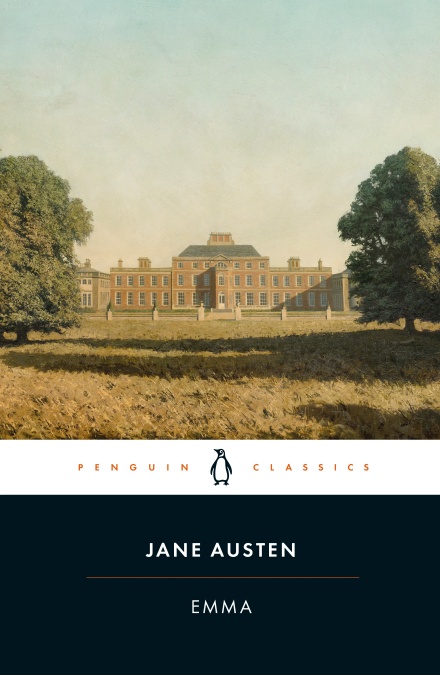
Late last year, a friend and I decided to reread Emma before seeing the most recent film version. We met twice to talk about it shortly after the movie was released, but hadn’t had a chance to see it once theatres closed in March. We’re optimistic about seeing it together – perhaps along with one of my daughters-in-law.
Among the beauties of a Jane Austen novel is the ease and comfort that accompanies revisiting it. It had been years since I’d last read Emma. The depth of the characters – or in Emma’s case her shallowness – along with the descriptive sense of place — made it fun to revisit.
Yes, Emma is intelligent, wealthy and beautiful. She’s also selfish, but has a kind heart. Thankfully, she has Mr. Knightly to try to open her eyes beyond the estate where she lives with her father. Mr. Woodhouse is a distressed man worrying about his health and attempting to project his mindset on others. Emma patiently caters to him.
Although the plot involving a free-thinking, independent young woman with friends representing different social stations and various degrees of romance/matchmaking/unrequited love is familiar to Austen fans, Emma is simply an enjoyable read. The 1995 film entitled Clueless is the perfect description of Emma. She is unable to correctly assess situations when it comes to relationships, whether for others or herself.
Yet, Austen ensures that Emma is an endearing character because her efforts to play a role in the happiness of others are sincere, even if misguided.
Emma
Five Bookmarks
Penguin Classics, 1996 (first published in 1815)
476 pages (includes Introduction, Chronology, Further Reading)

I thought I had Ruth Ware’s The Death of Mrs. Westaway figured out about halfway through. I was close, but close doesn’t count when murder and deceit are involved.
Ware masterfully creates a sympathetic main character in Harriet “Hal” Westaway, a 21-year-old plagued by debt and loneliness with no known relatives. That is, until a letter arrives naming her as a beneficiary in the will of someone identified as her grandmother. Hal knows this isn’t possible but schemes to learn more, even going so far as to concoct a plan to gain some portion of the will by misrepresenting herself. She makes her living as a tarot card reader who has learned how to tell people what they want to hear based on what they reveal about themselves. Hal is certain she can use the same approach with the Westaway family.
Of course, Hal is not the only one keeping secrets. Much of the fun lies in trying to determine the evil player among the deceased’s other living relatives. It’s clear Mrs. Westaway, the grandmother, was not a loving mother and her grown sons, Hal’s uncles, claim they want nothing to do with anything from her will. That is until it’s revealed that Hal is to inherit the bulk.
A short-tempered, intimidating housekeeper and methodically revealed truths add to Hal’s distress.
It’s hard to go wrong with vivid descriptions of the cold, wet landscape surrounding the dark, old mansion. Thus, Ware sets the scene for an engaging mystery.
The Death of Mrs. Westaway
Four Bookmarks
Scott Press, 2018
368 pages

Active imaginations, fear of the unknown, religion, science and a bit of romance are among the themes in Sarah Perry’s epic novel, The Essex Serpent.
The setting is 1893 England. Cora Seaborne is introduced as a soon-to-be well-off widow. Her marriage is an unhappy one, so her husband’s death, which occurs within the first chapter, is not unwelcome. Her husband’s physician is enchanted with Cora, so is her friend/companion, Martha. Her son Francis is less enamored. These characters, and several others integral to the narrative, are well-developed as passionate, intelligent and flawed.
Cora, Martha and Francis travel to Essex where there are long-standing rumors of an unseen, but terrifying creature lurking near a small coastal town. The idea of documenting its presence appeals to Cora. Her friendship with Will, the local pastor, and his wife provide friendship.it’s clear there is the potential for something more than platonic between Cora and Will, this is an attraction of minds. He is certain the panic stirred by the unseen, unnamed creature reflects a lack of faith among his parishioners. She, on the other hand, is intrigued by the idea of discovering, perhaps, a new species.
Cora is aware of the feelings held by her late husband’s doctor, yet she does little to discourage his interest. When she beckons, he appears. Generally, the women are portrayed as strong-minded and intelligent, while several of the men are satisfied simply being in their presence.
Despite the dark setting, Perry injects humor and light moments.
The Essex Serpent
Four Bookmarks
Custom House, 2016
418 pages

Not all mysteries are thrillers; I like those that make me want to sleep with the light on – lots of lights. I expected to be kept awake by Ruth Ware’s The Woman in Cabin 10. I wasn’t. I enjoyed it as a mystery, but it fell short as a thriller.
The story is intriguing enough: a small group of passengers aboard a boutique luxury cruise liner bound from England to Norway’s fjords. The 10-cabin ship is owned by an exceptionally wealthy man who has invited a few friends and members of the media for the maiden voyage. Part of the problem is the main character: Laura “Lo” Blacklock, a travel magazine low-level journalist who lucked into the assignment. Ware doesn’t imbue Lo with many attributes that evoke much empathy or interest.
The mystery begins when, after drinking too much on the first night of the cruise, Lo is convinced that the woman in the cabin next door (#10) was thrown overboard. It’s the same woman who had earlier lent mascara to Lo. The problem is, according to the ship’s manifest, the cabin is unoccupied.
Lo knows the woman existed; she had proof. The narrative follows her efforts to determine what became of the woman in the face of incredulity from others. In this, Ware is successful. However, the lack of intensity as Lo strives to prove the reality of what she saw, keeps the novel from reaching the level of thriller. It was easy enough to turn off the lights.
The Woman in Cabin 10
3.5 Bookmarks
Scout Press, 2017
340 pages




 The Blue Page Special