Archive for the ‘depression’ Tag
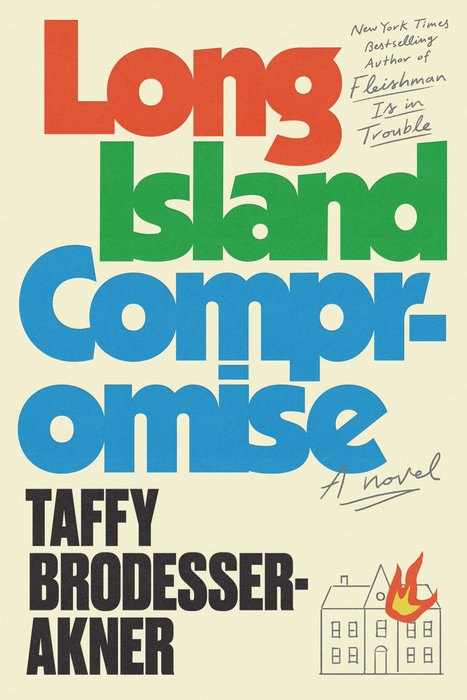
It’s 1980 when Carl Fletcher, the owner of his family’s Styrofoam manufacturing plant, is kidnapped from the driveway of his home In Middle Rock, a wealthy, mostly Jewish, Long Island community. Thus begins Taffy Brodesser-Akner’s novel Long Island Compromise.
There’s certainly intrigue regarding the kidnapping, but it’s not much of a spoiler to note that after his harrowing experience, Carl is ultimately reunited with his pregnant wife, Ruth, six-year-old son Nathan and four-year-old Bernard (later known as Beamer). Carl’s mother, Phyllis, insists the family move onto her estate with the intent that all will be safer.
The family’s affluence has its roots in Phyllis’s late husband, who escaped from Nazi-occupied Poland with a formula for plastics, founded the factory.
Although Jenny, is born soon after her father’s kidnapping, she and her brothers are forever marked by their father’s ordeal and the wealth of their upbringing. For the rest of their lives Ruth and Phyllis go to extremes to protect Carl who remains traumatized.
The novel is loosely based on a true story, but the characters are composites of stereotypes with personality twists. They’re interesting, amusing, pathetic and occasionally surprising, often predictable – sometimes in the same breath (or sentences as the case may be).
The Fletchers’ tale spans four decades with narration changes as each family member’s personal story is portrayed. There are contemporary issues such as drug abuse, mental health issues, financial concerns and familial turmoil. Yet, Brodesser-Akner’s writing is rich with an abundance of humor, irony and empathy.
Long Island Compromise
Four Bookmarks
Random House, 2024
444 pages
Lorrie Moore has multiple threads in her novel I Am Homeless If This Is Not My Home, some are easier to digest than others. First, there are letters from a woman to her dead sister written shortly after Abraham Lincoln’s assassination. The main plot, though, follows Finn, a middle-aged man fumbling through life.
Finn and Lily have ended a long relationship. She worked as a clown therapist; that is, a therapist dressed as a clown) with a history of threatening suicide. He’s suspended from his teaching job because of his attitude issues. After receiving a call about Lily’s latest attempt, he leaves his brother’s deathbed and drives through the night to be with her.
Here’s where things get strange. Lily is, in fact, dead, but her remains were not placed where she wanted them to be, so she and Finn take a road trip to her desired final resting spot.
Despite the bizarre turn off events, or maybe because of them, Moore’s writing is imbued with humor, poetic phrasing and sharp wit. Her descriptive language is vivid. Interspersed with the road trip are other letters from the woman to her dead sister.
Finn is still in love with Lily and as they make their way from one cemetery to another, her body continues to slowly decay. When Finn needs to stop to rest, they land at an old inn that is almost as decrepit as Lily. The inn is significant, but I’ll avoid a spoiler here.
I Am Homeless If This Is Not My Home
Three-and-a-half bookmarks
Random House, 2023
193 pages

Emily Nunn knows food. She wrote about it as a staff writer for The New Yorker and Chicago Tribune, among other publications. She also knows heartbreak and self-damaging behavior, which she shares in The Comfort Food Diaries.
A description of her seemingly-ideal life in Chicago where she lives with her boyfriend, dubbed “the engineer” and his lovely daughter, “the princess,” fades quickly. After Nunn learns that her brother has committed suicide she begins her own self-destructive tailspin through alcoholism and ending the romantic relationship.
Nunn reveals her backstory as she seeks to find balance in her life. The loss of her brother, her parents’ dysfunctional marriage – and ultimate divorce – her relationship with other siblings, relatives and friends fill the pages. At the suggestion of a friend, she embarks on a “comfort food tour.”
The direction of this tour is different than what I anticipated. Rather than a road trip around different parts of the country in search of consolation fare, Nunn sojourns to the places of her past and the role of food in her past and present. This isn’t a one-food-fits-all look at comfort, it is only about Nunn and her perceptions.
My family, for example, has dishes deemed “classics” in lieu of comfort foods. Not because they are universal, instead because they’re unique to us. Nunn, with her family and friends, has her own.
In addition to narrating her quest, Nunn shares recipes with her memories and new experiences. Her writing style is conversational and honest. She also knows how to whet the appetite.
The Comfort Food Diaries: My Quest for the Perfect Dish to Mend a Broken Heart
Three-and-a-half Bookmarks
Atria Books, 2017
310 pages


 The Blue Page Special