Archive for the ‘books’ Tag

Thanks WordPress for letting me know this is our third anniversary. I don’t have a book or restaurant to review right now, but I did make my 275th post earlier this week.
The traditional gift to commemorate three years is leather. Hhmmm. Sounds like I need to get a book to celebrate!
Thanks WordPress, but more importantly, thank you readers! It’s nice to know I have followers who aren’t related to me, although I am very grateful to those who are for being so consistent in your love and support. I’ll keep writing and I hope you’ll keep reading. Here’s to three more — at least!

The Storied Life of A.J. Fikry by Gabrielle Zevin is the literary equivalent of a triple chocolate dessert. It’s rich, nuanced and meant for those who love chocolate, or in this case, books.
A.J. is an ill-tempered man running a bookstore on an Atlantic coastal island. The store does a brisk summer tourist business. Otherwise it’s a slow, quiet livelihood for A.J., whose wife has been dead for almost two years. But, he’s not old. He’s not even middle-aged. He is, however, a snob, particularly when it comes to literature, and he’s set in his ways, such as they are, as a lonely and often rude man.
Parts of this novel are entirely predictable, but in all the right spots. A.J. meets someone, actually three someones, who change his life: Amy, a publisher’s sales rep; Lambiase, the local police chief; and Maya, the two-year-old child abandoned in his shop. Despite some unsurprising turns, Zevin writes with humor and poignancy. She also displays a knowledge of books.
The relationships also allow A.J. to accept the greater world around him, for better and worse. It helps that the three persons who share his life are book nerds. Lambiase, who is only ever referred to by his last name, is the last to jump on board as a reader. His evolution from a by-the-rules cop is fun and warm. It’s A.J.’s connections to Amy and Maya that resonate the loudest through their shared passion for pages that need to be turned by hand.
The Storied Life of A.J. Fikry
Four-and-a-half Bookmarks
Algonquin Books, 2014
260 pages

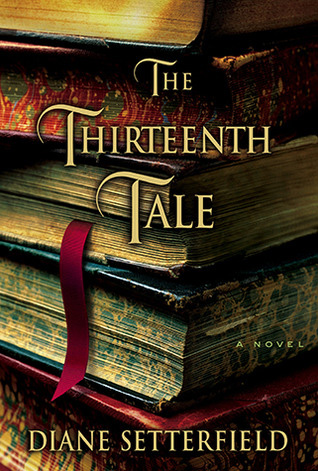
When I mentioned to a friend that I was reading Diane Setterfield’s The Thirteenth Tale, she was surprised it was new to me. It is, after all, a book for booklovers and a mystery, two aspects I find appealing. There is also a sense of the gothic, which typically doesn’t grab me. Yet, I had trouble putting the book down.
This story within a story is compelling on many levels. There’s Margaret Lea, a reclusive woman whose companions are the books in her father’s antiquarian bookshop. Although close to her father, her mother is distant, practically absent from family life. Margaret had a twin sister who died at birth, an event from which Mrs. Lea never recovered.
Margaret receives a letter from Vida Winter, considered one of Britain’s most prolific and beloved authors. Despite her popularity, Vida has creatively maintained her privacy. However, in poor health she summons Margaret to write her biography. In the process, dark secrets emerge.
Each character is transformed through the story telling. Margaret becomes softer as she learns about Vida’s mysterious and startling past. Vida, whose strength diminishes day by day also begins to demonstrate warmth and concern. The more Vida reveals about herself and her dysfunctional family (long before the term was coined), the more engrossing the tale becomes.
Vida tells about the twin sisters, Adeline and Emmaline, and just when the reader is certain to have determined who is who and what is what, Setterfield adds more ingredients into the tantalizing mix.
The Thirteenth Tale
Four Bookmarks
Washington Square Press, 2006
406 pages
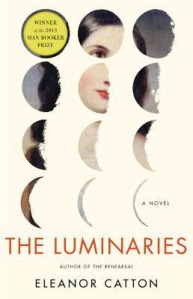
I’ve written once before about giving myself permission not to finish a book. I usually make the decision within the first 50 pages. I just stopped after 360 pages of Eleanor Catton’s 830 page tome, The Luminaries. The strange thing is, I will probably finish. Someday. Not now though; I have too many other books on my nightstand, and the library copy I’m reading is already overdue.
I can’t say it took me more than 300 pages to get into the 2013 Man Booker Prize winner, but it was no easy trek to make it that far, which is not even halfway.
The tale begins in January 1866 when Walter Moody arrives in a New Zealand mining town seeking his fortune. His first night in town finds him among 12 men ready to discuss a series of events to which they are all directly or tenuously connected. Catton pays meticulous attention to detail. Each character is exhaustively described from appearances, mannerisms, likes, dislikes, self-perceptions and reputation. Moody and company aren’t the novel’s only characters: a few women of mystery and ill-repute and several men who have either died or gone missing are also fastidiously introduced. Yet.
The relationships through business, friendship and happenstance actually do make for an interesting story. Hidden gold, lost fortunes, prejudices and the association of the characters is a maze. while easy to follow from one possible explanation only to be thwarted by another, is eventually, and finally, enthralling. I just hate to have library fines.
The Luminaries
Undecided on Bookmarks
Little, Brown and Co., 2013
360 pages of 830

I have a Twitter account, but don’t tweet. Reading Hatching Twitter: A True Story of Money, Power, Friendship, and Betrayal by Nick Bilton did nothing to encourage me to embrace this social media leviathan. I was curious about Bilton’s book because I teach an Internet Media class. Undeniably, Twitter has a huge role in how society communicates. Journalists around the world demonstrate its use as a significant tool to report news. I appreciate that. However, it’s disconcerting that stories, whether personal or professional, can be condensed to 140 characters or less.
Nonetheless, Bilton’s book, while not as objective as expected from a New York Times reporter, provides insight into Twitter’s short history. All of the major players and how they became part of the little blue bird’s universe are introduced. Although many others are featured, the focus is on the four identified as Twitter’s co-founders: Evan “Ev” Williams, Jack Dorsey, Christopher “Biz” Stone, and Noah Glass. Bilton is sympathetic in his account of Glass’s involvement, which was short lived. Williams and Stone are profiled in a positive light compared to Dorsey who’s mocked for his Steve Jobs-wanna-be approach and his alone-at-the-end-of-the-day consequences.
The manner in which the story’s told is appealing. Starting in 2010 with Williams about to announce his departure as Twitter’s CEO, Bilton then offers the true beginning in 1997. The account is similar to a mystery without the murder, but plenty of intrigue and backstabbing. The reader knows what’s going to happen, but not necessarily how.
Hatching Twitter: A True Story of Money, Power, Friendship, and Betrayal
Almost Four Bookmarks
Portfolio/Penguin, 2013
302 Pages

The blind date set up by the Pikes Peak Library District was okay. I might go out again with another Ray Bradbury book, but for now the novellas in Now and Forever are enough.
The stories blend a sense of otherworldliness with the familiar. First in Somewhere a Band is Playing, Bradbury plays with the themes of life and the afterlife. The story begins abruptly when a writer practically falls off a train near an isolated Arizona town. It’s beautifully described and seems an ideal place to live, at least until the writer begins to wonder what’s beneath the surface beauty. It’s an enjoyable story, but predictable. I was hoping for something other than a “Twilight Zone” twist.
In Leviathan ’99, Bradbury, by his own admission in the preface, has created a sci-fi version of Herman Melville’s Moby Dick, right down to the main character: Ishmael. Set in 2099, the beast is a big white comet pursued by a spaceship and its blind captain. It’s actually fun making the jump from being at sea to out in space. And, it’s not to be as big a leap as one might initially imagine.

It’s been years since I’ve read anything by Bradbury. Although I have long been intrigued by the titles of his numerous works, I am not a reader who’s made it through much of his literary oeuvre. I can certainly appreciate his imaginative approach and accessible tone, but the bottom line is that he’s not really my type.
Now and Forever
Three Bookmarks
HarperCollins, 2007
177 pages

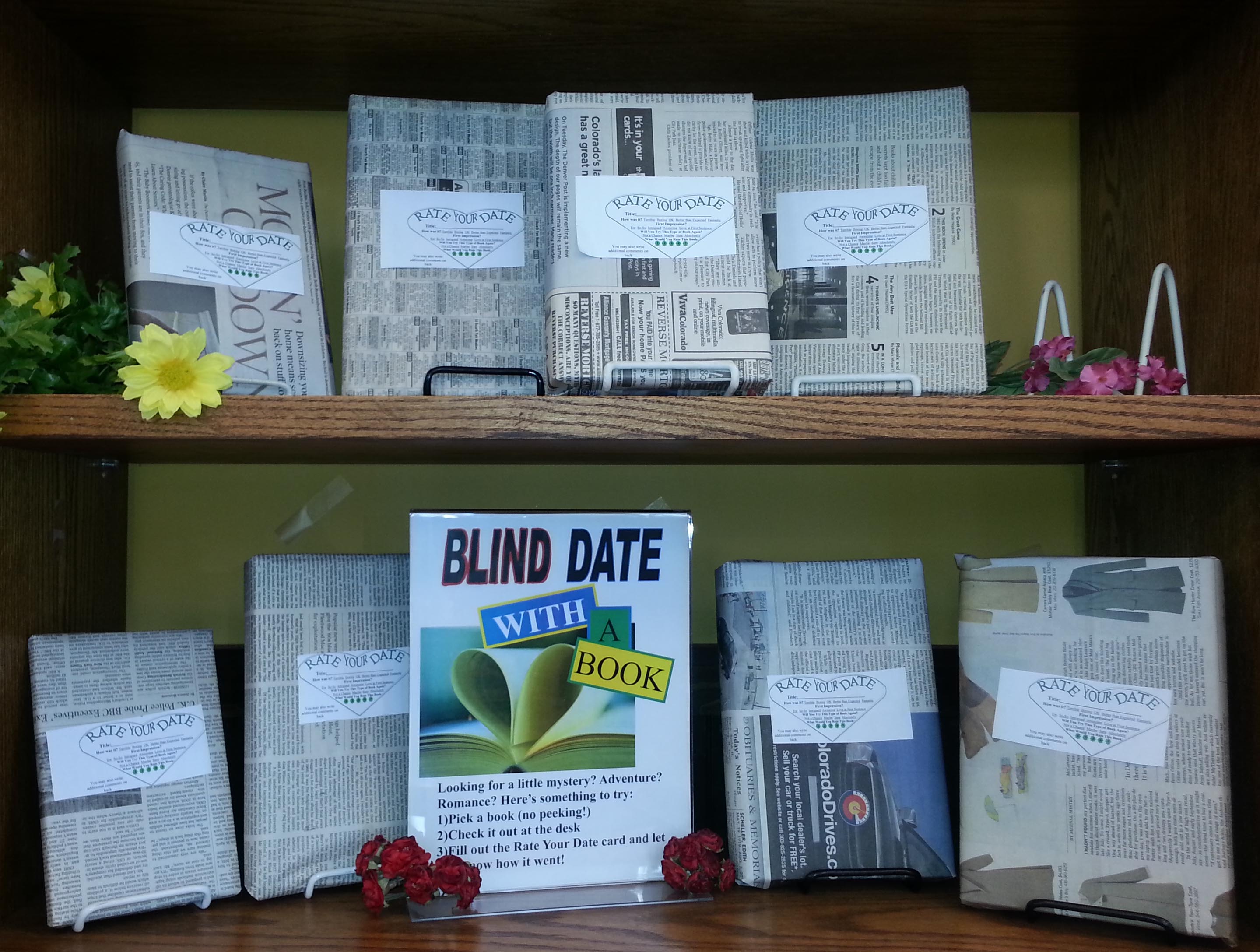
As I was leaving my neighborhood library, the Old Colorado City Branch of the Pikes Peak Library District, two shelves with books wrapped in newspaper caught my eye. They were near the backdoor in what seemed an out of the way location for a holiday display, although I realized it’s far too early to be in that mindset. Then I saw the sign: “Blind Date With A Book.”

The concept is to check out a wrapped book without knowing its title. I was intrigued. I picked up a couple of books/packages in much the same way I’d consider which gift to open first on my birthday or Christmas. Did I really want to commit to something I knew absolutely nothing about? What if it was one I’d already read? Yet, in a way, starting a book is very similar to a blind date anyway; there’s always a sense of the unknown, of possibilities and disappointments.
I considered another blind date. It’s how I met my husband, and that’s turned out very well. So, I decided to take my chances. I was paired with Now and Forever by Ray Bradbury. I haven’t read anything by Bradbury since my high school days, but this book contains two previously unpublished novellas: Somewhere a Band is Playing and Leviathian ’99.
I laughed when I opened book. It was dedicated to two women, which didn’t strike me as a very auspicious way to begin a date.
I’ll review the date, I mean, the novellas in a separate post.

Writers who pay to have their books published often go through the wringer when it comes to perceptions. Such efforts were once identified as vanity-pressed or self-published. Now the preferred term is indie, or independent, publishing. Some indies are poorly constructed, rife with grammatical errors and simply uninteresting; yet many are well-written including Summoning the Strength by Stephanie Briggs. She manages to avoid those most frequent missteps. In fact, she’s really only guilty of not calling on her own strengths, which are plentiful, when it comes to writing.
At 169 pages, Briggs’s novel is all-too brief to accommodate the numerous characters. The account follows Katherine, a small-town girl who endures a disastrous marriage to a wealthy man. She’s interesting and has an especially strong relationship with her mother, which unfortunately, just withers.
Katherine’s unhappiness is tangible because Briggs tells the story in retrospect. However, the explanation for the discontent is one-dimensional. The husband’s a jerk and Katherine’s an intelligent woman too blind to see the obvious.
One problem is the large number of long-lasting friendships Katherine has from her childhood and college days. It’s clear the author appreciates the importance of women’s friendships. However, here’s an instance when having more isn’t necessarily a good thing.
Briggs’s prose is engaging and descriptive, but she could have easily created fuller (and fewer) characters for a richer story. I’ve come to enjoy Briggs’s writing through her blog, Honie Briggs. It’s smart, humorous and meaningful. I suspect her next book will be, too.
Summoning the Strength
Three bookmarks
Briggs& Briggs, 2011
169 pages
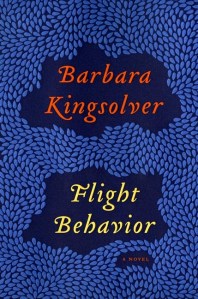
Barbara Kingsolver and Joni Mitchell have a lot in common – at least to me. I’m especially drawn to their early works. They’re prolific and both know the beauty of language. Even though they’re favorites of mine, it doesn’t mean I don’t see their foibles.
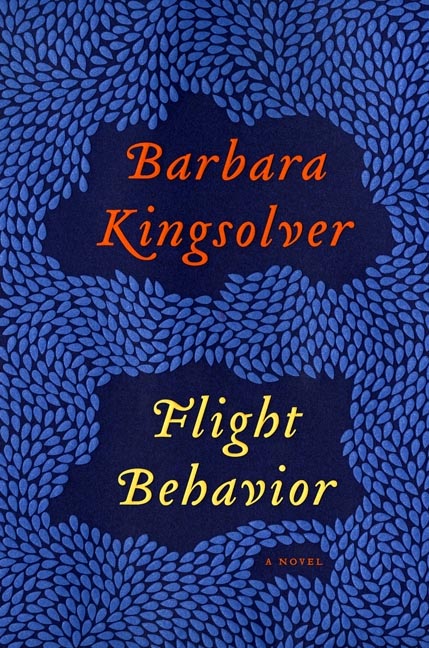
Admittedly, it’s been a while since I’ve listened to anything by Mitchell, but I did just finish Kingsolver’s Flight Behavior. I pretty much read anything and everything she writes. Unfortunately, it didn’t wow me. It has plenty of descriptive images and the characters are interesting, but the story itself is just too predictable.
Climate change is the driving issue with the theme of understanding the world around us. Dellarobia is a young mother of two in a lackluster marriage. Just as she is about to embark on an affair, she discovers monarch butterflies have blanketed the woods on the family land in rural Tennessee. This introduces her to scientists, the media, family secrets, and herself.
Dellarobia’s an appealing character. She’s a good mother, but isn’t thrilled by being a wife thanks to her easy-going husband, Cub, and his willful, demanding parents. To counter the country folk, Kingsolver brings in the intellectual Ovid Byron, a researcher.
The gist of the story can be found in the first and last chapters. The downside to only turning those pages is that you’d miss the imagery, sarcasm ascribed to some of the characters, and the magic Kingsolver has with words. Then again, you’d get to skip the preachy tone and predictability. It might be time to listen to Joni Mitchell again.
Flight Behavior
Three-and-a-half Bookmarks
HarperCollins 2012
433 pages
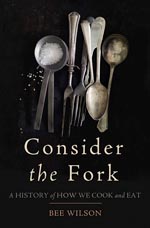
Anyone worth his or her salt in the kitchen has drawers and cabinets full of wonderfully useful and incredibly useless gadgets. Bee Wilson’s Consider the Fork: A History of How We Cook and Eat provides historical and cultural perspectives on how most of them came into our lives. The book is divided into eight sections, each addressing a specific element of cooking under such headings as “Knife,” “Fire,” “Eat,” among others. Yes, the fork gets plenty of attention, but so do other implements that impact not just how food is prepared, but what’s eaten.
Wilson examines the technology behind cooking tools, using the purest definition of the word: “Techne means an art, skill or craft, and logia means the study of something.” Occasionally, she gets bogged down by too much detail, such as the various types of fuels, or the dangers inherent in knives. But who knew about the egg beater boom in the late 1800s? How about that “Kitchen Debate” between the U.S. and Russia at the time of the Cold War?
Nonetheless, reflecting on why we use certain implements versus others, or why some are no longer to be found, is pretty interesting stuff. Wilson has done her homework. If nothing else, I gained insight into the evolution of pots and pans, and now know that the fork was initially not well-received. It took the Italians and pasta to demonstrate its usefulness.
Besides, having read the book I discovered a few new Scrabble words: quern, trifid and ulu.
Consider the Fork: A History of How We Cook and Eat
Three-and-a-half Bookmarks
Basic Books, 2012
310 pages, including notes and bibliography






 The Blue Page Special