Archive for the ‘addiction’ Tag
It’s 1980 when Carl Fletcher, the owner of his family’s Styrofoam manufacturing plant, is kidnapped from the driveway of his home In Middle Rock, a wealthy, mostly Jewish, Long Island community. Thus begins Taffy Brodesser-Akner’s novel Long Island Compromise.
There’s certainly intrigue regarding the kidnapping, but it’s not much of a spoiler to note that after his harrowing experience, Carl is ultimately reunited with his pregnant wife, Ruth, six-year-old son Nathan and four-year-old Bernard (later known as Beamer). Carl’s mother, Phyllis, insists the family move onto her estate with the intent that all will be safer.
The family’s affluence has its roots in Phyllis’s late husband, who escaped from Nazi-occupied Poland with a formula for plastics, founded the factory.
Although Jenny, is born soon after her father’s kidnapping, she and her brothers are forever marked by their father’s ordeal and the wealth of their upbringing. For the rest of their lives Ruth and Phyllis go to extremes to protect Carl who remains traumatized.
The novel is loosely based on a true story, but the characters are composites of stereotypes with personality twists. They’re interesting, amusing, pathetic and occasionally surprising, often predictable – sometimes in the same breath (or sentences as the case may be).
The Fletchers’ tale spans four decades with narration changes as each family member’s personal story is portrayed. There are contemporary issues such as drug abuse, mental health issues, financial concerns and familial turmoil. Yet, Brodesser-Akner’s writing is rich with an abundance of humor, irony and empathy.
Long Island Compromise
Four Bookmarks
Random House, 2024
444 pages
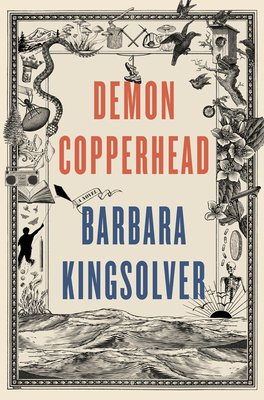
Barbara Kingsolver acknowledges a connection with Charles Dickens, which explains the many similarities between her most recent novel, Demon Copperhead, and the classic David Copperfield. Admittedly, I’ve forgotten a lot about the latter, but recall enough to know they both deal with contemporary social issues of their times. For Dickens, child labor, squalid living conditions and long-standing poverty in 1800s London were among the problems he addressed.
Kingsolver sets her narrative in southern Appalachia where Demon, an exceptionally reliable narrator, tells his life’s story beginning with his birth in a single-wide trailer to an unwed mother prone to addiction. If not for the kindness of neighbors, the Peggots, who temporarily and intermittently become his surrogate family, Demon likely would have ended up in foster care long before he did.
The topics Kingsolver focuses on include physical abuse, disarray within the foster care system, child labor, the elevation of high school football over classroom education and widespread drug addiction. Demon is a victim of these and more. Despite often making poor decisions – without consistent role models there’s little reason to expect otherwise – he’s intelligent and self-aware. He’s also caring and resilient.
Demon is artistic and a keen observer of his situation and those around him. His hunger in one foster home is palpable, as is his fear when he runs away. Besides the Peggots, a handful of other adults try to help Demon, but their rural community has access to ill-gotten pharmaceuticals with few resources to focus on their consequences.
Demon Copperhead
Four-and-a-half Bookmarks
Harper, 2022
548 pages, includes acknowledgements
I recently discovered the unexpected pleasure of Carol Anshaw’s Carry the One, which had been buried in my nightstand stack. (The unforeseen is or should be, after all, one of the joys of picking up a new book.)
Through richly developed characters, smooth transitions of the progression of time and several relatable subthemes, Anshaw has crafted a meaningful story about the impact of tragedy – even when there are degrees of separation from it.
Soon after Carmen’s wedding reception, five guests including her siblings Alice and Nick and their partners Maude and Olivia, who are all on drugs or drunk, are involved in an accident. On a dark, deserted road their car runs over a young girl.
Each passenger, as well as the wedding couple, deal with the accident in different ways. Olivia, who was driving is sent to prison where she undergoes a dramatic personality change. Alice immerses herself in her art by painting portraits of the deceased girl as she would have grown up. Carmen, who was not in the car, engages in community activism; and Nick, who is overwhelmed with guilt, tries to overcome his addictions in order to be the man Olivia insists he become.
Their success in their respective endeavors varies as time passes. This progression is smooth. It’s subtly indicated through someone’s birthday, a current event and the age of a beloved dog – among other observations.
Anshaw incorporates wry humor in this engaging, relevant narrative while portraying vivid emotional pain through familial and romantic love.
Carry the One
Four+ Bookmarks
Simon & Schuster, 2012
253 pages




 The Blue Page Special