
Full disclosure: The Margarita at Pine Creek is among my favorite
restaurants. It’s been around since the mid-1970s; I’ve been a fan
many of those years. My love affair is based on exceptional service,
and its approach to seasonal foods (way before it was trendy or the
norm). It’s my special-occasion place; but every now and then, my
husband and I go for the simple, hokey reason it’s a nice place to
enjoy each other’s company.
Many of the servers have long been part of the dining room. The
commitment to unique spins on traditional plates has been constant.
Several years ago, a printed menu and the choice of a three-course
meal, down from the usual five courses, were introduced. Diners can
choose from three of the five courses: appetizer, salad, soup, entrée
and dessert – or all. Each course has two or more items to select
from, and the warm bread is always a treat.
I began with calamari and shrimp in a roasted-tomato bouillabaisse.
Tender pieces of seafood bathed in rich tomato sauce featured bits
of tangy green olives. The parmesan-dressed salad was above-average,
but our server brought the vegetable bisque to sample. After sharing
a bowl, my husband and I were disappointed we hadn’t ordered it. My
Colorado Sea Bass was melt-in-your-mouth tender, topped with chorizo
butter, over jasmine rice and spinach.
Apologizing for the small portion of tiramisu, our server brought an-
other for us to take home. I’m sure we’ll fight over it in the morning.
Five Plates
The Margarita at Pine Creek
7350 Pine Creek
Colorado Springs, CO

It’s difficult to like a character who doesn’t like herself, especially when
as a reader it is just as easy to see the positive qualities as the foibles.
Victoria Jones is Vanessa Diffienbaugh’s problematic protagonist in The
Language of Flowers.
Granted, Victoria has every right to be troubled. Abandoned at birth, in
and out of foster care most of her life, and emancipated at age 18, she has
no skills or acknowledged support system. Yet, on those few occasions
when things do go her way, Victoria is a master of sabotage.
However, this is no victim of the system story. Rather, it a poignant look
at what makes a family (for better or worse) and how people communicate
when words fail. There is, in fact, a language associated with flowers. It’s
known as floriography. Each flower has a meaning that goes beyond its
shape, color or bloom. Victoria knows this, and her knowledge isn’t just
a marketable skill, but a way for her to express herself.
Ironically, Victoria is the narrator. The short chapters alternate between
her past, which includes life in foster homes, group homes and a near-miss
adoption, and her life as an 18-year-old trying to survive alone on the streets
of San Francisco.
Unfortunately, Diffenbaugh throws in a few clichés, like the over-extended
social worker, and abandons several likeable characters. Nonetheless, this
novel is a bouquet of peonies, primrose, ginger, mustard, moss, amaryllis
and fennel. They may seem an unusual grouping, but Victoria reflects all
their meanings.
The Language of Flowers
Three Bookmarks
Ballentine Books, 2011
322 pages (including “Victoria’s Dictionary of Flowers”)

I love receiving books as gifts, especially when it’s obvious the bearer has
decided it’s something I would particularly enjoy. I try to do the same,
but am not – admittedly – always successful. I’m pleased to say my friend,
Esteban, was on the money in giving me Tracey Lawson’s A Year in the
Village of Eternity.
Lawson writes of food and Italy (two of my favorite things) and longevity.
The secret to a long life has nothing to do with a fountain of youth. Instead,
it is a cascade of fresh, organic, seasonal food augmented by family, friends
and an active lifestyle. That’s Lawson’s premise as she describes Campodimele,
Italy, where the average life expectancy, for men and women, is 95 years!
Lawson provides a month-by-month account of a year in Campodimele, thus
sharing seasonal experiences that coincide with weather, festivals, crops and
food preparation. The village is located between Rome and Naples in the
mountains above the Tyrrhenian coast. The focus is on the people, individuals
who shared their kitchens, produce and recipes, but it’s their lifestyle that is
particularly intriguing. Numerous studies have been conducted linking longe-
vity to the Campomelano diet which is low in salt, includes moderate amounts
of wine, and is full of protein-rich beans, fish and chicken. All this in addition
to fresh produce, which is canned, dried or otherwise preserved to last through-
out the year.
A bonus, besides Lawson’s vivid, sensual imagery of the landscape, people and
meals, is the collection of photographs and recipes.
A Year in the Village of Eternity
Three and a half Bookmarks
Bloomsbury, 2011
374 pages

I know the journey’s supposed to be more significant than the
destination, but a recent event for the Crested Butte Junior Nordic
Ski Team made it hard to tell the difference. The goal was dinner
at the Magic Meadows Yurt and reaching it involved cross-country
skiing through a much-anticipated snowstorm (which added about
15 inches to the terrain). Usually, the snow is bright enough for
cross-country skiing at night, but the seemingly unending flurries
made visibility somewhat difficult.
Magic Meadows Yurt hosts moonlight and special occasion dinn-
ers throughout the winter – no matter the amount of snow or moon
glow. The menu varies from dinner to dinner; however, reaching
the yurt, enjoying its warmth, and relishing the friendliness of
strangers enhances the dining experience.
The “Thai-One On Fundraiser” featured freshly made Thai food
by a ski team member’s mother. The young team members served,
and the local Gypsy Jazz Social Club provided toe-tapping live
music. The kids, all lacked serving skills, were entertaining; the
food reflected culinary expertise.

Egg rolls and spring rolls were starters. The latter filled with rice
noodles, mint and shrimp accompanied by lightly-spiced peanut
dipping sauce. Soup, salad, entrée and dessert were included,
along with beer, wine and soft drinks. The vegetable soup, made
with a rich coconut milk base full of mushrooms, carrots and bam-
boo shoots, garnered raves. The beef and green bean curry entree
boasted a subtle kick.
After strapping the skis on again, we were fortified by all the yurt
had offered.
Four Plates
The Magic Meadows Yurt — 1.25 miles on the Peanut Lake Trail,
a fairly flat, winding trek.
Crested Butte:
• February 7, Full Moon Dinner
• February 14, Valentine’s Dinner
• February 19, President’s Weekend Dinner
• March 8, Full Moon Dinner
• March 17, Last Dinner of the Season
• TIME: Doors open at 6, dinner at 6:30
• COST: Varies on whether equipment rental or trail pass
are needed
Reservations: Call 970-349-1707, ext. 2

I’ve had three dogs in my adult life, so I found the first line of Jill Abramson’s
The Puppy Diaries – Raising a Dog Named Scout powerful: “The truth
about getting a new dog is that it makes you miss the old one.”
Still, I struggled with Abramson’s combination memoir/how-to guide which
chronicles the life she and her husband share with their blond golden retriev-
er. How he came into their lives is interesting and the joy he brings is palpable,
but not necessarily unique. I don’t want to disparage the connection she has
with her dog, but anyone who has played or lived with a dog will be familiar
with everything Abramson writes about. This may be a source of reassurance
for some dog owners, but for readers it is the book’s major flaw. What sets
the story apart, and is given only a casual nod, is the way dog ownership has
changed, and that the Abramsons are “aging baby boomers with dogs …”
Don’t get me wrong, I have immense respect for Abramson. She is the first
female excutive editor of The New York Times. Her journalism creds are both
impressive and intimidating to me, a former reporter. No doubt, her journal-
istic background provided access to the sources she doles out like special
treats.
Writing about dogs is a sure-fire way to evoke emotion among dog owners.
Most wear their passion for their canine pals like a collar of pride. Clearly,
Abramson is no exception, but then neither am I.
“The Puppy Diaries”
Two Bookmarks
Times Books, 2011
242 pages

Some attributes of people like Bill Gates and Steve Jobs may find their way
into David Guterson’s Ed King, but the strongest similarity to anyone is
Oedipus Rex. This story begins in the 1960s introducing Ed’s birth parents,
a married insurance actuary and a 15-year-old British au pair. That’s the first
clue that something’s amiss. It moves from Ed’s conception to well into the
21st century in his prominence as an Internet wiz. A lot of similarities to
the title character and the modern day wunderkind exist, but those parallels
are garnish. They’re not nearly as intriguing, nor repelling, as the connection
with the ancient story of Oedipus.
At the risk of revealing too much, once the first half of this modern-day Greek
tragedy is identified, it’s easy to anticipate the completion. It is at this point
that Guterson changes tone and voice to suddenly directly address the
reader: “Who could blame you for being interested in this potential hot part …”
And just as quickly (well, little more than a page) reverts to the objective
third person narrative.
This book is heavy on characters, and many seem extraneous. Nonetheless,
a surprising number are well-developed, but the question is why? Set in the
Pacific Northwest, Guterson’s favored locale, the likelihood of many of the
events is about as possible as a talking sphinx; oh yeah, that was part of
Sophocles’s play, too.
Although the well-known plot’s twisted one, Guterson is a master storyteller
writing about destiny, desire, and manipulation.
Ed King
Three-and-a-half Bookmarks
Alfred A. Knopf, 2011
304 pages

Although I enjoy the food at Yakitori 2, it is the good friend I usually meet
there that makes it a special place. I have been a few times with others, but
it is my friend, B.B., who I most enjoy the meal with. When we get together
we are able to ignore the large television screen permanently set to a sports
channel. We dismiss the torn Nagahyde booths. We even forget that we’re in
a strip mall set like an island in one of the city’s busiest thoroughfares. In-
stead, we order the lunch special and spend an hour or more catching up.
It helps that the special is consistent, filling and a bargain. For under $6 per
person, it includes a cup of soup, two Teriyaki chicken skewers, onion rings,
white rice and cole slaw. The soup is nothing more than lightly seasoned broth
garnished with scallions. The surprise on the plate is the onion rings. These
panko-breaded sweet onions are crispy inside and out.
It’s always a struggle to remove the chicken from the skewers. There are no
knives making it an exercise in grace and dexterity, but worth every second
of effort. Grilled in a Teriyaki sauce, the bite-sized pieces of glazed chicken
have just the right amount of tangy sweetness. The white rice, which must
have been plated with an ice cream scoop, is a great foil to the sauce from the
chicken and the slaw.
Poor health has kept B.B. homebound. Thank goodness for take-out.
Three-and-a-half Plates
“Yakitori 2”
1612 N Academy Blvd
Colorado Springs, CO
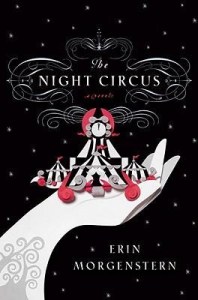
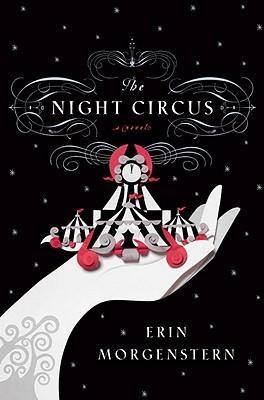
The Night Circus is like a fine etching, rich in detail and artistically crafted. Although
black and white are the dominant hues, the nuances of lighting and shading result in a
rainbow of detail.
The word magical to describe Erin Morgenstern’s novel is inadequate. The story is so
much more. The circus, only open at night and in various places around the world,
transports its audience members, and thus readers, to beyond the suspension of dis-
belief. Taking place between 1873 and 1903 the story moves from one time frame to
another, from character to character, from love story to mystery, while Morgenstern
tells a very tall tale that is engaging and exciting.
Magic, or the manipulation of what people believe they see, is the backdrop. The
circus is the venue for a battle of the beautiful and incredible between Celia and
Marco. They have been trained their entire lives by masters who have no regard
for emotion or repercussions. Although Marco and Celia are destined to try to sur-
pass each other through their skills of illusion, no one is prepared for the direction
their relationship takes.
The vivid cast of characters demonstrates the human element of magic and mystery.
Attachments develop among them, and with the reader, creating plenty of tension
wondering not only what will happen between Marco and Celia, but to those whose
lives depend on the night circus.
Morgenstern’s black and white portrait is as lively as any circus, but far more fantastic
than any that can be imagined.
The Night Circus
Four-and-a-half Bookmarks
Doubleday, 2011
387 pages

A wait staff that actually knows its restaurant’s food is nothing to dismiss. This is
true whether the fare is extraordinary or not. The Crystal Park Cantina has a
knowledgeable, friendly staff that complements its twist on exceptional Mexican food.
Margaritas, chips and salsa give the impression this is a standard Mexican restaurant;
however, after perusing the menu this is quickly dispelled.
Asking a server for his or her favorite menu item is nothing new; sometimes it seems
like a crap shoot. I asked my server at the Cantina what sauce she recommended for
the Chile Relleno: pork green chile or tomatillo Alfredo? Her face lit up and, without
hesitation, she said half and half. The green chile has a depth of flavor that has no-
thing to do with being too spicy. An Alfredo sauce is not something necessarily asso-
ciated with anything south of the border, but this rich cream base is augmented by
the green tomatoes. Having the sauces side-by-side felt like picking the winning Lotto
numbers.
The relleno was light with the chili and cheese the rightful heir to the plate. Too often
an over-eggy batter attempts a coup and overshadows the chile, cheese or both. Here
a pastry-like shell covers the two chiles like a thin, protective blanket.
The entrees include frijoles and saffron-infused rice. A dollop of guacamole and an-
other of pico de gallo result in a very colorful plate.
By the way, there’s nothing wrong with those margaritas, chips and salsa – the servers
recommend them.
Four Plates
The Crystal Park Cantina
178 Crystal Park Rd., Manitou Springs, CO

Just because everyone has a story to tell, doesn’t mean everyone should. It’s
nice, though, that Adriana Trigiani shares hers in the memoir, Don’t Sing at
the Table: Life Lessons From My Grandmothers.
Trigiani imparts memories and the advice given by both of her grandmothers:
Lucy (on her mother’s side) and Viola (on her father’s). Although the two
had little direct interaction with one another, they had a profound influence
on the author. Both were hardworking, independent women who raised families,
ran their own businesses, suffered personal losses, but lived long rich lives.
This describes many grandmothers today, but this was the 1940s and ‘50s.
These Italian-American women weren’t just role models to their granddaughter
(and others); they also had plenty of advice to dispense, from parenting to
femininity, from marriage to adventure. Trigiani’s writing is conversational.
It’s easy to imagine the time spent with Lucy and Viola, and to feel the im-
pact they had. These were tough but caring women who found success at work
and happiness at home.
The title is what caught my attention. Not singing at the table was one of
many family rules when I was a kid, but there was never an explanation.
Trigiani provides one. It comes from an Italian proverb: “Chi e canta a
tavola e piu stupido che fuma a letto, which translated means ‘He who
sings at the table is more stupid than the one who smokes in bed.’” This
is debatable, but it certainly makes for a good title.
Three Bookmarks
Harper Collins, 2010
204 pages








 The Blue Page Special