
I am not sure I would have chosen Corinthia Falls off the bookshelf on my own,
but I volunteered to judge a competition. Kim Hutson’s book is what I received in
the mail, along with a list of reading criteria. It was entered in the Fiction Category,
but that should’ve been amended to Christian Fiction. There’s nothing wrong with
that genre, I just think it warrants a heads up. Or maybe I should have paid more
attention to the photo of a church on the cover.
The book gets its name from the small town in Oklahoma where most of the story
takes place. The first two-thirds is narrated by 18-year-old Timber Oaks who has a
strong sense of faith, a group of best friends, loving parents, and an impressive golf
game. The town is full of the requisite eccentric characters, many of whom initially
don’t get along. An itinerant evangelist arrives to help the Corinthia Falls Church,
the townspeople, and Timber fully realize the presence of God in their lives.
The book’s final third begins 30 years after Timber’s narrative ends. Priscilla Luke,
a long-time journalist and, as it turns out, Oaks’ family friend takes over as narra-
tor. This change in voice is interesting. Pris brings the reader up to date on the
major changes many of the characters have experienced, and tells Timber’s story
from the outside looking in.
Some editing and grammar issues distract from what is otherwise a story strong on
faith with occasional lapses in believability.
Corinthia Falls
Three Bookmarks
Outskirts Press, 2011
404 pages
Sorry for the delay in posting, but the wildfire here in Colorado Springs was a major distraction this weekend. We still need some rain.
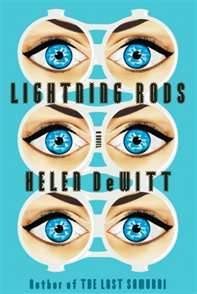
When reading Helen DeWitt’s Lightning Rods it’s important to keep in mind the various
definitions of satire: lampoon, irony, parody, among others. DeWitt’s novel offers several
examples of satire’s many faces: it’s far-fetched, addresses a significant topic, and throws in
occasional laughs. Unfortunately, this just isn’t enough.
DeWitt examines sexual harassment in the workplace through an idea known as lightning
rods. The genius behind the concept is Joe. Just Joe with no last name and not much of a
backstory. What’s known is that Joe is a down-on-his-luck salesman with a penchant for
sexual fantasies. Of course it makes perfect sense that he would blend his weak sales skills
with the latter to develop a service to improve workplace productivity while eliminating
sexual harassment. Joe’s idea: anonymous female employees (the lightning rods) available to
fulfill sexual needs. This may sound like prostitution, but Joe spends plenty of time trying to
convince people otherwise. Like their namesakes, the females provide resistance to potential
problems. One of the best explanations is from a lightning rod who later becomes a Supreme
Court Justice. She says, “… there’s nothing like being on the receiving end of a proactive sex-
ual harassment program …”
The story follows Joe’s climb from a hapless schmuck to a successful one. Among many ironies
in DeWitt’s tale is that most characters are identified by first name only. They engage in one
of the most personal ways people interact, but they are more like cardboard cutouts than living,
breathing humans.
Lightning Rods
Two-and-a-half Bookmarks
By Helen DeWitt
New Directions, 2011
273 pages

Although I know the difference between good manners and bad, I wanted to throw
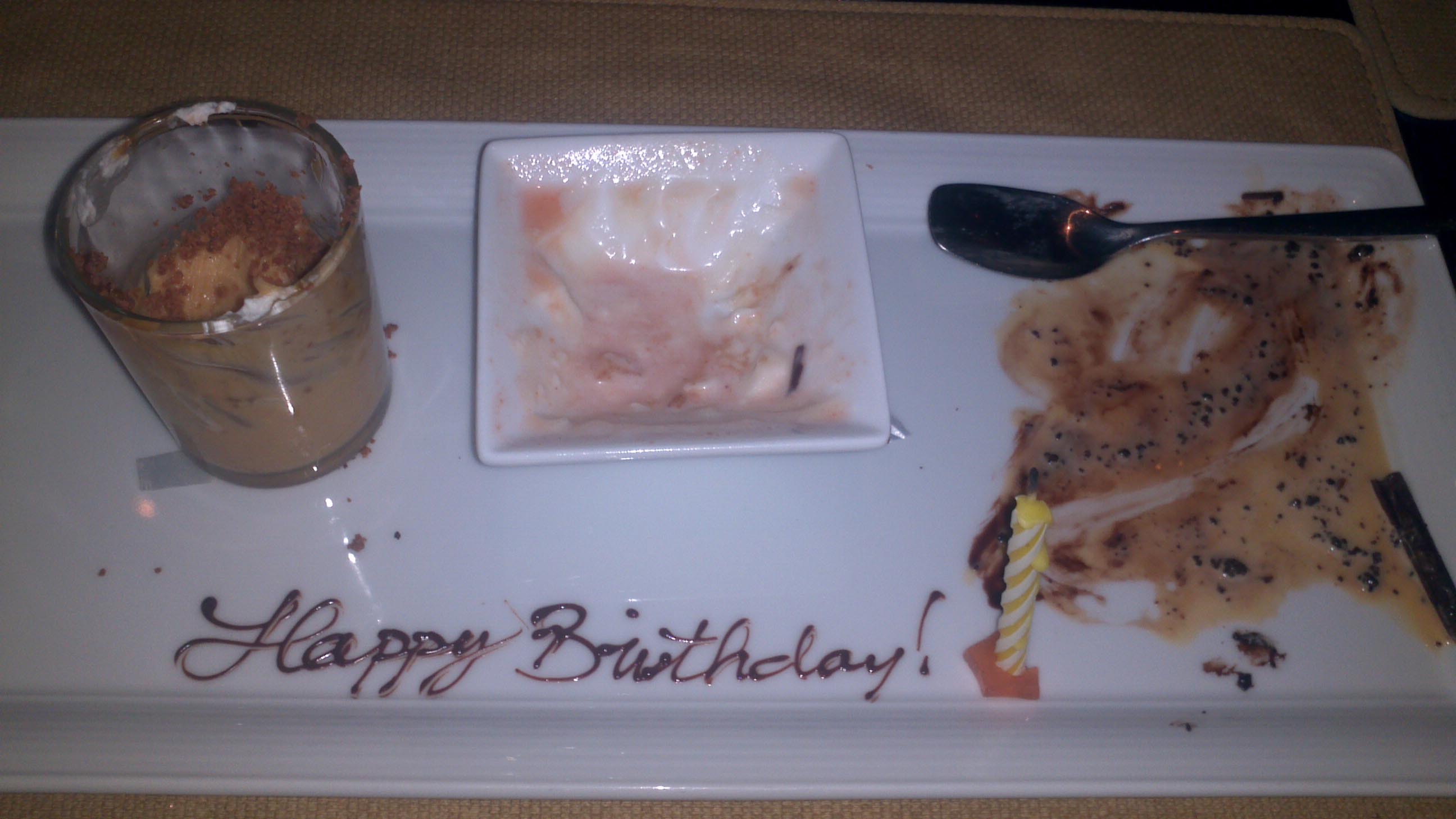
that wisdom out the door at Scarpetta. I enjoyed an early birthday present from
my mother and a dear friend where we ordered the four course tasting menu. I want-
ed to lick each plate clean after every single serving, but etiquette prevailed.
With the tasting menu we put ourselves at the chef’s mercy – and generosity. To be-
gin: Crudo of Sashimi and Yellowtail with ginger oil. Both sang in my mouth. A prawn-
stuffed, deep-fried Zucchini Blossom followed. We received two extra courses. The
first, a plate of Braised Short Ribs served on a bed of farro. The tender meat was smooth
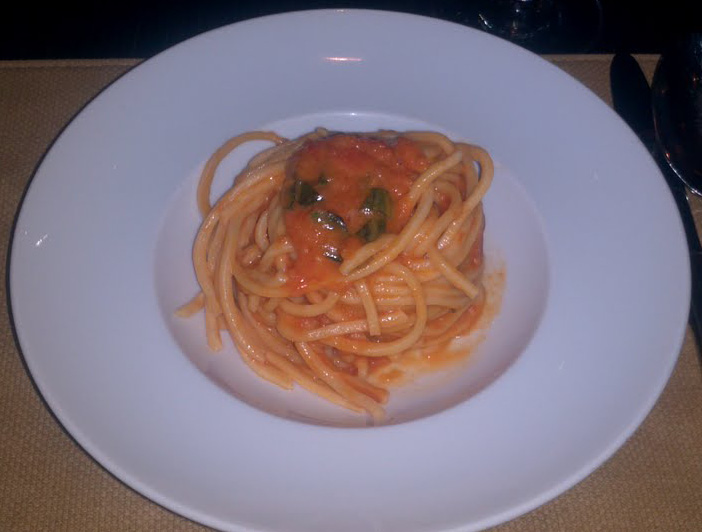
as butter on a warm day. Scarpetta is known for its Spaghetti, which was served next.
It sounds pedestrian; yet, with a sauce of reduced fresh tomatoes and basil, this was
perhaps the most perfect al dente pasta I’ve eaten.
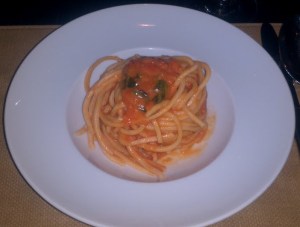
While enjoying the spaghetti, a server brought another extra, Agnotti. These small pasta
pouches were stuffed with reduced short rib marrow and drizzled with browned butter.
At this point it might seem the entrée would have been overkill, but it wasn’t. Black Cod
over roasted fennel and tomato was another taste spectacular.
Perhaps having dessert was too much, but it was wonderfully over the top. An assort-
ment of flavors and textures arrived on one plate featuring Caramel Budino, Pineapple
Panna Cotta, Chocolate Molten Cake, and Hazlenut Gelato.
I was sated and too well-mannered to moan in delight.

Scarpetta
Five Plates
225 N. Canon Dr.
Beverly Hills, CA
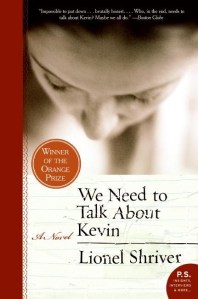
If you read Lionel Shriver’s We Need to Talk About Kevin be sure you have
someone with whom you can talk about it.
This disturbing, yet compelling, story unfolds through a series of letters written by
Eva to her absent husband, Franklin. The purpose of the letters is to try to under-
stand how their 15-year-old son, Kevin, could murder seven classmates, a teacher,
and a school cafeteria worker.
Through a clear almost detached, yet very personal, perspective Eva expresses the
difficulty she has in relinquishing her independence to become a mother. Following
Kevin’s birth, she continues to lack a natural maternal instinct. Still, Eva is not
without heartfelt emotion and empathy; she simply has difficulty showing these traits
to Kevin.
On the other hand, neither is Franklin completely blameless; although his side of the
story is not told. As seen through Eva’s eyes, Franklin maintains a vise-like grip on
the image of a happy, American family. His perception does not include discipline,
respect to others, or a recognition that there are two sides to every story.
Kevin is simply a bad kid, albeit an exceptionally bright one. The concept of uncon-
ditional love falters under Shriver’s pen. Parents are bound to examine their parent-
ing style and question whether it is the right approach. It is easy to be critical of
Eva and Franklin, but it’s hard to know if anyone else could have parented Kevin with
a different outcome.
We Need to Talk About Kevin
Three Bookmarks
HarperCollins, 2006
432 pages
(I wrote this review several years ago, but decided to post it here.)
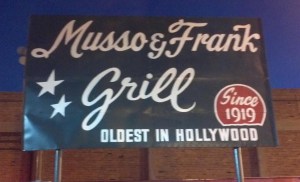
Our presence at “The Charlie Chaplin table” at Musso & Frank Grill for dinner
recently prompted one passerby to comment: “You must be somebody special to be
sitting there.” This led to a lively discussion among those in our group while we
enjoyed what could be construed as old-school cuisine – except it tasted so good –
in the dated restaurant.
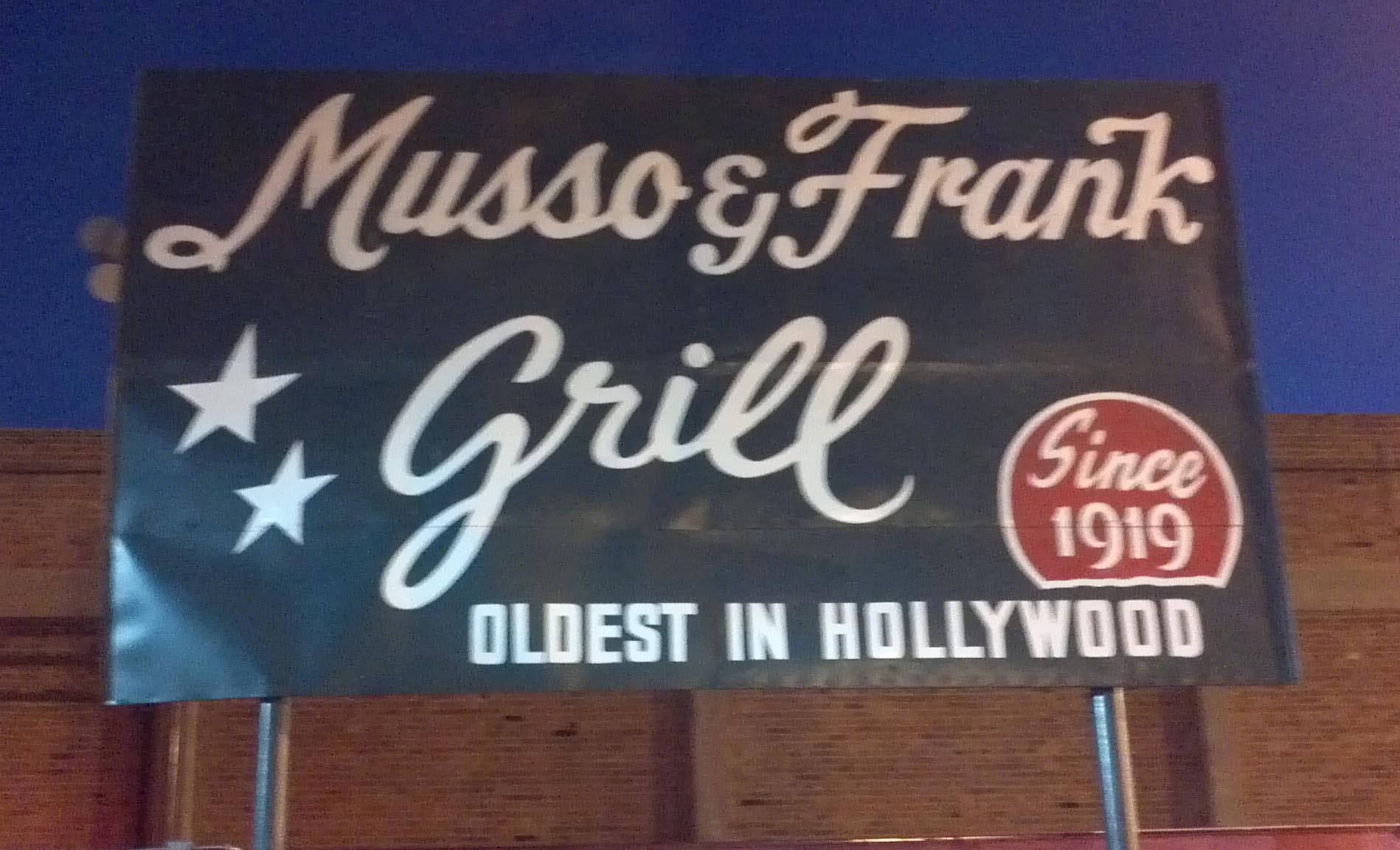
Around since 1919, Musso & Frank bills itself as “the oldest restaurant in Hollywood.”
This is hard to dispute. The staff, along with the dark and cavernous décor, helps au-
thenticate the claim. The history may be appealing, but it’s the food that continues to
draw people of all ages.
The menu is eclectic: from Fruit Cocktail to Welsh Rarebit, from Lobster Thermidor to
Chicken Pot Pie. The latter is the featured special every Thursday. Three of the five in
our party ordered it. With its flakey crust, large pieces of chicken, a colorful array of
vegetables and a rich creamy gravy, it’s easy to see why this comfort food is so popular.
I ordered Veal Scaloppini which revealed the Marsala very nicely, but the surprise was
the tapenade served atop the side of rice. The Bone-in Pork Chop was the final dish se-
lected. It covered the plate. The chop was perfectly grilled and tender, something unex-
pected given the thick cut.

Musso & Frank has no visible signs of its place in Hollywood history. Nonetheless,
the booth to the left of the front door is known as Chaplin’s favorite. We did feel
pretty special.
Musso & Frank Grill
Four Plates
6667 Hollywood Blvd.
Hollywood, CA

I hope the next book Alexis M. Smith writes will be much, much longer
than her debut novel, Glaciers. At only 174 pages it is obviously terse,
yet remarkably rich in detail with characters I wanted to spend a lot
more time with.
The storyline follows a day in the life of Isabel, a Seattle librarian who re-
pairs damaged books and whose primary interactions are with those who
are also somehow wounded. That may sound either dry or familiar (The Hours
comes to mind since Isabel plans to attend a party later that day), but Smith
writes in a lyrical, understated manner that is immediately enticing.
Isabel’s story takes place in less than 24 hours, but it is not confined to that
time frame. Her dreams, her family, and her childhood in Alaska are all beau-
tifully crafted to create a complex, sensitive woman with a penchant for vin-
tage clothing and old photographs. Isabel recounts her first trip to a thrift
store with her father who explained they were hunting for treasures. Initially,
the young girl is uncertain, even fearful she will miss the prize, until her father
says, “If you love it, you will treasure it, does that make sense?” The four-year-
old Isabel takes this to heart, and, ultimately, subtly applies the explanation
to everything from dresses to relationships.
Without giving anything away, one of Smith’s most impressive writing techniques
is the adroit manner in which she makes Glaciers Isabel’s story in more ways
than one.
Glaciers
Four and a half Bookmarks
Tin House Books, 2012
174 pages

The Nickel Diner in downtown Los Angeles is a trendy throwback in more
ways than one. First, its location is marginally sketchy. That’s because it’s sand-
wiched between blocks of ornate historic buildings on which sophisticated rest-
aurants, shops and lofts have taken up residence. Meanwhile, next door to the
diner are facilities for the homeless. Then there’s the food which is true diner fare
with a fun, contemporary twist: maple glazed donuts covered with bacon; home-
made Pop Tarts; scrambled eggs with Fontina cheese, for example.
In true diner fashion, breakfast is served nearly all day. Even though the mac and
cheese sounded appealing, as did a BLT with avocado on sourdough, I settled on
one of the egg scrambles: Italian sausage, roasted red peppers and parmesan mix-
ed with what seemed like half a dozen eggs. Creamy, but scrambled hard, the eggs
absorbed the rich flavors of everything else. Most diners offer a choice of sides, at
the Nickel there’s a healthy option of sliced, fresh tomatoes or the less nutritious
home fries. I said tomato, my friend said potato, and both were great. The bacon
donut was a treat; I don’t have to be healthy about everything.
I’ve been to the Nickel twice, and have been fortunate enough to be seated right
away. There have been other times, when driving by, I’ve seen wannabe-diners
outnumbering those needing the services for the indigent. I think it’s worth taking
a chance of snagging a table and mingling with the crowd — inside or out.
The Nickel Diner
Four Plates
524 S. Main St.
Los Angeles


Occasionally, when a business or restaurant has resided in one place for a very lengthy
time, it’s hard to exorcise memories (good or bad) to make room when new occupants
come along. That was my fear of going to Spice Island Grill. Gone was the long-established
and dependably good El Tesoro. In its place was not only a new owner, but an entirely dissimi-
lar cuisine: Jamaican. I needn’t have worried. Besides the address, the two vastly different
restaurants share an apparent commitment to well-prepared food and attentive service.
Vibrantly colored walls and knick knacks from Jamaica greet diners, but more importantly
are the friendly faces and acknowledgement from the staff. The menu offers a 15-minute
lunch. Although we didn’t time it, I suspect ours, and others’, took a little longer. But that’s
fine, because it’s a comfortable space.
The lunch menu features a variety of sandwich, entrée and salad offerings with the requisite
Jamaican jerk seasoning. I ordered the jerk chicken sandwich served on Jamaican Cocoa
bread, which is thick and bun-like. The jerk seasoning on the grilled chicken was tangy
and spicy without being overwhelming. My dining companion ordered chicken curry with
a side of plantain. The flavors were rich and full of depth. The thinly sliced fried plantain
tasted more like squash, as it should, than banana.
In addition to chicken and pork, there’s shrimp, goat, tilapia and even tofu imbued with jerk
seasoning. Perhaps Spice Island Grill will have a life at least as long as its predecessor –
18+ years.
Spice Island Grill
Four Plates
10 N. Sierra Madre
Colorado Springs, CO

What begins campy and comic book-like soon assumes a more serious tone about
familial dysfunction in Karen Russell’s Swamplandia! This enigmatic coming-of-
age story is set in Florida’s Everglades, where the harsh environment is full of danger-
ous creatures and rich in bittersweet memories for the Bigtree family.
Thirteen-year-old Ava Bigtree is the narrator for most of the novel; when the setting
switches to the nearby coastal town of Loomis, Russell narrates. Swamplandia! is the
name of the Bigtree family’s alligator theme park. When Ava’s mother, the main attract-
ion as an alligator wrestler, dies, the family disintegrates. Ava’s 16-year-old sister is in
love with a ghost; Kiwi, the older brother, leaves to work at the competing theme park
in Loomis; and Chief, the children’s father, leaves Swamplandia to look, he says, for
funding. Through most of the novel, Ava is the most level-headed, so when she shows
her age, it’s a good thing for the reader, but not so much for Ava.
This is one whopper of a tale, but Russell creates complex characters facing difficult
issues in their lives, not the least of which is dealing with the mother’s death. The back-
drop of the theme park and alligators provides some levity on one hand and heavy-duty
allegory on the other. Russell’s beautifully-written descriptions and sentence structure
are captivating. There are some laugh-out-loud moments countered by creepy events.
Several times I considered closing the book to stop what was likely to happen, but
needed to keep reading just in case I was wrong.
Swamplandia!
Four Bookmarks
Alfred A. Knopf, 2011
316 pages

A mashup is the best way to describe the vegetarian sandwich at the Heart of Jerusalem
in Manitou Springs. It’s a grilled cheese with salad ingredients wrapped in Zaatar pita. This
sturdy bread is delightfully airy. Zaatar is a Middle Eastern spice combination of thyme,
marjoram and oregano. The spice is added with olive oil and brushed on top of the dough as
it is grilled. Also, the dough is docked. That is, pierced so it doesn’t puff up to create the air
pockets typically associated with pita. Rather than have the food inside the pita pockets, the
bread is wrapped around the filling. This thicker pita provides the perfect grip to embrace the
gooey melted cheddar, hummus, tomatoes, lettuce, pickled turnips and, whether by design or
accident, a few pieces of falafel. The bits of deep-fried ground chickpeas added both texture
and flavor. On my next visit, I’ll have a full serving of falafel. Although they tasted fine, the
turnips have an unusual color more closely associated with a shade of lipstick worn, perhaps,
by circus or prison matrons.
Service is somewhat sketchy. It wasn’t clear if we were to order at the cash register, or if some-
one would come to our table; ultimately a server came to us. The whiney Middle Eastern music
was too loud, but this may have been an effort to establish the right mood in a room with plastic
seat cushions and Formica tabletops. Fortunately, the food wasn’t eclipsed by the mixed-bag
ambiance.
The Heart of Jerusalem
Three-and-a-half Plates
718 Manitou Ave.
Manitou Springs, CO










 The Blue Page Special