The Frozen River by Ariel Lawhon is part mystery and historical fiction inspired by the experiences and diary of Martha Ballard, the novel’s narrator, who relates her story as the town midwife and life in rural late-1700s Maine.
When a body is found and recovered from the frozen Kennebec River, Martha is immediately suspicious of the cause of death. The victim is one of two men accused of committing rape; the other is a judge and respected citizen.
Despite numerous obstacles, including being a woman whose opinions are quickly dismissed by the men who oversee the social norms of the day, Martha is determined to fight for the preacher’s wife who was raped.
Martha is happily married and a mother, most of her children are in their teens and early 20s. She takes her role, as not just a midwife but medical care provider for the town and surrounding area, seriously and professionally – even after a Harvard-educated physician arrives and questions her knowledge and abilities.
The harsh elements of the wintry landscape and the hardscrabble life the townspeople endure are vividly described. Martha’s efforts to prove the rape victim told the truth while also trying to determine how one of the accused died results in an engaging work.
This is a portrayal of a strong, intelligent woman ahead of her time in her recognition of the sexism women faced. Martha’s story is one of life in a rural community impacted by the season, gossip and mores of the times.
The Frozen River
Four Bookmarks
Doubleday 2023
432 pages, includes author’s notes and acknowledgements
James is Percival Everett’s retelling of Mark Twain’s Adventures of Huckleberry Finn told from James’ (Jim’s) perspective.
After learning he’s to be sold and forced to leave his family, James runs away. Jim is the name he’s been given by his white owner; his peers know him by his more formal name. Huck fakes his own death to avoid further beatings by his father and discovers Jim in hiding. The two make their way down the Mississippi River, each with different goals in mind.
There’s a reward for James’s capture, and he worries he’s suspected of Huck’s “death.”
While this has Twain’s classic as its foundation, the architecture is all Everett’s. James speaks in the vernacular associated with slaves when spoken to by slave owners and other white people. However, among each other, slaves converse in perfect English, that’s not only grammatically correct but rich in vocabulary. James also knows how to read, as do many in his circle.
Occasionally, he slips in a word that Huck doesn’t know but quickly makes its clear he’s misspoken, when, in fact, James hasn’t.
The book is full of irony, humor and sadness. In their travels they encounter kindness, brutality and fear. At one point the pair is briefly separated and James fares well, including, ironically, being recruited by a minstrel group and is befriended by another black man who passes for white.
Like its predecessor, this is an adventure story but more profoundly addresses still existing racial inequities and social injustice.
James
Four bookmarks
Doubleday, 2024
303 pages
The Silence of the Choir is, in fact, loud and clear. This timely, multi-voiced novel by Mohamed Mbougar Sarr addresses the plight of African refugees and their impact on a small Sicilian town.
The men, called “ragazzi” by the townspeople, have fled their respective countries for numerous reasons, including war and poverty. Few share the same language, but all endured subhuman conditions to reach Europe – at great cost physically and monetarily.
Not surprisingly, reaction to their arrival varies: some locals are eager to help, others are convinced they will take jobs and do harm. Few are indifferent.
The story is told from numerous perspectives including several refugees, the town physician, a priest, a reclusive poet, the mayor, the woman determined to help them attain asylum and a man equally resolute to send them back to where they came from.
Jogoy, is a former refugee working as an interpreter. Some of the ragazzi trust him, many don’t. Still, it’s his skill with languages that’s secured his place, but his past remains a burden that’s always close to the surface. The narrative is sporadically interrupted with his story, complete with a different font and chapter titles. His could easily be that of others in exile.
Though this is a poignant, contemporary and significant topic, the author injects moments of humor and joy with the agony of uncertainty the ragazzi and locals experience. There are also elements of mystery, romance and an array of often painful approaches dealing with the situation.
The Silence of the Choir
Four-and-a-half bookmarks
Europa Editions, 2024
391 pages
When Ruth Reichl writes about food it’s difficult to keep from drooling; this is intensified in her most recent book: The Paris Novel.
At first, however, the storyline drags. Stella St. Vincent is an unhappy child. Her mother, Celia a New York City bon vivant has little interest in her daughter. Celia refused to tell Stella the identity of her father; consequently, she has no interest in learning anything about him. In short, Stella is boring, prone to maintaining schedules and keeping to herself – having been told throughout her childhood that she should be more open to life.
When Celia dies she leaves Stella an airline ticket to Paris. After a month of living cautiously in the City of Lights she wanders into a second-hand clothing ship. This is where the action picks up thanks to a vintage Dior dress. As slow as the early chapters are, Stella’s transformation to someone willing to embrace the unknown happens too fast. Yes, there are still moments when her reticence surfaces, but suddenly she has a keen, impressive palate and makes friends.
Stella is befriended by Jules, a wealthy octogenarian art collector. She is initially suspicious of his attention, but he has no ulterior motives other than to enjoy her company. He recognizes her appreciation of art, literature and fine cuisine – only the latter was not something she had previously cultivated.
This is a story of finding oneself and not just accepting but embracing the surprises –good and bad – that are part of life.
The Paris Novel
Four Bookmarks
Random House, 2024
272 pages
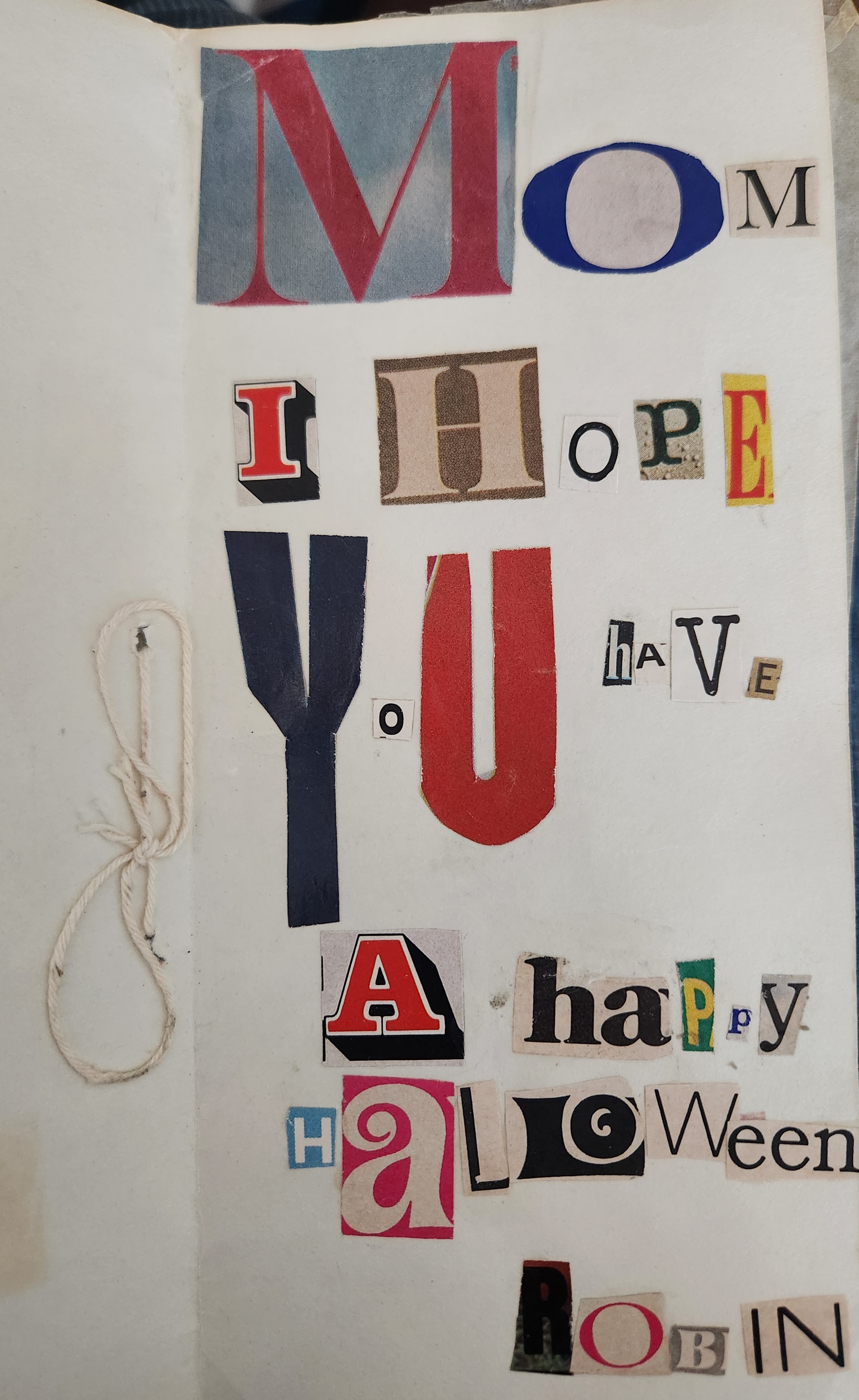
My mother died last week. In going through some of her papers I found letters I’d written her that she’d saved, along with some cards I made. Among the letters, one, in particular stood out, written when I was 25, which was a long time ago.
While reading it, I was struck by how much of the content had not changed. It was a thank you note, but not for anything materialistic. Rather, I thanked her for the wonderful qualities, ones she, wittingly or not, passed onto me. These included, but definitely weren’t limited to, instilling in me the importance of a sense of humor, independence, sensitivity, and the certainty of her love for me.
(In looking at the Halloween card I made, I realize she also imparted an appreciation for mysteries.)
My mom was also my closest friend. The only time I recall that not being the case was when I was 13. That age explains it all. Otherwise, we laughed a lot, shared details of our lives once I moved away from home as a young adult and ever since. We spoke by phone almost daily – until about six weeks before she died. Talking on the phone was difficult for her, so the conversations practically ceased. I think that’s when the grieving process started for me.
I was with her when she died. I’m glad that card wasn’t the only time I expressed my appreciation for all she gave me. I’m saddened I can’t keep letting her know.
Raquel Toro is a first-generation university student in her third year at an Ivy League school studying art history. She’s never heard of Anita de Monte but the two share several commonalities though they’re a generation apart in Xochitl Gonzalez’s novel Anita de Monte Laughs Last.
Anita was an up and coming artist in the mid-1980s before she’s found dead. Her husband, Jack, is a well-known, successful sculptor who, although professes his undying love, manipulates his wife to suit his moods/needs.
Jump ahead to the late 1990s, Raquel is certain she wants to do her senior thesis on Jack, with neither awareness of his deceased wife, nor knowledge of how she died. Although Raquel doesn’t realize it, readers will quickly see similar behaviors between Jack and Nick, the graduating art student from a wealthy family, with whom she becomes romantically involved.
There is passion in both relationships, but there are also strings attached. As she researches Jack’s work, Raquel identifies a period in which he produced little, if any, art. This is roughly the same time of Anita’s death, which is noted as either a fall from or push out of a high-story New York City window in the novel’s early pages. A subsequent trial following her death is also new to Raquel.
The engaging storyline is driven by chapters narrated by Anita, Raquel and occasionally Jack. Those revealing Anita’s side of the story require accepting the perspective from someone who’s dead, but very much alive in the spirit world.
Anita De Monte Laughs Last
Three and three-quarter bookmarks
Flatiron Books, 2024
341 pages
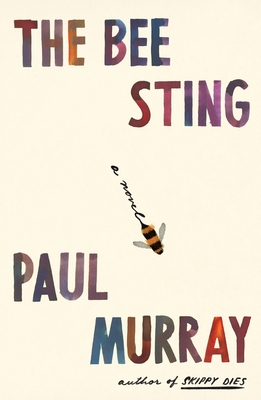
When things go wrong for Dickie Barnes in The Bee Sting by Paul Murray, they occur in seemingly slow motion yet the ensuing chaos is still surprising. What catches readers off guard is the number of lies the characters tell not only to one another but also to themselves.
The plot, told in the present and past, follows Dickie; his wife Imelda; daughter Cass; son PJ; and older brother Frankie. Dickie is in a downward spiral. His once-successful car business is falling apart and his family isn’t doing so well either. Reverting to their histories is significant: at which point did things go amiss?
Frankie, the small town’s popular football star, and Imelda were engaged. Dickie was always in his older brother’s shadow and left for Dublin to study at university to one day take over their father’s car business.
The author blends humor and pathos. How Dickie and Imelda came to be married and the bee sting (the title source) that forced her to wear her veil throughout the day of their wedding are major elements; as is the impact of their unraveling marriage on their children. These are main threads of this lengthy book– which at times is long-winded and other times impossible to put down.
Without revealing the ending, it’s necessary to note it is one of the most cinematic, edge-of-your-seat conclusions. It’s fraught with danger, fear and love … just like the rest of the book. However, it takes a long time to reach this point.
The Bee Sting
Four Bookmarks
Paul Murray
645 pages
Farrar, Straus and Giroux, 2023
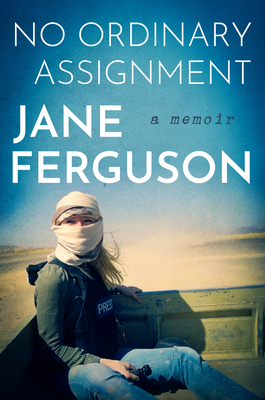
No Ordinary Assignment is Jane Ferguson’s memoir about her career as a war correspondent, primarily in the Middle East.
Ferguson grew up in Northern Ireland where conflict was a constant, so it’s little surprise that later she often put herself on the front lines that led, for example, to Arab Spring, the fall of Kabul and much more. This was initially as a freelance journalist and eventually on staff of Al Jazeera English and PBS.
The work meant leaving her home base, which through the years included Sana, Yemen; Dubai; Kabul; New York City; and others on a moment’s notice. The result tested relationships but allowed Ferguson to prove her abilities at getting the story.
Her experiences were fraught with danger; she was often the first reporter on the scene and usually the only female. She frequently embedded with military forces and was smuggled into several war zones.
Ferguson shares her love of Kabul and the heartbreak of its downfall, not just for herself but the Afghans who were forced to leave – she was among the last Western journalists to evacuate Afghanistan.
At times self-deprecating, Ferguson’s account of becoming an award-winning journalist is compelling, if, albeit, at times repetitive. Not to denigrate her exploits, but it’s difficult to keep track of so many close calls in the face of peril.
It’s evident she sacrificed a lot to pursue her goals. Certainly, she warrants admiration for her tenacity and desire to inform the public about world events that have impactful consequences.
No Ordinary Assignment
Three-and-a-half bookmarks
Mariner Books, 2023
320 pages
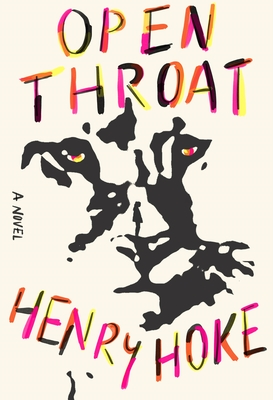
In Open Throat, a feral mountain lion roams the Hollywood Hills above Los Angeles (“ellay”). He’s hungry, but has his limits as to what prey he’ll pursue. He even protects a homeless camp, unbeknownst to its inhabitants.
Author Harry Hoke’s novel addresses climate change, homelessness and humankind’s encroachment on nature. Almost poetic in form, the lion narrates the story as he watches hikers and eavesdrops on their conversations. Some words he overhears often enough that they become part of his narrative: scarcity becomes scare city.
The lion witnesses the start of a manmade fire, something erroneously blamed on the homeless camp. The heat and smoke force the lion into a residential neighborhood where he finds shelter in the basement of a house he overheard someone say was owned by “slaughter.”
He’s soon discovered by the owner’s teenage daughter who calls him “hecat” and he refers to her “little slaughter.” (All quotation marks are mine, not the author’s).
There’s no punctuation no capitalization except for the personal pronoun I. Excluding the italicized statements from little slaughter, who treats him in as a pet and support animal, everything is from the lion’s perspective. When she takes him to Disneyland, suspending disbelief is challenged!
From 2012 to 2022, a puma known in the Los Angeles area as P-22 roamed Griffith Park. His presence was well known making him a celebrity of sorts. The only concern for Hoke’s predator comes from little slaughter; otherwise, interest in his wellbeing is, reasonably, overshadowed by fear.
Open Throat
Three bookmarks
MCD, Farrar, Straus and Giroux, 2023
160 pages
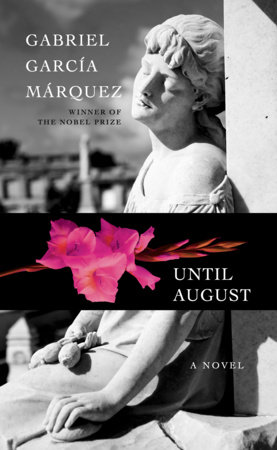
Until August Gabriel Garcia Marquez‘s posthumously-published novel lets readers revel in something new by the renowned author who died in 2014.
The novel’s background is interesting. Its bones were first published in The New Yorker in 1999. The Editors Notes at the book’s conclusion indicate the short story was to be part of something larger featuring the same main character. Garcia Marquez finished the work, but it had yet to be fully edited before his death and he felt the work should be destroyed. His sons decided otherwise: “In an act of betrayal, we decided to put his readers’ pleasure ahead of all other considerations,” they wrote in the preface.
Every August, Anna Magdalena Bach travels by herself to a nearby island to place flowers at her mother’s gravesite. It was her mother’s final wish to be buried there, although Anna never knew why.
Yet, the flowers are not the only reason she goes every August for one day and catches the return ferry to the mainland the next day. She also takes a lover for that one night. Each year, it’s a different man. Up until the first time, she had never previously been unfaithful.
Through the years, the island becomes more popular among tourists, which affect her visits. And, of course, Anna gets older. Readers learn about her reading habits, her preferred drink, how her family has changed and more. It’s all succinctly described in 107 pages rich with humor, tension and intelligence – complete with a surprising revelation.
Until August
Four Bookmarks
Alfred A. Knopf, 2024
129 pages, includes Editor’s Notes and Facsimiles of the Original Manuscript






 The Blue Page Special