Archive for the ‘Reviews’ Category

A journalism background isn’t necessary to appreciate the points made by Bill Kovach and Tom Rosenstiel in their book entitled Blur: How to Know What’s True in the Age of Information Overload. Anyone who reads or listens to the news should find this interesting. The authors examine the speed at which information, specifically news, reaches consumers/viewers/readers. Demand for attention from various media is overwhelming in its volume and content.
Plus, since news is disseminated via multiple outlets including Twitter, blogs, newspapers, television, and Facebook — among others — it’s often difficult to know who or what to believe. Consequently, the authors say a healthy dose of skepticism is not a bad trait to possess. The pair outlines a six-step process to help sift through the excessive information to discern fair and accurate reports about the world around us. They suggest asking: “What kind of content am I encountering; Is the information complete, and if not, what is missing; Who or what are the sources, and why should I believe them; What evidence is presented, and how was it tested or vetted; What might be an alternative explanation or understanding; Am I learning what I need to?”
Media literacy is nothing original among journalism scholars, but taking it to the public is. It’s something that benefits the general population. A camera and access to the Internet are all the tools necessary to record and distribute news stories. However, just because everyone can play the game, doesn’t mean everyone plays it well, accurately or fairly.
Blur: How to Know What’s True in the Age of Information Overload
Bloomsbury, 2010
203 pages, plus notes and appendix

Spice of Life is always one of those reliable go-to places. Well, almost always. Breakfast and lunch standards have been part of the Spice landscape for (20) years. In truth, the food is more than standard, especially considering the small cooking/prep area behind the counter.
This is a popular Manitou Springs hangout. It’s the spot to meet friends, have a cup of coffee or pick up a gourmet food item, including spices. Recently, a beer and wine license was acquired and tapas appeared on the menu. Unfortunately, the tapas fall into the average category.
By definition, tapas are small plates. Although they’ve been around for years, it seems there’s a tapas bandwagon that has recently come into favor in the Colorado Springs area. Without taking anything away from the Spice guys (Michael and Doug) or their establishment, snacks are a more honest description for much of the Tapas menu. Handfuls of olives, cheese, slices of baguette and roasted peppers fall short of a well-rounded tapas identity. Of course, if we had ordered the Caprese Sandwich or Chicken Skewers, something that involved cooking or more preparation, I’d have less to quibble about.

Nonetheless, the appetizers were tasty: a large variety of olives, a tangy caponatta, and a creamy Roule – in this case made with sheep’s milk and rolled in herbs. I’ve always been pleased with the granola pancakes and sandwichs (especially the Vegetarian Delight), I’ll stick to those. Although, when enjoying a glass of wine, it is nice to have a little nosh.
Spice of Life
Three Plates
727 Manitou Ave.
Manitou Springs, CO.

The images of a very pregnant police investigator and the frozen tundra evoked the movie Fargo. However, these are the only similarities with Asa Larsson’s Sun Storm. Larsson, no relation to Steig of the Dragon Tattoo mysteries, has crafted a novel rich with imagery but lacking in true suspense.
Rebecka Martinsson is a tax attorney in Stockholm called home to Kiruna, in northernmost Sweden, to help a friend suspected of murder. The gruesome, ritualistic crime takes place in a church run by the pastors who long ago banished Rebecka from their community. The back story, including the strained relationship between Rebecka and Sanna, more a former friend than a true one, fill most of the pages. What’s noteworthy is how compelling this is. In fact, at several points it’s easy to forget a murder investigation is underway, or that a threat has been made against Rebecka.
Larsson’s writing is stark, like the landscape of which she writes. Yet, it is easy to imagine the corrupt church leaders, their disappointed wives, the aggrieved Sanna, and a friendly neighbor. Rebecka is both insecure and confident. She tries hard to maintain an emotional distance from the area she was forced to leave. These very efforts make her interesting, but not altogether warm and engaging.
The only completely likeable character in the bunch is Anna-Maria Mella, the female investigator. It turns out, she actually is somewhat like the Frances McDormand role in the Coen Brothers’ film: intelligent, caring and ready to give birth.
Sun Storm
Three-and-a-half Bookmarks
Delta Trade Paperbacks, 2007
310 pages

The title alone, Cocktail Hour Under the Tree of Forgetfulness, is sufficient to lure the imagination, and Alexandra Fuller’s colorful, poignant memoir of her mother is enough to keep it willingly ensnared. This is a sequel to Fuller’s Don’t Let’s Go to the Dogs Tonight: An African Childhood, which I did not read. But then I didn’t read Cocktail Hour either. Instead, I listened to it.
Conditions have to be just right for me to turn to an audiobook. Usually, it means a road trip, but in this case I wasn’t going anywhere. In fact, I was stuck painting the downstairs bathroom.
Fuller’s mother, “Nicola Fuller of Central Africa,” is a character full of flaws, passion and imagination. The author makes it clear it was not easy being her daughter. Nicola is exuberant to the point of embarrassment of all around her. While Fuller does not hold back in detailing her mother’s domineering persona, neither does she waffle in showing the occasional moments Nicola allowed an approachable, sensitive side to appear. This is not a daughter-as-victim tell all memoir. It is a daughter recognizing who she is thanks to, and in spite of, her mother.
One of the joys of listening to this, rather than having read the book is that Nicola loves to sing. Like Nicola Fuller of Central Africa, the narrator breaks into song. Sure, I can imagine a tune in my head as I read, but here it was treat hearing this aspect of Nicola’s personality.
Cocktail Hour Under the Tree of Forgetfulness
Four Stars
Alexandra Fuller
Recorded Books, LLC, 2011
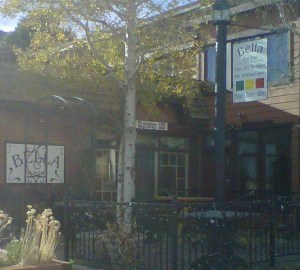
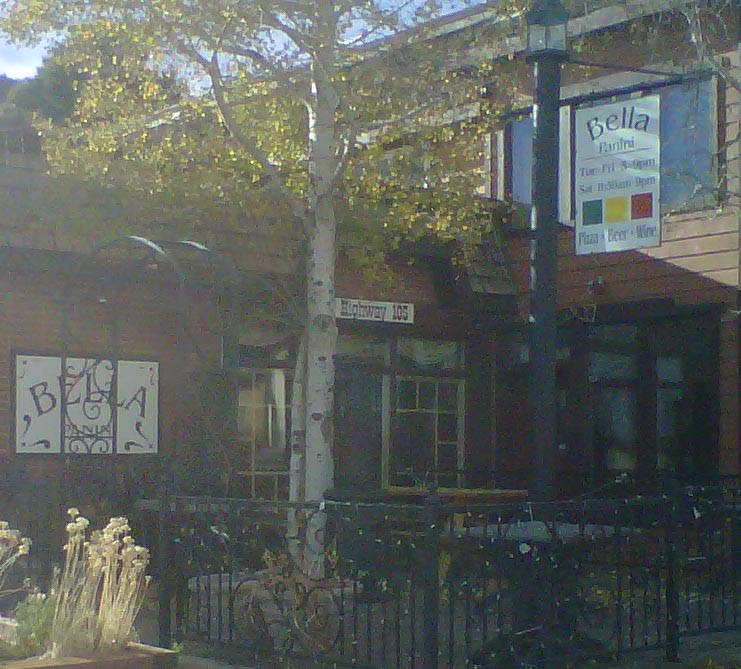
Most Italian restaurants go in for overkill in the dining room: red-checkered table cloths, Chianti bottles coated in streaming tears of wax, accordion music playing in the background. At Bella Panini, however, the emphasis on all things Italian takes place in the kitchen – where it should.
The friends who introduced us to Bella warned us that on a Friday night we’d be in for a lengthy wait to get a table. Somehow, we timed our arrival just right and were seated immediately. Although our companions are regulars, we all received a warm welcome.
The restaurant features an impressive beer and wine menu, but it’s the food that commands your attention. An array of pastas and Paninis are available, as are soups and salads. The thin crust pizza was tempting, but I was more attracted to the Stuffed Pasta Roll and the nightly fish special: Sea Bass Topped with Etouffee over a bed of Linguini.

The pasta roll is stuffed with sausage, spinach and mushrooms covered with a sun dried tomato pesto sauce. It’s lasagna gone round. The fish was equally creative. Who would think of Etoufee in a place called Bella Panini? The classic Louisiana stew made with shrimp and crawfish was just piquant enough to make sure I was awake to enjoy it. The mild, flakey sea bass was the perfect neutralizer.
The one nod to the décor is in the subtle murals evocative of rural Italy. That’s easy enough to dine with. Mangiare!
Bella Panini
Four-and-a-Half Plates
4 Highway 105
Palmer Lake, Colo

It’s difficult to imagine a more unlikely, unqualified person to serve as the U.S. ambassador to Germany as William E. Dodd during Hitler’s rise to power. It’s equally hard to visualize that his daughter’s scandalous behavior never, well, caused a scandal.
Erik Larson’s In the Garden of Beasts chronicles one of the four years Dodd spent in Germany first trying to ignore the problems, later attempting to convince others of the threats, fear and destruction caused by the Third Reich. He was equally inept at recognizing the potential dangerous behavior exhibited by his daughter Martha, who was attracted, it seemed, to any man who looked in her direction.
Larson relies on numerous letters, memoirs, newspaper articles, personal diaries and other accounts to piece together his narrative. The result is a well-constructed look at a fascinating time in world history. Beginning with Dodd as a professor at the University of Chicago, Larson tracks his path to Berlin, with brief stops through his backstory as a son of a poor North Carolina farming family. Although Dodd’s wife and son also moved to Germany, Larson’s focus is on the senior Dodd and Martha. He because of his position and his eventual, ineffective efforts to share his concerns/fears to greater powers; she because of the disreputable manner in which she socialized.
Larson’s descriptions of pre-World War II Berlin are riveting, as are his references to Dodd’s frugality. For example, Dodd insisted on shipping the family Chevrolet to Germany to save costs. Even in the face of the ensuing events, this is endearing.
In the Garden of Beasts
Three-and-a-half Bookmarks
Crown Books, 2011
488 pages, including end notes, bibliography and index

My friend, Esteban, knows food. He reads about it, talks about it, cooks it (exceptionally well), and, of course, enjoys eating it. When it came time to celebrate his recent birthday he knew just where he wanted to share a meal: Tapateria. This unassuming little restaurant serves, not surprisingly, tapas, or little plates, which are big on variety and flavors.
Placemats with photos of the tapas serve as the menus. A couple of chalkboards feature additional items, including drink specials and desserts. The laminated placemats are the least classy aspect in the place. Nonetheless, it’s hard to keep eyes averted. Each menu item is numbered and falls into one of four categories: Bocadas (snacks), Verduras (vegetarian), Mariscos (seafood) and Carne (meats).

We started with the Pan con Tomate, thick toasted bread slathered with a fresh tomato paste. Because this was reminiscent of Spain, Esteban requested adding Serrano. This air-cured, Spanish national ham was sliced paper thin and deliciously salty. We also ordered the Chorizo-stuffed Mushrooms. Both dishes featured distinct flavors in little bites, however, the mushrooms were disappointingly small. We also ordered the Tuna Carpaccio Salad. Four thin slices of fresh tuna atop a bed of spinach, with capers, cherry tomatoes, sliced red onions, red peppers and diced cucumbers drizzled with a creamy, tangy dressing. It was great way to end our lunch.
The meal was deliberately slow paced, and we could have easily extended our stay. When we finally left it was to enjoy a walk in the cool fall weather — so could we still talk about food.
Tapateria
Four Plates
2607 W. Colorado Ave.
Colorado Springs, CO

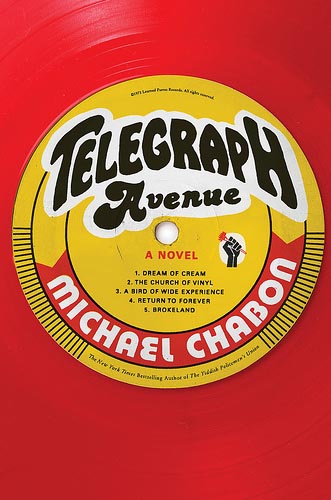
While wondering at the necessity, I marvel at the kind of concentration and craftsmanship it takes to write a single sentence that makes sense and holds interest as it spans 12 pages rife with characters, each distinctly different, who share a common struggle against fate, karma, some elusive and nebulous hand manipulating a game board with varying designs and obstacles; yet this engaging contest in Michael Chabon’s most recent novel, Telegraph Avenue, is played with swagger and fear by men, women and teenage boys fighting to hold onto dreams while desperately needing to relinquish the realities of their colorful lives.
I lack the skill, and inclination, to take a 100+ word sentence any further. Chabon can, but that’s the least of his mastery. Set in Oakland, his story about two men who run a (old school vinyl) record store in danger of being razed to accommodate a mega urban renewal project is a tribute to friendship, music and, oddly, especially family.
The novel is drunk with sensory images. Consider: “At 9:45 a.m. the first batch of chicken parts sank, to the sound of applause, into the pig fat.” Or: “… the loose weather stripping that peeped like a gang banger’s drawers from the seams around the back door.”
The major flaw lies in the glut of characters; initially, it’s difficult keeping track of who’s who. Nonetheless, it’s clear everyone, from actors to midwives, is just trying to get by in life while a poor economy, outdated technology and children get in the way.
Telegraph Avenue
Four Bookmarks
HarperCollins, 2012
465 pages

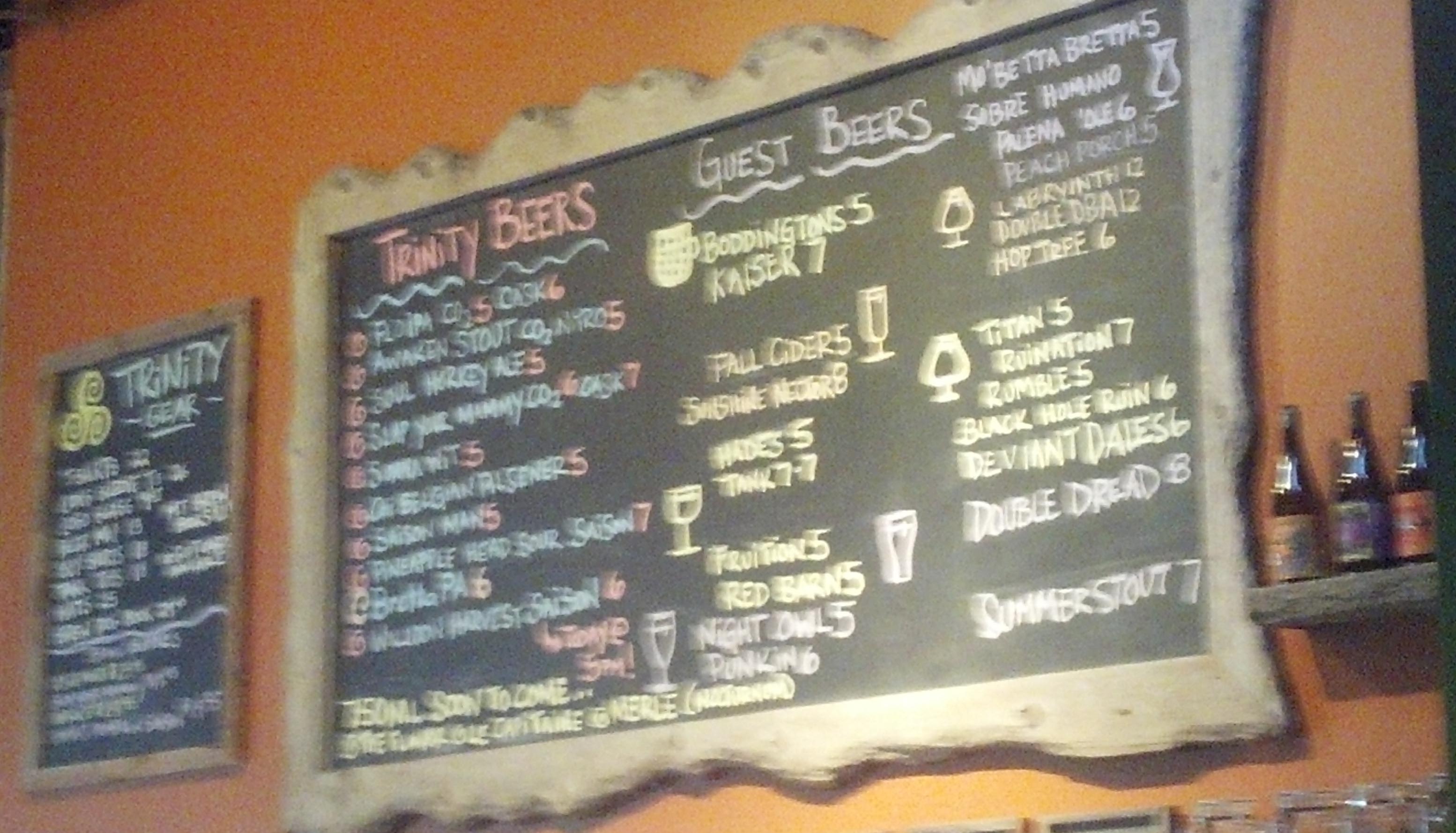
Although the window into the kitchen of Trinity Brewing Company is small, diners can almost see food being prepared. On the other hand, larger windows provide spacious views of the brew master at work. Brew pubs shouldn’t get a pass on food just because beer is their primary focus. Fortunately, Trinity appears to agree – even if the observation point is restricted.
Of course, we ordered beer. I was in the mood to sample the pumpkin saison, but it was only being sold in much larger quantities than we cared to consume. We settled for the Flo, the in-house I.P.A. Trinity brews its beer on premises, but also features around 35 different “guest beers” on tap.

I ordered the Soul Gouda Soup and Forest Salad of organic spinach, red onions, walnuts and mushrooms with a tangy Tahini-lemon dressing. The soup arrived at the table looking like a bowl of peanut butter topped with pretzel pieces and green onions. It’s the kind of thing most five-year-olds would push aside and refuse to taste. My palate is far removed from that kind of disdain, and while I agree it didn’t look very appetizing the soup was decadently rich, creamy and full of flavor. The buttery, smoky gouda was augmented by the Soul Horkey Ale.
My husband’s Balsamic Chicken Wrap was good but messy. We shared an order of Belgian Fries. These twice-fried potato sticks are served in a paper cone and come with a choice of sauces. The homemade Ketchup was a good pick.
Trinity Brewing Company
Three-and-a-half Plates
1466 Garden of the Gods Rd.
Colorado Springs, CO

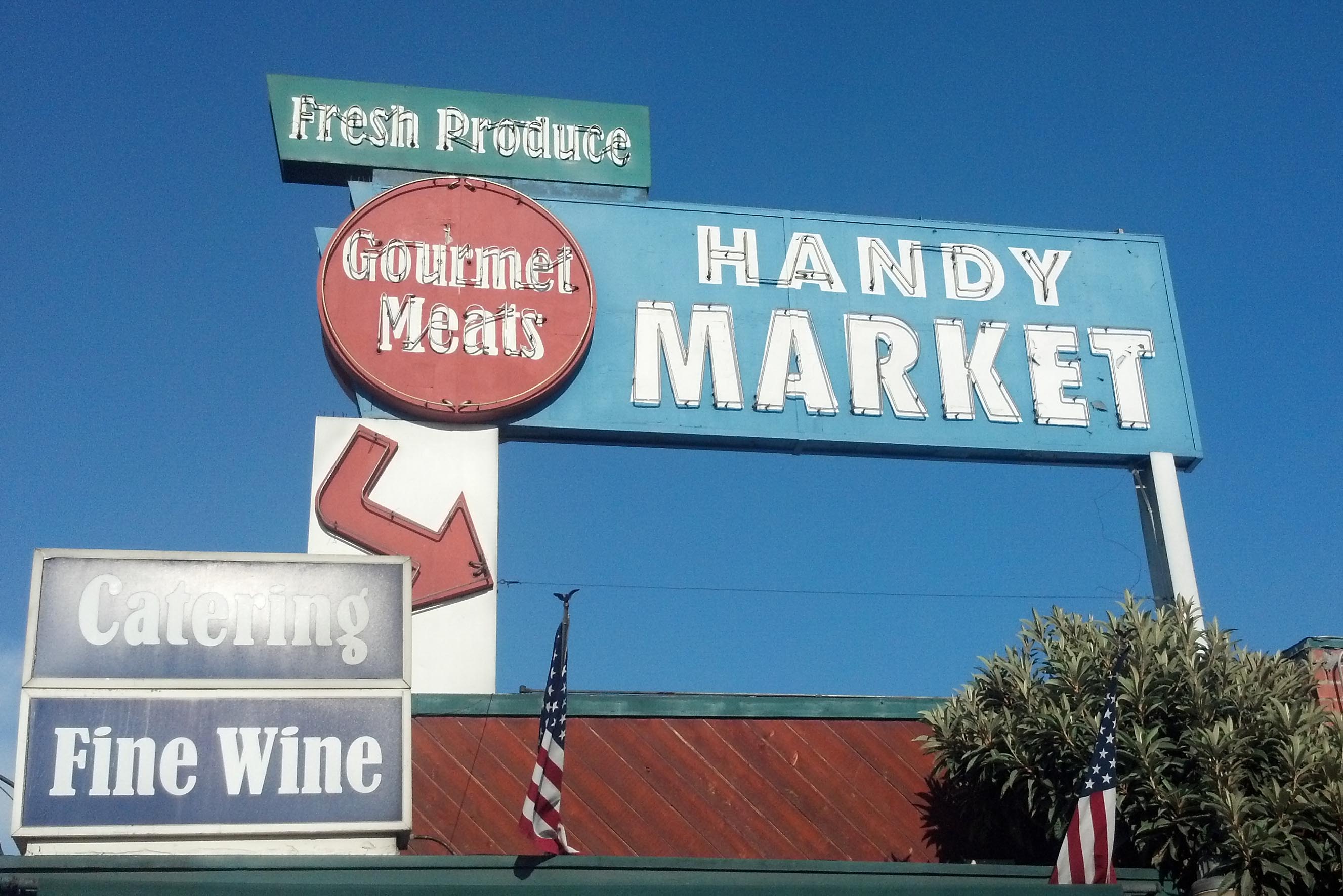
The Handy Market is just that: conveniently located and, despite its compact size, well-stocked with fresh produce, an impressive meat counter and a decent selection of wine and beer. And there’s the Saturday barbecue.
Every Saturday the industrial grills are loaded with a variety of meats cooked to fork-tender perfection. The aroma alone is hypnotizing. People stand in line – often a block long – to order ribs, chicken and tri-tip, but the bonus is the aroma emanating from the ballooning smoke of the grills.

A Santa Maria-like style is used: meats are cooked over a hot, hot bed of slow burning fuel, such as mesquite. Tri-tip is a lean roast with one fatty side from which the juices flow into the meat during the cooking process.
A recent visit to LA netted a trip to the Handy Market. We arrived later in the afternoon and the line was only about ten people deep. A wipe board identifies the meats, and orders are placed at the window of a trailer. The grills are set up next to it in the market’s parking lot. We ordered the trip-tip and chicken. With just the right amount of salty, smoky flavors, and optional tangy sauce, the Tri-tip is the meat of choice.
Grilled corn and salads, ordered at the meat counter, are offered. Once the meats, which are sold by the pound, are wrapped in heavy duty foil there’s the option of having them slathered in a thick, rich barbecue sauce. Go for it.
The Handy Market
Four-and-a-half Plates
2514 W. Magnolia Blvd.
Burbank, Calif.








 The Blue Page Special