Archive for the ‘Reviews’ Category
As disturbing as The Push is by Ashley Audrain, it’s nearly impossible to put down. It’s not exactly like watching a disaster unfold before your eyes, but it’s close.
Blythe Connor’s mother was not an exemplary maternal role model; although they never met, neither was Blythe’s grandmother. Audrain offers some background about these women, which helps explains the younger woman’s anxiety about becoming a mother herself. The pressure is magnified by her husband, Fox, who’s certain she’ll be a Mother of the Year candidate.
After their daughter, Violet, is born, Fox is the parent of choice; Mother and daughter never bond. Initially, Blythe is certain it’s her fault; however, as Violet gets older, Blythe becomes convinced she’s not entirely to blame. Something isn’t right with Violet, and Fox refuses to acknowledge it.
Blythe and Fox’s marriage falls apart, something revealed early in the novel. Audrain uses a direct address approach to Fox for Blythe to explain her side of the story. She recounts falling in love with him in college, the early days of their marriage, and Violet’s birth which marks the beginning of problems. She tries to rationalize the issues with Violet are only in her imagination. When the couple has a second child, Blythe is surprised by her deep feelings for him.
Audrain has crafted a profound, often dark, family portrait. Blythe is a sympathetic character, but the haunting question is whether or not she’s a reliable narrator. The result is compelling.
The Push
Four-and-a-half Bookmarks
Pamela Dorman Books, 2021
307 pages
The Last Romantics begins in 2079 when Fiona Skinner, a poet and climate awareness advocate, has finished giving a talk and opens the floor for questions. At 102, Fiona is taken aback when asked about the inspiration for one of her best-known poems. Her memory takes readers to 1981, the year her father died.
Fiona is the youngest of the four Skinner siblings: Renee, Joe and Caroline. Joe, the boy wonder, is idolized by the entire family.
Their father dies when Fiona is 4. His death affects each family member differently, but all recall their mother being emotionally absent. Fiona is too young to remember much about her father. The siblings are close, protective and blind to each other’s faults, especially Joe’s until they can no longer be ignored.
Tara Conklin has created an epic in the sense the story spans nearly a century. The siblings relationships with each other, their mother, friends and love interests (some fleeting, others less so) are a combination of airing dirty laundry as much as highlights in a family holiday newsletter, but is more enjoyable to read.
The gripping narrative moves from childhood’s halcyon days to the heartbreak of unrealized dreams. Even at its most depressing moments (and, spoiler alert, there are several) the Skinner kids are ones you wish you knew. As with most families, their lives are full of joy and tragedy, humor and tears. Fiona’s account of her youth, like most memories is cloudy at times, but beautifully vivid at others.
The Last Romantics
Four+ Bookmarks
William Morrow, 2019
352 pages
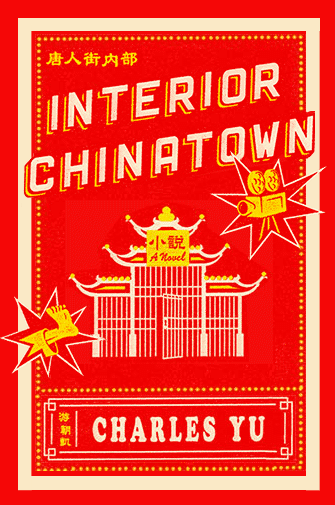
Clever, timely and important are what come to mind after reading Interior Chinatown by Charles Yu.
Written as a script for a fictional television show, along with some background about the characters/actors, the novel follows Willie Wu in his quest for the prime part of Kung Fu Guy in the police show “Black and White.” He, and his Chinatown neighbors, family and friends have been relegated to roles such as Generic Asian Man, Young Asian Man, Delivery Guy, Pretty Oriental Flower and Old Asian Woman, among other stereotypes.
The setting is mostly the Golden Palace, where the show is in constant production. Willie lives in an SRO, as do the other Asian cast members, viewed as interchangeable, above the restaurant/set. His parents live one floor below him in the unit where he grew up. They, too, have had various roles throughout the years.
Yu establishes the scene, the characters involved and provides production notes. Even his acknowledgements adhere to the theme. It doesn’t take long to realize the name of the television show is another example of racism with the main characters reflecting a hierarchy based on the “Black and White” title.
The script-like approach takes some getting used, but ultimately works well. The Wu family’s past isn’t part of the TV show, but is a major element of the narrative. Although the theme is serious, Yu injects humor and romance as Willie faces the dilemma faced by many regardless of race: attaining a dream but at what sacrifice?
Interior Chinatown
Four Bookmarks
Pantheon Books, 2020
270 pages
The Midnight Library is a point between life and death rather than a repository for books. The premise of Matt Haig’s novel is based on life choices with all of its regrets and often overlooked joys. Some decisions are major and others less so, but all have an impact. This is not a duh discovery, though. Instead, Haig offers, through Nora Seed, the opportunity to experience parts of her unchosen lives until she finds the one she’s actually meant to live.
Depressed, alone and uninspired, Nora decides she’s better off dead. Immediately following her suicide attempt, she finds herself at the Midnight Library which her high school librarian oversees. There are no other patrons and all of the shelves contain books about the different paths Nora might have taken based on her actual family, interests and relationships.
Thinking about the literal road not taken (yes, Frost’s poem is referenced) is engaging. There’s an element of mystery as Nora opens one book after another while trying to the find the right life. Although she considers many, time is running out. Nora needs to make a decision before her death becomes a point of no return.
Nora’s successes and pitfalls involve the usual: love, friends, family and career choices. With each book she opens, Nora learns more about herself and the world around her. There’s a sense of Ebenezer Scrooge’s experience here. Nora gets a wake-up call regarding her life, which, as it turns out, isn’t such a bad thing for anyone
The Midnight Library
Four Bookmarks
Viking, 2020
288 pages
Drugs, sex and rock n’ roll are major players in this novel recounting the history of a popular ‘70s band Daisy Jones & the Six. Taylor Jenkins Reid’s work is formatted like a documentary film with perspectives provided by the various personalities involved in the band and its past. Although the story may sound similar to that of actual groups, it is fiction.
Initially, the style is off-putting. There’s no single narrator. Instead, members of the band, old boyfriends, rock critics, musicians in other groups, close friends, spouses (and more) have a say. Their memories create the images of the characters and situations. Ultimately, it works.
As told through the eyes of others, readers learn about Daisy’s early family life, her entrée as a groupie in the LA music scene and her reckless lifestyle. She’s a force with a beautiful voice and a talent for writing songs. Across the country, Billy Dunne and his younger brother Graham form a rock band, mostly playing gigs in bars. Billy is also a song writer, and unquestionably the band’s leader. The Six, representing the number in the group, slowly makes a name for itself and lands a record deal.
The narrative addresses the demons in Billy and Daisy’s lives, along with their personal and professional successes. Along the way, vulnerabilities, compassion and disdain are among the feelings the author exposes.
Music is the backdrop, from recording studios to packed auditoriums when the band tours. Yet, it’s the personalities of the characters that create the loudest impact.
Daisy Jones & the Six
Four Bookmarks
Ballantine Books, 2019
355 pages
The Liar’s Dictionary by Eley Williams is an entertaining novel with two separate plots spanning a century. The primary setting for both storylines is a London printing house for the Swansby Encyclopdaedic Dictionary.
In its heyday, Swansby employed dozens to research words and their definitions. Peter Winceworth’s job addresses the letter S. One-hundred years later, Mallory, a young intern, is tasked with determining which words are real. Her publisher, part of the same Swansby family, has plans to digitize the dictionary.
Alternating between past and present, Peter and Mallory have distinct senses of humor, feelings of self-doubt and an apparent love of language. In an effort to exert a latent sense of power and personality, Peter invents words. These are what later keep Mallory busy.
Through her investigation, Mallory gains an understanding of the person behind the fictitious words. Although he is unknown to her, elements of his personality are revealed.
Williams begins each chapter with a letter from A to Z, each referring (in alphabetical order) to one of Peter’s concocted vocabulary. It’s a clever way of further connecting his work with Mallory’s.
Yet, not everything is rosy in either era. Peter is tormented for a lisp (he only pretends to have). This makes his efforts associated with S-words to be humiliating on the surface, but amusing since he could easily drop the speech impediment. Mallory’s torment comes in the form of repeated threatening phone calls.
The relationship across time is tied to fake words and people with real emotions.
The Liar’s Dictionary
Four Bookmarks
Doubleday, 2020
270 pages
The Searcher, like most of Tania French’s mysteries involves an Irish setting and new characters. Here it’s Cal Hooper, recently retired from the Chicago police force, in a remote village where he’s renovating a fixer-upper.
Hooper’s content to fish, repair his house and ready to mind his own business. His plans are interrupted when a local kid pleads for help in finding an older brother who disappeared months ago.
Despite efforts to not get involved, Hooper agrees to see what he can discover. Aware, he’s an outsider and not wanting to overstep local authorities or customs, Hooper goes about his investigation as stealthily as possible. It isn’t enough.
French’s description of Hooper’s run-down home, the harsh landscape and the village residents is like a travelogue designed to keep tourists away. Sure the area has some visual appeal, but little else going for it. Hooper soon learns he’s not as clandestine as he’d hoped in his efforts to locate the young man who’s gone missing.
In fact, he misreads the words and actions of most of those he encounters. He’s surprised when it’s clear the villagers, his neighbor in particular, are aware he helping the taciturn kid who showed up uninvited at his house.
Of course, the question, beyond the whereabouts of the missing person, is why everyone is keen to keep Hooper uninformed. French is a master at creating tension. The element of suspense veers towards the realm of thriller. It’s almost necessary to keep several lights on while reading.
The Searcher
Four Bookmarks
Viking, 2020
451 pages
I’m a cooking magazine and cookbook junkie. I like discovering new recipes and techniques, but I especially enjoy the narrative accompanying them. Ovenly is an excellent example of a cookbook with delectable recipes and engaging storytelling. It’s also the name of the authors’ New York City Bakery.
Agatha Kulaga and Erin Patinkin are self-taught bakers. In her introduction, Patinkin writes, “… (recipes are) not just about food of a certain time, but also about relationships, culture and tradition.” Kaluga also shares her own insights. Many of the bakery items were adapted from recipes handed down from their grandmothers.
The pair met through a book group. Ovenly’s early days were auspicious relying on a borrowed kitchen and an old Ford Explorer in which they made deliveries. Slowly, they built their brand, established relationships with neighborhood artisans (including a local dairy and brewery, among others).
Except for the first chapter which offers baking tips with suggestions for equipment and ingredients to have on hand, subsequent chapters focus on specific baked goods: biscuits, muffins, cookies, you get the idea. While most are sweet, as the subtitle implies several are also savory like cheddar mustard scones and bacon and blue cheese quiche.
The chapter on bar snacks is a surprise given that everything else, even the non-sweet goods, are associated with bakeries; for example, flavored popcorns.
Most of the recipes, rest assured, appeal to sugar cravings. Easy-to-follow instructions, impressive color photographs, and personal stories introducing each chapter make this enjoyable and sweet tooth appealing!
Ovenly: Sweet and Savory Recipes from New York’s Most Creative Bakery
Park Row, 2021
Four Bookmarks
272 Pages
It’s difficult not to marvel at Marie Benedict’s how’d-she-do-it in The Mystery of Mrs. Christie which takes the famous mystery writer’s disappearance as inspiration while adding a twist the title character would surely applaud.
Agatha Christie did, indeed, disappear resulting in an extensive search, massive media coverage and abundant speculation – something that continued long after she was found. When her car was discovered abandoned in early December 1926, the worst was feared. The explanation, when she reappeared 11 days later, was amnesia.
Benedict divides the chapters in her novel into two sections: The Manuscript and Days after the Disappearance – beginning with Dec. 4 to Dec. 14. The former recounts the relationship between Agatha and her husband, Archie, from courtship to his later infidelity and demand for a divorce. The alternating chapters describe Archie’s reactions, suspicions toward him and efforts to find the renowned writer.
References to Christie’s early works are made and Benedict provides a glimpse as to how mysteries became the genre of choice for the British author. The writing is engaging and the characters are vibrant. Archie, for example, is portrayed as a complete cad. He’s selfish, cold and calculating. However, when it comes to calculating, Agatha Christie, literally, wrote the book – several of them, in fact. Something Archie’s self-centered personality keeps him from recognizing, let alone appreciating.
Admittedly, the initial significance of the manuscript and its tie to the mystery eluded me. I’d likely be a disappointment to Miss Marple or Hercule Poirot; Marie Benedict would not.
The Mystery of Mrs. Christie
Four-and-a-half Bookmarks
Sourcebooks, 2021
264 pages plus Reading Group Guide and “A Conversation with the Author”
Although beautifully written, Maaza Mengiste’s The Shadow King was initially frustrating. I was anxious to meet the title character. He isn’t introduced until more than halfway through the novel at which point it becomes difficult to put down.
A shadow king, it’s explained, is essentially a double, someone who can pass as the real thing. In this case, it’s a peasant who looks like the exiled emperor in war-torn Ethiopia. Yet, the narrative highlights the role of two women: Aster and her servant, Hirut, in the battle against the Italians.
Before the invasion, before the emperor vacates his country, Hirut arrives at the home of Aster and her husband, Kidane an officer in the emperor’s army. Newly orphaned, Hirut must learn to accept her role as a maid to Aster who is jealous of the younger woman.
In 1935, Mussolini’s army is ruthless in its assault leaving many dead and homeless in its wake. Kidane assembles a small band of soldiers, with the women serving as cooks and nurses, forced to hide in the hills to avoid capture or worse.
Among the Italians are a ruthless, sadistic officer and his assistant, Ettore, a photographer tasked with documenting the war to put Italy in the best possible light. He has a conscience; his superior does not.
Hirut and Aster want to do more than be supporting players. Their efforts reflect the power and strength of women in even the most dire circumstances, along, unfortunately, with the easy dismissal of their accomplishments.
The Shadow King
Four Bookmarks
W.W. Norton & Co., 2019
428 pages





 The Blue Page Special