Archive for August 2013
 Union Station just east of the downtown Los Angeles is a beautiful historic landmark. It’s an actual train station. It also serves as a central public transportation hub, and it is the home of Traxx Restaurant.
Diners can choose from three dining areas: the small, dark dining room, an outdoor garden, or the small space cordoned off from the main hall. It’s the latter that provides lots of distractions, which is important, and people-watching opportunities. The muffled sounds announcing the arrival or departure of trains is exciting. The hall has natural wood, ceramic tile, ornate light fixtures and high ceilings.
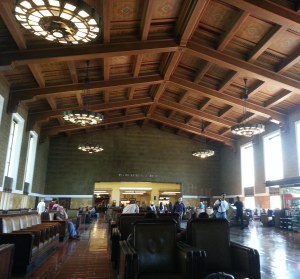
Back to the distractions, they’re necessary. The menu is ambitious, but doesn’t quite live up to the expectations imposed by Traxx’s environment. In some ways the dining area feels somewhat dingy, not dirty but worn. The sense of yesteryear evoked by the train station is very effective, but doesn’t work with the restaurant, at least at lunch when there’s too much light.
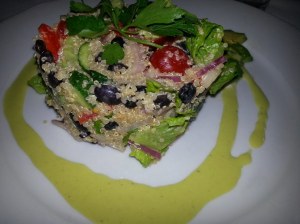
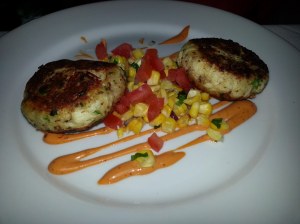
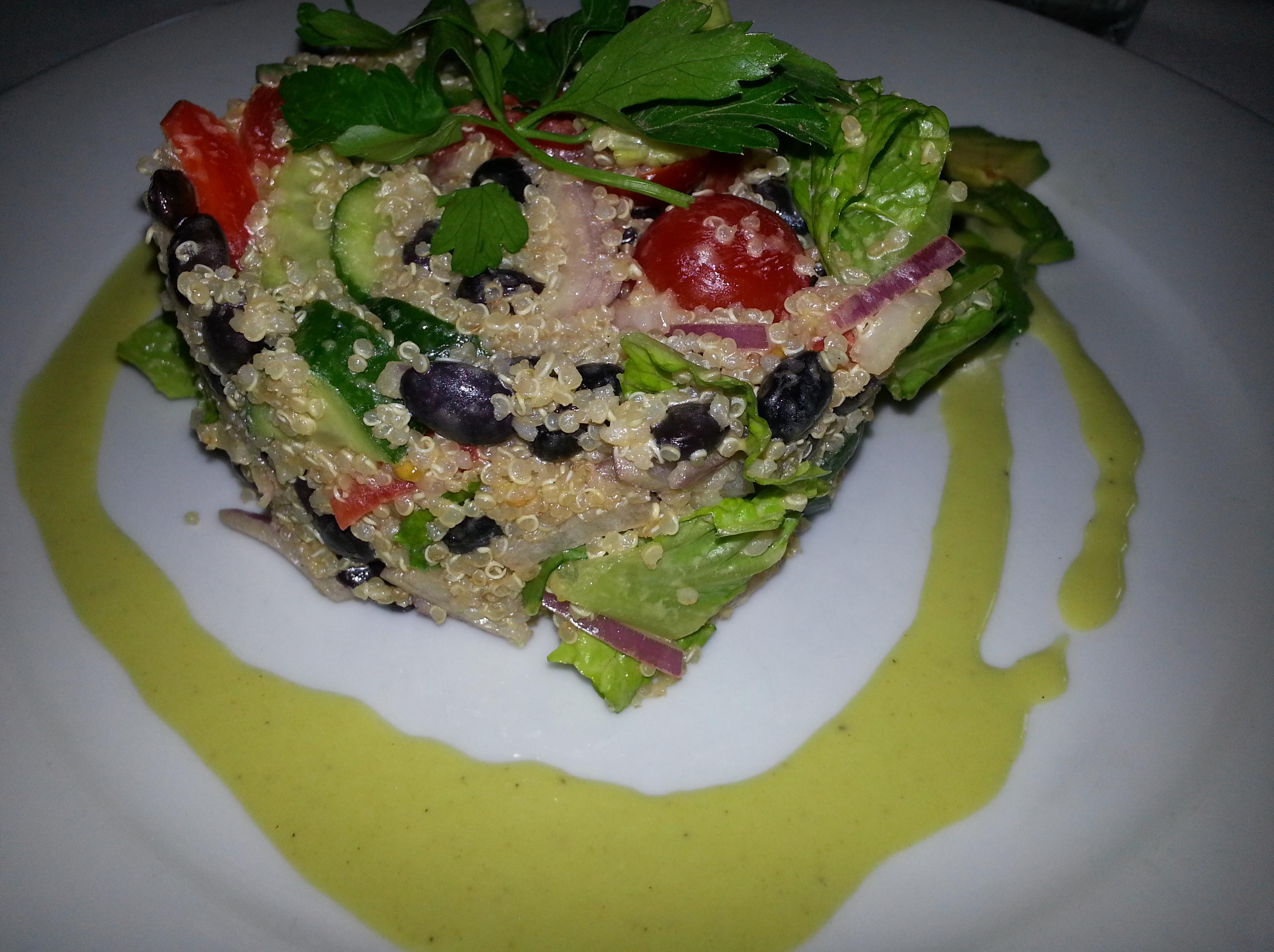
The Quinoa Salad was, nonetheless, beautifully plated. It featured cucumbers, eggplant, red onions, avocados, cherry tomatoes and lots of cilantro with an avocado vinaigrette. The onions were the bully on the plate; they overpowered everything. The Crabcakes were nicely cooked with a crunchy exterior and thick with crab served on a corn salsa with red pepper remoulade.
Even though I wasn’t traveling by train, I was more than ready to leave the station after discovering a long dark hair beneath the caramelized sugar layer of my crème brulee.
Traxx Restaurant
Three Plates
Union Station
800 N. Alameda St.
Los Angeles, Calif.

The Unlikely Pilgrimage of Harold Fry begins as a slow, methodical, unexpected journey – for the main character and the reader. Rachel Joyce’s novel practically crawls through the first few chapters. Then, like Harold, it picks up the pace only to falter on occasion like most adventures.
This poignant tale shares qualities of a love story and mystery, but is more the former than latter. And, it’s about different types of love: romantic, familial and companionable.
After receiving a letter from Queenie, a work colleague with whom he’s lost touch, Harold sets out to mail a response. Despite the fact that he left the house without his cell phone and is dressed somewhat formally, he decides to embark on a 600+ mile trek from one end of England to the other to talk to Queenie in person. He has no backpack, water bottle, map or other equipment. In fact, he walks in boating shoes.
The elements of a mystery come in the form of questioning the relationship between Harold and Queenie, as well as between Harold and his estranged son, David. There’s also the fact that Harold is married, although he and his wife, Maureen, do little more than share a past and the same house.
The characters’ imperfections are what make the story work, albeit inconsistently. As personalities evolve, foibles become more defined, but so do strengths. Harold loses his way in more than one manner, but he, like the reader, gains perspective even if it is not particularly satisfying.
The Unlikely Pilgrimage of Harold Fry
Three Bookmarks
Random House, 2012
320 pages

It’s obvious before entering the doors that Pizzeria Mozza isn’t a typical neighborhood pizza joint. The valet parking stand gives it away.
The menu is another clue; there’s also the fact that the owners are Nancy Silverton, Mario Batali and Joe Bastianich. Not surprisingly, their marks are everywhere: Silverton with the baked goods, and the men with their rustic Italian flair evident in everything, and all of them, of course, in the menu.
Our server would have happily explained the unfamiliar items, but it was fun studying the menu in advance. For example, Arancine alla Bolognese. I will eat almost anything with Bolognese, but it’s nice to know that at Mozza it’s served with rice balls made from creamy risotto, rolled in bread crumbs and fried. The texture is a marriage destined for bliss.

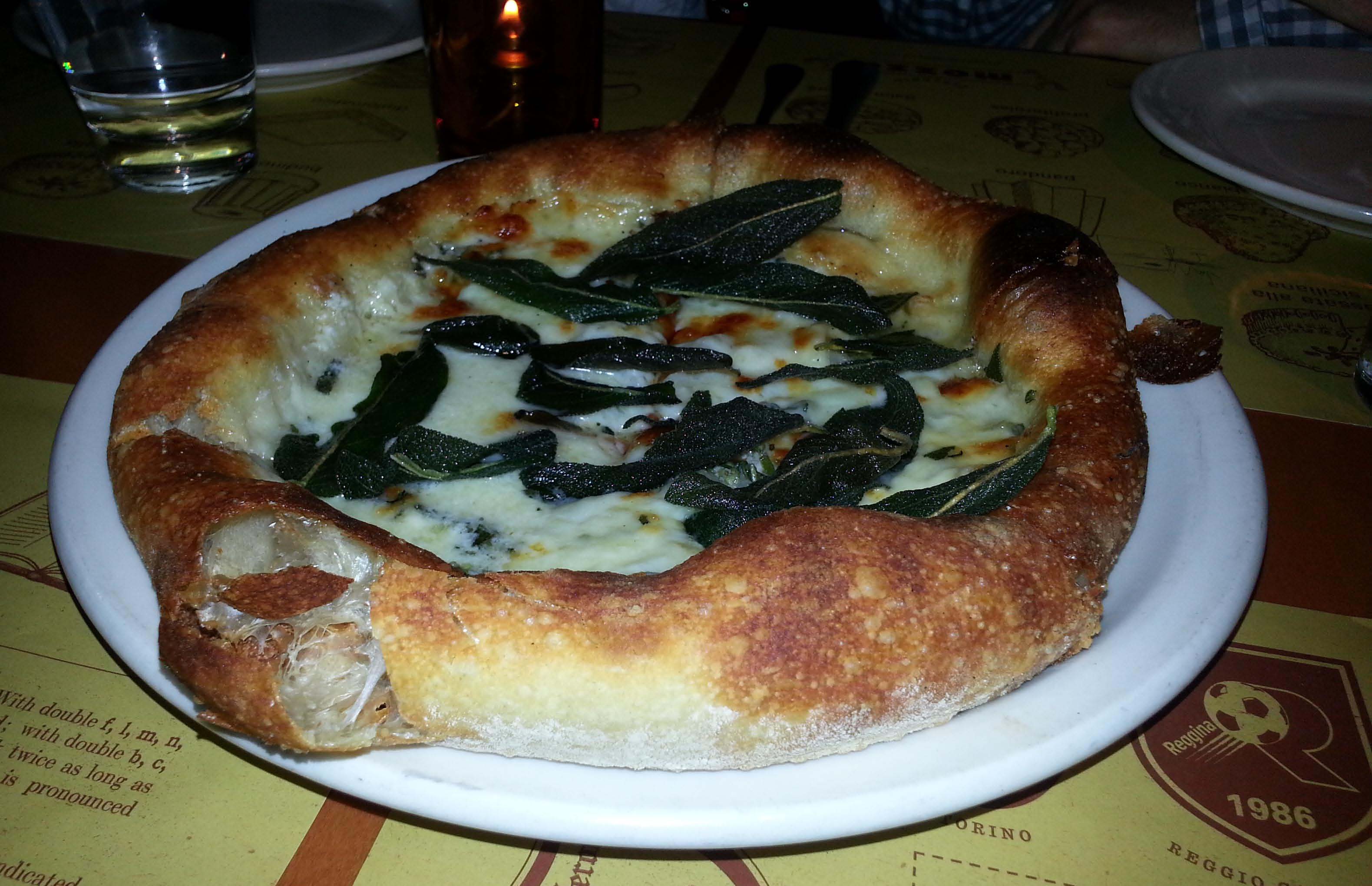
Although I don’t recall the sequence of arrival, each dish seemed to be better than the one before. The Fried Squash Blossoms filled with ricotta looks like an ugly duckling on the plate, but the burst of flavor reveals the literal inner beauty. The Bone Marrow al Forno is rich, beautifully plated, and decadent. It’s served with roasted garlic and toasted bread, and oozes fatty beefy flavor. The Chicken Wings alla Diavola, Prociutto di Parma, and Mozzerella di Bufala, and the Bianca pizza completed our meal. The latter, served with crispy fried sage and sottocenere, is just the kind of upscale pizza associated with valet parking. By the way, sottocenere, is white cheese with truffles.

Pizzeria Mozza
Four-and-a-half Plates
641 N. Highland Ave.
Los Angeles, Calif.

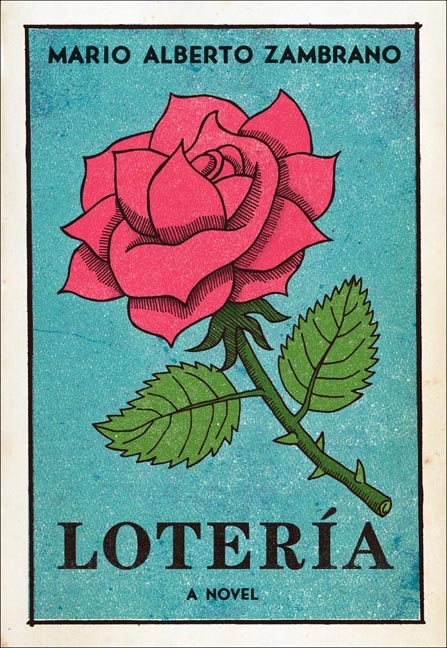
Eleven-year-old Luz Maria Costilla has a gut-wrenching way of storytelling. She’s a lot like Scout, daughter of Atticus Finch. Unfortunately, Luz’s father is nothing like Harper Lee’s heroic character. Nonetheless, in Mario Alberto Zambrano’s debut novel, Loteria, Luz is full of grit and independence.
Loteria is a game of chance, popular in Mexico, designed around cards each of which features an image rather than a number. The images, through riddles, are called out by the game’s dealer. The novel of the same name is built around the cards as Luz recounts the disintegration of her family and how she became a ward of the state of California. It’s rich with humor, sorrow and vivid imagery thanks to the game. The irony is that Luz isn’t talking; she has a journal and the cards to speak for her. Some knowledge of Spanish is helpful.
Luz loves her father. She sees past his many faults: he’s violent, he drinks, and has questionable parenting skills. In his own way, he loves his wife, his elder daughter Estrella and Luz. A few other relatives come in and out of the narrative, but the focus is on this nuclear family. For the El Borracho card, Luz recounts, “When Papi sang in the backyard I’d dance to whatever song he sang. He’d be a little drunk under the light of the porch, and for every four sips he took, I took one.” Not every card is as obvious in its intent, but as Luz puts them together they come to life.
Loteria
Four Bookmarks
HarperCollins, 2013
270 pages

Bouchon Bistro used to only offer fried chicken dinners once a month. Reservations filled within minutes; sometimes it felt like having one wrong lottery number. Now the odds are a little better: the crispy fried chicken in Thomas Keller’s restaurant is served twice monthly.
Although, the regular menu is available, I have to wonder why anyone would consider it. The sides, aren’t always the same, but by all accounts the chicken has a consistently high wow factor. Recently, the meal included fork-crushed potatoes, pole bean salad and Parker House rolls. The chicken is the star of the night. Plump from soaking in a lemon/herb brine for more than 12 hours, it’s deep-fried for a coating that shatters as soon as it meets your lips.
(Keller has numerous dining establishments. He’s authored several cookbooks, including Ad Hoc at Home featuring the fried chicken recipe. The description of the process and lengthy list of ingredients intrigued me, so last winter I tried it. It was good to know that, with fortitude and lots of time, the chicken can be made at home very close to what Bouchon serves. Keller also edits Finesse, a beautifully-designed magazine with articles celebrating the beauty of kitchens: design, cooking, gadgets and techniques.)

Back to that chicken, it’s juicy on the inside and crunchy on the outside for the perfect combination of texture and taste: buttermilk, rosemary and thyme. The bean salad in bacon vinaigrette, although flavorful, wasn’t as stellar as the creamy potatoes and rolls; even with a chicken-only meal I’d feel like a winner.
Bouchon Bistro
Five Plates
235 North Canon Dr.
Beverly Hills, Calif.
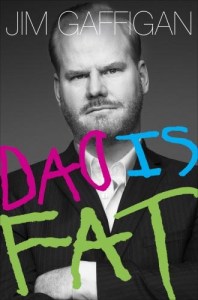
I hadn’t heard of Jim Gaffigan before his appearance on “Late Night With Jimmy Fallon” this past spring. Then I saw his name as an author on the library’s list of most requested books. I thought he was funny and decided to get in line for Dad is Fat. It was actually a long line. Although I enjoyed the book, I have to wonder if the library only ordered one copy.
Gaffigan writes about his life as the father of five young children. He, his wife and their brood live in a two-bedroom apartment in New York City. It’s a small space full of chaos, fun and lots of love. No aspect of parenting is off limits. He addresses everything from attending church to going to the park, from getting babysitters to sleeping — at least trying to. He writes, “I love the fact that if my children wake up scared or are feeling lonely, they can come in our bed. I just wish each and every one of them didn’t do it every single night.”
His humor blends sarcasm with self-deprecation. He considers his wife a saint, albeit a fertile one. Gaffigan is in the right career as a comedian, and his voice adjusts well to the page.
The book provides several laugh-out-loud moments, but after a while they start to wear thin. For people of a certain age, his family may sound reminiscent of sit-coms from the 1960s. Perhaps someday it will be the basis of one on a cable channel.
Dad is Fat
Three Bookmarks
Crown Archetype, 2013
274 pages
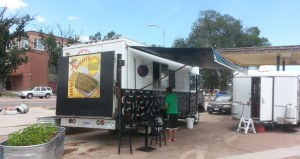
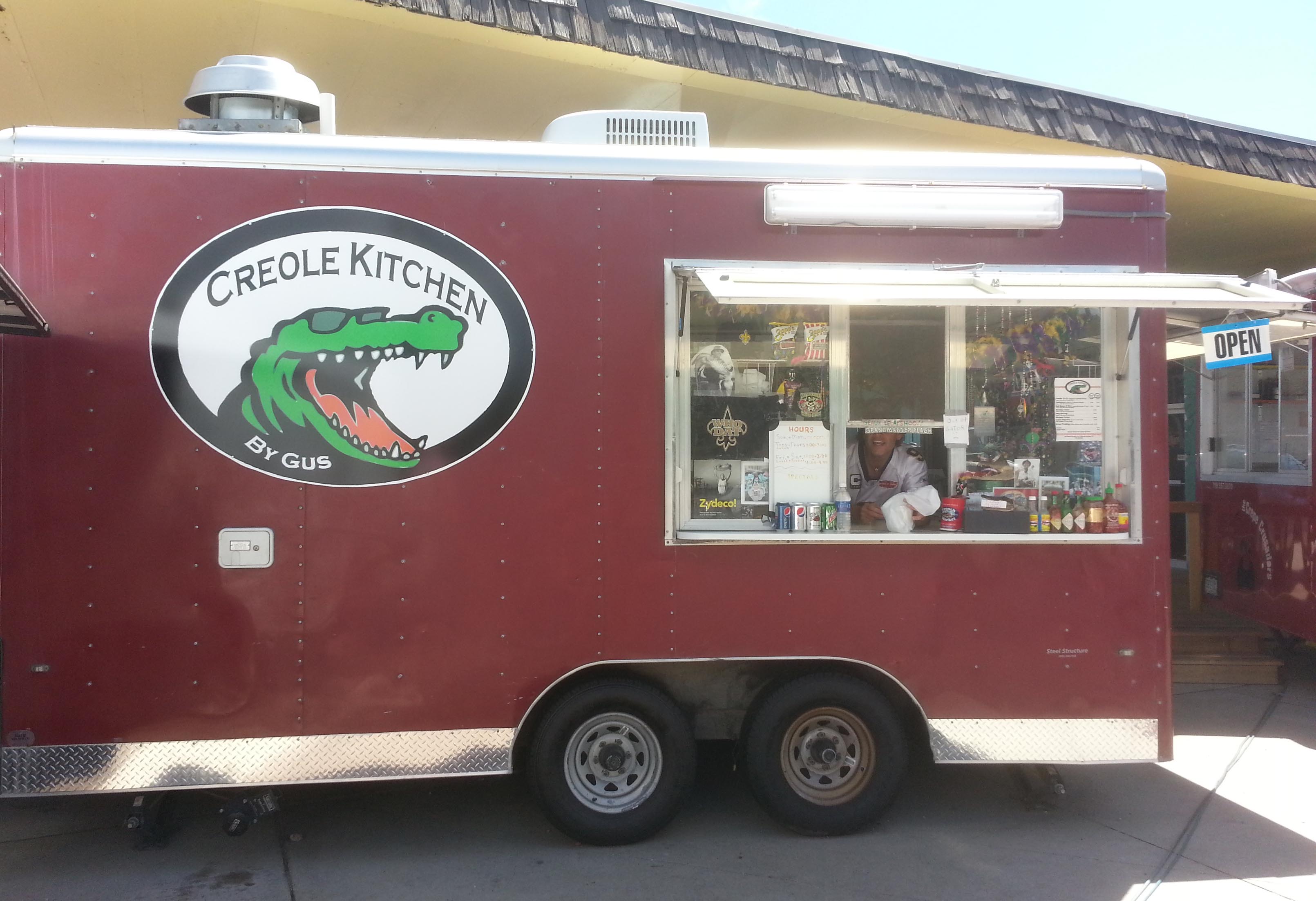
Food trucks are an interesting phenomenon. They have a very different persona from other dining venues. After all, the cooking takes place in hot, cramped quarters – on wheels, which means they could be gone tomorrow. However, downtown Colorado Springs has a food truck court thanks to Curbside Cuisine in the paved area of a one-time gas station. On any given day, between the hours of 6:30 a.m. and 8 p.m., made-to-order food is being served.
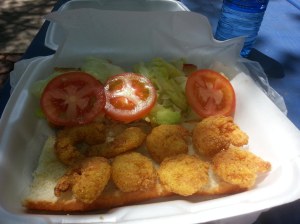
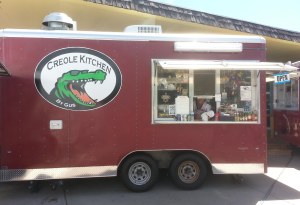
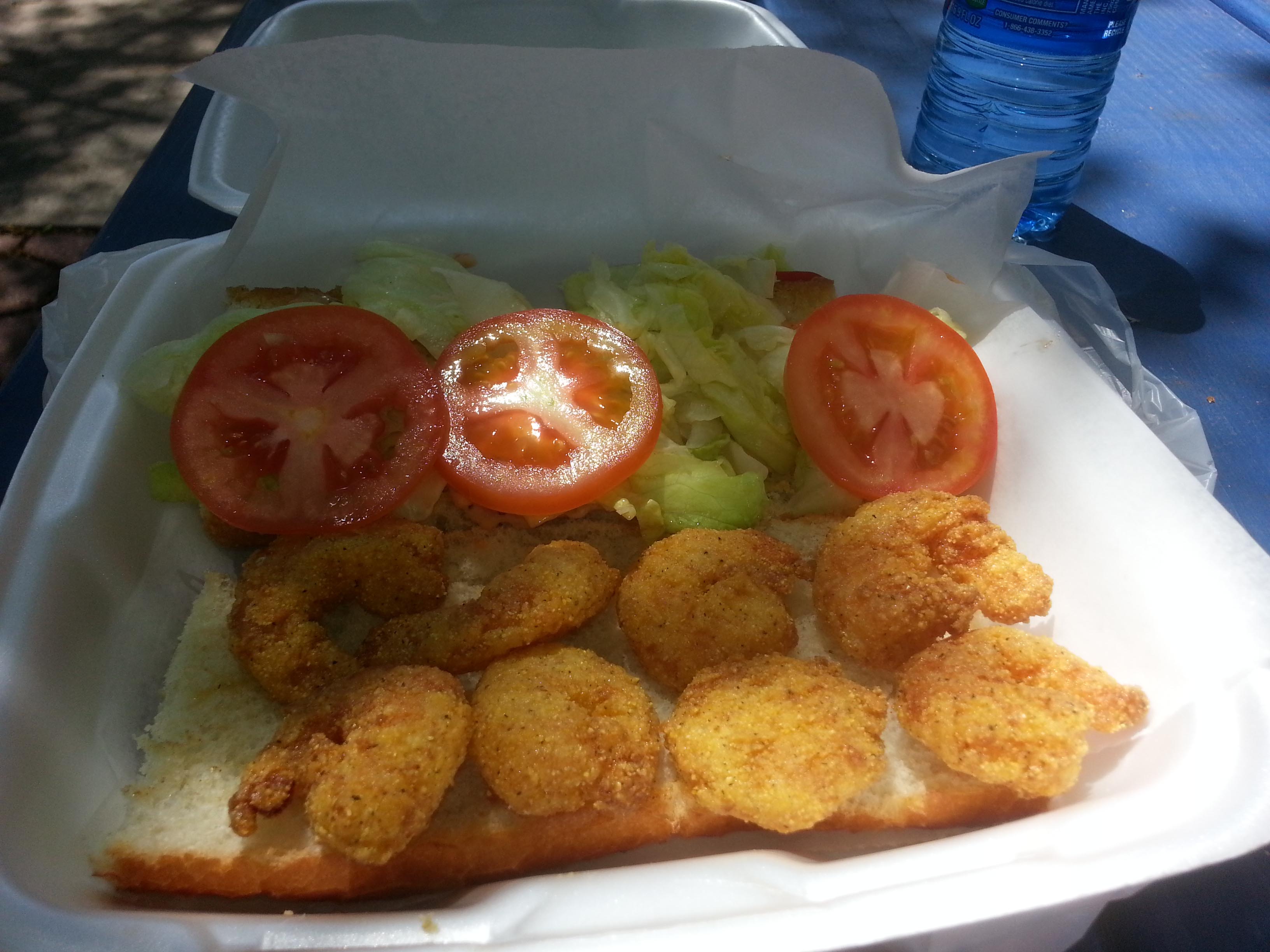
While perusing the menus of the various trucks (whose offerings on our recent visit included pizzas, wraps, crepes and the two we selected: Creole Kitchen and Maco’s Tacos), a woman walking away from the former, said, “The Shrimp Po’boy is to die for.” It had already caught my eye. There was further affirmation when I ordered: “That’s my best seller,” said the owner. And with good reason. Tender, lightly-breaded shrimp fried so quickly there’s no hint of oil, sit on a roll slathered with tangy remoulade loaded with lettuce and tomatoes. It could be habit forming.
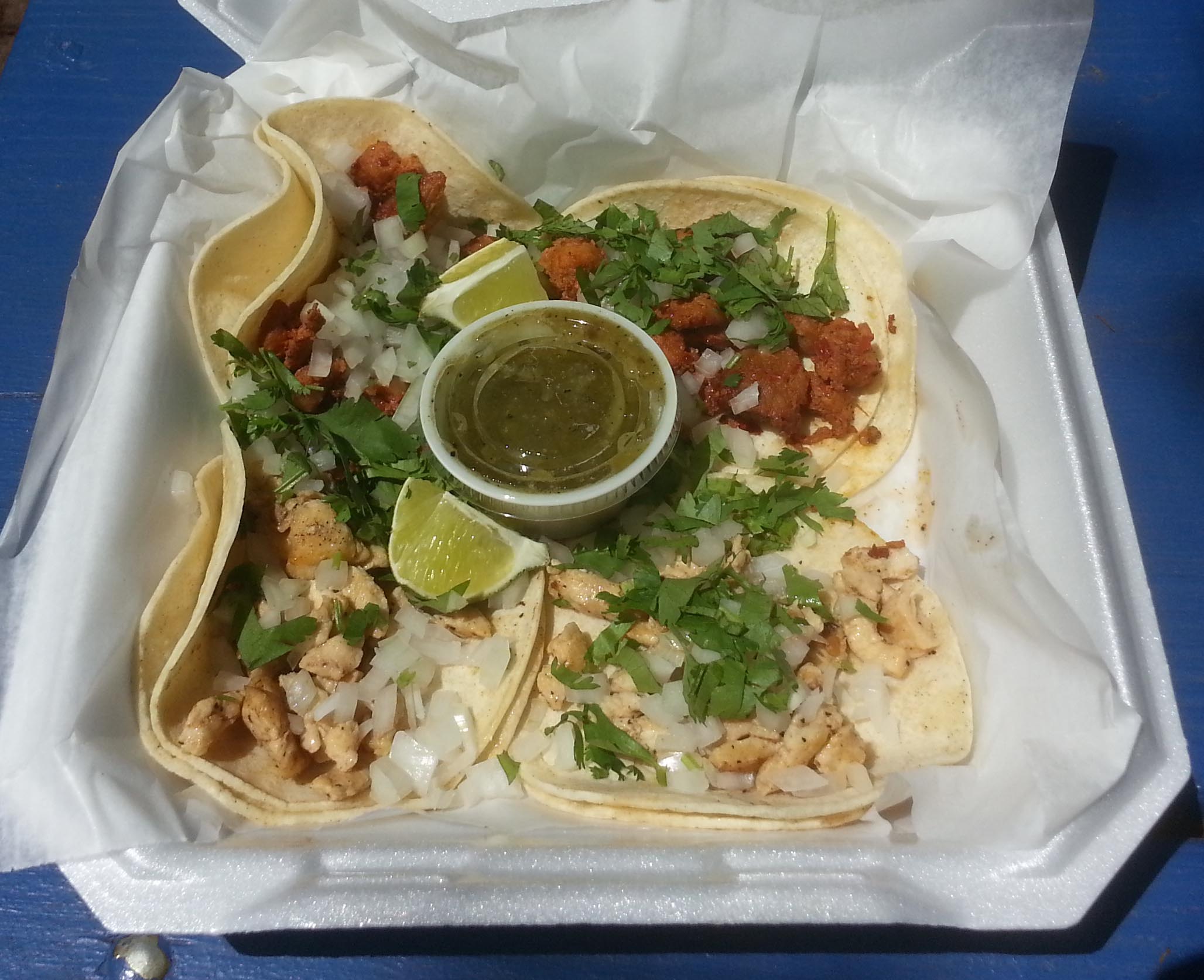
The tacos were less impressive, although they’re a bargain at four for $5. The chicken was subtly seasoned, as was the pork, but both were overpowered by an abundance of diced onion and fresh cilantro – fortunately, I like those flavors. Burritos and tamales are other options at Maco’s.

The beauty of Curbside Cuisine is that the trucks are likely to consistently be in the same spot. Although, I’d follow Creole Kitchen almost anywhere.
Curbside Cuisine
Four Plates
225 N. Nevada Ave.
(Southeast corner of Nevada and Platte avenues)
Colorado Springs, Colo.

Titles, like first lines, can make or break a novel’s appeal. Certainly, if Meg Wolitzer had called her most recent book The Borings, instead of The Interestings, it might not have garnered much attention (which it has). Yet, there’s something pretentious about it, which is just the tone – along with some irony – the author instills in this contemporary epic about friendship, love, human potential and disappointment.
Wolitzer’s account moves back and forth through time, but it all pivots around the beginning which occurs at a camp for the arts in the summer of 1974. “The Interestings” is the name six teenagers give themselves; it’s meant to separate them from everyone else in camp. They’re talented, to varying degrees, mostly privileged and self-absorbed. Even as they move through adulthood, they carry those same qualities. Yes, they mature and Wolitzer is at her best illustrating their personal struggles and triumphs, but they can’t quite shake idea of their old moniker.
The power of friendship, particularly among four of the six, is an underlying theme and it, more than anything else, drives the novel. The characters’ ability to fit in and accept themselves also delivers some impact.
The exhaustive story spans more than five decades in a way that’s reminiscent of Forest Gump. Instead of a sound track to identify the passage of time, Wolitzer relies largely on political events. Although the characters are interesting, it’s not as much as they think – or as much as we want them to be.
The Interestings
Four Bookmarks
Riverhead Books, 2013
468 pages

Denise Kiernan’s The Girls of Atomic City: The Untold Story of the Women Who Helped Win World War II made me wonder if it would appeal to anyone unfamiliar with Oak Ridge, Tenn. I lived in Oak Ridge for five years after college. It was a beautiful, fascinating place thanks to its population of highly educated people from all over the world and its impressive, albeit once-clandestine, past. Kiernan writes about how, and why, the town came into existence by focusing on the role of the thousands of women (and men) who did their part to help end WWII. Most had no idea what they were doing or why.
In 1943, people from major metropolitan areas and rural communities were recruited to relocate to a town which didn’t even exist on a map. Kiernan conducted interviews with many of the women, now in their 80s and 90s, to recreate the conditions they endured knowing only that their work contributed to the war effort. Friendships formed, romances ensued and construction progressed at a rapid rate. All the while no one could talk about their jobs. Yet, this was an integral part of American history.
Uranium, referred to as Tubealloy, was, in fact, being enriched for its ultimate use in the atomic bomb. Oak Ridgers learned about the secret the same time as the rest of the world when Hiroshima was bombed.
The advantage to knowing Oak Ridge is that it’s easy to envision Kiernan’s descriptions, but the book’s fascination is far-reaching.
The Girls of Atomic City: The Untold Story of the Women Who Helped Win World War II
Four Bookmarks
Simon & Schuster, 2013
371 pages with notes and index
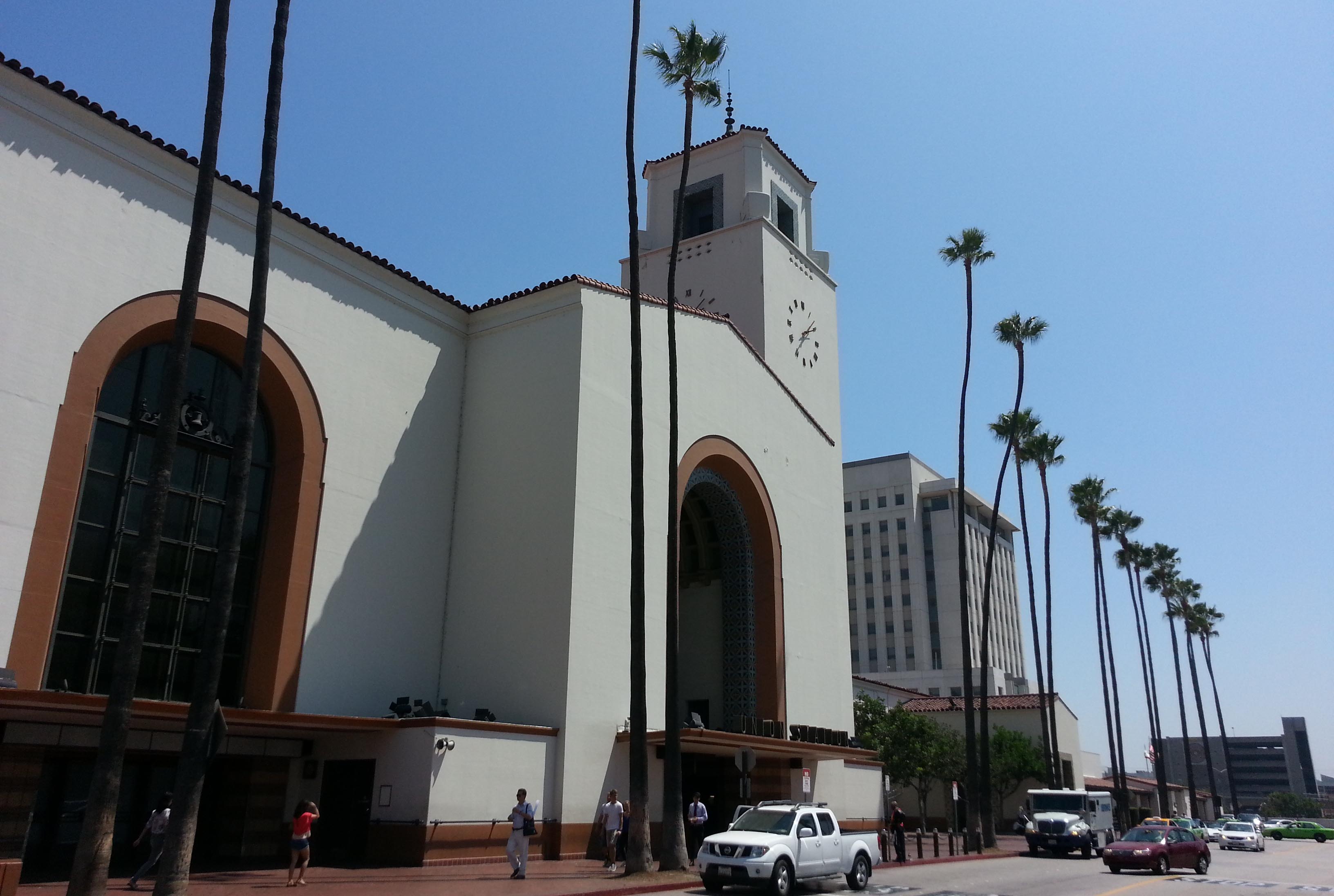 Union Station just east of the downtown Los Angeles is a beautiful historic landmark. It’s an actual train station. It also serves as a central public transportation hub, and it is the home of Traxx Restaurant.








 The Blue Page Special