Archive for the ‘truth’ Tag

Deciding what to believe   Leave a comment

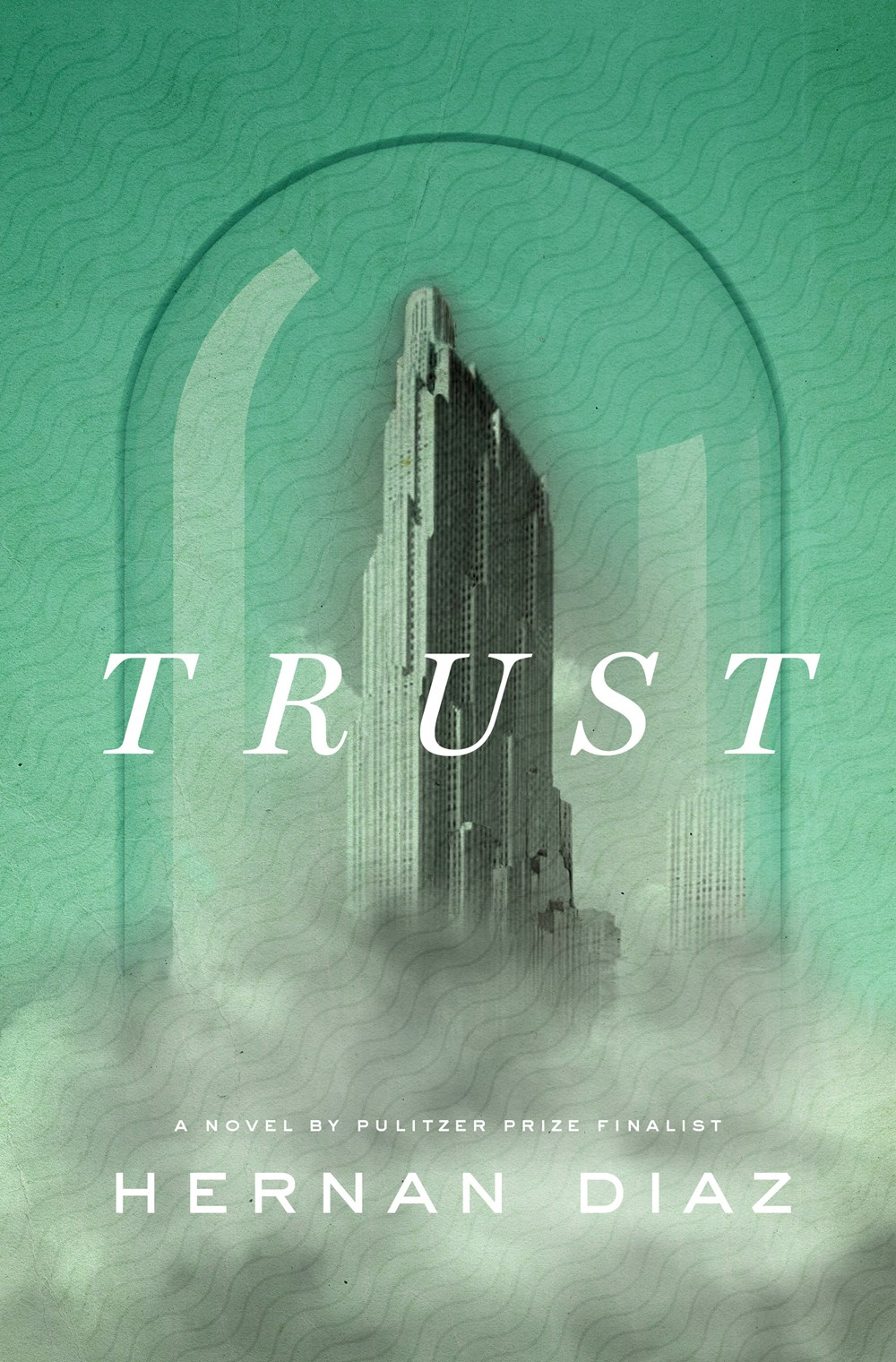
Initially, Trust by Hernan Diaz is confusing. There are four different parts to the novel, but it works to think of this as four mini- books in one.

The different elements are: Bonds; My Life; A Memoir; and Futures. Each has a different author, but all about Andrew and Mildred Bevel.

“Bonds, A Novel by Harold Vanner,” opens Diaz’s series. It was written in 1937 as a work of fiction about Benjamin and Helen Rask, their wealth and lifestyle, set mostly in New York City. It’s the roaring ‘20s, but the couple, neither flaunt their wealth nor seek attention. Helen, does however, fund foundations and is a patron of the arts.

Next, “My Life by Andrew Bevel”, is a series of the wall street tycoon’s life intended as the basis of a novel, but in this context appears as a haphazard assortment of half-finished notes. This is meant to counter Vanner’s novel, based on the Bevels; it took a while to figure this out.

The third part is written by a newly introduced character, Ida Partenza. She’s hired by the now elderly Andrew Bevel to tell what he considers to be the “true” story about the Bevels. She’s given limited access to records and transcripts. Bevel wants Ida to portray their lives as he sees fit, which isn’t necessarily the way things happened. This is something Ida soon realizes, until she finds the final segment: “Futures written by Mildred Bevel,” which is more of a diary, but connects all of the components while resolving any residual confusion.

Of course, Diaz is the author of Trust in its entirety. It’s best described as a mystery and a reflection on the past. What we want to recall isn’t always the way things actually were.

Trust

Three and three-quarters bookmarks

Riverhead Books, 2022

402 pages

A #Movement, Journalism and Truth   Leave a comment

46650277. sy475

The phrase Catch and Kill, the title of Pulitzer Prize  winner Ronan Farrow’s account of power brokers’ abuse of women, has its roots in journalism. It refers to a media outlet obtaining the rights to a story and then letting it rot. That is, the public never sees it.

Farrow writes of his efforts to expose Harvey Weinstein who used his power as a Hollywood producer to take advantage of women by promising, or at least suggesting, he would help further their careers in exchange for sexual favors. This isn’t about a singular or a few incidents; there are many, but it took Farrow’s determination to uncover the truth.

Although Weinstein is the focus, Farrow also recounts efforts by other men in similar roles to keep their secrets from surfacing. These included threats of intimidation to keep the victims of abuse silent; spies, financial payouts and efforts to kill the story – not just once but multiple times.

When Farrow began working on the story he was an investigative reporter for NBC News. The more information he obtained, including on-the-record statements from the victims, the more the was thwarted by upper management at the network. He was finally given approval to pitch the story elsewhere, which is how it came to be published by The New Yorker.

Farrow recounts the numerous fact-checking, the uncovering of documents and a general resistance to revealing the facts associated with how the story broke. He imbues the narrative with sensitivity, vulnerability, occasional humor and tenacity.

Catch and Kill
(subtitled: Lies, Spies, and a Conspiracy to protect Predators)
Four-and-a-half Bookmarks
Little, Brown and Co., 2019
448 pages (includes index)