
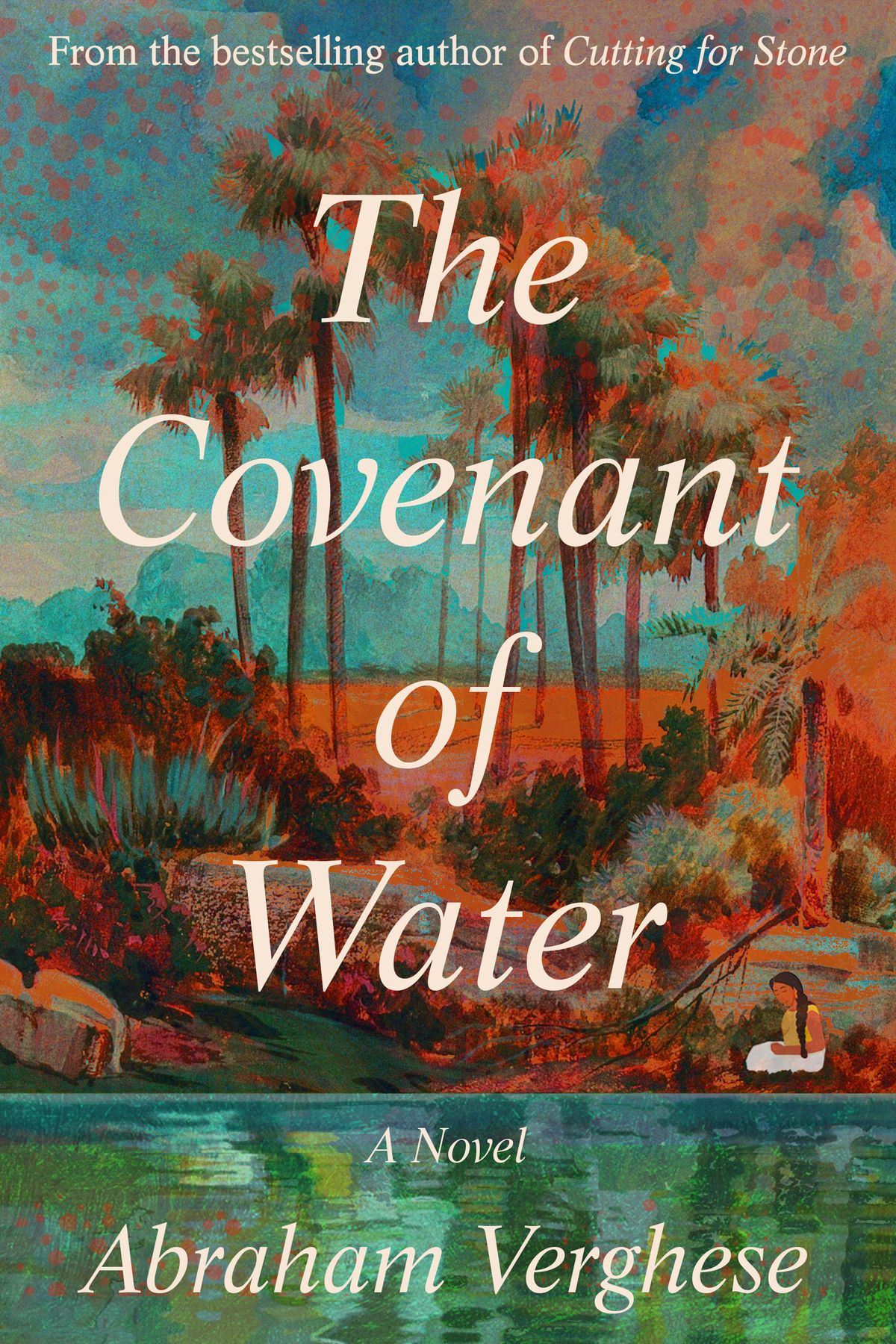
Whether it’s referred to as a tome, an extravaganza, or even a whale of a novel, all are apt physical, and some are literary, descriptions of Abraham Verghese’s The Covenant of Water. At more than 700 pages, if nothing else, it’s a marathon of a read.
Set in southwestern India, it encompasses 1900 to 1977. The narrative follows three generations of a family whose members have a history of drowning, known as “The Condition.” Besides the expanse of time, much of what adds to the book’s length is the number of characters introduced, then seemingly discarded only to eventually resurface.
Big Ammachi is the (direct and indirect) loving force binding all of them together. It begins with her as a 12-year-old girl betrothed to a much older widower with a young son and thriving farmland.
The author’s fortes are evident in the descriptions of the numerous evolutions of the relationships among those populating the book. This is rivalled only by the portrayals of the characters and the imagery of the various landscapes visited in the novel. Along with the family’s farmland, the latter includes Madras and a leper colony. Everything is connected; it just takes a while to see how.
Indian history, the caste system, British Raj and medicine are significant elements.
Tragedies and joys abound throughout this epic, with themes of faith and resilience. After questioning whether so many characters, settings and, ultimately, pages were necessary, it’s difficult to see how the story could have been told any other way.
The Covenant of Water
Four-and-a-half Bookmarks
Grove Press, 2023
724 pages, including acknowledgements and notes

 The Blue Page Special
