Archive for the ‘class issues’ Tag
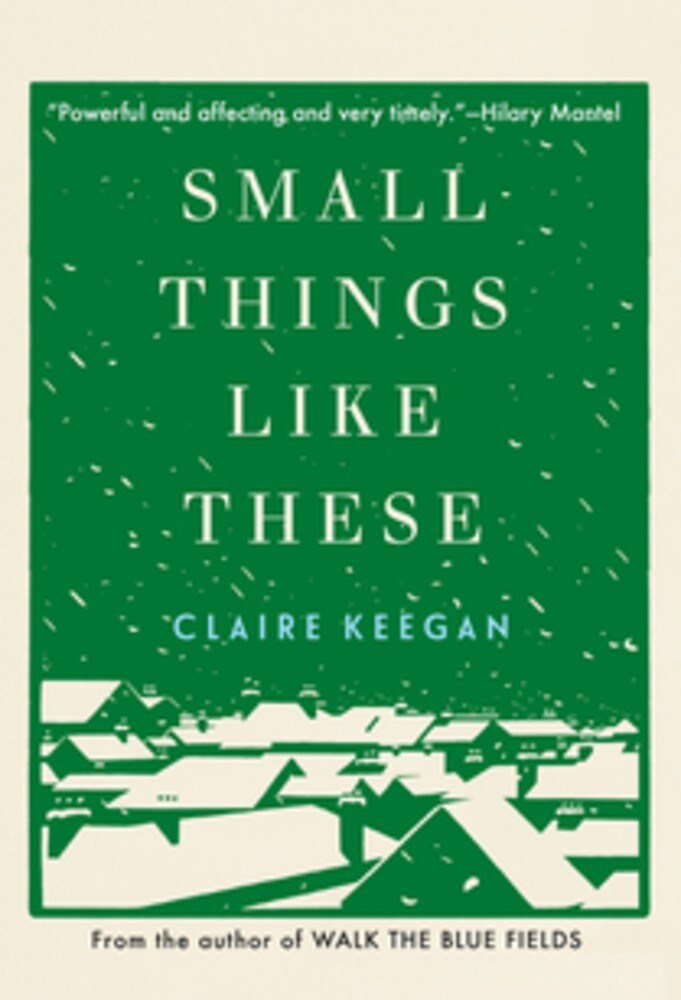
Silence is the same as complicity in Claire Keegan’s short, but impactful novel Small Things like These.
Bill Furlong was lucky; his unwed mother was allowed to stay on as a domestic worker throughout her pregnancy in the prosperous home of Mrs. Wilson, a protestant. The reference to this religion distinction is important.
The young boy grew up, knowing he was different, but also fully aware that he was loved and a beneficiary of the wealthy woman’s kindness. The only consistent male figure in his life was Ned, Mrs. Wilson’s farmhand. Through the years, Bill never learned the identity of his father, but later married and had four daughters.
The setting is a small Irish village during a particularly frigid Christmas season. As a coal merchant Bill is kept busy with deliveries, including one to the nearby convent. There he finds a young, pregnant girl locked in the woodshed. He’s deeply moved and this causes him to think about how often he wondered about his father particularly when he was young.
The terse, yet descriptive narrative is chilling – not just because of cold temperatures, but the unwritten awareness of the Magdalen laundries. Bill is keenly cognizant of all that he has and what life might have otherwise been for him and his mother.
This is a quiet, little, heartfelt work addressing hard life truths.
Small Things Like These
Four Bookmarks
Grove Press, 2021
118 pages, includes acknowledgements

Easy to visualize characters, plots driven by class conflict, issues of the heart (or both) and a very proper sense of, well, what’s proper are what make English Lit so appealing to me. Yes, the above could easily refer to classic British literature, but it also applies to Helen Simonson’s Major Pettigrew’s Last Stand – a very contemporary work.
Simonson’s novel begins with a chance meeting between the Major (his first name is Ernest, while apt doesn’t fit him as snugly as his military title) and Mrs. Jasmina Ali, a Pakistani shopkeeper. Although their paths have crossed in the past, this encounter comes at a vulnerable point in the Major’s life: he’s just learned of his brother’s death. What follows is the evolution of a friendship based on a passion for books and widowhood.
Both characters are thoroughly engaging. The Major in his stilted, decorous yet sensitive manner has appeal, and Mrs. Ali is an exceptionally intelligent woman burdened by a certain sadness associated with being considered an outsider in her home country. Simonson portrays people we know or would like to; they’re well-defined individuals with foibles, principles and dreams. The cast of lesser characters, including Roger, the Major’s obnoxious status-seeking son, enhance the story.
The novel moves at a leisurely pace as the Major and Mrs. Ali embark on a relationship that puts a spark in their step and ultimately has tongues wagging throughout the village. Simonson clearly enjoys thumbing her nose at what’s considered suitable or not.
Major Pettigrew’s Last Stand
Four Bookmarks
Random House Trade Paperbacks, 2011
358 pages (not including the Reader’s Guide)



 The Blue Page Special