Archive for the ‘art’ Tag
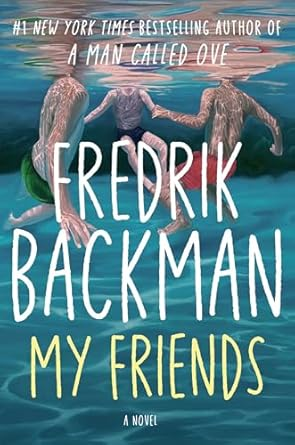
Just as the title, My Friends, implies Fredrik Backman’s novel is about friendships both those in the past and an emerging one.
Louisa has grown up in foster homes and just turned 18. Her best friend, Fish, has recently died leaving her completely on her own.
Through a random, and hard to believe, encounter with a famous Artist in the back alley of an art gallery, they graffiti a wall together. She learns he’s the artist she’s long admired; he sees she’s a talented artist. Before he dies shortly thereafter, he instructs his friend, Ted, to find Louisa to give her the painting that first brought him worldwide attention. It’s one she’s been obsessed with most of her life.
That chance meeting changes her life and thus begins a journey to learn more about the artist and herself. Despite’s Ted’s reluctance and discomfort to have Louisa as his companion, they embark on an adventure that occurs simultaneously as he shares the story of how he, the Artist and two other friends spent the summer they turned 15.
Backman, through Ted, details how the painting came to be, illustrates the close bonds the friends shared and describes their unprivileged backgrounds. Louisa easily relates to having never had much and still carries memories of Fish close to her heart.
Backman injects humor in this often poignant, predictable work. It’s about the strength of friendship, perseverance and the ability to survive through unlikely circumstances.
This is a story about friendship, perseverance and survival.
My Friends
Four Bookmarks
Astoria Books, 2025
436 pages, includes acknowledgements
Four bookmarks
I’ve struggled with how to review All Fours by Miranda July about a woman’s search for, well, more particularly when it comes to sex.
The unnamed narrator, an artist, by all accounts has a good, if not completely satisfying life with her husband and child. After receiving a large sum of money for the use of some of her work, she plans a trip to New York City. Rather than flying, she drives.
She stops 30 miles from her Southern California home, briefly meets Davy, learns his wife is an interior decorator stays at a nondescript motel. There she uses the money to hire the young man’s wife to redecorate the room.
While the upscale redecorating takes place our narrator fantasizes about the man, the man and his wife and mostly the man being with her.
Rather than a road trip, the novel becomes a jaunt through sexual fantasies. Once the remodel is complete, the narrator and Davy routinely meet. He’s adamant about not having sex with the narrator, their relationship is a close to being unconsummated as it gets. This is only the first third of the novel.
The remaining thirds feature plenty of sexual escapades that do occur in the posh room, but all involve women. Once home again, the narrator’s marriage becomes a co-living, co-parenting relationship; and she returns weekly to the motel room where she meets other women.
There’s humor and sex so this may be for the faint hearted. There’s also a lot of repetition.
All Fours
Three Bookmarks
Riverhead Books, 2024
326 pages
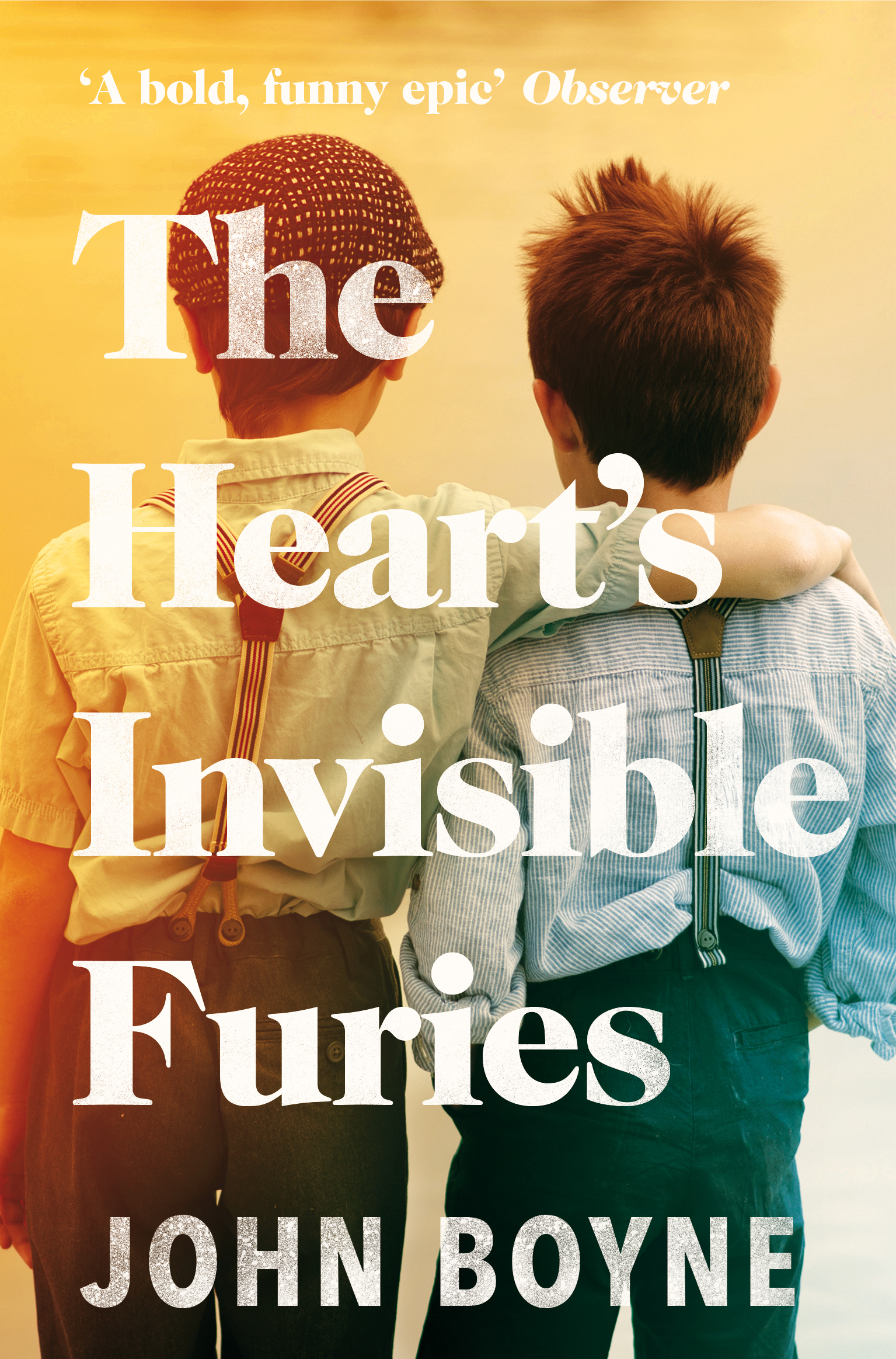
Repression, redemption, acceptance and truth are the themes of The Heart’s Invisible Furies by John Boyne primarily set in Ireland.
Catherine, a 16-year-old, girl from a rural community, is physically kicked out of the church and her community by the parish priest for being pregnant and unwed. She makes her way to Dublin, gives up her newborn son for adoption and moves on with her life. The boy, Cyril, is adopted by Charles and Maude Avery, a wealthy couple whose idea of parenting doesn’t include affection. Nonetheless, he lacks for little else. The narrative follows Cyril for seven decades.
Cyril is introspective. He’s told to call his adoptive parents by their first names and is frequently reminded he is “not an Avery.” When, at age seven, he meets Julian he is immediately enthralled. Later, they become best friends but couldn’t be more different: Cyril is gay and Julian loves (all) women.
For most of his life, Cyril hides the truth about himself. This haunts him and destroys the most important relationships in his life. There are rifts, disappointments and more lies until Cyril finally leaves Dublin in spectacular, yet shameful, fashion.
This beautifully crafted novel is rich with complex, interesting characters. Boyne injects humor, joy and sorrow into all of them, especially Cyril. He is someone to embrace and shake by the shoulders. He’s intelligent, funny and serious, and it takes years for him to recognize all his life holds. The abundance of which surprises the reader as much as him.
The Heart’s Invisible Furies
Five Bookmarks
Hogarth, 2017
585 pages, includes reader’s guide
Raquel Toro is a first-generation university student in her third year at an Ivy League school studying art history. She’s never heard of Anita de Monte but the two share several commonalities though they’re a generation apart in Xochitl Gonzalez’s novel Anita de Monte Laughs Last.
Anita was an up and coming artist in the mid-1980s before she’s found dead. Her husband, Jack, is a well-known, successful sculptor who, although professes his undying love, manipulates his wife to suit his moods/needs.
Jump ahead to the late 1990s, Raquel is certain she wants to do her senior thesis on Jack, with neither awareness of his deceased wife, nor knowledge of how she died. Although Raquel doesn’t realize it, readers will quickly see similar behaviors between Jack and Nick, the graduating art student from a wealthy family, with whom she becomes romantically involved.
There is passion in both relationships, but there are also strings attached. As she researches Jack’s work, Raquel identifies a period in which he produced little, if any, art. This is roughly the same time of Anita’s death, which is noted as either a fall from or push out of a high-story New York City window in the novel’s early pages. A subsequent trial following her death is also new to Raquel.
The engaging storyline is driven by chapters narrated by Anita, Raquel and occasionally Jack. Those revealing Anita’s side of the story require accepting the perspective from someone who’s dead, but very much alive in the spirit world.
Anita De Monte Laughs Last
Three and three-quarter bookmarks
Flatiron Books, 2024
341 pages
Over the course of a decade, Stephane Breitwieser, along with his girlfriend who stood guard, stole more than 300 pieces of art with an estimated value of $2 billion. How the thefts were accomplished, what was done with the art and, finally, Breitwieser’s downfall are chronicled in Michael Finkel’s The Art Thief.
It’s not just the number of thefts, but the brazen, often clever, methods employed along with the variety of items stolen. These ranged from small ivory sculptures to paintings, from medieval weapons to a massive tapestry – among much, much more.
Lesser-known, often out-of-the-way museums and castles were the usual targets: places with limited budgets for effective security. There was little advance scouting involved and it wasn’t unusual for Breitwieser to be captivated by a work, or two, at first sight and simply walk out the door with it. Initially, locations throughout France and Switzerland were his primary targets, but expanded to include much of Europe.
There were never any attempts to sell the pieces. Instead, Breitwieser collected them in the attic bedroom he shared with his girlfriend in his mother’s home. At first the works occupied a table here or a wall there. Eventually, the room was overrun with the stolen goods.
Besides spending time with Breitwieser, Finkel conducted extensive research and interviewed psychologists, Swiss and French police officers, among others. The result is a fascinating portrait of a man obsessed with fine art willing to go to extremes — and the thrill — to attain it free.
The Art Thief: A True Story of Love, Crime, and a Dangerous Obsession
Four Bookmarks
Alfred A. Knopf, 2023
224 pages, includes notes
Horse by Geraldine Brooks is much more than about the equestrian world. Along with some history of horse racing, other topics include slavery, art history, modern science and even romance. However, racism is the primary underlying theme throughout.
The narrative incorporates several threads across different, non-chronological time periods: 1850-75; 1954; and 2019. Blending perspectives and experiences of several characters across time to create a complete picture is one of Brooks’ trademarks.
Although Theo, a Black art history graduate student in Washington, D.C., in 2019, is the first character introduced, readers spend the most time with a 13-year-old slave identified by his masters’ name as Warfield’s Jarret in 1850. As the story progresses and Jarret matures, his owners’ names change as do his situations. Jarret has inherited his father’s horse training skills making a name for himself as an exceptional trainer working with Lexington, a thoroughbred whose lineage now extends through generations.
Other major characters include Jess, an Australian scientist working at the Smithsonian Museum of Natural History; Thomas J. Scott, a 19th century artist, whose paintings of Lexington are a significant part of the plot; several of Lexington’s owners; and a 20th century gallery owner.
A discarded painting of a horse leads Theo to learn more about the work, and Jess to discover more about its subject.
As the novel moves back and forth through time, the issue of race remains a constant. Brooks’ deft approach provides an engaging look into the past and an important reflection on our times.
Horse
Four-and-a-half Bookmarks
Viking, 2022
401 pages (including “Lexington’s Historical Connections”)
I recently discovered the unexpected pleasure of Carol Anshaw’s Carry the One, which had been buried in my nightstand stack. (The unforeseen is or should be, after all, one of the joys of picking up a new book.)
Through richly developed characters, smooth transitions of the progression of time and several relatable subthemes, Anshaw has crafted a meaningful story about the impact of tragedy – even when there are degrees of separation from it.
Soon after Carmen’s wedding reception, five guests including her siblings Alice and Nick and their partners Maude and Olivia, who are all on drugs or drunk, are involved in an accident. On a dark, deserted road their car runs over a young girl.
Each passenger, as well as the wedding couple, deal with the accident in different ways. Olivia, who was driving is sent to prison where she undergoes a dramatic personality change. Alice immerses herself in her art by painting portraits of the deceased girl as she would have grown up. Carmen, who was not in the car, engages in community activism; and Nick, who is overwhelmed with guilt, tries to overcome his addictions in order to be the man Olivia insists he become.
Their success in their respective endeavors varies as time passes. This progression is smooth. It’s subtly indicated through someone’s birthday, a current event and the age of a beloved dog – among other observations.
Anshaw incorporates wry humor in this engaging, relevant narrative while portraying vivid emotional pain through familial and romantic love.
Carry the One
Four+ Bookmarks
Simon & Schuster, 2012
253 pages
The Great Believers begins in 1985 Chicago when a group of friends, who’ve been excluded from a funeral, gather to celebrate Nico’s life. He died of AIDS. It’s early days of the epidemic and their friend’s death foretells of what lies ahead for many.
Yale Tishman is among the group, as is Fiona, younger sister of the deceased. Nico’s parents kicked him out of the family home years ago, but Fiona stayed in contact providing him food, money and support as best she could. Consequently, she grew up around Nico’s circle of friends, including Yale.
Time is an element of Rebecca Makkai’s novel which alternates between Chicago 1985/86 and Paris 2015. The earlier period focuses on Yale. He’s a development director for an art gallery, is in a monogamous relationship and comes across as an intelligent, sensitive young man. Through Fiona he’s put in touch with her aunt with an art collection from the 1920s Yale tries to secure for his gallery.
The latter time frame follows Fiona to Paris in her attempt to locate her estranged daughter and granddaughter. The younger Fiona is more interesting than the older version. She took care of Nico, and many of his friends, as they contracted AIDS. She apparently exhausted her caretaking abilities when it came to her immediate family.
Still, the beauty of the novel lies in the power of friendship and acceptance. Yale, and others, faced threats and, initially, medical care for AIDS patients was scattered, at best.
The Great Believers
Four Bookmarks
Viking, 2018
421 pages
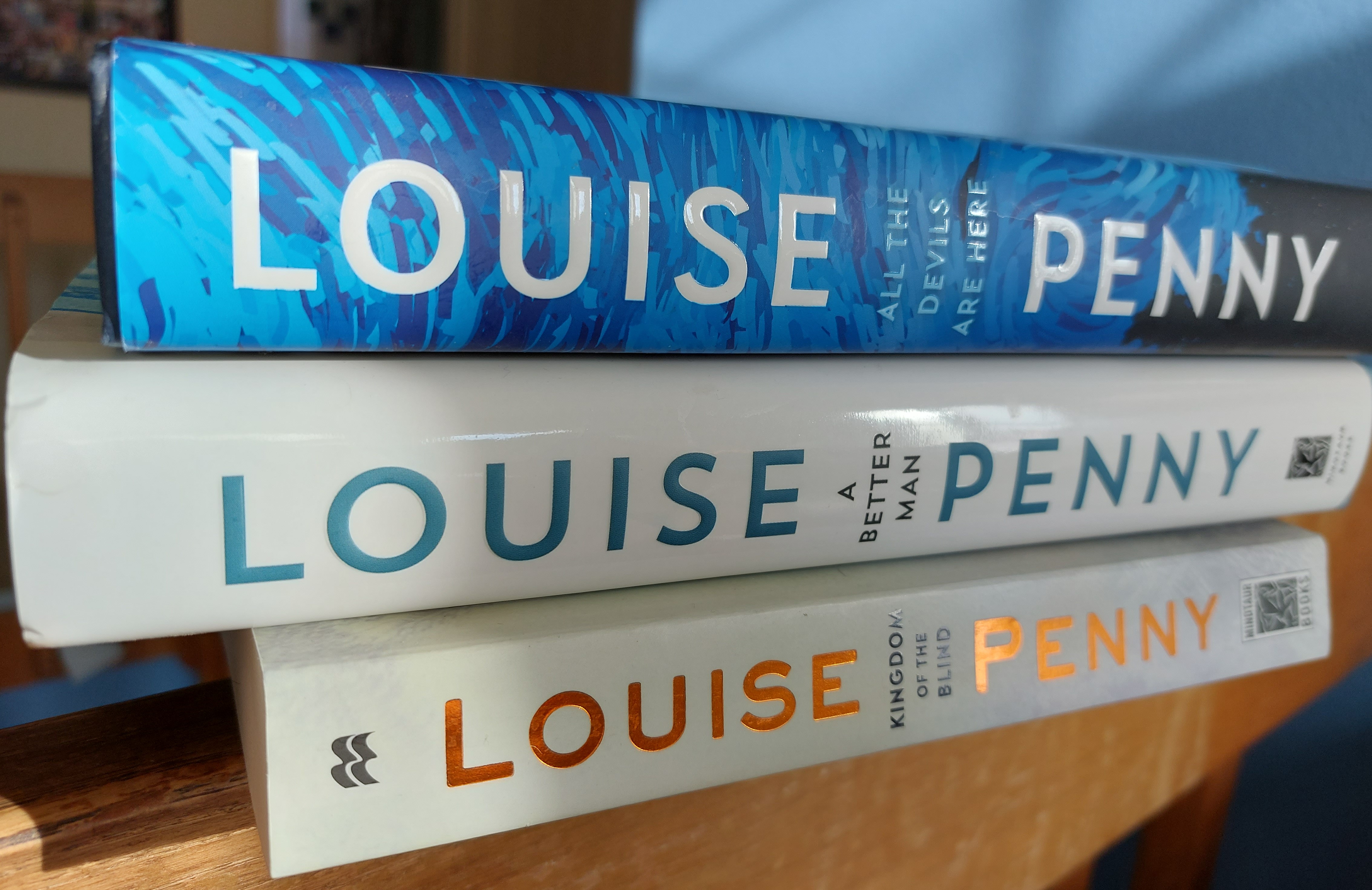
I finally did it: binged on three* Louise Penny novels back to back. There’s still another to read, but since it isn’t on my nightstand (per my New Year’s Books Resolution), it has to wait.
Most readers I know are fans of the Inspector Armand Gamache series. To those few who admit to me they aren’t, we can still be friends; although, I am disappointed.
Nonetheless, I’ll focus on All the Devils are Here, which allows me to also highlight what I enjoy so much about Penny’s work: the relatable characters, the descriptions (and significance) of settings, and, of course, the mystery to be solved. Unlike most of the previous novels, this one is set in Paris, with brief references to Three Pines, the small, tight-knit community in rural Quebec. I was initially disappointed the usual cast of characters (residents of Three Pines) was relegated to barely-existent roles. Yet, Paris is, after all, a magical place, which comes to life through the author’s vivid imagery of people, sites and food – lots of food.
In addition to the mystery at hand, are several back stories: Armand’s relationship with his estranged son Daniel; the imminent birth of his granddaughter; and his memories of visiting the City of Lights.
Suspicions abound as Gamache works to discover who tried to kill his godfather. The inspector encounters corporate espionage, corrupt police and rumors involving the French Resistance. It’s an intriguing combination. This and the benevolent qualities of her main character are what Penny does best.
All the Devils are Here
Four Bookmarks
Minotaur Books, 2020
439 pages
*Kingdom of the Blind
A Better Man
All the Devils are Here
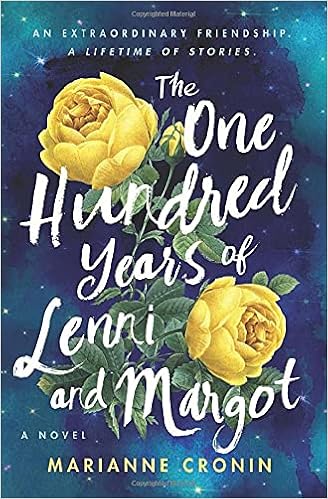
The 100 Years of Lenni and Margot by Marianne Cronin is about the sustaining and enduring power of friendship. Lenni is the 17-year-old narrator hospitalized with “life-limiting” cancer – usually referred to as terminal. She meets 83-year-old Margot and an immediate bond is formed. Between them is a 100-year-old life.
Lenni’s acerbic, insightful humor is beyond her age. This isn’t a criticism; it makes sense given her situation. She’s a no-nonsense teen who doesn’t get to live the life of a healthy teenager. She still manages to sling attitude, though. Yet, she makes the most of her situation: she’s curious, so she meets with the hospital chaplain; she creative, so she has the idea to collaborate with Margot to share their life stories through art. Each painting is associated with a particular and significant situation, which they reveal to each other. The result, besides bringing them closer, is a compelling narrative rich with life’s joys and sorrows.
Lenni’s parents never visit, which is eventually explained. Whether intentional or not, Lenni creates her own family within the hospital. Father Arthur, New Nurse , Paul the Porter, the Temp and Pippa the art teacher are those with whom she has meaningful relationships.
Cronin’s characters are vividly portrayed. The novel is both heartwarming and heart wrenching. After all, the word terminal is stated on page one. The friendship with Margot transcends age. Although Lenni will never have Margot’s experiences, she’s able to appreciate what life does offer, and everyone is enriched by knowing Lenni.
The One Hundred Years of Lenni and Margot Four+ Bookmarks HarperCollins, 2021 326 pages, plus Reading Group Guide and Author Interview




 The Blue Page Special