Real Tigers is the third of Mick Herron’s Slough House series. It’s just as gripping as its predecessors and equally rife with often-sardonic humor.
The discredited British intelligent operatives, known as Slow Horses, once again find themselves faced with overcoming expectations of their abilities when one of their own is kidnapped. In some ways it’s a comedy of errors in the face of real danger.
Herron hooks readers from the onset with his description of the shabby Slough House, the name given to the office space where the former spies are relegated to paper pushing busy work. The M15 higher-ups expect the meaningless jobs will encourage them to quit. Little do they understand the degree of hope each has of being able to find their way to good standing. These people are nothing if not optimistic.
Toward this end, the crew sets about to rescue their colleague. The kidnappers’ ransom request is a secret file they want the Slow Horses to retrieve. It’s a seemingly impossible task.
Among Herron’s fortes is his skill to imbue characters with distinct personalities including physical features, foibles and qualities.
Jackson Lamb oversees Slough House with an attitude akin to a broken umbrella: why bother?! He’s a disheveled chain-smoking, flatulent man who’d rather sit at his desk nursing a drink. However, when necessary he will take action albeit in a slothful manner – keeping in character.
M15 conspiracies and suspicions about who is good and who’s not are other elements Herron incorporates to keep readers engaged.
Real Tigers
Four Bookmarks
Soho Crime, 2016
343 pages
Over the course of a decade, Stephane Breitwieser, along with his girlfriend who stood guard, stole more than 300 pieces of art with an estimated value of $2 billion. How the thefts were accomplished, what was done with the art and, finally, Breitwieser’s downfall are chronicled in Michael Finkel’s The Art Thief.
It’s not just the number of thefts, but the brazen, often clever, methods employed along with the variety of items stolen. These ranged from small ivory sculptures to paintings, from medieval weapons to a massive tapestry – among much, much more.
Lesser-known, often out-of-the-way museums and castles were the usual targets: places with limited budgets for effective security. There was little advance scouting involved and it wasn’t unusual for Breitwieser to be captivated by a work, or two, at first sight and simply walk out the door with it. Initially, locations throughout France and Switzerland were his primary targets, but expanded to include much of Europe.
There were never any attempts to sell the pieces. Instead, Breitwieser collected them in the attic bedroom he shared with his girlfriend in his mother’s home. At first the works occupied a table here or a wall there. Eventually, the room was overrun with the stolen goods.
Besides spending time with Breitwieser, Finkel conducted extensive research and interviewed psychologists, Swiss and French police officers, among others. The result is a fascinating portrait of a man obsessed with fine art willing to go to extremes — and the thrill — to attain it free.
The Art Thief: A True Story of Love, Crime, and a Dangerous Obsession
Four Bookmarks
Alfred A. Knopf, 2023
224 pages, includes notes
The Age of Vice is a massive novel about inequity, corruption and loyalty. Despite its hefty size (more than 500) pages, Deepti Kapoor has crafted an epic story that is equal measures mystery and love story – my favorite combination.
Ajay is the manservant of Sunny Wadia, the son of one of the wealthiest and most powerful man in India. Ajay is imprisoned when he’s identified as the driver of the speeding Mercedes that kills five people. The narrative then jumps back 13 years when Ajay is a poor, barely-educated child in a rural area of India. When his father is beaten by the village leaders, Ajay is sold to help pay the family’s debts. He’s sent to a mountain farm where his situation is improved, although he’s still looked down upon for his station in life.
How Ajay came to be Sunny’s servant and charged with manslaughter is a circuitous tale of excessive wealth and waste amplified by exploitation. By contrast are Ajay’s strong work ethic and his gradual rise to Sunny’s shadow, something that comes with numerous perks but many strings attached.
Sunny is an addict and womanizer, but falls in love with a journalist. Their relationship is complicated. She’s not what Sunny’s father envisions as the perfect wife for his heir.
Bunty and his brother’s influence span much of the country and little goes unnoticed by either, including how Ajay came to be behind the wheel in the deadly crash.
Kapoor’s characters are vividly depicted as are India’s extremes.
The Age of Vice
Four+ Bookmarks
Riverhead Books, 2023
548 pages
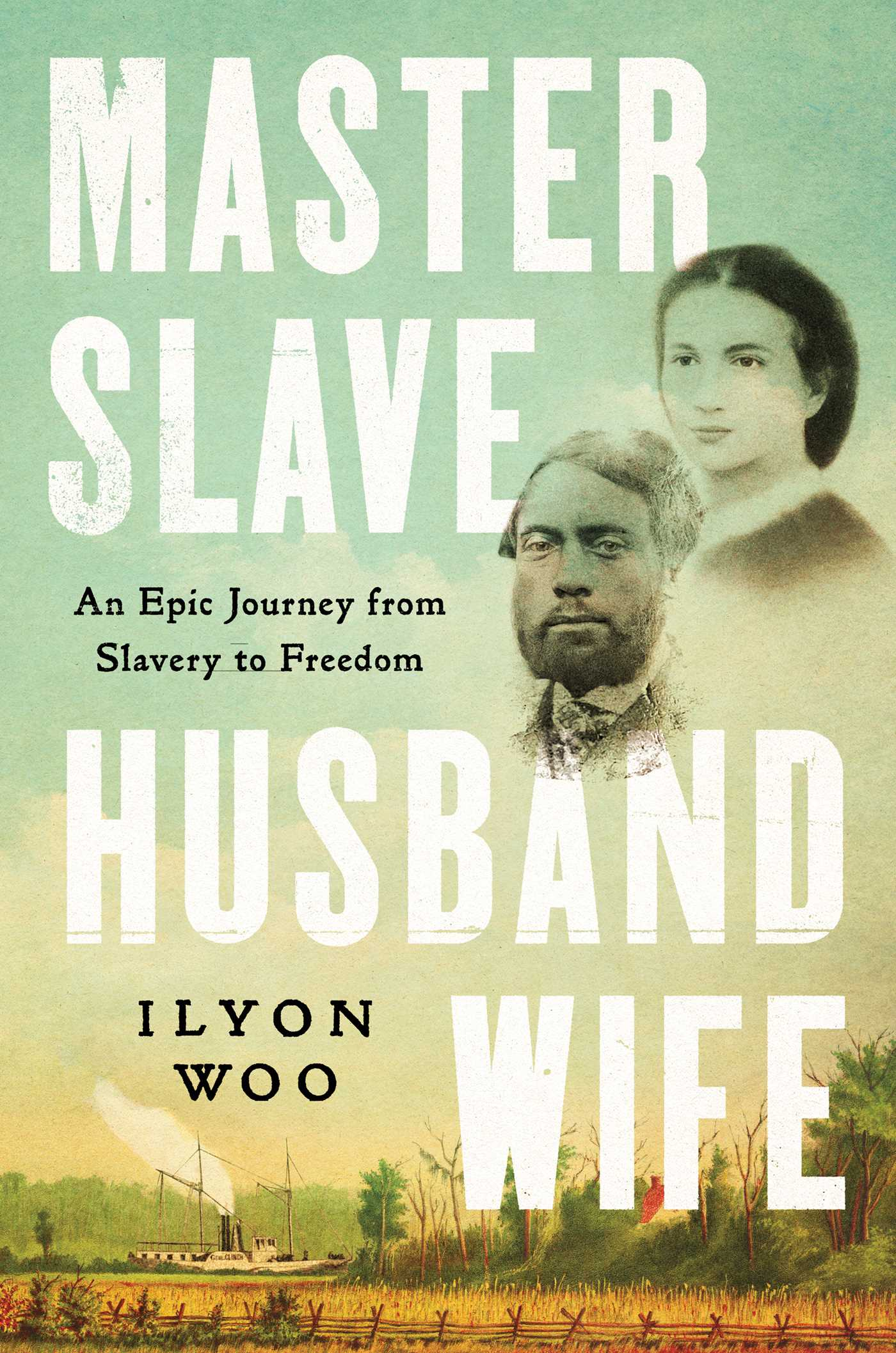
Master Slave Husband Wife by Ilyon Woo is the account of the enterprising quest for freedom by Ellen and William Craft. They left slavery in the south, became celebrities in the north and ultimately found freedom in England.
What sets their story apart is the manner in which they executed their getaway: Ellen dressed as a man accompanied by her slave, William, traveled by train and boat to free states. It helped that she was fair-skinned and her disguise allowed her to appear sickly; thus in need of William’s assistance.
Woo sets the scene for their daring escape by describing the lives they left behind, including patrimonies and their roles: Ellen as the property of wealthy landowners and William in bondage as a cabinet maker. Their fear of being caught is palpable, yet with each receding mile, glimmers of hope surface.
Once in the north, first Philadelphia and later Boston, they are revered and celebrated for their bold exodus. Here, however, is where the narrative loses steam. Woo mentions abolitionist after abolitionist, from Frederick Douglass to William Wells Bell, among numerous others. She also names the many individuals who harbored the Crafts. Despite their assistance, the threat of being caught and returned to the South never diminishes.
Realizing they’ll always be at risk, they continue their journey northward to Canada and finally, Halifax, where they board a ship bound for England.
Woo’s research is extensive and the Crafts’ story is an important one. However, there’s an abundance of unnecessary detail.
Master Slave Husband Wife
Three-and-a-half Bookmarks
Simon & Schuster, 2023
420 pages, includes Notes on Sources, Notes and Index
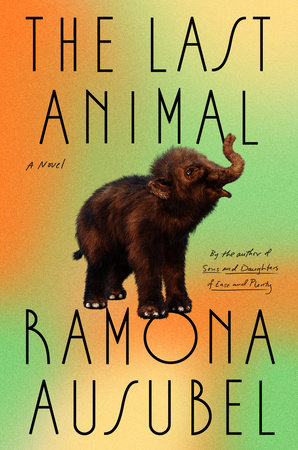
The Last Animal by Ramona Ausubel could easily be titled The Last Family because it’s about a mother and her teenage daughters trying to keep it together.
Jane is a paleo biologist, whose husband died in a car accident a year ago. Eve and Vera are 15 and 13, but wiser than most kids their age. This is, in part, due to their strong bond with each other and to tagging along with their parents on scientific expeditions around the world.
The novel is rich with humor and pathos as the trio treks to Siberia, Iceland and a private animal refuge in Northern Italy. As Jane becomes increasingly disappointed in her ability to be heard/seen as a legitimate scientist, the girls assume responsibility for her care. Grief fills all three as they move forward with their lives while making scientific and personal discoveries.
Part of which involves Jane’s theft of genetically-created embryos of a woolly mammoth, which are clandestinely inseminated into an elephant at the Italian refuge.
What ensue are questions of ethics, sexism and a family struggling for some semblance of normalcy. The latter is particularly difficult given the possibility of introducing an extinct prehistoric animal to the modern world.
Eve and Vera are remarkable characters even if, at times, difficult to consider realistic because they’re wise beyond their years, self-aware teens. They have enough sense to be skeptical of what the future holds, yet are naïve enough to hope for the best – attitudes worth emulating at any age.
The Last Animal
Four Bookmarks
Riverhead Books, 2023
278 pages
Presented as a coming of age tale, Go as a River by Shelley Read relies on the spirit of place while addressing romantic and maternal love. And, the author incorporates Colorado history.
Victoria Nash is 17 when she meets a drifter in her small town of Iola. This quickly evokes feelings she’s never experienced. Wilson Moon is not much older than Victoria but his wisdom and sensitivity captivate her. They embark on a brief, clandestine affair. He’s suspected of theft, although his only crime is being Native American in a mostly racist community.
When his body is found at the bottom of a gulch, Victoria suspects her brother of murder. However, her attention soon turns to dealing with her pregnancy. When she can no longer hide her swollen stomach, she runs away from the family peach orchard to hide in the nearby mountains.
Read’s descriptions of the land, Victoria’s feelings and determination to survive on her own are vivid Victoria endures harsh conditions alone, including giving birth. This, and coming upon a young family picnicking in the forest with whom she furtively abandons her son, make belief difficult to suspend.
The impending destruction of Iola, a consequence of the creation of Blue Mesa Reservoir is among the losses she carries the rest of her life. Yet, she moves forward. With assistance from a botanist and others, Victoria moves the peach trees to Paonia before Iola is submerged. And thoughts of the son she gave away remain close to the surface.
Go as a River
Spiegel and Grau, 2023
305 pages, includes acknowledgements
Despite the racism, hardships and wrongs done to the Blacks and Jews who inhabit the landscape of James McBride’s The Heaven and Earth Grocery Store, there is redemption — on numerous levels.
The appropriately-named store is a gathering place for the myriad of immigrants in the Chicken Hill community of Pottstown, Penn. It’s run by Chona, a kind, rabble-rousing Jewess. She’s idolized by her husband Moshe, a Romanian immigrant who runs a successful dance hall. Nate is his Black handyman.
It’s the early-1970s when the remains of a body are found in the neighborhood; the identity keeps readers wondering throughout the novel. The engaging storyline switches to the mid-1920s. The interactions among the Jews, Blacks and whites (who include Klu Klux Klan members) are vividly detailed.
Nate, needs to hide, Dodo, his deaf, orphaned nephew from authorities who want to institutionalize him believing him to be feeble-minded. Chona insists on harboring him in her apartment above the store. While the boy doesn’t hear, he is far from stupid — something Chona recognizes. The two become close and she does what she can to keep safe from the white powers that be.
McBride’s story is rich with characters, although many are one-dimensional; many more — the ones readers will care most about — are multi-faceted. The result is a poignant narrative about people living and working together toward a better life.
Humor and injustice are an odd couple, but here McBride deftly proves them to be a good match here.
The Heaven and Earth Grocery Store
Four-and-a-half Bookmarks
Riverhead Books, 2023
400 pages, includes acknowledgements.
Except for lives lost and residual health issues faced by those infected by COVID-19, the pandemic was, in many ways, positive. It was a time for introspection and, if lucky, being together. This is the starting point for Tom Lake, Ann Patchett’s newest novel.
It’s cherry picking season on the Nelson family orchard in northern Michigan. Due to the pandemic, Lara and Joe Nelson’s young adult daughters are home to help harvest the crop. They plead with their mother to tell the story of her long-ago romance with Duke, a famous actor.
The narrative seamlessly moves between Lara’s descriptions of present-day life and her involvement with Duke. They met doing a summer stock production of Our Town. Duke was beginning his trajectory while Lara awaited release of a movie she was in. However, it, and her role as Emily, was as far as her acting career would go.
Lara does little to embellish the relationship and spares few details regarding the intensity of their short-lived affair; she, via Patchett, tells a good story over the span of several days. She’s happily married to Joe, relishes her life on the farm and being with her daughters. How this evolved is entangled in Duke’s story, which has several (credible) surprises. Fortunately, readers are privy to info Lara does not share with her kids.
Patchett’s writing is engaging from page one and never wavers. Like those in Thornton Wilder’s play, Patchett has created a family of extraordinary characters living conventional lives in unusual times.
Tom Lake
Five Bookmarks
Harper, 2023
309 pages
Louise Penny is well-known for her Inspector Gamache mystery series, and, of course, Hillary Rodham Clinton, is, well known. Period. The appeal is that they teamed up to write State of Terror, a thriller that blends Rodham Clinton’s knowledge of politics and international relations with Penny’s skill of setting a fast-paced, engaging and intriguing narrative.
Ellen Adams is the new president’s Secretary of State. She and he are long-time rivals, so Ellen is certain she’s been set up to fail. Shortly after her appointment to the post, a series of terrorist attacks around the world occur. To further complicate the situation, her estranged son, a journalist, may somehow be involved.
As Ellen works to determine the source of the attacks, it becomes clear to her that previous administrations may have had a hand in the current chaotic, and dangerous, situation she faces. Dealing with the aftermath of the bombs, her son and a possible conspiracy put her in an unenviable position.
An element of intrigue practically lingers on every page. In true Louise Penny style, solving the crime isn’t the only aspect of the plot. Friendships and familial relationships are just as critical to the storyline as those involved in the transgressions under investigation.
State of Terror Four Bookmarks Simon & Schuster, 2021 494 pages, includes acknowledgements
The unlikely mix of family history, parenting, basketball, Chicago, mental health and love, most of all love, are all elements of Ann Napolitano’s Hello Beautiful.
Much has been written regarding this as homage to Little Women. Yet, the references are brief with themes beyond what Louisa May Alcott addressed. Yes, there are four sisters: Julia, intent on a better life; Sylvie, the librarian with whom she is closest, who dreams of finding her one true love; and twins Cecelia, and Emeline.
Beginning in 1960s, Napolitano’s novel provides perspectives from different characters. William Waters is a sad child neglected by his parents dealing with years-old grief. Basketball courts are the only places he finds a sense of belonging.
His skills and physical growth develop almost simultaneously. By the time he’s in high school, William is 6’7” and good enough to earn a scholarship to Northwestern University. There, he meets Julia the eldest of the Padavano sisters who decides William is the man for her. That is, unlike her father: kind but lacking motivation. Julia has long-range plans for William; he just wants to play ball while he can.
The Padavano family embraces William in ways he never experienced. What follows is a multi-decade narrative addressing depression and belief in the power of love.
When Julia gives birth to their daughter, William despairs he’s an emotionally-distant parent. What ensues is an upheaval in the relationships of all the characters. Napolitano creates such a credible rift; it’s questionable whether repairing the damage is possible.
Hello Beautiful
Four Bookmarks
The Dial Press, 2023
387 pages (includes acknowledgements)







 The Blue Page Special