Archive for the ‘Reviews’ Category

With one exception, we’ve yet to be disappointed with our dining experiences when visiting Crested Butte; that singular incident involved service not food. Still, there’s no better stamp of approval for a restaurant than the number of locals who frequent it. We were surprised, and encouraged, by the impressive number of CB residents at The Last Steep Bar and Grill for a mid-afternoon lunch where we snagged a table with a great vantage point on all the activity.
It’s one thing for locals to patronize local establishments, but it’s another when out-of-towners are made to feel welcome. Such was the case at the Steep.
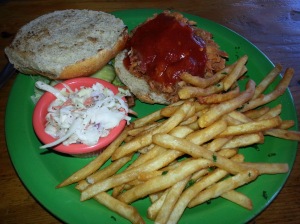
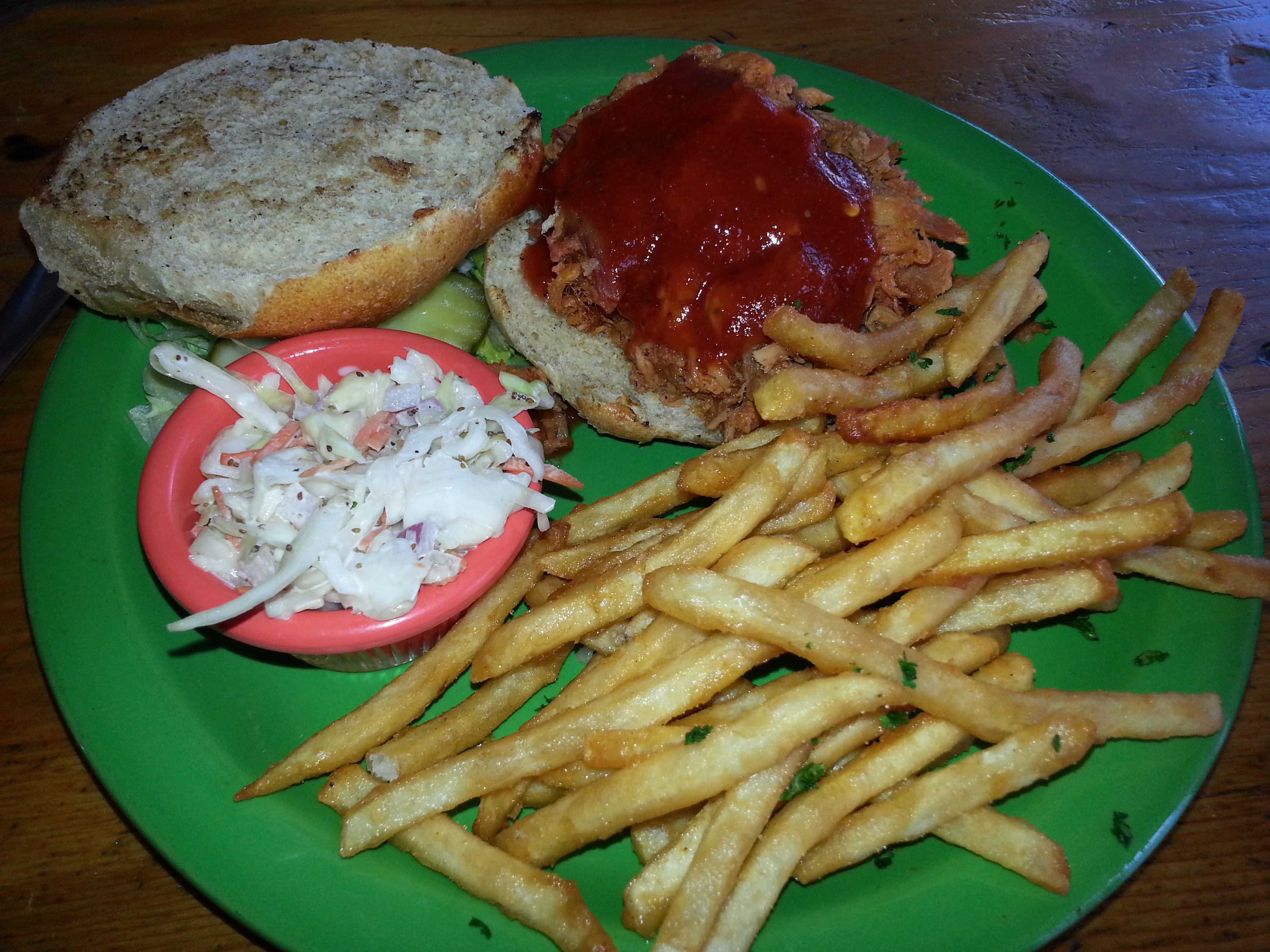
Although it took a little while for our order to be taken, we understood why: the place was packed inside and out. Still, service was friendly and we were never made to feel rushed. The menu features a large selection of sandwiches ranging from burgers to wraps, from a Turkey Club to PoBoys. Salads are also available. My husband ordered the Kansas City Chief: a Kaiser bun piled with pulled pork topped with house-made barbecue sauce, which was more spicy than tang. Bottles of the stuff are sold on-site, as evidenced by a man who bought a case.

I was pleased with my Sweet Potato and Black Bean Tacos. Corn tortillas warmed on the grill enveloped the sweet and savory filling enhanced by melted cheese, diced tomatoes, sour cream and salsa. It came with warm chips dusted with chile powder.
We felt right at home.
The Last Steep Bar and Grill
208 Elk Ave.
Crested Butte, Colo.

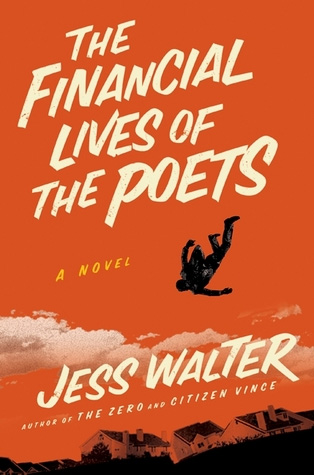
Jess Walter takes satire to a new level in The Financial Lives of Poets, a look at marriage, social media, unemployment and breaking the law. Matt Prior is an unemployed financial journalist and a would-be poet. His senile father lives with Matt, his wife and their two young boys. Matt is convinced his wife is having an affair. When he isn’t busy writing poems about the direction of his life, he stalks his wife’s online activities.
Walter instills humor and pathos in his characters. In fact, these elements are so evenly balanced it’s difficult to choose a preference. It’s funny that Matt meets two young hoods late at night at a 7-Eleven; it’s pathetic when he continues the relationship. It’s amusing when Matt comes up with an idea to save his home from foreclosure; but it’s sad to realize the extent of his debt and desperation.
The novel’s title comes from another of Matt’s bad ideas, although this one is completely legal: a website with financial news written in blank verse. Matt left his job at the local paper to pursue this not surprisingly unsuccessful venture. It’s not that the poetry is weak, only that, for better or worse, poetry simply doesn’t appeal to everyone; and as it turns out, particularly not financial types.
The Financial Lives is suggestive of a Breaking Bad Lite. The motivation for making ill-conceived choices is understandable, even if it cannot be condoned. The farther Matt sinks, the less intriguing the story. It wears thin.
The Financial Lives of Poets
Three Bookmarks
HarperCollins, 2009
290 pages
The story of David and Goliath is so familiar making it the perfect set up for Malcolm Gladwell’s examination of beating the odds. In David and Goliath: Underdogs, Misfits, and the Art of Battling Giants, Gladwell blends storytelling with psychology and hard cold facts.
In the interest of full disclosure, I didn’t read Gladwell’s book; I listened to the audio version. I’ve read most of his other works, and enjoy his essays in The New Yorker. Although Gladwell is not the reader on the CD version, his is a unique voice. He shares insights about what makes us tick and manages to find common ground making it easy to relate to his thesis: even in daunting situations it’s possible to achieve success.
This concept may come as no surprise, but many of Gladwell’s examples might since some are contrary to preconceived ideas. His stories focus on personal experiences of others relating to higher education, dyslexia, loss of a child, and even sports. Parenting and financial success are among several subpoints.
What makes this work unique isn’t that Gladwell acknowledges the triumphs of the often-minimalized, but he shows that their accomplishments do not always emerge from the usual places. He acknowledges that making the most of situations certainly contributes, but it’s necessary to consider more than the obvious. For example, he discusses class size and its impact on academic prowess. We might think small class size is better, but, like other points in the book, Gladwell shows why this is faulty.
David and Goliath: Underdogs, Misfits, and the Art of Battling Giants
Four Bookmarks
Recorded by Jared O’Donnell
Little Brown Hatchette Audio, 2013
Unabridged, 7 hours

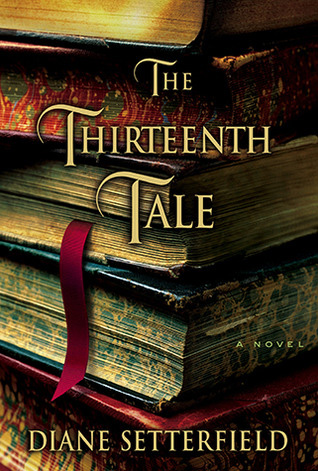
When I mentioned to a friend that I was reading Diane Setterfield’s The Thirteenth Tale, she was surprised it was new to me. It is, after all, a book for booklovers and a mystery, two aspects I find appealing. There is also a sense of the gothic, which typically doesn’t grab me. Yet, I had trouble putting the book down.
This story within a story is compelling on many levels. There’s Margaret Lea, a reclusive woman whose companions are the books in her father’s antiquarian bookshop. Although close to her father, her mother is distant, practically absent from family life. Margaret had a twin sister who died at birth, an event from which Mrs. Lea never recovered.
Margaret receives a letter from Vida Winter, considered one of Britain’s most prolific and beloved authors. Despite her popularity, Vida has creatively maintained her privacy. However, in poor health she summons Margaret to write her biography. In the process, dark secrets emerge.
Each character is transformed through the story telling. Margaret becomes softer as she learns about Vida’s mysterious and startling past. Vida, whose strength diminishes day by day also begins to demonstrate warmth and concern. The more Vida reveals about herself and her dysfunctional family (long before the term was coined), the more engrossing the tale becomes.
Vida tells about the twin sisters, Adeline and Emmaline, and just when the reader is certain to have determined who is who and what is what, Setterfield adds more ingredients into the tantalizing mix.
The Thirteenth Tale
Four Bookmarks
Washington Square Press, 2006
406 pages

If Michael Gibney’s writing is anything like the food he prepares, I’m ready for him to make me a meal. In Sous Chef: 24 Hours on the Line Gibney provides a life in the day of, you guessed it, a sous chef. By definition, the kitchen’s second in command.
Beginning at 9 a.m. on a cold December Friday in New York City, Gibney offers a behind-the-kitchen-door view of what it takes to get dinner on the table. The particular night he recounts does 300 covers (servings). The restaurant is never named, but judging from the food descriptions, it’s an upscale eatery.
Gibney relies on second-person voice, which is awkward at times. The point must be that even though this is his story, it is universal to all sous chefs. Gibney’s attention to detail is strong, and interesting. He explains each person’s role, the type of prep work necessary to ensure a smooth service, the hierarchy among the staff and preparation of several dishes.
From the moment Gibney arrives at the restaurant, and before he puts on his chef whites, he’s in kitchen mode. He describes the quiet, almost serene, atmosphere before others arrive to begin their shifts. Slowly, as the day progresses, that serenity evolves into controlled chaos.
By the time Gibney’s shift ends, it’s after midnight. He has to be back in eight hours. Nonetheless, he and his colleagues meet at a local bar. Eventually, Gibney makes it home, although the kitchen is never far from his thoughts.
Sous Chef: 24 Hours on the Line
Four Bookmarks
Ballantine Books,2014
214 pages, including “Selected Kitchen Terminology”
* A sautoir is a shallow frying pan

Attempting to describe Kate Atkinson’s most recent novel, Life After Life, is like sharing a recipe that’s undergone several transformations or tweaks here and there. The end result may be familiar, but the process is not.
Jumping from pre-war Germany to the halcyon country life of the Todd family to London in various parts of the first and second World Wars, Atkinson takes the Groundhog Day concept of redoing things – life – until they’re done right, or at least differently. Paying close attention to the chapter headings is essential.
Ursula Todd’s personal history is told with variations beginning with several involving the day she was born. These range from death at childbirth to the family doctor arriving in time to ensure her survival. The Todd family remains constant, as do most of the other characters and events. Some are slightly altered, while others undergo major conversions, but all are interesting, some uncomfortable and a few are actually happy. Even the Veal ala Russe, a favorite of the Todd family cook, Mrs. Glover, makes recurring appearances, but none reflect an improvement on the dish.
The underlying theme of the novel is to question what happens if one had never been born. Or, what if Ursula had been more assertive at certain points in her life, or what if she shared troubling observations with those around her? Of course, no one ever knows, which is what makes Atkinson’s work so intriguing; she offers a slew of possibilities right up to the final pages.
Life After Life
Four Bookmarks
Little Brown and Co., 2013
529 pages
Anyone planning a wedding in the next few months, or ever, might consider avoiding Seating Arrangements by Maggie Shipstead; but they would be missing a fun, albeit satirical, and poignant look at families under stress.
Shipstead’s debut novel focuses on Winn Van Meter, father of the bride-to-be, in the three days prior to the ceremony. Winn is a banker, a Harvard man whose greatest disappointments are that he didn’t have sons and has yet to be granted membership in a private golf club. His daughter Daphne, seven months pregnant, is marrying Greyson Duff. That name alone suggests privilege, which is an apt description for the entire wedding party.
The nuptials are taking place on a fashionable island off the New England coast. The Van Meters have long had a vacation home there, although, as it turns out, the Duffs have their own island. Yet, the only character concerned with one-upmanship is Winn. And, perhaps, his younger daughter, Livia, who was recently dumped by her boyfriend, Teddy Fenn – whose father, Winn surmises, is responsible for obstructing admittance to the private club.
Shipstead’s multiple talents lie in her ability to create distinct voices and flaws for each of her characters. The cast of which include friends, family, and the Fenns. Biddy Van Meter, Winn’s wife, is the voice of reason while humoring her husband. However, her patience and fortitude wane as his attraction to one of the bridesmaids waxes.
In Shipstead’s hands, humor and heartache are worn with the ease of a properly fitted cummerbund.
Seating Arrangements
Four Bookmarks
Alfred A. Knopf, 2012
302 pages

In Wave, Sonali Deraniyagala writes with intensity and candor as she describes the tsunami she survived but which her family did not.
The memoir begins in the minutes before one of the most deadly forces of nature hit the Sri Lankan coast Dec. 26, 2004. She is initially incredulous that she should survive; it only makes sense that her husband, their seven- and five-year-old sons, along with her mother and father also made it through alive. Unlike the 2012 film, The Impossible, about the same topic, Wave does not have a happy ending. Neither does it have a happy beginning.
Deraniyagala slowly moves through the stages of grief and gets stuck in denial. She is angry, she is depressed and though her narrative extends to 2012, she can’t wrap her heart or mind around the loss she has endured. Yet, she brings her family to life in the memories she shares. She vividly details her sons’ antics and dissimilar personalities. She recounts her courtship with her husband, Steve, and their life in London before and after kids. It takes longer for her to deal with the loss of her parents, so they aren’t as fully portrayed.
Gradually, she’s able to revisit family homes, places her children played, friends and even the devastated Yala resort. The author moves from the present to the past, from her childhood in Sri Lanka to Cambridge, from Yala to London. At each juncture pain is never far from the surface; fortunately, it becomes less raw.
Wave
Four Bookmarks
Alfred A. Knopf, 2013
228 pages

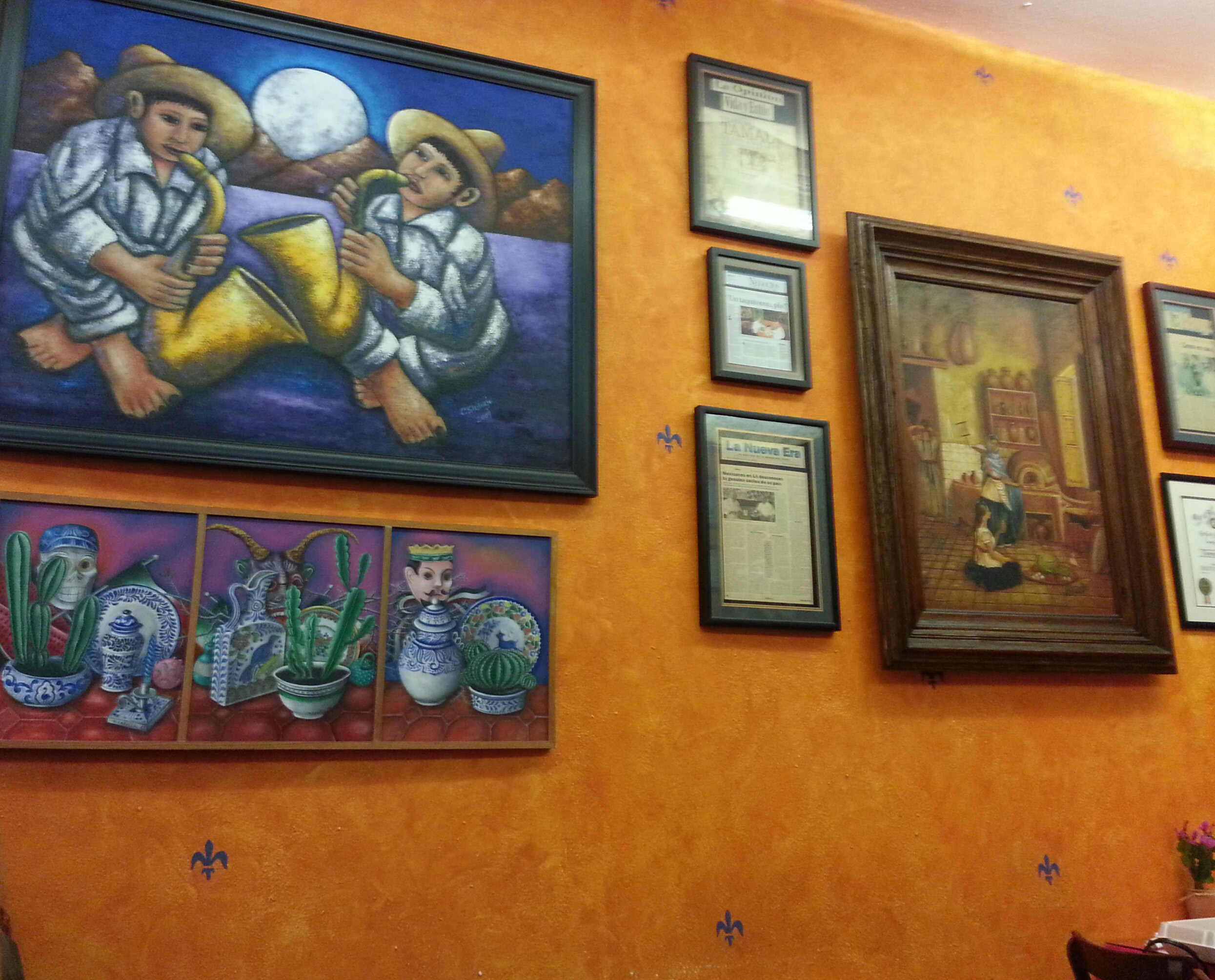
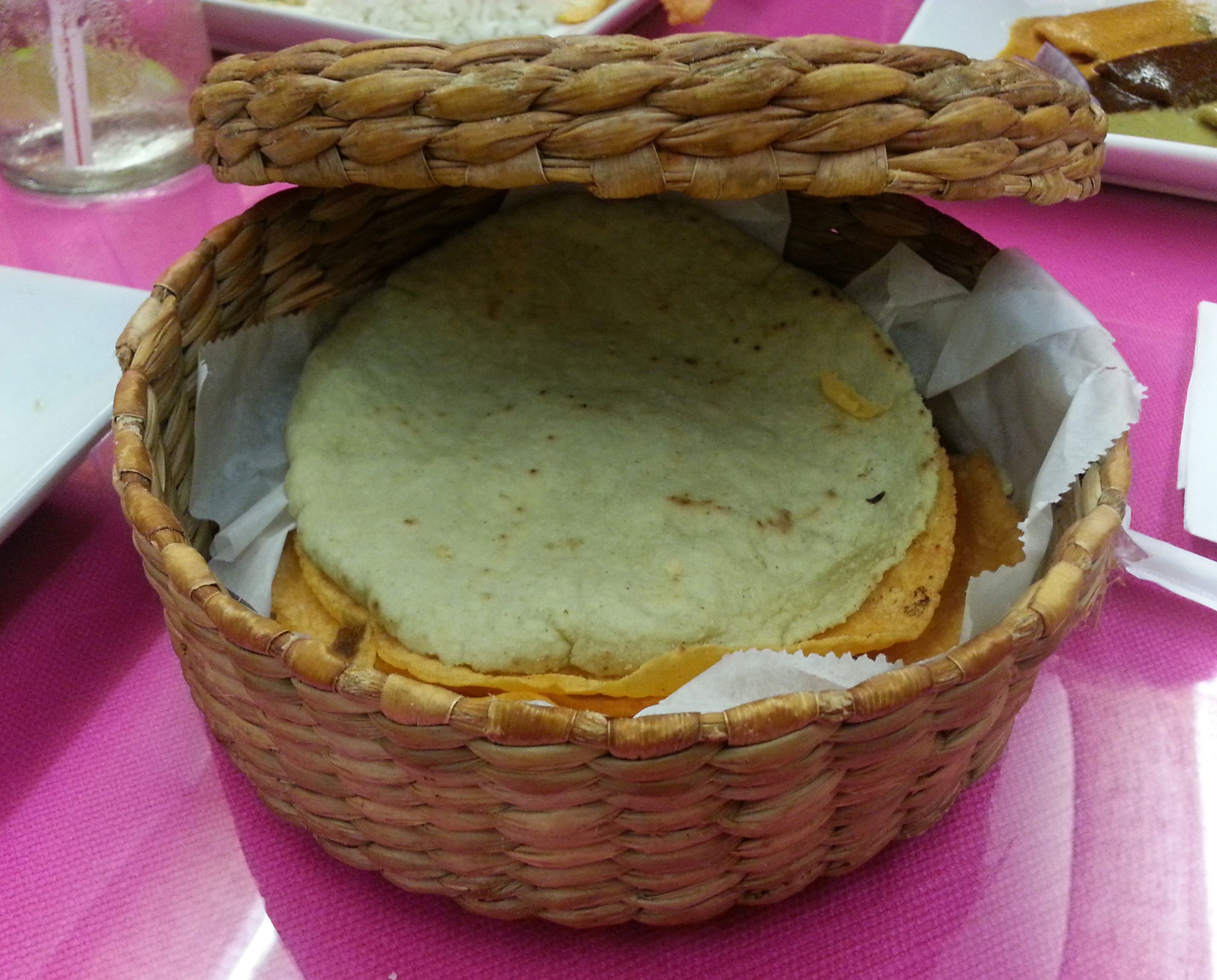
Friendly servers can make a meal fun and relaxing; yet, super-outgoing ones run the risk of casting a shadow. This happened at La Casita Mexicana, a vibrant exciting restaurant known for its mole. Our server’s problem was his affability with everyone. He took photos of birthday celebrations, he bantered with a couple waiting for their bill, he visited with busboys, and all the while orders weren’t taken and food wasn’t served.
Eventually we got bowls of soup, which we would have gladly foregone. The menu did indicate that meals came with the house soup, but no further details were provided. We learned it was rice soup, but the faux salmon color was reminiscent of canned tomato soup and the flavor wasn’t much better.
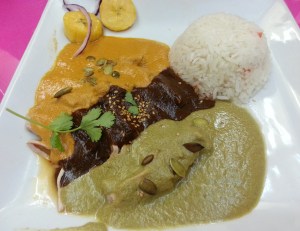
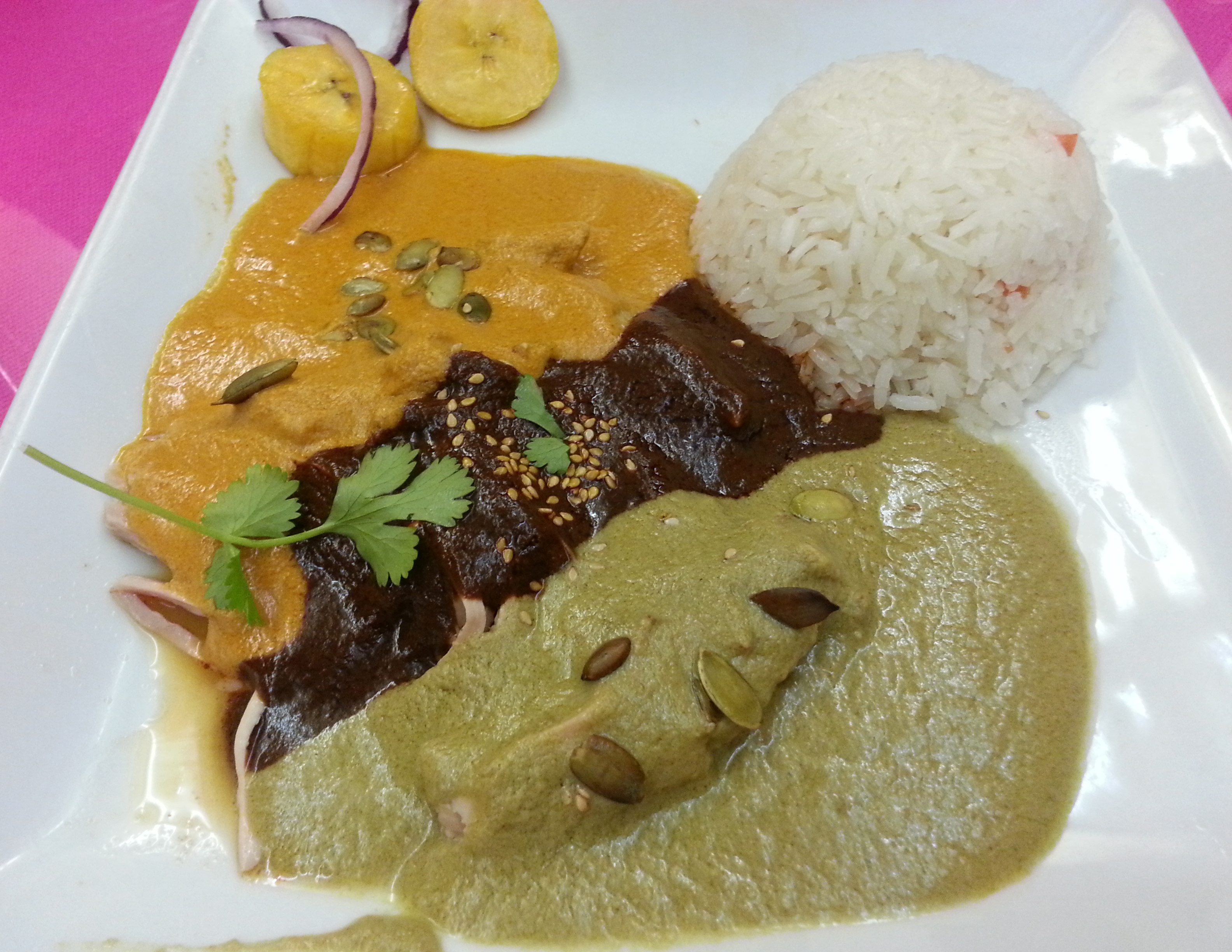
Three types of mole are available: poblano, verde and pepian. It’s best to sample all. According to the menu, the poblano is a family recipe with 46 ingredients. Its dark red color and range of flavors includes its namesake chile and pumpkin seeds. The verde combines green chile, tomatillos, cilantro – along with an array of herbs and spices. Ground pistachios and chile are the base for the pepian.
I ordered the pork with tres moles. The meat was tender and moist; a perfect vehicle for the sauces.
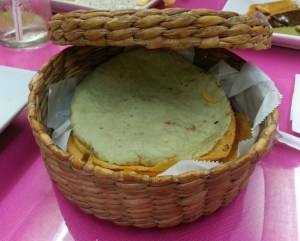
Our server gave all appearances of being busy — probably because he moved with such enthusiasm to see who he could socialize with next. Fortunately, once the entrees finally arrived, we forgot the gregarious guy and could focus on the mole.
La Casita Mexicana
Three-and-a-half Plates Three Plates
4030 E. Gage Ave.
Bell, Calif.
Although Semi Sweet Bakery in downtown Los Angeles has savory items as well as numerous tempting sweets, the name isn’t quite right. It’s not partially sweet, and it’s tucked away in small, hard-to-find space not at all like a semi, as in truck; however, the quality and variety of baked goods rides above other, pedestrian bakeries.

Semi Sweet is fun: it features several familiar goodies that can’t be identified by their better-known names to avoid copyright infringements. Take the Crullant: a cross between a croissant and a cruller (but this donut’s baked not fried); or the Pocket Tart, as unfamiliar in taste and texture as it is similar in shape and size to a convenient toaster variety popular among kids. There’s also the Ding-a-ling, a spin on the Hostess snack.
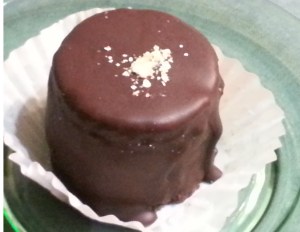
The Crème Brulee Crullant had a slightly hard glaze and was filled with vanilla cream reminiscent of its namesake. The texture was light with just the right amount of sweetness. The Pocket Tarts have several filling options; since I’m almost always drawn to anything with strawberries that was an easy choice. Thin, flakey melt-in-your-mouth pastry crust encased a fine layer of strawberry jam. Ding-a-Lings also come in assorted flavors, but chocolate and peanut butter is a hard combination to resist – and it did not disappoint.

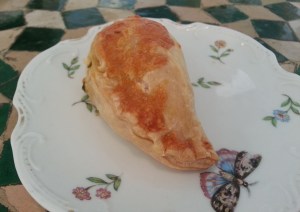
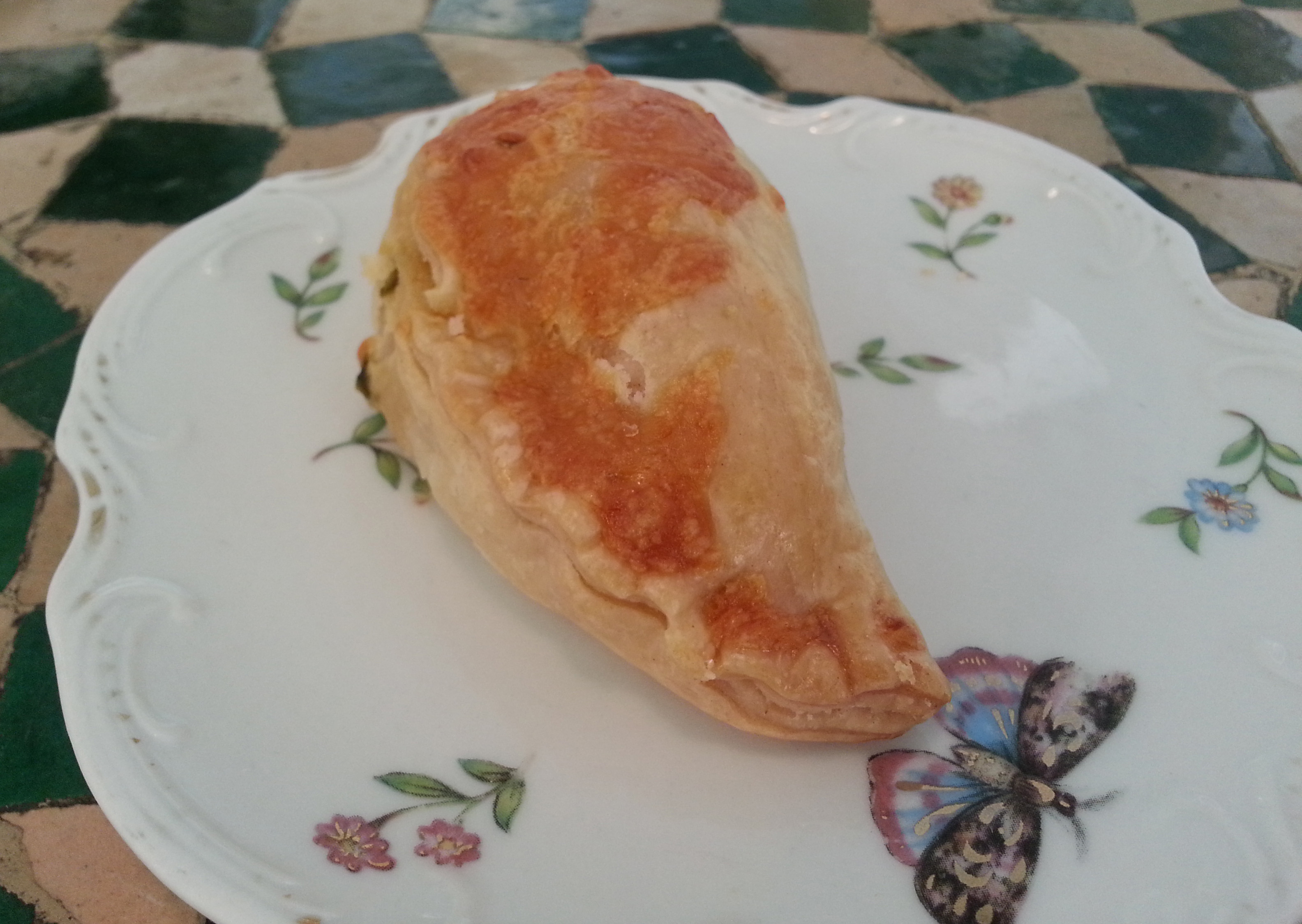
On the savory side, we tried, at the recommendation of a woman who described herself as a regular since she works a few doors away, the Jalapeno Mac and Cheese Empanada. Yep, macaroni and cheese with bits of the piquant chile baked in flakey pastry. It wasn’t sweet and all, but it was a truckload of flavor.
Semi Sweet Bakery
Four-and-a-half Plates
105 East 6th Street
Los Angeles, CA









 The Blue Page Special