Archive for the ‘Books’ Category
In Wave, Sonali Deraniyagala writes with intensity and candor as she describes the tsunami she survived but which her family did not.
The memoir begins in the minutes before one of the most deadly forces of nature hit the Sri Lankan coast Dec. 26, 2004. She is initially incredulous that she should survive; it only makes sense that her husband, their seven- and five-year-old sons, along with her mother and father also made it through alive. Unlike the 2012 film, The Impossible, about the same topic, Wave does not have a happy ending. Neither does it have a happy beginning.
Deraniyagala slowly moves through the stages of grief and gets stuck in denial. She is angry, she is depressed and though her narrative extends to 2012, she can’t wrap her heart or mind around the loss she has endured. Yet, she brings her family to life in the memories she shares. She vividly details her sons’ antics and dissimilar personalities. She recounts her courtship with her husband, Steve, and their life in London before and after kids. It takes longer for her to deal with the loss of her parents, so they aren’t as fully portrayed.
Gradually, she’s able to revisit family homes, places her children played, friends and even the devastated Yala resort. The author moves from the present to the past, from her childhood in Sri Lanka to Cambridge, from Yala to London. At each juncture pain is never far from the surface; fortunately, it becomes less raw.
Wave
Four Bookmarks
Alfred A. Knopf, 2013
228 pages
I ‘m somewhat uncomfortable admitting that for all the years LEGO were scattered throughout my house, I used the plural and lower case (Legos) to identify the multi-colored blocks. Thankfully, Jonathan Bender has set me straight in his comprehensive book LEGO: A Love Story.
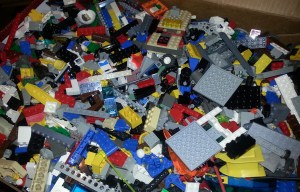
None of my sons live at home, but their LEGO are safely stored in multiple readily-accessible bins. I still have an MOC (My Own Creation, not from instructions) made by one of my sons as a gift on my dresser. Recently, my husband and I’ve been told it’s not Christmas without LEGO to build. I share this because LEGO have long been a part of my family. And we are not alone. According to Bender, in 2010, when his book was published, there were 62 LEGO bricks for every man, woman and child in the world.
Bender recalls his childhood fascination with the Danish-made pieces and his personal transformation to an AFOL (Adult Fan of LEGO). He explains that LEGO developers acknowledge the Dark Ages, when kids quit playing with the bricks. However, Bender’s focus is on AFOLs and their worldwide presence. He travels to LEGO conventions, he visits LEGOLAND, the LEGO factory in Denmark, and interviews an assortment of LEGO designers, builders and collectors. Who knew of the various LEGO-related web sites, nor the impressive number of LEGO User Groups (LUGs – acronyms are big in this world).
Bender nimbly details the evolution of his passion for LEGO while also revealing a personal side-story about creating family.
LEGO: A Love Story
Four Bookmarks
John Wiley & Sons, Inc., 2010
270 pages, including notes
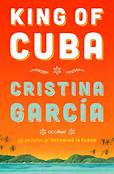
Fidel Castro is never identified by name in Cristina Garcia’s King of Cuba, but it’s easy to fill in that blank. The novel should be entitled The Kings of Cuba because the two main characters share a passion for the island nation and philandering. The difference is that one is a despot and the other an exile: the former in Cuba and the latter in Miami.
Both are nearing the end of their lives. Although El Commandante (also referred to as the tyrant and El Lider) remains vain, he can see his failing body reducing his political power. Goya Herrera wants nothing more than to help the tyrant’s life to a speedy conclusion. Goya’s disdain for the Cuban leader is tied to a lost love and living as an expatriate. It doesn’t matter that Goya’s life has been financially successful.
Alternating between El Commandante and Goya’s voice, other perspectives regarding Cuban history also are included in the form of footnotes. At first, this is annoying – as footnotes usually are. Eventually, they’re entertaining and edifying.
Goya’s family life is in ruins; his wife is deceased and his grown children have few positive attributes. By contrast, the tyrant has progeny he doesn’t even know about. The legacies they will leave behind are entirely shaped by the history they helped create. The tyrant led his country into a revolution that lasted 50 years, and the businessman personifies the American Dream.
Garcia’s disarming narrative combines history with satire, and Castro’s presence is felt on every page.
King of Cuba
Three-and-a-half Bookmarks
Scribner 2013
235 pages
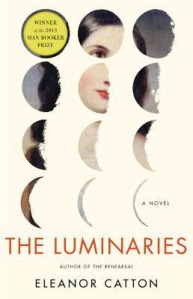
I’ve written once before about giving myself permission not to finish a book. I usually make the decision within the first 50 pages. I just stopped after 360 pages of Eleanor Catton’s 830 page tome, The Luminaries. The strange thing is, I will probably finish. Someday. Not now though; I have too many other books on my nightstand, and the library copy I’m reading is already overdue.
I can’t say it took me more than 300 pages to get into the 2013 Man Booker Prize winner, but it was no easy trek to make it that far, which is not even halfway.
The tale begins in January 1866 when Walter Moody arrives in a New Zealand mining town seeking his fortune. His first night in town finds him among 12 men ready to discuss a series of events to which they are all directly or tenuously connected. Catton pays meticulous attention to detail. Each character is exhaustively described from appearances, mannerisms, likes, dislikes, self-perceptions and reputation. Moody and company aren’t the novel’s only characters: a few women of mystery and ill-repute and several men who have either died or gone missing are also fastidiously introduced. Yet.
The relationships through business, friendship and happenstance actually do make for an interesting story. Hidden gold, lost fortunes, prejudices and the association of the characters is a maze. while easy to follow from one possible explanation only to be thwarted by another, is eventually, and finally, enthralling. I just hate to have library fines.
The Luminaries
Undecided on Bookmarks
Little, Brown and Co., 2013
360 pages of 830
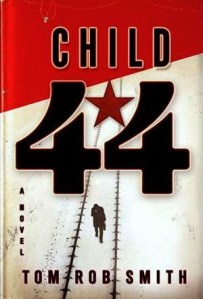
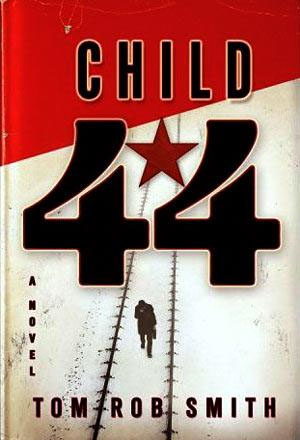
Child 44 begins in such a predictable manner, with a vignette from the past, it belies the true suspense of Tom Rob Smith’s novel. However, as the tale unfolds each twist and turn is a complete surprise.
In Stalin-era Russia, Leo Demidov is with the State Security Force. In the midst of investigating a possible traitor, he’s ordered to address the death of a colleague’s young son. The family is convinced the boy was murdered but as Leo notes, “If left unchecked, the groundless chatter about murder could grow like a weed, spreading through the community … making them question one of the fundamental pillars of their new society: there is no crime.” The family’s concerns are dismissed.
Although he’s guilty of cold-heartedly dealing with those who denounce Mother Russia through actual or perceived actions, Leo has a soft side. Smith establishes a tangible fear and mistrust that permeate the Russian culture. Leo has kicked in more than his share of doors and had citizens banished, or worse, but the tide changes and he becomes a hapless victim when he refuses to condemn his wife, Raisa.
Consequently, Leo is assigned menial tasks with small town police force, but a girl’s murder captures his attention by its similarity to the death he had previously scorned. Thus begins a secret investigation, cross-country pursuit, and unraveling of long-held secrets.
This is a rapid-heart rate page turner. However, one fault lies in Leo’s nemesis: Vasili, a one-dimensional character in an otherwise realistic, albeit frightening, world.
Child 44
Four and a half Bookmarks
Grand Central Publishing, 2008
436 pages
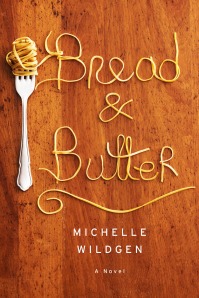
Bread & Butter is bound to appeal to foodies. Author Michelle Wildgen combines her talents as a writer with her past restaurant experience to tell the story of three brothers with two competing eateries in their hometown.
Leo and Britt have been running Winesap, their fashionable restaurant for more than a decade. When their younger brother, Harry, returns home they find it difficult to be enthusiastic about his plans to open another upscale establishment in a weak economy. Yet, it’s not just the competition that has the older two apprehensive. Harry has bounced around from educational pursuits to various jobs in the years since he’s been gone. Leo and Britt are certain Harry lacks the stamina, knowledge and commitment to run a successful business. They see him as a neophyte, and Harry, who wants their support, is driven to prove them wrong.
Wildgen has created likeable, sometimes exasperating, characters whose voices and situations ring true. Eventually, Britt signs on as Harry’s partner while maintaining his front-of-house role at Winesap. Tensions mount as expectations, many unfounded, lead to several surprises when Harry’s place opens for business.
Descriptions of food, prepping for dinner service and the relationships among the employees (and owners) are vivid and realistic.
Ultimately, the siblings have credible culinary chops; they also have difficulty relinquishing family issues precipitated by birth order. This tends to bog things down a bit. Wildgen emphasizes that sometimes family members are often seen as what we want them to be, rather than who they truly are.
Bread & Butter
Three-and-a-half Bookmarks
Doubleday, 2014
314 pages
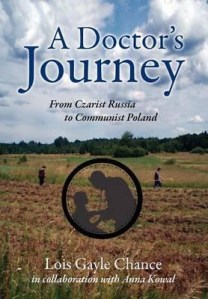
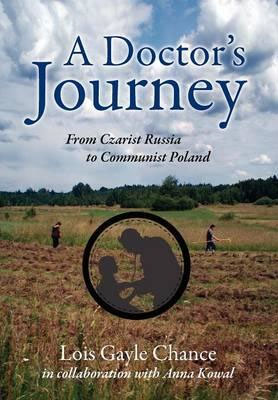
A Doctor’s Journey by Lois Gayle Chance, in collaboration with Anna Kowal, is the true story of Alexander Kowal’s arduous trek from farm boy to physician during World Wars I and II. The book is subtitled From Czarist Russia to Communist Poland.
This independently published work incorporates Alexander’s written accounts, family memories, and, as the author notes in her preface, “the imagination of the writer.” The result is an engaging account of a remarkable man in a historic period. With a few missteps here and there, it, nonetheless, deserves praise for Chance’s ability to set credible scenes and smooth dialogue (which is where, she admits, she took creative license).
The story begins in 1907 when Alexander’s aspirations of becoming a teacher are thwarted; as the oldest son he’s destined to inherit the family land, which has been handed down for generations. Nonetheless, a teacher encourages him apply to become a doctor, and Alexander is awarded a scholarship to study medicine. After ultimately receiving his father’s blessing, Alexander begins his journey.
Chance is weakest in her repeated foreshadowing of the obvious. She writes, “Once home, his family gathered around and he showed them this precious possession, his medical diploma. He never dreamed that nearly a century later it would be cherished by a daughter who hung it proudly in her office …” Of course not! Who can, let alone would, imagine such things?
Alexander’s story, driven by his determination, is filled with aspects of ordinary life, except it occurs in an extraordinary era.
A Doctor’s Journey
Three Bookmarks
Outskirts Press, 2013
271 pages

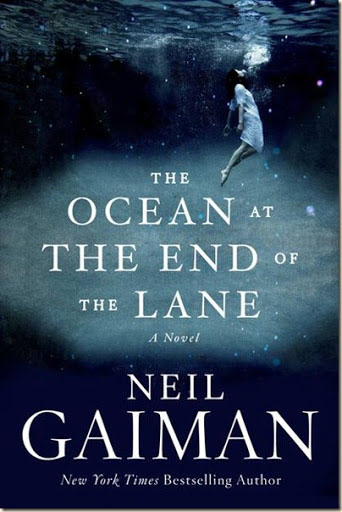
Part Harry Potter, part Alice’s Adventures in Wonderland, The Ocean at the End of the Lane by Neil Gaiman compels the reader’s imagination to relinquish, among other things, fear of the unknown. It’s worth the little effort needed to suspend belief, but Gaiman makes it very easy through his sensitive story telling that mixes memories, nightmares, and hope into one gripping tale.
The story begins as the narrator returns to his hometown for a funeral. He recalls how 40+ years earlier as a shy, reclusive seven-year-old he is befriended by Lettie Hempstock, who lives with her mother and grandmother. The boy has no friends, but Lettie, who is four years his senior, draws him out of himself. It’s Lettie who believes the pond on her family farm is an ocean.
At the same time, a nanny, Ursula Monkton, arrives in the boy’s home. It will come as no surprise that Ursula isn’t what she appears to be. In fact, she appears as many things. Lettie becomes a protector who in the process of caring for her young charge takes on numerous risks – dangers the young boy would never face on his own, but who willingly approaches them with Lettie.
Gaiman blends magic, mystery and the passage of time into a single cauldron where dreams, recollections and reality are hard to distinguish. The now-grown man finds himself at the Hempstock farm with whom he initially believes is Lettie’s mother since it’s unlikely, in his mind, that Grannie Hempstock is still alive. Yet.
The Ocean at the End of the Lane
Four Bookmarks
William Morrow, 2013
181 pages

It should come as no surprise from the title of Hannah Kent’s debut novel, Burial Rites, that death plays a major role since it overshadows the entire plot. It is also obvious from the onset who will die and why. What is less clear is the unexpected empathy that develops for the condemned.
Kent creates an unlikely protagonist in Agnes Magnusdottir, charged with the brutal murder of her former lover. While awaiting her execution, Agnes is sent to live with a farmer’s family apprehensive of have a murderess in their home. Like the harsh, cold Icelandic setting in which the story occurs, warmth toward to Agnes is slow to kindle.
The beauty of Kent’s writing lies in her ability to develop an emotional response in readers in much the same way the host family members relinquish their reluctance, revulsion and fear of having Agnes in their midst. The transformation is hard won.
Told in part from Agnes’s perspective, a few official letters, and an omniscient narrator, each character is skillfully portrayed through personality quirks, physical descriptions, and overt reactions. It’s easy to envision the pompous, narrow-minded District Commissioner who inflicts his will. Kent is equally successful in developing Toti, the young assistant reverend Agnes has requested as her spiritual advisor. This uncertain young man, and his faith, evolves as Agnes grows more comfortable sharing details of her life.
The novel, a fictional account of actual events, demonstrates hardened hearts can be softened by honesty, profound interaction, and a good storyteller.
Burial Rites
Four-and-half Bookmarks
Little, Brown and Company, 2013
322 pages
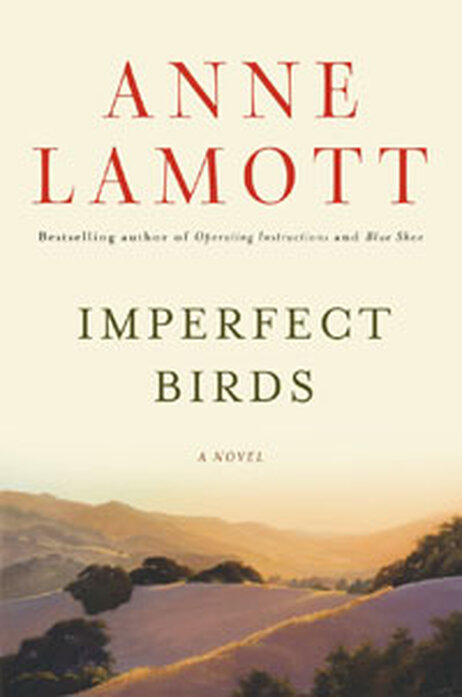
Anne Lamott’s Imperfect Birds is either a wake-up call or a near-miss experience for parents and their kids. Either way, it’s a disheartening look at teenagers, parenting, and community. The first paragraph sets the tone: “… a teenager died nearly every year after a party and kids routinely went from high school to psych wards, halfway houses, or jail.” The first thing I’d do is move, no matter how idyllic the little town, where the story’s set, with its appealing proximity to San Francisco.
Lamott writes with purpose, honesty and humor. Yet her characters are not likeable. Rosie is an entitled high school senior, facing real and difficult situations where peer pressure, availability of drugs, and opportunities for sex are abundant. Elizabeth and James, Rosie’s mother and stepfather, know these dangers exist, but are reluctant to parent. Why should they? Rosie’s a good student and involved at church. Plus, as a consummate liar she successfully overrides her parents’ arbitrary concerns.
It doesn’t help that Elizabeth is a recovering alcoholic – except it should. She shouldn’t be such an easy mark. James doesn’t fare much better, although he tries. Elizabeth’s fault is her desire to be Rosie’s friend first and parent second. The book does lend itself to a discussion about parenting.
If Lamott’s goal is to show how blind loving parents can be, she’s successful. When Elizabeth and James finally see the light, it’s not through their personal epiphanies, rather from Rosie forgetting to keep the wool over her own eyes.
Imperfect Birds
Three Bookmarks
Riverhead Books, 2010
317 pages




 The Blue Page Special