Archive for September 2015

I am humbled and surprised when I run into someone who tells me my blog is enjoyable and a good place to learn about books (and restaurants when I write about them). When I started The Blue Page Special nearly three years ago, that’s what I hoped for. What’s even better is when one of my readers shares a book title with me, introducing me to a new author or genre. Such is the case with The Rosie Project by Graeme Simsion.
Simsion presents Don Tillman: a nerd. This renowned genetics professor at a Melbourne, Australia, university has created a life so structured that all of his activities are scheduled to the minute. He finds the slightest deviation unnerving. This, along with his intelligence and inclination to view the world through literal eyes, makes him socially inept.
Nonetheless, he decides it’s time to find a life partner and creates the Wife Project, complete with a multi-point questionnaire which has no place for romance. That is until Rosie Jarman, a graduate student in psychology, unwittingly becomes a candidate in the project. Don quickly dismisses her as a viable contender because of what he perceives as her many (human) faults.
The novel is predictable which might warrant a spoiler alert, but I encourage reading it anyway. Don’s voice and personality quirks are well-developed — complete with a few laugh-out-loud moments. Also, Rosie’s criticism that the Wife Project objectifies women is unarguable. Yet, the premise results in a fun read where transformations occur on several, some even surprising, levels.
The Rosie Project
Four Bookmarks
Simon & Schuster, 2013
292 pages

Coming of age can be a mystery, and Karen Brown has combined the two genres in The Longings of Wayward Girls.
The story begins with a 1974 news clipping about the abduction of a young girl, Laura Loomis, and moves back and forth between 1979 and the early 2000s. Laura remains a mystery throughout, while other secrets surface its place. The narrative instead focuses on Sadie Watkins as a creative, energetic young teenager and later as a married mother of two. It hardly seems possible that the two characters are the same; the adult Sadie lacks imagination. That is, until Ray Filey returns to town.
Set in a rural New England community, Brown’s descriptions of the landscape and close-knit neighborhood are intriguing and easy to visualize. The novel is also evocative of a time when parents thought nothing of letting their children roam nearby woods and streets. Or, when parents (in this case, mostly mothers) chain-smoked and drank their way through summer afternoons and evenings.
Sadie teeters on the edge of being a mean girl with childhood friend, Betty, following her lead. Ray is a few years older than Sadie. As a girl she was aware of his presence, although he was never part of her circle of friends. His interest in her as a woman is intriguing, but Sadie’s response to his appearance doesn’t entirely make sense, nor do her actions. However, Brown’s merging of the two themes does offersenough interest to see the novel to its conclusion.
The Longings of Wayward Girls
Three-and-a-half Bookmarks
Washington Square Press, 2013
337 pages
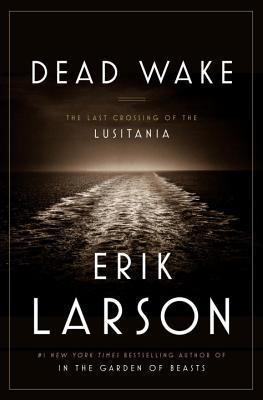
It takes Erik Larson about 100 pages to finally let the Lusitania set sail from New York City in May 1915. Dead Wake, his account of the doomed luxury liner, is exhaustive in detail and detached in its descriptions of the events leading to its historic sinking. No need for a spoiler alert here; many consider the German sinking of the Lusitania is what ultimately led the United States to join the British and French allies in World War I.
Larson’s research on the subject is thorough (there are more than 50 pages of notes). He addresses everything from the backgrounds of the ships’ captains involved, to the weather leading up to the point the ship left sight of land, to how the dining room was decorated for first class passengers. There’s more: brief bios about passengers, history of submarines, how Cunard came to name its fleet, and even Wilson’s love life as he strove to maintain neutrality for the U.S. even as events continued to escalate in Europe.
While it is heartbreaking to know that a record number of families with children were on board, the concise elements Larson provides about the passengers makes it difficult to have a true sense of their characters. This does not mean the event was less tragic, just that the book offers little except a historic narrative.
As with any tragedy, fingers pointing blame are plentiful; Larson offers numerous what ifs, which, of course, do nothing to change the course of history.
Dead Wake
Not-quite-three Bookmarks
Crown Publishers, 2015
430 pages (including notes and index)


 The Blue Page Special